Trouble Brews for MENA Tea Drinkers in COVID-19 Lockdown

Fears tea will be left rotting in the field as movement restrictions prevent experienced tea pickers harvesting crops in Turkey has sparked worries about tea supplies in the MENA region.

A similar situation is playing out in the world’s other major tea producing nations like China, India, and Sri Lanka, threatening supply in prices of tea-loving MENA countries like Morocco. 

Trouble in the Turkish Tea Fields

Turkey, the world’s top tea-drinking nation per capita, is looking down the barrel of a reduced tea harvest this year due to COVID-19 restrictions. Up to 100 000 tea growers and experienced pickers travel from Istanbul to the Black Sea tea-hub provinces of Giresun, Trabzon, Rize, and Artvin each year for the tea harvest season from May to October. 

This year, however, Turkey, which is self-sufficient in tea, is expecting low yields due to the impact of COVID-19 restrictions on experienced harvesters’ abilities to get to the crops in time. The government has banned travel from Istanbul to the tea-hub provinces and told tea producers to source their workers from the Kars, Ardahan, Erzurum, and Bayburt in the east. 

“If 10,000 people out of 100,000 have the COVID-19, the virus will spread to the entire Black Sea region. Thus, under the guidance of the Health Ministry and Interior Ministry, the travel from Istanbul to those four provinces has been banned,” the ministries said on April 27, according to Turkish paper Hurriyet Daily News. 

Agricultural workers in Giresun, Trabzon, Rize, and Artvin are still free to participate in the harvest and special “harvest commissions” can be granted to Istanbuli’s and other outsiders by muhtars (village heads), but there are still concerns tea will be left rotting in the fields.

“Provincial Pandemic Councils had decided that we could return to our hometowns until April 30, but the decision was overturned while we were waiting for travel permits to clear,” Istanbul-based Black Sea tea farm owner Maksut Terzi told Turkish media.

Hurriyet predicts up to 20% of tea growers like Terzi will be unable to participate in this year’s harvest, and that they will have trouble finding enough workers to pick the tea leaves. The lack of experienced pickers is expected to reduce tea yields and may drive up the price of the staple commodity, of which Turkey is the world’s fifth-largest producer. 

Morocco’s tea stockpile threatened

Meanwhile, Morocco’s tea supply is under threat as COVID-19 restrictions in China, India, Kenya, Sri Lanka and Vietnam are affecting around 82% of the world’s tea supply produced by those five nations. Tea picking has been delayed, workers are hard to come buy, and tea shipments are also being delayed as COVID-19 curbs bite into the normally stable industry. 

Morocco imports the majority of its green tea from the world’s top producer China, where tea production is expected to be down due to a lack of pickers and bad growing conditions. Tea is Morocco’s national drink, and the Moroccan association of tea and coffee manufacturers (AMITC) stockpiled six months’ worth of tea after foreseeing negative impacts from the COVID-19 crisis.

“Tea is available in markets and there will be no shortage. I reassure Moroccans that the tea price will not increase,” AMITC Mohamed Astaib said back in March. He also said his organization was guarding against tea shortages by, “studying the possibility of dealing with alternative tea exporters such as India and Sri Lanka.”

Since March, however, the COVID-19 crisis has depended and spread to those tea producers too. India is predicting annual output to drop by 9% because the country’s lockdown has put harvesting on hold, while in Sri Lanka drought and coronavirus have caused a 15% drop in production. 

Reduced production is, in turn, impacting those country’s export capacity and driving up prices by as much as 30% Russian tea buyers reported.

“Shipments from India have been delayed by an average of one month, and we have also experienced delays in the supply of tea from other countries, in particular Sri Lanka,” according to Russia’s leading tea manufacturer, Orimi trade.

A gradual easing of worldwide coronavirus restrictions in recent weeks provides some hope that tea supply in Turkey and Morocco may be able to recover, and price increases avoided. The tea trouble brewing, however, goes to show that in 2020 nothing is safe from COVID-19. 
 

Read also: Israel to Ease COVID-19 Curbs While Morocco Extends Lockdown

Foreign Powers Call for Reforms Before Delivering Aid to Lebanon

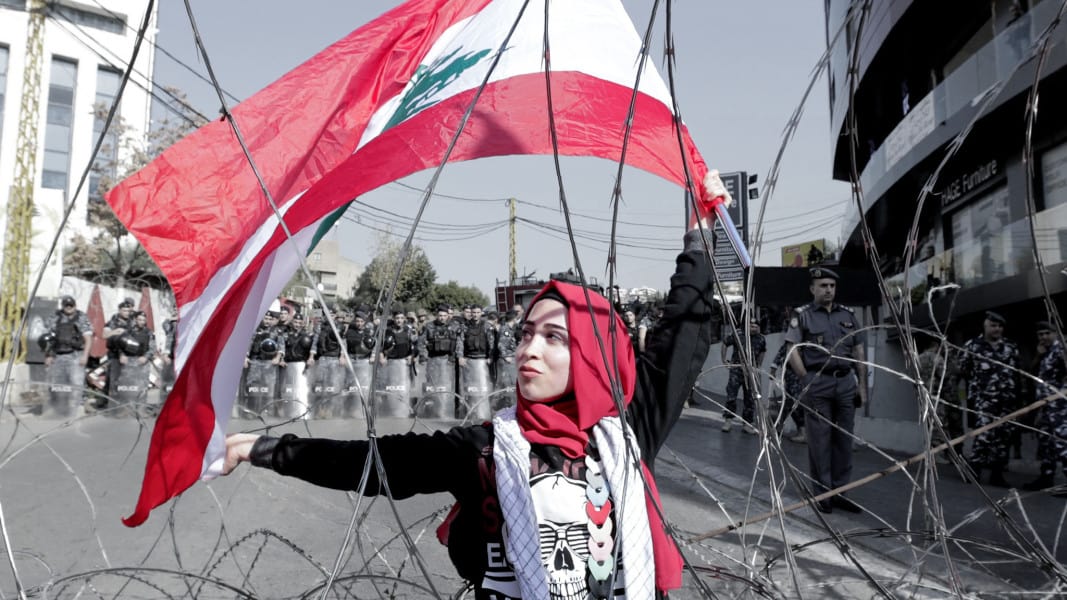
The pressure is mounting on the government of Lebanon. Anti-government protests have reemerged even as the threat of COVID-19 grows, a sign of the people’s increasing desperation. Protesters have set fire to banks and blocked roads and highways this week as Lebanon’s citizens expressed their discontent. Now the pressure is starting to grow from abroad as well.

David Schenker, US assistant secretary for Near Eastern affairs, told Al Arabiya on Wednesday, April 28, that the Lebanese government must make significant reforms before foreign aid can be expected.

“For Lebanon to be in a position to receive assistance from international financial institutions it must prove that it is ready to make difficult choices and decisions to show it is 100% committed to reform,” the diplomat told the Saudi publication.

Unpopular Reforms

Both Lebanese protesters and outside forces are calling for reforms, but the difference lies in what to reform. The US will primarily focus on the role Hezbollah plays in Lebanese politics. The group is classified as a terrorist organization by the US but continues to play a significant role in Lebanon’s unique multi-denominational government where power is divided and shared between Christian, Shia, and Sunni politicians.

The reforms foreign powers have called for will likely deepen Lebanon’s political crisis as they will lead to an increase in the austerity measures that citizens are protesting. The only agreement between foreign and local reform aspirations is the desire to combat corruption and mismanagement. The government in Beirut has scrambled to put together an economic stimulus plan and renegotiate its foreign debt in order to stave off further decline.

Unbearable consequences

The Arab League on Wednesday, April 28, warned that Lebanon’s crises could lead to “unbearable consequences” in a statement released by General Hossam Zaki, the organization’s assistant secretary.

“The Lebanese government is urged, due to the circumstances, to speed up steps for economic reform and to meet the legitimate demands of the Lebanese people,” Zaki stated.

“We have indications that this will happen soon,” he said, possibly revealing that discussions with Arab partners are ongoing behind the scenes.

The political, health and economic crises that are ravaging Lebanon have citizens and foreign parties concerned as protests escalated on Wednesday, leading to the death of a protester. With pressure mounting on Lebanon’s government, it is up to the government of Prime Minister Hassan Diab to propose new reforms that appease both internal and external critics.


Read also: Protester Dead, Banks Left Burning After Violent Clashes in Lebanon

Falling Oil Prices Force Saudi Arabia to Dip into Reserves

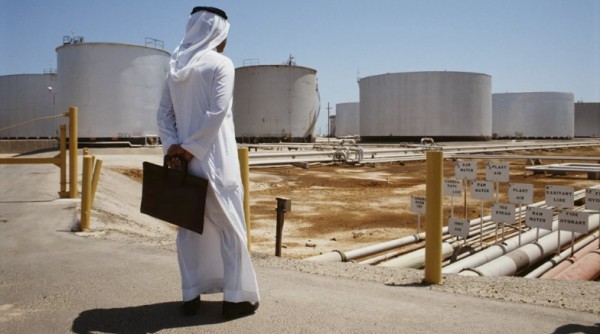
Saudi Arabia continues to reassure its foreign trade partners and allies that all is well in the kingdom, but depleting reserves of its central bank tell a different story.

The kingdom held impressive reserves prior to the pandemic, but the price-war over oil and a historic drop in global demand has resulted in a $27 billion drop in Saudi reserves. The Saudis still have a stockpile of $464 billion, showing that the nation is able to continue the downward trend for some time.

Falling oil prices

For most of 2020, Saudi-Arabia has been the focal point in a disagreement between Russia and the Saudi-led Organization of the Petroleum Exporting Countries (OPEC). As demand fell Russia and Saudi-Arabia could not agree on a production cut, causing t prices to spiral down. As oil prices fell with the COVID-19 lockdown, so did the demand for oil as the pandemic brought air travel, car use, and manufacturing to a near standstill.

Following a last-minute agreement in April to cut global oil production by 10 billion barrels a day, oil prices continue to fall as the ten% cut was deemed insufficient. Because global oil production continued unabated for months, the world is now facing an unprecedented oil glut as tankers and storage facilities are rapidly filling up.

A calculated risk?

The question remains whether the Saudi-led price war over its most precious resource was indeed a disagreement, or a purposeful strategy. Low-cost oil producers like Saudi-Arabia could stand to benefit if low oil prices force higher-cost producers out of business.

If the Saudi moves are part of a concerted strategy, the fall in reserves and increased deficit are a calculated cost in order to benefit from increased market share following the pandemic. Accusations that Saudi exports are threatening ten million American jobs in the US oil industry have brought the country into a confrontation with several US lawmakers.

A fleet of Saudi tankers is currently on its way to the US, carrying seven times the usual monthly US intake of Saudi oil. If these tankers arrive just when US oil storage reaches capacity and proceeds to dump their oil onto the US market, it could severely damage smaller US oil producers. Whether the kingdom would risk endangering its military alliance with the US remains to be seen.

Potential consequences

As a Saudi-US stand-off is nearing in the West, in the East the country is facing competition from Russia. Saudi Aramco had offered significantly discounted oil prices to Eastern markets to increase its market-share as Russia begins to catch up with the Saudis after China imported 31% more oil from Russia last month.

The Chinese now import roughly 1.66 million barrels of Russian oil per day, while Saudi oil accounts for 1.7 million barrels. Both oil exporters are now nearly on a par, but the Russian 31% gain far exceeded the 4.5% gain the Saudi’s saw in exports to China.

It is difficult to determine whether the Saudis are playing a risky game to gain market share. They could simply be reacting to changing oil prices or could even be a victim of their own actions amid global trends in slumping demand.

The coming stand-off between the US and Saudi-Arabia over its tanker fleet and the developments in the Eastern market could change Saudi-Arabia’s fortunes for a long time to come. One thing is certain, Saudi decisions today will have far-reaching consequences for the nation as well as other oil-producing states in the Gulf.


Read also: Amid Low Oil Prices, China’s Industry Restarts

Erdogan Concedes to US in Letter to Trump

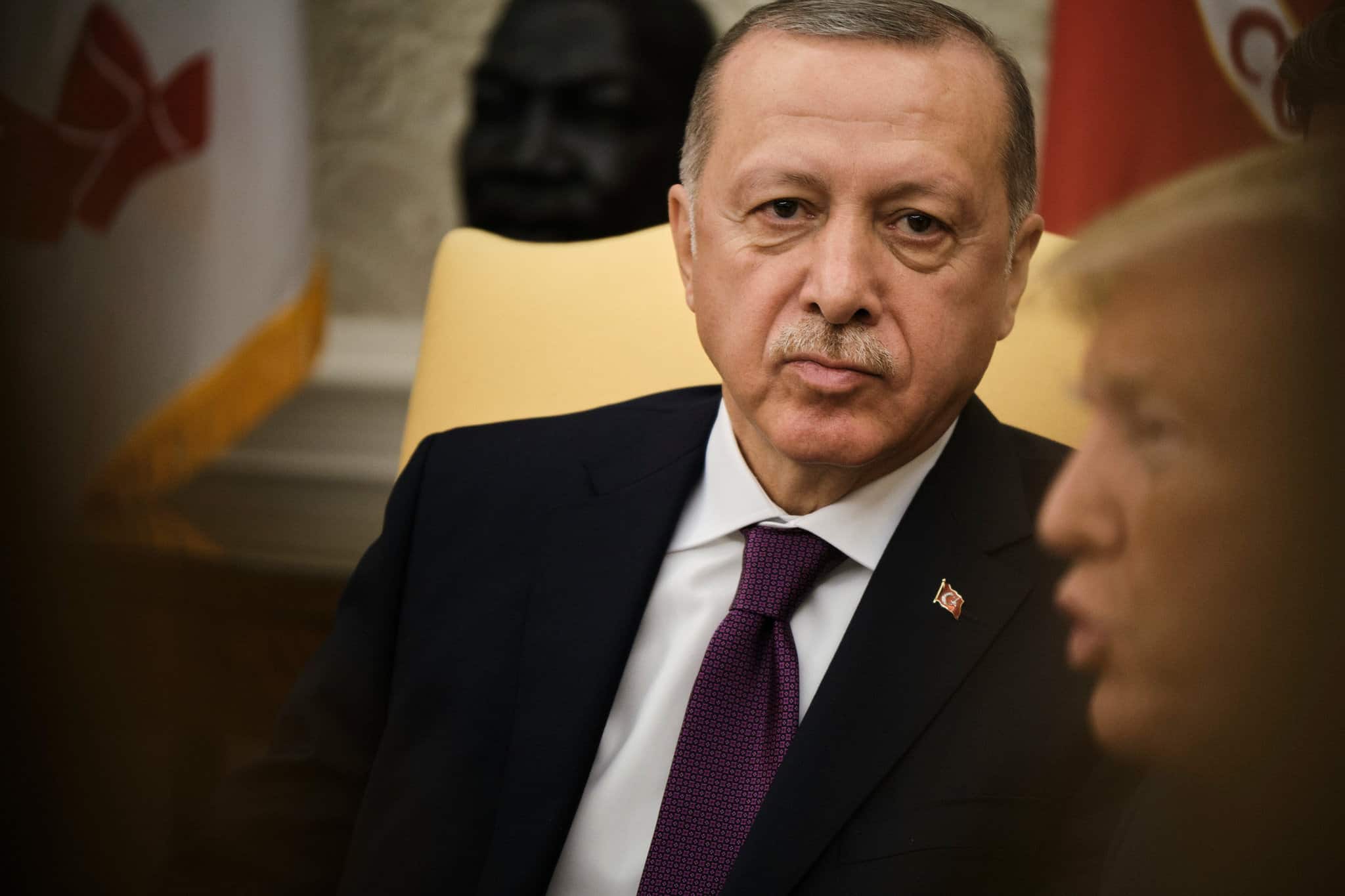
On April 28, Turkey sent the United States a peace offering in the form of a Turkish military plane loaded with medical equipment. The A400M military plane landed at Joint Base Andrews in Maryland with a letter from Turkish President Recep Tayyip Erdogan to his American counterpart.

The Turkish president struck a conciliatory tone in the letter. 

“I hope that in the upcoming period, with the spirit of solidarity we have displayed during the pandemic, Congress and the US  media will better understand the strategic importance of our relations,” he wrote.

Erdogan’s message and its accompanying gift of medical supplies signal a significant shift in Turkey’s attitude.

A reversal of tone

The Turkish move has highlighted the dire conditions in the country, despite initially boasting of an absence of COVID-19 infections due to ‘superior Turkish genes.’ Once the virus started spreading through Turkey, ineffective government action resulted in an explosion in infection rates in the country, with many going undetected.

Erdogan’s message shows a reversal of fortune and attitude. In October of 2019, Trump had similarly sent a letter to Erdogan, about Turkish foreign policy adventuring in Syria. Erdogan made a show of making sure the media knew he had thrown the letter in the trash without reading it.

In the letter, Trump told Erdogan “Don’t be a tough guy. Don’t be a fool!” after it had become clear Turkish troops would launch a military offensive against the Kurdish Syrians that defeated ISIS. Vice-president Mike pence had visited Ankara to unsuccessfully negotiate a ceasefire.

Failed geopolitical games

Erdogan was playing a dangerous game. By buying Russian anti-air missile batteries, he attempted to play Russia and the US off each other. The scheme was reminiscent of strategies from the cold-war, where countries like Somalia successfully gained concessions and aid from both the US and USSR.

Any friction between the US and Turkey has been purposefully flamed by Erdogan who had hoped to benefit from Turkey’s position as NATO’s second-largest army. Turkish investment in the Joint Strike Fighter program would surely mean the US would do whatever it takes to persuade Turkey from implementing Russia’s advanced anti-air missile system.

But the plan seems to have backfired, as weeks after Turkish officials announced the installation of the Russian system was approaching without delay, Turkey’s top official is now mending relations. The awkward failed gamble has cost Turkey in both money and prestige, with the US coming out as the winner as Erdogan comes begging for better relations.

Americans capitalize

The Trump Administration was quick to embrace Turkey’s move. “We thank Turkey for their generous donation of medical supplies and protective equipment to help us fight COVID19 in our hardest-hit areas,” US Secretary of State, Mike Pompeo said on Twitter.

 “Americans are grateful for your friendship, partnership, and support,” he wrote.

 In contrast to Erdogan’s posturing in October, the US appears to capitalize on Turkey’s moment of weakness to ensure its interests will prevail.

Turkish media widely reported the arrival of a single Turkish plane with goods. In contrast, China and tiny Gulf state Qatar have exchanged tonnes of mutual aid, while Egypt is receiving planeloads full of Chinese advanced medical equipment every few weeks. The Turkish plane full of gloves and masks clearly was meant as a signal of Turkish surrender more than anything.

The humiliating turn of events will have been a difficult choice for Erdogan. As most powerful nations have continued their geopolitical games throughout the crisis, Turkey appears unable to carry on with its dangerous bluff as COVID-19 cripples the nation.

For the Turkish people, the wasted resources and efforts will be a hard pill to swallow as the nation needs effective leadership amid its government’s petty political games, repression and failed COVID-19 strategy.


Read also: COVID-19 is exposing Erdogan’s flaws

Egypt Prosecutes Social Media Stars for Immorality Amid COVID-19 Crisis

TikTok influencer Haneen Hossam and well-known belly dancer Sama el-Masry’s social media posts have landed them in detention in Egypt. The arrests sparked calls from conservative quarters of Egyptian society for stricter censorship of female social media users, while rights campaigners have decried the arrests. 

Belly dancer al-Masry is currently serving a four-day stint in jail while prosecutors investigate complaints regarding “disgraceful” videos and pictures she posted on the internet. After her arrest on April 27, Al-Masry strongly denied posting the viral content, saying it could have come from a phone stolen in June 2019 or may be part of a campaign against her, motivated by her political views. 

In 2015, the outspoken al-Masry was sentenced to six months in jail and fined $635 for criticizing pro-government voices through her ‘feloul’ TV channel. Controversial female TV host Reham Saheed, who has had a very public feud with rival Al-Masry, said she was behind one of the complaints that led to the debauchery and immorality investigation.

TikTok and Instagram star Hossam found herself in hot-water after encouraging her followers to post videos in exchange for money on April 21, a common business model for the new profession of ‘influencers’ that have emerged thanks primarily to social media. Critics and Egyptian security authorities instead likened the video, where she offered women over the age of 18 up to $3000 in exchange for live streaming themselves, to prostitution.

The Cairo University student who has around one million TikTok followers is now serving 15 days detention after being arrested for “inciting debauchery,” and faces expulsion from her faculty. 

“This video went viral and some TV hosts and YouTubers started to incite against her, saying she wants to hire young Egyptian women as ‘digital sex workers,’ which is illegal and goes against the so-called public moralities,” Egyptian feminist Ghadeer Ahmed explained in a tweet

[These laws] condemn people for their behavior that may not conform to imagined social standards for how to be a ‘good citizen’ and a respectful woman,” she said in defense of Hossam and el-Masry. 

The prominent Egyptian women’s rights defender also claimed the charges were part of a concerted cyberbullying campaign against 20-year old Hossam and just another example of Egypt’s government using archaic laws to “reassure their control” at “the expense of women.”

The women’s arrests have been welcomed by conservatives like parliamentarian John Taalat

“Because of a lack of surveillance some people are exploiting these apps in a manner that violates public morals and Egypt’s customs and traditions,” Taalat said on Facebook. 

He and a number of fellow lawmakers have petitioned Prime Minister Mostafa Madbouly to further increase social media surveillance to prevent women from posting “unethical” and “inappropriate” content. Egypt already has draconian cyber-crime laws that give the government free reign to censor the internet, communication apps, and media regulators to block social media accounts. 


Read also: Egypt Repatriates 375 Nationals, Promises More Flights to Come

At Least 30 Die After Fuel Tanker Explosion Rips Through Afrin, Syria

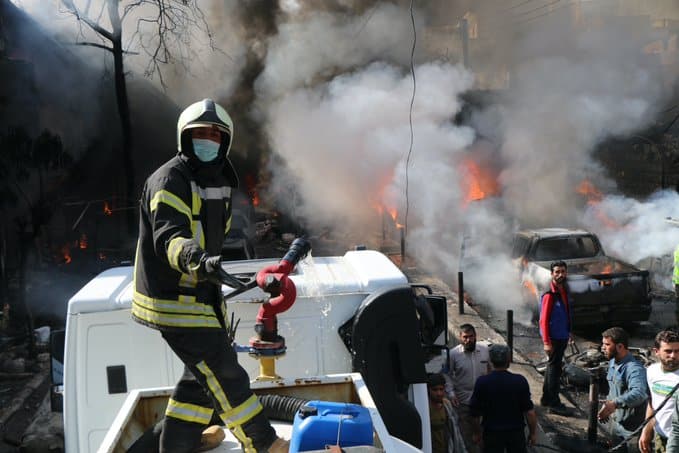
Syrian humanitarian groups and Turkish authorities reported that a fuel tanker rigged with an IED exploded in a crowded outdoor market on Raju Street, Afrin, killing somewhere between 30 and 40 civilians.  

Syria Civil Defence, also known as the White Helmets, tweeted that “30 people so far is the death toll from the horrific explosion that hit a market in #Afrin City in #Aleppo today.” 

“Most of them were burned to death in the inferno,” caused by Tuesday’s explosion, the organization added.  

The UK-based Syrian Observatory for Human Rights (SOHR) said it expects the death toll to rise due to the large number of people badly burned in the blast.  

“SOHR activists have documented the death of at least 22 persons due to the explosion of a booby-trapped fuel truck in an outdoors market on the road to Raju township in the Turkish-controlled city of Afrin,” according to a report on the group’s website. 

“The number of fatalities is expected to rise, since there are more than 27 wounded some of whom sustained serious injuries,” SOHR said.

Graphic videos circulating on Twitter show the bodies of victims, burned beyond recognition, lying on the pavement alongside burned-out car bodies. “The scenes are unspeakable from this tragedy,” said the war-weary White Helmets. 

According to Turkish state-run news outlet Anadolu Agency, the casualty count from the attack in the border city of Afrin, which is controlled by Turkish-backed militias, could be as high as 40. Up to 11 children were killed by the blast and some 47 civilians are receiving treatment in local hospitals for bomb-related injuries.  

The same source reported that the Turkish Ministry of Defense has attributed the attack to Kurdish PKK/YKK militias. No group has formally claimed responsibility, as of yet. 

Read also: Displaced Syrians return home to outrun virus


World on the Brink: A Window to Right Global Wrongs

The COVID-19 pandemic could have been a redemptive moment for humanity. Countries could have stopped worrying about geopolitical interests and national sovereignty to protect one another. Politicians could have left the decision-making to qualified public health experts. Rich nations could have supported the poor by canceling debts and helping to feed those in need.

Instead, the COVID-19 crisis has exposed that underneath all the lofty rhetoric, our world appears divided, dis-compassionate, and bound to repeat mistakes from history. People do not necessarily hate each other, but our political and economic structures pit us against one another.

Unsustainable debts

The debts accrued during the pandemic could create a powder keg. Rich nations borrow from their own citizens as they ramp up spending to mitigate economic losses. Poor countries instead borrow internationally, at high rates, ensuring their continued impoverishment. After the pandemic subsides, the post-coronavirus international community will see the weak become weaker and the strong become even stronger.

Our current crisis could have provided an opportunity to even the playing field in a way international development assistance never could. Debt forgiveness, support for investment in infrastructure, and IMF support could ensure developing nations come out stronger post-pandemic. Instead, Iran and Venezuela are denied assistance because of political disagreements, support for the Global South is limited, and each politician continues to ensure their own country comes out on top.

A world of international debtors and creditors that vie for repayments and delays is a recipe for disaster. Germany accrued debts as punishment for its role in World War I, eventually leading to the country’s economic collapse. As Germany was unable to pay the victors, inflation and internal economic catastrophe provided a breeding ground on which the growing Nazi party capitalized.

Hot-spots

Around the world, several “hot-spots” remain where a military mishap could ignite a war. Iran, Saudi Arabia, Israel, and the US remain at a stand-off in the Gulf, India and Pakistan continue to point artillery at each other in Kashmir, and control over the South China Sea brings China and the US closer to conflict. One misunderstanding or accident in these regions could push these nations into all-out war.

While the pandemic could have provided a moment for opposing powers to recognize each other’s humanity and heal old wounds, the opposite appears to be happening. Sanctions are tightened instead of temporarily loosened, military units continue to enter contentious areas, and little is done to settle tempers between the populations of opposing countries.

Blundering into war is common in history. The assassination of an Austrian royal started World War I, a soldier chasing his dog across a border caused a conflict between Greece and Bulgaria, and the Spanish-American war started after a US military vessel exploded when its munitions ignited. As alliances will fray and tensions will increase following our current pandemic, so too will the risk of blundering into war.

Famine and revolutions

The UN warned on April 21 that a famine of “biblical proportions” is coming. Even without COVID-19, 2020 was already bound to witness the worst humanitarian crisis since the last world war, according to the World Food Programme. Three dozen countries are threatened with famine and 300,000 people could starve to death every single day for a duration of three months.

The UN and the IMF have warned countries not to change food exports as this could imperil global food security. Many countries have ignored the advice in order to stockpile staple foods that would otherwise be exported. The damage these actions could have on global supply chains could result in increased food insecurity in a time of drought and locust plagues.

National leaders should be wary of hunger as famines and revolutions are closely linked. Some examples include the French revolution, which started following bread shortages. In 2006 a drought in Syria and ensuing food shortages pushed the country closer to civil war, and more recently, Sudan’s dictatorship was overthrown after protests over increasing bread prices turned into a revolution. With three dozen countries heading for famine, we should see the chance of political unrest increase as well.

Avoiding disaster

It is not too late to act. National leaders are bickering over providing assistance and continue to cast blame on others in order to avoid responsibility, but there is still time to come together to diffuse many of the factors that could lead to conflict.

Our global community could provide the World Food Programme with a hefty “war budget” to stop the coming famine. After trillions have been pumped into supporting business, perhaps the lives of millions of people could receive priority similar to airlines and hotels.

Countries could heed the statements of UN Secretary General Antonio Guterres and suspend sanctions, realize ceasefires, share medical resources, provide financial support to struggling nations, and build metaphorical bridges where there are now only barriers.

Through the World Bank and the IMF, countries could wipe out much of the debt that continues to impoverish and handicap the world’s poorest nations. Instead of spending a small percentage of GDP on development aid, countries could ensure a rebalancing of the current division of the world’s riches.

Averting disaster is not an impossible task. Rather, it is a matter of following the advice of the leaders of our global institutions instead of prioritizing national interests. This would entail the richest and most powerful nations ceding some of their control over the world’s resources to create a more fair and balanced world.

Decisions made in the coming months will impact more than the number of COVID-19 infections worldwide. How humanity proceeds will indicate whether we are moving towards a better world of tomorrow, or whether we will again devolve into repeating the mistakes of the past.


Read also:

Dubai Introduces New Mechanism for Online Conversion to Islam

The COVID-19 pandemic has caused people around the world to shift their lives online, from work to doctors’ appointments and exercise sessions. The Dubai-based Mohammed bin Rashid Center for Islamic Culture is no exception and is now enabling people to complete their conversion to Islam remotely using email and WhatsApp, it announced today, April 28. 

The center, which falls under the Dubai Government’s Islamic Affairs and Charitable Activities Department (IACAD), is headed by Hind Mohammed Luttah, who said demand for its services was still strong in spite of the COVID-19 pandemic.

IACAD reports that 852 people converted to Islam through the center in the first quarter of 2020, representing a “significant increase” compared to last year’s figures of 828 new Muslims, Luttah said in an online statement. 

The director assured those interested in exploring Islam that “the center is still providing conversion services,” adding that it is now fully equipped with the “necessary technical requirements” to do so via the internet.

The head of the center’s New Muslim Welfare section, Hana Abdullah Al-Jallaf, said, “the interest in Islam and its teachings in the center and collaborating parties, witnessed a remarkable rise especially with the exceptional circumstances the world is facing nowadays.”

Al-Jallaf explained that those interested in converting to Islam can now contact the center’s hotline and discuss their religious intentions with a guide via the phone, email, or through ICAD’s mobile application. Converts can also make their declaration of faith “remotely” and have certificates of conversion sent to them electronically.  

IACAD did not elaborate on whether the remote conversion services would stay in place post-COVID-19. 

Read also: Start of Ramadan Prompts Algeria, Egypt, Dubai to Ease COVID-19 Curbs

Protester Dead, Banks Left Burning After Violent Clashes in Lebanon

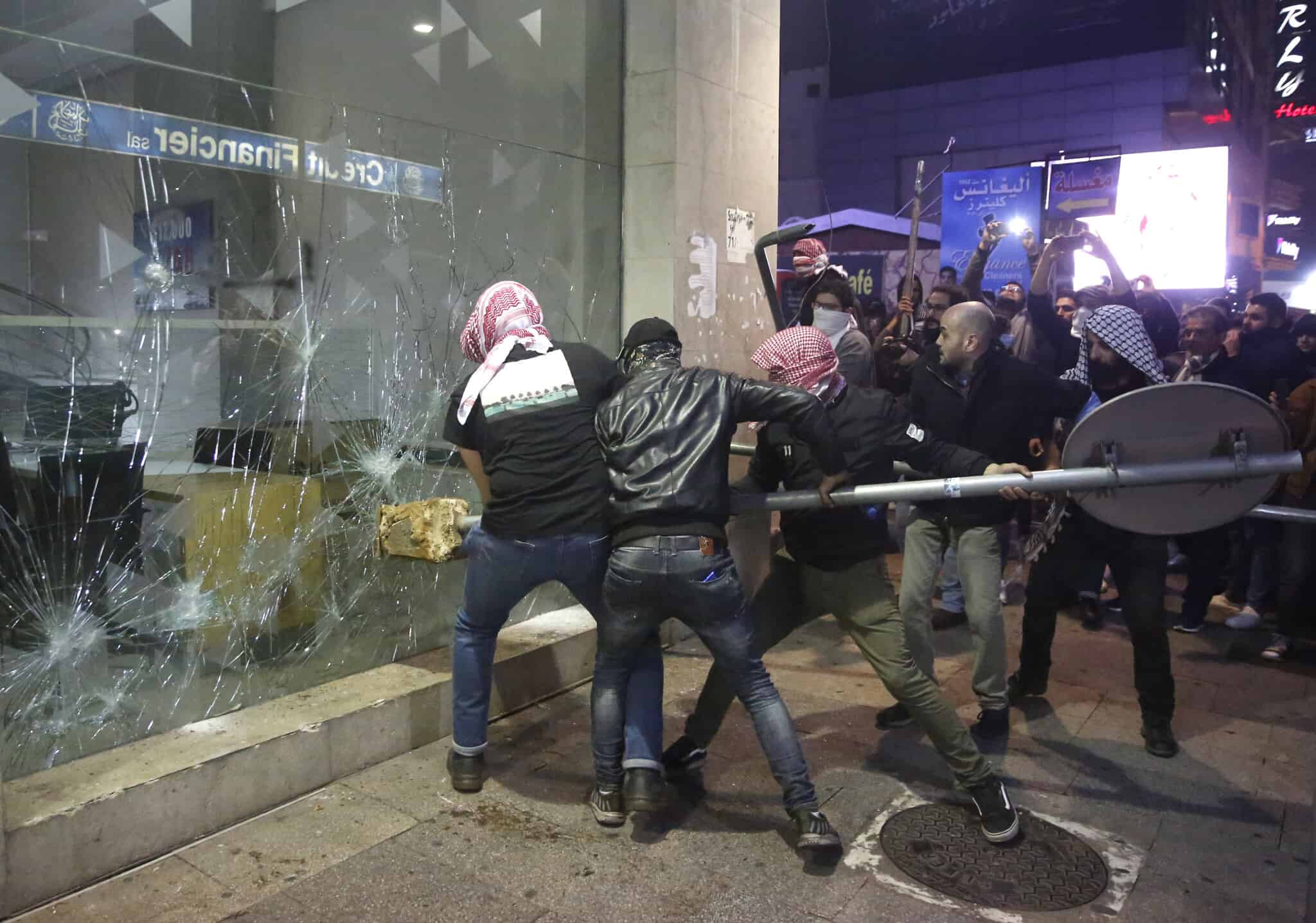
Protesters in Lebanon defied COVID-19 curbs and took to the streets of Tripoli, the country’s second-largest city on Monday, April 27. Anger over the country’s dramatic currency crash that has caused the cost of living to skyrocket boiled over into violent clashes between civilians and security forces that left one protester dead and over 50 army personnel injured, according to Lebanese government and media accounts.

Protester Fawaz el-Samman was allegedly fatally injured by live ammunition fired by security forces to calm an aggressive, stone-throwing crowd on the streets of Tripoli on Monday night. This morning, Samman’s sister announced via Facebook that her brother died from his injuries. 

“My Brother Fawaz Fouad al-Samman, 26, was martyred by his wounds as a result of a live bullet during the rebel clashes with the army yesterday in Tripoli,” Fatima Fouad wrote today, Tuesday, April 28.

A candlelit vigil in front of the Bank du Liban in Hamra, Tripoli in honor of Samman is scheduled to take place at 9 p.m. local time on Tuesday. 

The Lebanese Army released a statement on Tuesday saying 54 troops were injured in the Tripoli riots and other clashes around the country, triggered by Lebanon’s worst economic crisis since the 1975-90 civil war. 

“Army units arrested nine individuals for throwing firecrackers and stones at the residence of MP Faisal Karami and at soldiers deployed in the area [of Tripoli], for triggering chaos and for torching three banks and their ATMs,” the statement said.

Witnesses and local media report security forces used live ammunition, tear gas, and rubber bullets to try and disperse participants who in turn threw rocks, Molotov cocktails, and blocked roads with burning tires. 

“Some protesters also torched an army vehicle, which prompted troops to fire in the air and throw tear gas to disperse the demonstrators,” the state-run National News Agency said. 

What appears to be gunshots can be heard in a compilation of video footage from Tripoli showing hundreds of people running through streets cloaked in thick smoke amidst burning buildings, shared by Sky News Arabia’s Lebanon correspondent Salman Andary. 


Banks were a major target for protesters’ anger and several were still ablaze on Tuesday morning, prompting the national banking association to close banks in Tripoli until “the return of the security.” 

The value of the Lebanese pound plunged even further over the weekend and is currently trading at a black market rate of 3,800 pounds to the dollar, while the official exchange rate remains at £1,507. The currency devaluation has sent the price of food soaring, while the deeply indebted country’s liquidity crisis has been further exacerbated by the nationwide COVID-19 lockdown. 

Monday’s outpouring of discontent was not limited to the impoverished north, and security forces trying to clear blocked roads across Lebanon were reportedly met with fierce resistance. In the capital Beirut, enraged residents used a Molotov cocktail to torch a bank in the suburb of Ras el-Nabaa in the early hours of Tuesday morning.  

Protests are likely to continue over the coming days, in spite of the threat of COVID-19 and violent tactics employed by security forces as there is no end in sight to Lebanon’s spiraling economic crisis.


Read also: Lebanon: Living Conditions Supercede COVID-19 Crisis, Protests Reemerge

Israel Continues Foreign Incursions, Demands Compensation From Palestine

On April 27, an Israeli court held the Palestinian Authority (PA) liable to pay $150 million to Israeli families who lost family members during the second Palestinian uprising in the 2000s. The court in Jerusalem decided that the sum will be deducted from tax revenue that Israel collects “on behalf” of the PA.

As the impoverished Palestinians continue to struggle to contain a local outbreak of the COVID-19 virus, Israel will now unilaterally take much-needed funds away from the PA. Justifying the decision with rhetoric calling Palestinians terrorists and denouncing their desperate acts of violence, Israel itself continues its structural and sustained aggression against countries in the region.

Love thy neighbor

While Israel demands compensation for its victims, the country continues to attack targets in its feeble, impoverished neighbor, Lebanon. The Lebanese are struggling with three spiraling and interconnected crises that threaten the country’s health, economy, and political system. But like the Athenians besieging Melos in antiquity, the Israeli justification for its actions boil down to “the strong do what they can, and the weak suffer what they must.”

Israel continues to casually bomb its neighbor two decades after the Israeli army withdrew from Lebanon, leaving behind torture camps and untold destruction. As the Israeli court demanded compensation for Palestinian aggression, Israel continues to send drones and fighter-jets into Lebanese airspace with impunity.

The Israeli air force, at its own discretion, bombs targets in Syria and Lebanon. Any target deemed problematic can result in a breach of Lebanon’s airspace, making a mockery of national sovereignty. Israel appears to be completely detached from the rules that govern the global community of nations, with respect to sovereignty and what constitutes an act of war.

Colonialism and Apartheid

The righteous indignation that led the Jerusalem court to rob the PA of $150 million of its desperately-needed tax revenue seems incredulous in the face of Israeli hostility towards its occupied population. At the same time, the country is waiting for the “nod” from the US to invade the West Bank and annex large swaths of it.

Similar to colonial states in the 19th century, Israel takes territory and chases away native people to allow its settlers to expand and multiply. The crippling blockade on the West Bank and Gaza means it keeps its occupied people poor and desperate, taking any aggression from them as justification for increased repression.

As long as the US continues to back Israeli impunity, the Palestinian people will continue to suffer from a slow and calculated cultural genocide. Currently, farming villages are being cut off from water sources as Israeli defense forces eye the West Bank’s eastern borders as new space to expand into.

Double standards

While Israel continues to accuse Iran of secretly developing nuclear weapons, Israel’s own hidden nuclear program remains one of the few nuclear programs in the world that is not inspected by the International Atomic Energy Agency. While any news of Iranian or North Korean steps toward nuclear proliferation ends up on front-pages of newspapers, Israel again enjoys unprecedented impunity.

There is no country in the world that could indiscriminately attack targets in neighboring countries. There is also no country where nuclear weapons are allowed to be built outside of international conventions and obligations. In the 21st century, there are no more colonial states where “natives” are chased off their lands at gunpoint. Only in Israel are these breaches of law and convention permitted.

While the American public appears to support Israel out of religious convictions and Europeans continue to turn a blind eye out of sympathy over the atrocities committed during the Second World War, Israel’s impunity is not good for the world, and it is not good for Israel itself. The fewer the restrictions on Israeli hostilities, the more they are encouraged to continue.

Israel wants to be recognized as a legitimate country by its neighbors, perhaps it should start acting like one.


Read also: US to give $5 Million in COVID-19 Aid to Palestine After Years of Cuts