Easter in the Time of Coronavirus

As Passover celebrations wrap up and Muslims begin preparing for the holy month of Ramadan, Christians around the world are experiencing a very different Easter this weekend, in the time of coronavirus. 

The holiday, which celebrates the death and resurrection of Jesus Christ, usually draws large crowds of worshippers throughout the Easter weekend. 

This year, St. Peter’s Square in Vatican City will be eerily quiet, with Mass canceled due to Italy’s deadly coronavirus crisis. The pope will instead conduct Easter services via video stream from an empty St. Peter’s Basilica.

As in Italy, traditional Easter processions have been canceled in Spain and throughout Europe, as the death toll from COVID-19 continues to rise throughout the continent. 

“Easter is one the most popular festivities for Catholics here in Spain. For Easter you would have large crowds here waiting to see the procession coming out of the Church. But this time, the doors of all churches in Spain will remain closed,” Madrid-based journalist Jaime Velazquez told Euronews.

In majority-Christian countries around the world, many families, religious or not, take the opportunity to gather together over a long weekend, but coronavirus has put an end to that this year. Authorities are instead strongly discouraging non-essential travel and reminding people to respect social distancing practices. 

Yet, as with all other aspects of life, people are still finding ways to mark Easter in the time of coronavirus. 

Family camping trips or Easter feasts are being replaced with video conferences. Churches large and small are live streaming or pre-recording Mass so devotees can receive the word safely, in their own homes. 

Chocolate rabbits are immune to COVID-19

One Easter tradition that even a global pandemic cannot stop is that of the Easter Bunny. Rabbits, feted for their fertility, are associated with Easter as a symbol of new life. In many countries, children are told that the Easter Bunny goes from house to house to deliver chocolate Easter eggs, another symbol of rebirth.

On April 6, New Zealand Prime Minister Jacinda Ardern reassured the nation’s children that the Easter Bunny and Tooth Fairy would still be able to visit despite the Pacific nation’s COVID-19 lockdown.  


Video credit: Radio New Zealand


 A fake letter, purportedly issued by South African authorities and offering the Easter Bunny a quarantine “egg-semption,” has been making the rounds on social media. Sources revealed the letter as a hoax, but it brought a smile to many who were left feeling disappointed that they will not be able to enjoy quality time with their families this Easter.


Meanwhile in the United Kingdom, chocolate makers who had to close their doors three weeks ago due to COVID-19 containment measures are reporting above-average Easter egg sales, thanks to online orders.  

“As it turns out, we’ve sold more Easter eggs than last year,” said Angus Thirlwell, head of high-end UK chocolate retailer Hotel Chocolat.

“Demand is four times higher than average – and we have received approximately one million visitors to our site this week,” Thirlwell added.

Sales of Easter confectioneries in the UK are down by 17%, US market researchers IRI report. There is still time for those figures to improve as supermarkets scramble to meet the unprecedented demand for online orders and home delivery. 

Special COVID-19 Easter confectioneries, such as bunnies sporting face masks, have also brought a smile to those downtrodden by the spectre of the coronavirus pandemic.

US Diplomat: Threat to US Troops in Iraq Still High, but ‘Competent’ New PM a Good Partner

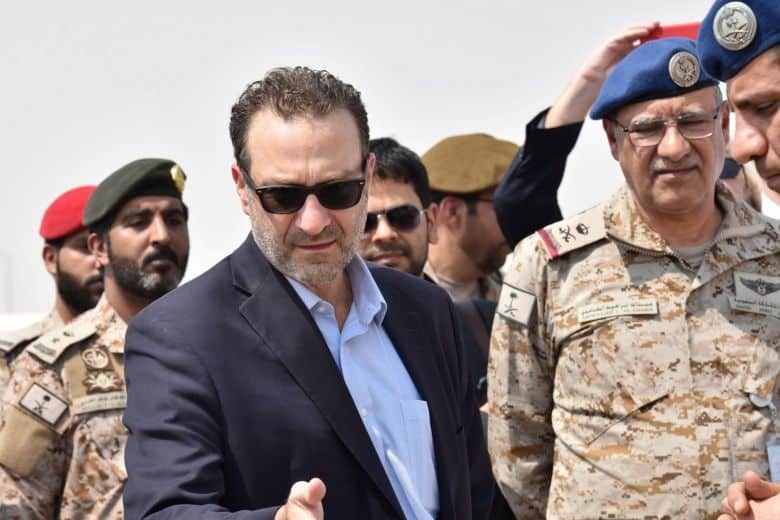
US Assistant Secretary for Near Eastern Affairs David Schenker opened the broad-ranging press conference, by reconfirming the United States commitment to providing both security and COVID-19 assistance to Iraq. 

Schenker contrasted US assistance with Iran’s “counterproductive” meddling in neighboring Iraq’s internal politics, stating, “we are committed and longstanding partners to Iraq. Our support is not a PR stunt and our generosity is unmatched.” 

During the conference, Schenker commented on Lebanon, Syria, and Yemen, but questions on Iraq dominated the discussion–notably the new Prime Minister Designate Mustafa al-Kadhimi, COVID-19, and the security situation facing US troops, following rocket attacks near Basra on April 6. 

US Appraisal of Prime Minister-Designate 

On Thursday, April 9 Iraqi President Barham Salih announced Kadhimi as the country’s third prime minister-designate in less than a year following Adnan al-Zurfi’s failed attempt at forming a government. 

Kadhimi, a former Iraqi National Intelligence Service chief, was tapped to try his hand at forming a government after al-Zurfi resigned, citing domestic and foreign issues as the reason for his ill-fated tenure as prime minister. 

Schenker echoed al-Zurfi, lamenting that Iranian meddling had prevented the previous prime minister from forming a government. 

“If I was an Iraqi, I would be furious at the role that Iran is playing and the role that Iran proxies are playing,” Schenker quipped. “If it’s a defeat for anybody, it’s a sad defeat for the people of Iraq that Zurfi did not get a chance after being designated to present his slate of ministers to the COR, the Council of Representatives.”

Iraqis took to the streets in November 2019 and in bloody protests called for a change of government and greater political leadership, but Iraq’s political and socio-economic crisis has only deepened since former prime minister Abdul Mahdi’s ouster. 

Kadhimi now has 30 days to try and achieve what his two predecessors could not–to build a cabinet acceptable to the 329-member COR and a frustrated Iraqi populace.

The new prime minister-designate will need to manufacture a level of political cooperation that has been elusive so far, but is badly needed as the weight of COVID-19, in conjunction with ongoing socio-economic challenges, weigh heavily on Iraq. 

Schenker was positive about Kadhimi’s selection and praised his work at the Iraqi National Intelligence Service, saying its performance improved markedly under his leadership. The assistant secretary also pointed to Kadhimi’s background in human rights and journalism, describing him as “impressive in his own right.”

“We’re looking for a government that we can work with that will be responsive to the legitimate demands of the people of Iraq, a government that is committed to reform, a government that wants to fight corruption, a government that values Iraqi sovereignty,” Schenker explained.

“And if he [Kadhimi] is an Iraqi patriot, which he appears to be, and is going to be fighting for reform against corruption and for Iraqi sovereignty, as the Iraqi patriot that he is, then this is something that’s also going to create problems for Iran, undoubtedly,” he said.

While those traits could create problems for Iran, they suit US interests, the assistant secretary revealed, saying Khadimi’s leadership “would be great for Iraq, and I think it would be great for our bilateral relationship.”

Security Threat

Local police and witnesses reported that three Katyusha rockets landed near the Burjesia residential area, that houses foreign workers and oil company offices west of the oil-rich city of Basra, on April 6. No one claimed responsibility for the attack, which came just one week after President Donald Trump accused Iran of planning a “sneak attack” on US assets, possibly in Iraq. 

Military bases and the US Embassy in Baghdad are regularly shelled, and Schenker confirmed the threat to US forces “continues to be significant.” He also noted that America took Iraqi shia paramilitary group Kataib Hizballah’s ceasefire declaration “with a grain of salt.”

“We would of course welcome [the declaration] if Kataib Hizballah did not attack us, but we still see a significant threat to U.S. personnel and forces, military forces in Iraq and that persists,” the diplomat said.

There has been a significant draw down of US and other foreign troops stationed in Iraq in recent weeks due to the regional coronavirus outbreak, and because the personnel are required to join the COVID-19 fight back home in countries like the US and France, which are hard-hit by the virus. 


Washington Refuses to Approve Algerian Ramtane Lamamra as UN Libya Envoy

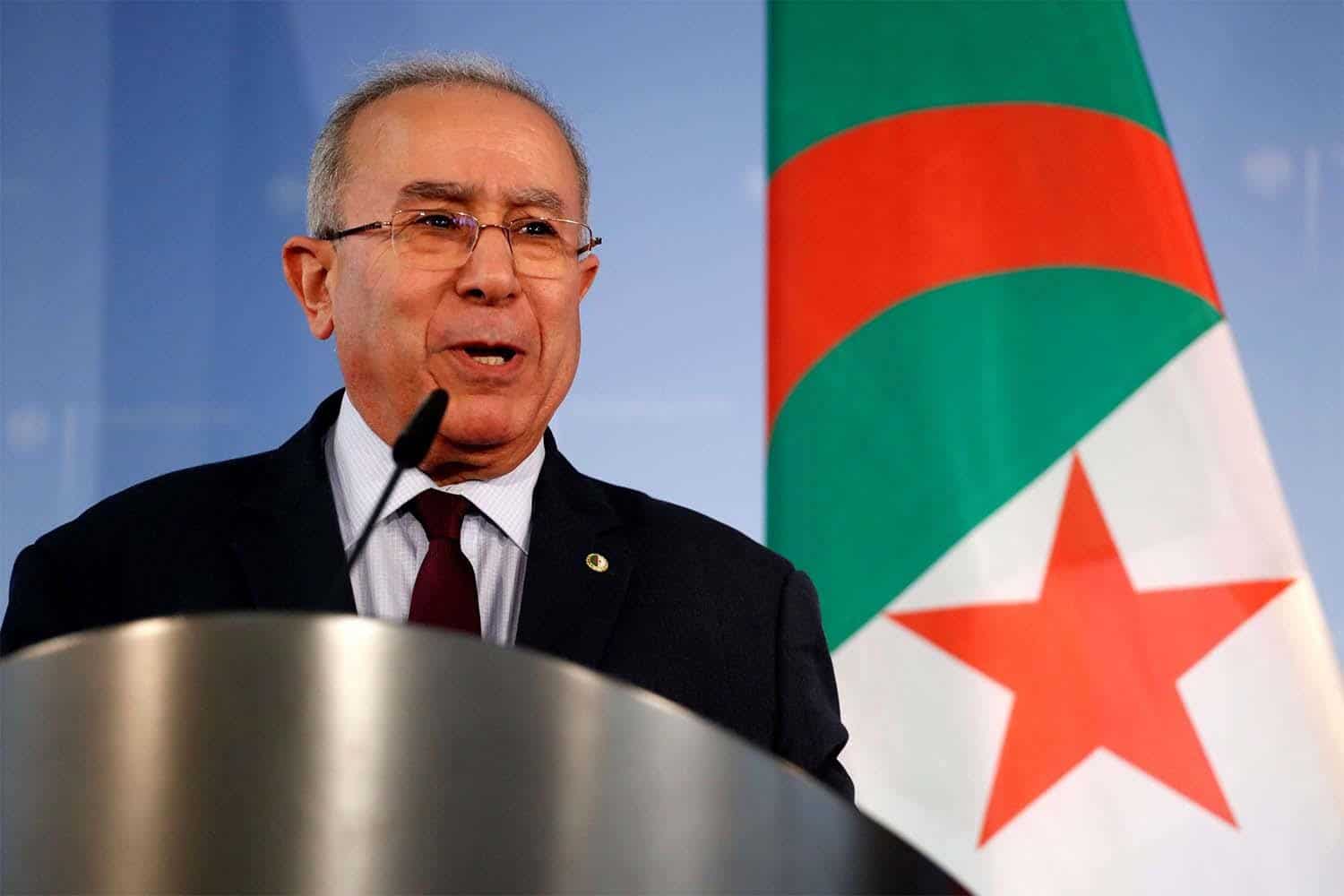
The US stalled a UN Security Council vote to appoint Algerian diplomat Ramtane Lamamra as the new special representative and head of the United Nations Support Mission in Libya (UNSMIL). Secretary-General Antonio Guterres nominated Lamamra to replace Ghassan Salameh, who served in the position from 2017 to 2020. 

Lamamra is known as a peacemaker in the region and worldwide, including in his success nurturing positive international relations with Washington—but this was not enough to secure the only remaining member state’s approval. All 14 other Security Council member states favored the appointment, but a council vote can be vetoed by any of the five permanent members–the US, Russia, France, the UK, and China.

The former Algerian Minister of Foreign Affairs (2013-2017) served as deputy prime minister in the post-Bouteflika transitional government. Lamamra was also the African Union Commissioner for Peace and Security from 2008 to 2013 and worked as an ambassador in Ethiopia, Djibouti, and the US.

Lamamra has acted as a mediator in many African conflicts, particularly in Liberia, working closely with the United Nations and the African Union.

Secretary-General Guterres started looking for a new UN envoy to Libya after Washington rejected Lamamra as a potential candidate, a diplomatic source told the French Press Agency (AFP).

US Hesitation

US tension with Russia allegedly influenced Washington’s rejection of Lamamra, with a diplomatic source claiming the Algerian diplomat is “very close to Moscow.”

In recent weeks, the US administration came under heavy criticism from democratic members of the US Senate. During a hearing in February 2019, lawmakers sitting on the Senate Foreign Relations Committee called on the US administration to play a more assertive role in Libya and put pressure on the warring parties to return to the negotiating table. 

Lawmakers also questioned Trump’s reluctance to call out Russia’s disruptive role in the Libyan conflict through the Wagner Group, a mercenary group believed to have close ties with the Kremlin.

The US’ reluctance to play a decisive role in the Libyan conflict over the past three years cast a cloud of doubt and uncertainty about its position on the conflict.

The US State Department has repeatedly stressed its recognition of Libya’s Government of National Accord (GNA) and support for the UN-led political process. A phone call that President Trump held with Libya’s now retired Major General Khalifa Haftar in April 2019, mere days after he launched his offensive to take Tripoli, caused confusion and uncertainty regarding Washington’s stance on the Libyan conflict.

After significant US involvement in Libya during the Obama administration, the US has taken a back seat, with Trump showing no signs he will make Libya a top priority in his foreign policy.

“I do not see a role for the United States in Libya,” Trump said in his 2020 State of the Union address. “It’s also not our job to serve other countries as a law enforcement agency.”

Salameh, the former UN envoy to Libya, announced his resignation “for health reasons” on March 2, as the political process in neighboring Algeria reached a dead end.

Since his appointment in 2017, Salameh tried in vain to persuade the Libyan parties to unify state institutions and organize elections to end the country’s divisions.

Libya descended into chaos after the fall of Muammar Gaddafi’s regime in 2011, and civil war has raged on since 2015.

The GNA, based in Tripoli, and Haftar’s Libyan National Army (LNA), in the east of the country, are vying for control over the oil-rich North African state in a conflict that has crippled Libya and displaced hundreds of thousands of people.


Read also: Former Libyan Prime Minister Mahmoud Jibril Dies After Contracting COVID-19

Will Structural Corruption at FIFA Impact Qatar 2022 World Cup?

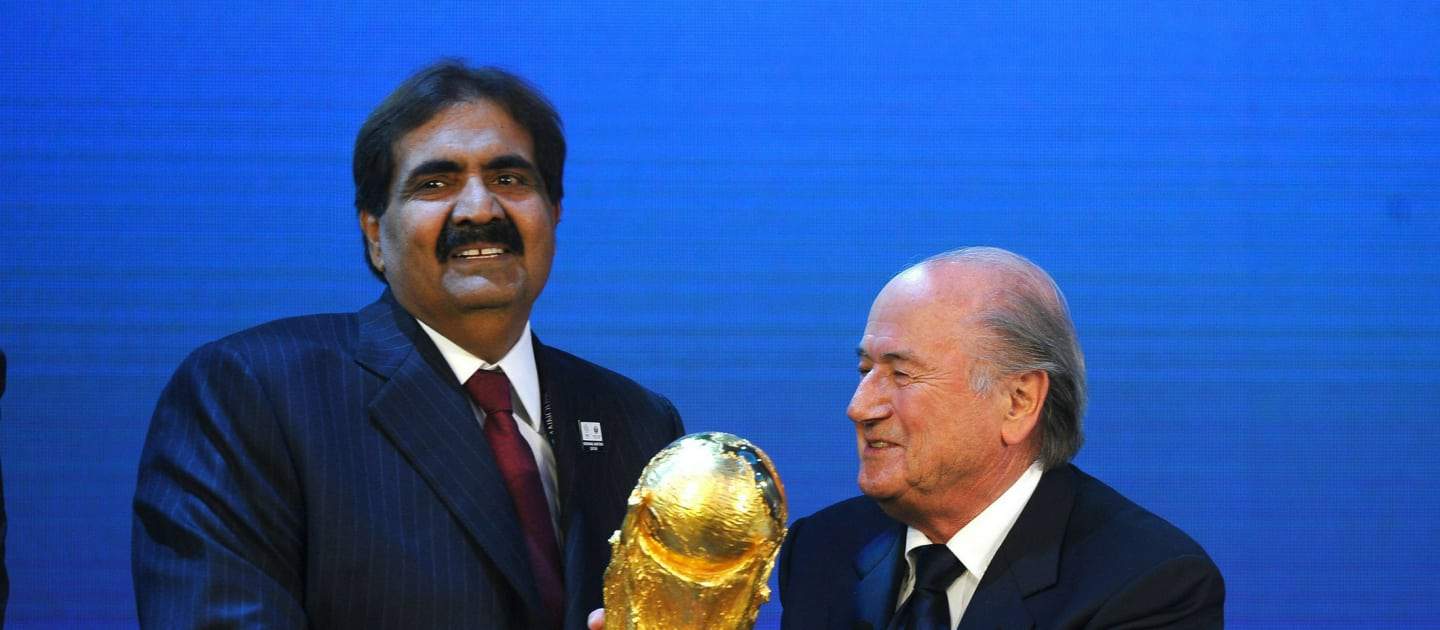
In 2010, then president of FIFA Sepp Blatter said “the Arab world deserves a World Cup. They have 22 countries and have not had any opportunity to organize the tournament.” While that argument might appear reasonable, the reason behind his comments was not. Then, in 2017, the world had its first glimpse into the shady dealings that had become inherent to FIFA’s modus operandi.

Considering the enthusiasm for football in MENA countries such as Egypt and Morocco, the prospect of an Arabophone country hosting the world cup is not a far-fetched fantasy. However, Qatar submitting a winning bid for the FIFA tournament seems more like a fan-fiction plotline than reality. In the tiny Gulf-state of Qatar, football-culture is limited to its national team and multi-billion dollar purchases of elite European clubs like Paris Saint.-Germain or popular sports channel beIn Sports.

In recent decades FIFA corruption has become so systemic that books and social media posts continue to explore the topic, with activists even calling Blatter’s head. Questionable decisions such as the  controversial move to host the World Cup in Russia had revealed the effects on the corruption, but no evidence existed to prove the accusations.

In December of 2010, Qatar beat the United States’ bid to host the 2022 World Cup. Although the announcement raised many eyebrows, no one would have predicted the move would change football’s governing body forever.

Following the announcement, US authorities started to investigate FIFA practices. The findings of the 2017 investigation showed that FIFA was not only corrupt, but that it had barely attempted to cover it up. Several senior executives faced charges, with a number of FIFA officials fleeing to countries without extradition-treaties with the US to avoid prosecution.

What became clear was that FIFA was not masterfully manipulating the system, but that national governments had been reluctant to investigate the organization as each country desperately wanted to stay within FIFA’s good graces. Only the US did not have to curry favor with the sport’s governing body and, as such, was able to quickly uncover the far-reaching institutional corruption within it.


Recent revelations

That body of evidence was further expanded on as of Monday, April 6 2020. New York prosecutors announced they had unsealed an indictment showing, in detail, how top executives had ensured that Qatar won its bid through bribery and underhanded dealings.

Two top executives in Latin-American football received bribes to sway their vote towards Qatar, the indictment revealed. Jack Warner, the former president of Concacaf, which represents North America and the Caribbean, was charged in 2017 but is again in the spotlight as the new revelations show he received $5 million in bribes to vote for Russia’s 2018 bid.

The money for the bribes came through a network of ten ‘shell companies’ or fake companies that only exist on paper. These fake companies were registered in a variety of locations throughout the world and were used to hide the original source of the money.

In 2017, Alejandro Burzaco, CEO of a sports marketing company involved testified that the three top executives had received bribes but no concrete evidence was available. Now the evidence is in the open. FBI assistant director William Sweeney said “the defendants and their co-conspirators corrupted the governance and business of international soccer with bribes and kickbacks, and engaged in criminal fraudulent schemes that caused significant harm to the sport of soccer.”

Besides the rigging of the bids to host world cups, the indictments also targeted corruption in the awarding of highly-coveted television distribution-rights. Two former executives for 21st Century Fox were charged with bribing officials to ensure rights were given to their company. A Spanish national stands accused of paying bribes to gain the broadcast rights to world cup qualifying matches in the Caribbean.
An unfair game

Both the 2017 investigation and Monday’s expose revealed much about the underhanded nature of the top governing body of the world’s favorite sport. Allegations of bribery touched each allocation of major tournaments and the losing bids will have had their suspicions confirmed.

Without bribery, the 2010 world cup might have been hosted in Morocco, but South Africa allegedly ‘bought’ the votes, while the 2018 World Cup could have been held in traditional football countries like the UK, Portugal, and Spain or the Netherlands and Belgium.

FIFA’s corruption goes so deep that even Gianni Infantino, who had promised to “clean up FIFA”  after succeeding Blatter as FIFA president, was exposed in the revelations of the 2016 Panama Papers.  As director of legal services at UEFA, he oversaw several shady deals selling broadcasting-rights to South-American companies. Shell companies would buy the rights for a low price and then sell them on for a large profit to actual broadcasters.

Bribery and underhanded dealings are not the only way that money is corrupting the ‘beautiful game’ (jogo bonito) as Brazilians call it. While football has traditionally been a sport for the working classes, it has transformed into a corporate monstrosity over recent decades.

Growing TV revenues from the globalization of the game have streamed to fewer and fewer clubs, ensuring a monopoly on success for Europe’s biggest clubs. While in the past Europe’s top professional cups were won by clubs from the Netherlands, Denmark or Portugal, now these smaller countries stand little chance without the financial firepower of the continent’s elite.

An elite club like Manchester United has revenues larger than the entire Portuguese or Dutch league. When a good young player emerges in Lisbon or Rotterdam, he is bought quickly by an elite club, often before they reach 18. At their new club they join a squad of forty other talented youngsters who have been tempted by the mind-blowing salaries these large clubs can offer.

Even in the exceptional situation where a smaller club has one successful year, like Amsterdam’s team of talented youth did last year, the next season they will have to start from scratch as all talent will have been plucked away by the sport’s elite. Teams outside of Europe similarly see their most talented players leave to end up sitting on the bench at Europe’s top clubs.

The sport is unfair by design, as the European top leagues have realized. The biggest clubs in the competition have repeatedly threatened to start their own ‘super league’ in order to get concessions and more control over UEFA, Europe’s governing body of the sport in the same way that the Premier League has taken control of the game from the Football Association in England. With the continent’s elite clubs now having to approve all major changes to the league, there is no chance the game will become more fair in the near future. 

No consequences

That corruption and money dictate the inner working of international football has become clear. Billion-dollar club owners and corrupt executives have led to a disfiguring of the beloved pastime for millions around the world and little can be done to stop it save for the occasional top executive getting arrested.

This unfairness is unique to football, unlike in American professional sports like basketball where leagues apply stringent measures to ensure fairness. Young talent is given incentives to stay at the team where they started, maximum salary expenditures limit the emergence of unbeatable elite teams, while strict salary caps and trade requirements limit the bidding wars that have resulted in football players worth several hundred million euros.

In football, however, life goes on as if nothing happens. Modern-day slave labor continues to be used to construct stadiums in Qatar, even as the country’s ‘valued’ citizens are in lock down. The World Cup in 2022 is unlikely to be moved to a new location and chances of world cup bidding becoming more transparent are slim.

Because football is so dear to so many, great abuses can be committed within its organizational workings. As long as billions flow into the coffers of elite clubs, sponsors, and executives, there is no incentive to change anything. Only because of the US’ relative lack of dependency on FIFA have these revelations come out and football fans around the world can only cheer for the US as they are doing what football-loving countries have been too fearful to do.

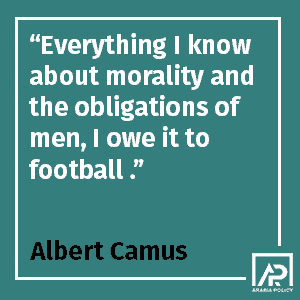
Monday’s indictments become part of a larger oeuvre of frustration within professional football. As the sport’s dirty laundry is aired, awareness of the unfair nature of football’s governing bodies increases. Only through a public outcry of the sport’s customers can change be realized. It would require great effort and persistence to change the entrenched powers involved in the game. But, as Pelé famously said, “the more difficult the victory, the greater the happiness in winning.”


 

Read also: Qatar Airways CEO: ‘We Are Not Taking Advantage’ of COVID-19

Yemen Records First COVID-19 Case, Houthis Reject Ceasefire

The Yemeni National Emergency Committee identified the war-torn country’s first COVID-19 case in the oil-rich southern province of Hadhramout on Friday April 10. 

The patient, from the small port city of Ash Shihr, “is stable and receiving medical attention,” according to the committee’s Twitter. They provided no further information on the case.  

The international community has grave concerns that COVID-19 will have a “catastrophic” impact on Yemen.  Even prior to the first COVID-19 diagnosis in the conflict-stricken country, The World Health Organization warned that Yemen’s coronavirus “preparedness must be stepped up.”  

The primary barrier to improving preparedness for a disease outbreak in Yemen is the bitter civil war that has consumed the country for the past five years. 

The United Nations in Yemen estimates 80% of the population, or some 24.1 million Yemenis, require aid and protection, making the country’s devastation the largest humanitarian crisis in the world. The war has pushed the health system to “the brink of collapse,” the UN states. Aid agencies regularly report that Houthi rebels interfere with their efforts to support the needy.

On April 8, the Saudi-led coalition announced a unilateral, comprehensive two week ceasefire starting from Thursday April 9. According to spokesman Colonel Turki al-Malki the truce was called to allow for discussions about the coronavirus response and with a view to recommencing stalled UN-sponsored peace talks.

The US State Department’s Assistant Secretary for Near Eastern Affairs David Schenker welcomed Al-Malki’s announcement and encouraged the Houthis to follow during a special briefing on Iraq and the Middle East.  

“They [Houthi rebels] continue to obstruct humanitarian deliveries, to skim from these deliveries to fund their own war effort. This is just exacerbating the pain and suffering of the Yemeni people, and so we encourage them to, one, join the ceasefire; and two, to end their problematic humanitarian practices,’ the US top Middle East diplomat said on April 9.

The Houthi rebels have so far rejected the coalition ceasefire, and instead submitted their own roadmap to peace in Yemen to the United Nations. 

“We will continue to fight and target their military installations and industrial sites since they continue with the siege. So we don’t consider it to be a ceasefire,” Houthi spokesman  Mohammed al-Bukhaiti told Al Jazeera on April 9.

“There has to be a total end of the siege or else the war will continue,” he said. 

A day earlier, fellow rebel spokesman Mohammad Abdulsalam revealed on Twitter the Houthi’s had provided their own vision for peace to the UN. 

“[Our proposal] will lay the foundations for a political dialogue and a transitional period,” Abdulsalam tweeted on April 8.

The possibility of a bilateral truce still seems unlikely although it was fleetingly discussed at the end of March, following UN Secretary General Antonio Guterres’ call for a worldwide truce in the face of the coronavirus pandemic. 

It remains to be seen if the discovery of COVID-19 in Yemen will galvanise the recalcitrant Houthi militia into agreeing to a ceasefire or if they will continue hostilities in spite of the coronavirus threat. 


Read also: One Step Closer to Peace? Saudi-Led Coalition Announces Yemen Ceasefire


Guterres Calls for Unity in “The Fight of a Generation”

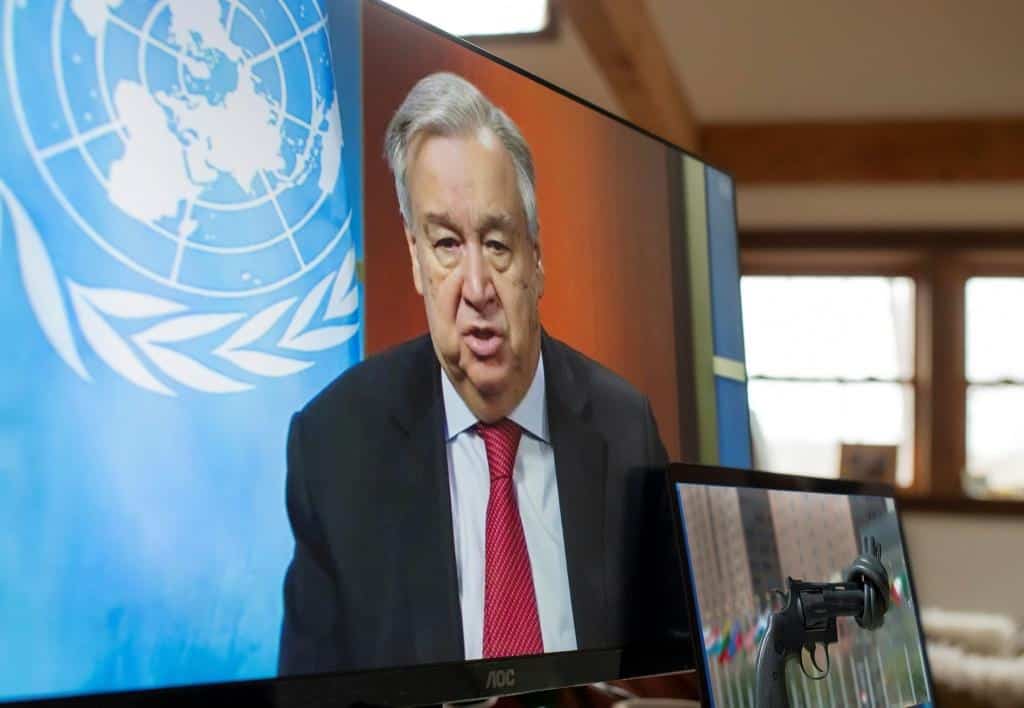
Put ‘unity’ back in the ‘United’ Nations, the UN Secretary General urged the Security Council (UNSC) members present at an April 9 video-conference. 

“The engagement of the Security Council will be critical to mitigate the peace and security implications of the COVID-19 pandemic,” Guterres said, as the Security Council remains divided over a united response to the global outbreak. “The world faces its gravest test since the founding of this organization,” the Secretary General began his address.

Germany and nine non-permanent members of the council called for the meeting out of frustration with the lack of a coordinated global response to the pandemic. Germany pitched the meeting as an “international peace and security issue” to fit within the UNSC’s mandate. Russia, China, and South Africa, however, disagreed that the Council had any authority on what they described as “health matters.”

The Secretary General attempted to avoid any such discussion about the Council’s mandate in his speech at the onset of the conference. 

“While the COVID-19 pandemic is first and foremost a health crisis, its implications are much more far-reaching,” he said.

Guterres emphasized the holistic nature of the crisis: “We are already seeing its ruinous social and economic impacts, as governments around the world struggle to find the most effective responses to rising unemployment and the economic downturn.”

The UN Security Council is made up of five permanent members, the major nuclear powers China, France, Russia, Great Britain and the US. The council also features ten elected rotating non-permanent members. Currently Belgium, the Dominican Republic, Estonia, Germany, Indonesia, Niger, Saint Vincent and the Grenadines, South Africa, Tunisia and Vietnam make up the non-permanent members of the Council.

The non-permanent members can vote and propose resolutions, but only the five permanent members have veto power, meaning all resolutions must be unanimously approved by them.

Competing proposals

The meeting featured two draft resolutions supported by different blocs within the council. The non-permanent members of the council, led by Tunisia, called for a global approach to combat the pandemic through “coordinated and united international action to curb the impact of COVID-19”. France, meanwhile, proposed a “humanitarian pause” to all ongoing military conflicts, with support from the permanent members of the Council, Britain, China, France, Russia and the US.

In essence the permanent members are pushing a resolution that does not infringe on their national sovereignty, often a sticking point in the council. The non-permanent members called for the opposite by proposing a resolution that binds all nations to a joint approach. The five permanent members would have to sacrifice some  personal decision-making to a supranational treaty, something they actively resist.

The issue is highlighting the use of the Security Council by its permanent members to dictate policy to others while being able to retain national sovereignty for the nuclear powers. “This is the reason for the UN to exist,” Guterres said to the council as China and the US continued to argue about the origin of the virus.

The UN General Assembly’s 193 member-states have already unanimously adopted a resolution calling for “cooperation”, but an ambassador to the UN told France24 that the Security Council was “missing in action”.

The Security Council meeting may have been a frustrating affair for Secretary General Guterres. It appeared his appeal had fallen on deaf ears as the world’s most powerful nations showed little willingness for cooperation in any practical way.

Even Guterres’ most basic request was ignored: “The engagement of the Security Council will be critical to mitigate the peace and security implications of the COVID-19 pandemic. Indeed, a signal of unity and resolve from the Council would count for a lot at this anxious time.”


Read also: UN Secretary General Calls for Domestic Violence ‘Ceasefire’

Tentative Oil Market Peace-Agreement Hinges on G-20 and Mexico

In an extraordinary video conference, the Organization of the Petroleum Exporting Countries (OPEC) has met with major non-OPEC countries to find a resolution in the ongoing oil-price war.

The meeting came in response to the Saudi-Russo disagreement over production cuts during an unprecedented slump in demand caused by the COVID-19 pandemic.

After a series of meetings in March failed to find a resolution between major oil producers Saudi-Arabia and Russia, both countries increased oil production,plummeting oil prices. With no end in sight for the current global health crisis, oil producing nations reconvened to find a solution before oil prices fall into single digits, as some experts have warned could happen.

Russia and Saudi-Arabia were finally able to agree on a production cut of 10 million barrels a day. This constitutes the largest production cut in history, but may not be enough to stem the tide. The two rivals pledged to ensure half of the cut would be fulfilled by Russia and Saudi-Arabia alone. In 2019, before production increases started, Russia and Saudi-Arabia both produced roughly 12 million barrels a day, meaning the cut would reduce oil production by less than 25% for the oil giants.

The agreement is anything but set in stone. During the night-long video conference, the Mexican delegation voiced its objections about the size and length of the cut. The tentative draft agreement has now carried into a Friday April 10 showdown at the G-20, where an agreement to solidify global participation must include Mexico’s approval in order to pass. But Mexico is not the only country that could oppose production cuts at the G-20.

The United States has indicated it disapproves of participating in production cuts, with its shale-gas industry already heavily in debt and struggling to survive. On Wednesday, April 8, US president Donald Trump said “Obviously for many years I used to think OPEC was very unfair, I hated OPEC. You want to know the truth? I hated it. Because it was a fix.” 

The president appeared to prioritize US employment in the shale-gas industry, saying “We have a tremendously powerful energy industry in this country now — No. 1 in the world —and I don’t want those jobs being lost.”

Too little, too late?

Even if the production cuts agreed upon on Thursday are joined by similar cuts by G-20 countries, the cuts might not be of the scale required to reverse oil price trends.

The current agreement would cut global oil production by roughly ten percent and would limit but not halt the estimated 14.7 million barrels of excess volume to be produced in the second quarter of 2020.

Even with enthusiastic support by the G-20, the cuts can only hope to bring excess volume down. With demand remaining at rock-bottom, balancing supply without actually producing less than demand would likely not result in major price swings. “This cut is woefully inadequate to stabilize prices into at least the summer,” oil analyst Tom Kloza told CNN on Thursday.

With one agreement signed and another in the balance, there is not much light to be seen at the end of the tunnel. 

The Secretary General of OPEC, Mohammad Barkindo opened the extraordinary Thursday meeting with a warning that is still valid after the agreement.“For the oil market, [the coronavirus] has completely up-ended market supply and demand fundamentals since we last met on March 6. Our industry is hemorrhaging; no one has been able to stem the bleeding,” he said.


Read also: Saudi Arabia Slashes Oil Prices, Boosts Production After Failed OPEC Meeting with Russia

US Senate Moves Away From Zoom Conferencing Over Security Concerns

The US Senate Sergeant-at-Arms Michael Senger, who is responsible for security, stopped short of banning Zoom outright but told Senators to look for more secure alternatives to the popular video conferencing tool, the Financial Times reported on Thursday.   

Zoom is a simple digital conferencing platform that requires no special software and has been around since 2011. Global shutdowns and a huge move towards remote work prompted by the coronavirus pandemic have caused an unprecedented uptick in Zoom users over the past few months.  

The massive jump in users from 10 million in December 2019 to 200 million in March 2020 has come with a series of security concerns. 

Issues such as “zoom bombing,” uninvited users hacking into meetings and bombarding innocent users with inappropriate content, and thousands of video recordings left open on the web for all to see, have increased scrutiny on Zoom. 

As a result, governments and private companies alike have banned the use of Zoom. Inadequate security and privacy protections have also prompted four lawsuits against Zoom, according to technology news site CNET, which is keeping a running tab on Zoom’s security failings. 

Google told workers on April 8 they are now prohibited from using Zoom, saying the platform “does not meet our security standards for apps used by our employees.” Elon Musk’s SpaceX said it dropped Zoom due to “significant privacy and security concerns.”

Taiwanese authorities instructed government employees to abandon Zoom on April 7 and many US school districts have followed suit, banning teachers and students from using the platform to facilitate homeschooling. 

Zoom CEO Eric Yuan has given a number of public apologies as issues have come to light, promising users that the company is committed to improving security. 

“When it comes to a conflict between usability and privacy and security, privacy and security [are] more important—even at the cost of multiple clicks,” Yuan said in an interview with NPR on April 8. 

“We’re going to transform our business to a privacy-and-security-first mentality,” the CEO stressed in an attempt to reassure users. 

It remains to be seen if the tech company can keep up with the new security demands that follow the 1,900% increase in the number of users and added attention from hackers and nefarious users. 

In the meantime, regular users need to judge for themselves if the video-conferencing app is safe or not. 

Associate professor of computer science at Princeton University Arvind Narayanan advises, “There is a tradeoff between security and usability when picking a video-conferencing product.”

“Companies and schools should consider supporting multiple software options, configuring them securely, and educating their users about the risks,” the tech expert explained. 

Read also: US Passes Largest Stimulus Package in History

How Jordan Could Have Prevented a COVID-19 Quarantine

While Jordan receives global attention for proactively handling the COVID-19 outbreak, our country’s current lockdown is, in fact, the result of the government’s failure to take the coronavirus threat seriously from day one. Although the country’s decision to establish quarantine facilities in four- and five-star hotels at the Dead Sea received international praise, the failure to educate our population about how best to slow COVID-19’s spread ultimately forced the government to declare a national curfew on March 21st, with a one-year prison sentence for all who violate the restrictions. 

If the Jordanian government had handled the outbreak proactively, this drastic measure could have been prevented. 

Jordan announced its first confirmed case of COVID-19 on March 2, but the government did not call for any response efforts at that time. Some Jordanians lament the country’s delayed response efforts. “The [government’s] actions should have been more disciplined. It seemed like they were confused when they didn’t take action instantly,” said Aya Jammal Zetawi, a student at Irbid Model School.

On Saturday March 14, Prime Minister Dr. Omar Razzaz announced in a press statement that the Jordanian government would implement a new set of measures to protect citizens against the pandemic. Measures included the suspension of all educational institutions, including nurseries, kindergartens, schools, universities, and training institutes for two weeks, effective March 15. To make up for these school closures, the Ministry of Education implemented an online education program through its national online education website and designated television channels.

The government also suspended passenger flights to and from the country until further notice, beginning March 17.

Passengers on the final flights into Jordan were transferred to four- and five-star hotels near the Dead Sea, for a fully government-funded quarantine. “The Jordanian government was so helpful and provided us with a four to five star hotel for the quarantine period,” said Leen Mohd Bataineh, a Jordanian student who was quarantined upon her return from Nottingham Trent University in the United Kingdom.

Misinformation, not authoritative guidelines, dominated headlines

Not all Jordanians who have potentially carried, been diagnosed with, or suffered from the virus have been so lucky. Minister of Health Sa’ad Jaber claimed on March 15 that Tamer Al-Saudi, a Jordanian man who had recently returned from London, escaped from Prince Hamza Hospital after he was diagnosed with COVID-19. Jaber proceeded to share Al-Saudi’s full name with the public without the man’s consent. The media soon picked up on the story, portraying the citizen as a fugitive from Prince Hamza Hospital’s quarantine facility. Authorities obtained Al-Saudi’s photo from his national ID card.

Al-Saudi denied the allegations, telling the press he was at home when his COVID-19 test came back positive. Neither the hospital nor its medical staff were prepared to care for a patient with COVID-19 and the hospital was dangerously unhygienic, he said. When the hospital was unable to offer appropriately hygienic quarantine conditions, the patient and his doctor agreed that he would self-isolate at home instead, Al-Saudi said.

While some praised the government for its initial virus containment response, this response, combined with media-propagated rumors about the COVID-19-positive citizen who escaped from the hospital, spurred panic throughout the country. Although no official statements were issued about the number of cases in the country, rumors about hidden cases spread rapidly.

Despite this panic, apparent in crowding in grocery stores, few Jordanians took the recommendation to stay home seriously. Instead, most continued to go about their daily lives. This was largely due to the fact that, despite top-down measures meant to contain the virus, public education about COVID-19 prevention was minimal. 

The government eventually declared a nationwide curfew with legal repercussions for violators because of the public’s lack of compliance with social distancing measures. While effective, the state’s quarantine could have been prevented by investing in awareness initiatives from the start. 

While the government did its best to respond in unprecedented circumstances, I hope the country will apply these learnings if forced to respond to a pandemic in the future. In times of crisis, information should take priority over misinformation.


Read also: PLO: Israel Close to Annexing Jordan Valley

European and American Right Wing: Sacrifice the Elderly, Save the Economy

One interesting element of a global crisis is that it reveals people’s true goals. In response to the COVID-19 crisis, organizations, think tanks, and NGOs around the world are proposing their own solutions, based on their advocacy positions before the crisis. 

Environmental groups have announced it is time to link airline bailouts to reducing fossil fuel consumption. Proponents of a universal basic income are claiming this is an opportune time to implement such a measure. Communists are aggrandizing China’s approach and calling for an end to capitalism. The crisis highlights the way these groups think about the world.

The same phenomenon is happening with neo-liberal and conservative groups. The mildest of their statements ask for the resumption of business-as-usual and argue against economically painful lockdowns or structural government support to citizens. They often pose these arguments without explicitly mentioning the goal of these policies: Keep business profitable even if that means a few more infections.

Many mainstream publications and politicians have discussed these issues without revealing a dark wager underway. In essence, it comes down to a simple question: How many more citizens will governments let die in order to keep economies strong? The subtle discussion is occasionally interrupted by the shocking honesty of its proponents. When figures pose the argument openly, reporters relay quotes with disbelief.

Papers across the world gasped when a liberal Dutch celebrity said as much on live television on April 8. Jort Kelder, a proudly snobbish friend of Prime Minister Mark Rutte, had said the unmentionable: “We’re currently saving overweight octogenarians who smoke” he said, adding, “At some point, it’d be good to think about balancing interests. How much economic damage to save people that would certainly have ended up dying within the next two years.”

The comment sparked outrage on social media to which the celebrity responded, “We’re always thinking about health, but should it always be prioritized over the economy?” In Jort Kelder’s view, this is the same argument on everyone’s mind, and he was just one of the few to take the idea to its logical conclusion. The prime minister appears to agree with Kelder, as Rutten chose not to enforce a lockdown in the densely-populated nation.

Economic prioritization in the United States

In the US, conservative political commentator Glenn Beck said: “I’m in the danger zone. I would rather have my children stay home and all of us who are over 50 go in and keep this economy going and working, even if we all get sick, I would rather die than kill the country.” 

For many American commentators on the political right, “the country” is Goldman Sachs and General Electric.

It appears many US conservatives fear that the government giving money directly to citizens will reduce their dependence on their employers. “We don’t want to endanger the employer-employee relationship,” several Republican senators said in opposition to providing direct aid to citizens during the crisis. In the US, people depend on their employers for healthcare and receive little support from the state, and many work more than one job in order to put food on the table and pay bills.

“My message: let’s get back to work, let’s get back to living, let’s be smart about it, and those of us who are 70-plus, we’ll take care of ourselves,” Dan Patrick, the lieutenant governor of Texas, told Fox News as the virus started to spread in the continental United States. “No one reached out to me and said, ‘As a senior citizen, are you willing to take a chance on your survival in exchange for keeping the America that all America loves for your children and grandchildren? And if that’s the exchange, I’m all in,” the politician continued, addressing a country where half of the population cannot afford to see a doctor because they do not have adequate health insurance.

The stance these outspoken commentators and politicians are taking mirrors the stance of politicians hesitant to implement lockdowns: The economy is not here to serve people, people are here to serve the economy. Businesses that face liquidity problems should of course count on help from the government, and stimulus can be effective when applied properly to corporations.

The irony of the outspoken right-wing thinkers is that while they argue against socialist solutions for people, they enthusiastically applaud the trillions of dollars reserved to provide socialist benefits to multi-billion dollar businesses. Giving money with few conditions to failing corporations that cannot cope with even a month of adversity directly opposes the free market concept, where good businesses thrive and bad businesses die off.

If poorly-prepared businesses are allowed a second lease on life, perhaps the people who directly contribute to their success, as customers, workers, and tax-payers who provide infrastructure such as roads for company activities, could receive the same support.


Read also: Trump Urges Syria to Release Kidnapped American Journalist Austin Tice