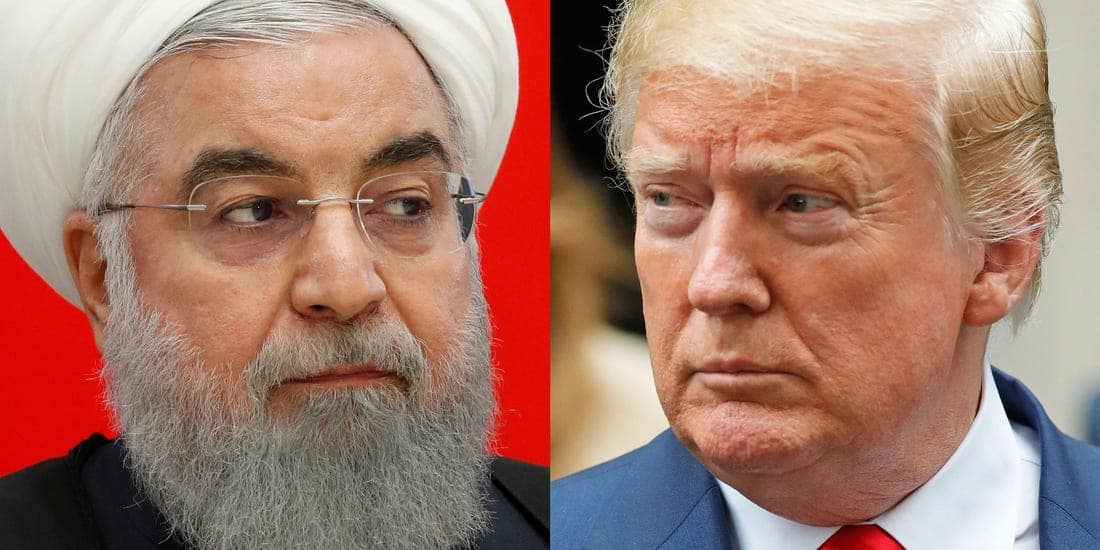
Update: Naval Threats Bring Iran, US One Step Closer to Conflict

A day after Trump told the US navy to fire on any Iranian ships harassing naval forces in the Arabian Gulf, Iran’s Revolutionary Guards (IRGC) chief has instructed his warships to follow suit. During a visit to the strategic Strait of Hormuz, IRGC Major General Hossein Salami said Iran’s navy will respond with “swift, strict, and effective” action against any US vessels it deems threatening. 

“I have ordered our naval forces to destroy any American terrorist force in the Persian Gulf that threatens the security of Iran’s military or non-military ships,” Salami said, while accompanied by IRGC Navy Commander Admiral Alireza Tangsiri.

Iran also summoned the Swiss ambassador, Markus Leitner, who represents US interests in Iran, to collect and transmit a letter reminding the US of their international obligations to freedom of navigation and maritime safety. 

Iranian foreign ministry spokesman Abbas Mousavi told the state-run Islamic Republic News Agency (IRNA) the letter advised the US that “Iran will give proper response to any threat and illegal and aggressive act in the Persian [Arabian] Gulf and the Sea of Oman.”

What Did Trump Tweet?

On April 22, US President Donald Trump shared a tweet saying, “I have instructed the United States Navy to shoot down and destroy any and all Iranian gunboats if they harass our ships at sea.” He published the message hours after Iranian media reported the IRGC had successfully launched a defense satellite into orbit. 

US Defense Department officials were quick to clarify that, in spite of Trump’s tweet, the US Navy had not changed its rules of engagement and would continue to defend itself as authorized under international maritime law.

“The President issued an important warning to the Iranians, what he was emphasizing is all of our ships retain the right of self-defense,” Deputy Secretary of Defense David Norquist said during a Pentagon briefing on Wednesday.

During the briefing, Air Force General and Vice Chairman of the Joint Chiefs of Staff John Hyten endorsed Trump’s statements, telling reporters, “nobody should doubt that the commanders have the authority right now to respond to any hostile act or hostile intent.”

Eleven Iranian vessels “repeatedly conducted dangerous and harassing approaches” to US Coast Guard ships in the international waters of the Northern Arabian Gulf, the US Navy said in an April 15 statement. The US Fifth Fleet also posted a video of what it claimed was Iranian harassment on Twitter. Such interactions between US and Iranian vessels were commonplace in 2016-2017, but had died down in the intervening years.  


Meanwhile, Iran claims that it is the real victim of “unprofessional and dangerous moves” by US naval vessels that bothered an Iranian logistics ship in the Gulf last week. Salami said that US ships operating in the Gulf seemed “confused,” adding that they must be preoccupied by America’s unfolding coronavirus crisis.

The tit-for-tat rhetoric from the US and Iran over naval activities in the Arabian Gulf further escalates already-high tensions between the two countries. Any misstep from either side’s naval, coast guard, or merchant vessels operating in the Gulf could foreseeably provoke an aggressive response that may tip tensions into a heated conflict.

Tensions have run high between the US and Iran ever since President Trump unilaterally pulled out of the Iran nuclear deal in May 2018 and re-imposed economic sanctions on the rogue nuclear state. The relationship has grown more fractious in recent months after a US drone strike killed Iranian military commander Qassem Soleimani in January, and retaliatory airstrikes on an Iraqi base killed US troops. 



WHO: Easing National Lockdowns a Risky Move

When Dr. Tedros Adhanom Ghebreyesus assumed the office of director-general of the World Health Organization (WHO) in 2017, he must not have been able to imagine the impossible task ahead of him. As head of the WHO, Ghebreyesus is tasked with providing scientific recommendations to assist world leaders in decision making.

The WHO has faced unprecedented resistance so far in 2020. Some leaders have brazenly tried to shift blame on the COVID-19 pandemic to the organization. The US went so far as cutting funding to the vital global institute, while other leaders are more subtle in ignoring the vital recommendations.

Economy first

The global crisis has revealed how many governments do not prioritize their citizens’ wellbeing, and what degree of suffering their countries’ elites will permit in order to limit economic damage. To benefit businesses, conservative and neoliberal governments across the West have implemented far-reaching economic measures and injected unfathomable amounts of money into their financial systems. They have done so only to support debt-ridden multinationals and large national businesses in order to preserve the economic status quo.

The people who are for the first time seen as “vital workers” continue to supply supermarkets, tend to the elderly, and provide healthcare to the sick. People in higher-paying sectors are realizing that their work is anything but vital as many well-paid managers, advertising professionals, and administrators spend their days at home on the couch.

Taking the risk

Several governments are now taking a further gamble with the health of their citizens. Across Europe and some US states, officials cannot wait to lift lockdowns and put people back to work. Several German states are lifting movement restrictions, even as their chancellor, Angela Merkel, warns against the move. French President Emmanuel Macron promised to lift the country’s quarantine in mid-May. US President Donald Trump issued “guidelines” for lifting lockdowns, while shifting the responsibility–for the consequences of the very same guidelines–to state governors. Meanwhile, many children in northern Europe are returning to school.

Such moves must frustrate Ghebreyesus, who reiterated on April 22 that the COVID-19 crisis is far from over and that lifting lockdowns could cause the virus to “reignite.” “Looking back I think we declared the emergency at the right time and when the world had enough time to respond,” he said in Geneva on April 22.

“Make no mistake, we have a long way to go. This virus will be with us for a long time,” Ghebreyesus once again proclaimed as national leaders continue to flaunt scientific evidence and push for a rapid re-opening of their economies. 

While national leaders scapegoat the WHO for their own inadequate responses, they further risk catastrophe in a blind pursuit of economic performance. These heads of state seem unlikely to reverse course. In a worst-case scenario, in a couple of months, these leaders can simply blame the WHO or China for the preventable misery they themselves will have caused.


Read also: WHO Says There is Still Time to Increase Middle East Coronavirus Response

Ramadan Mubarak! MENA Countries Sight Crescent Moon

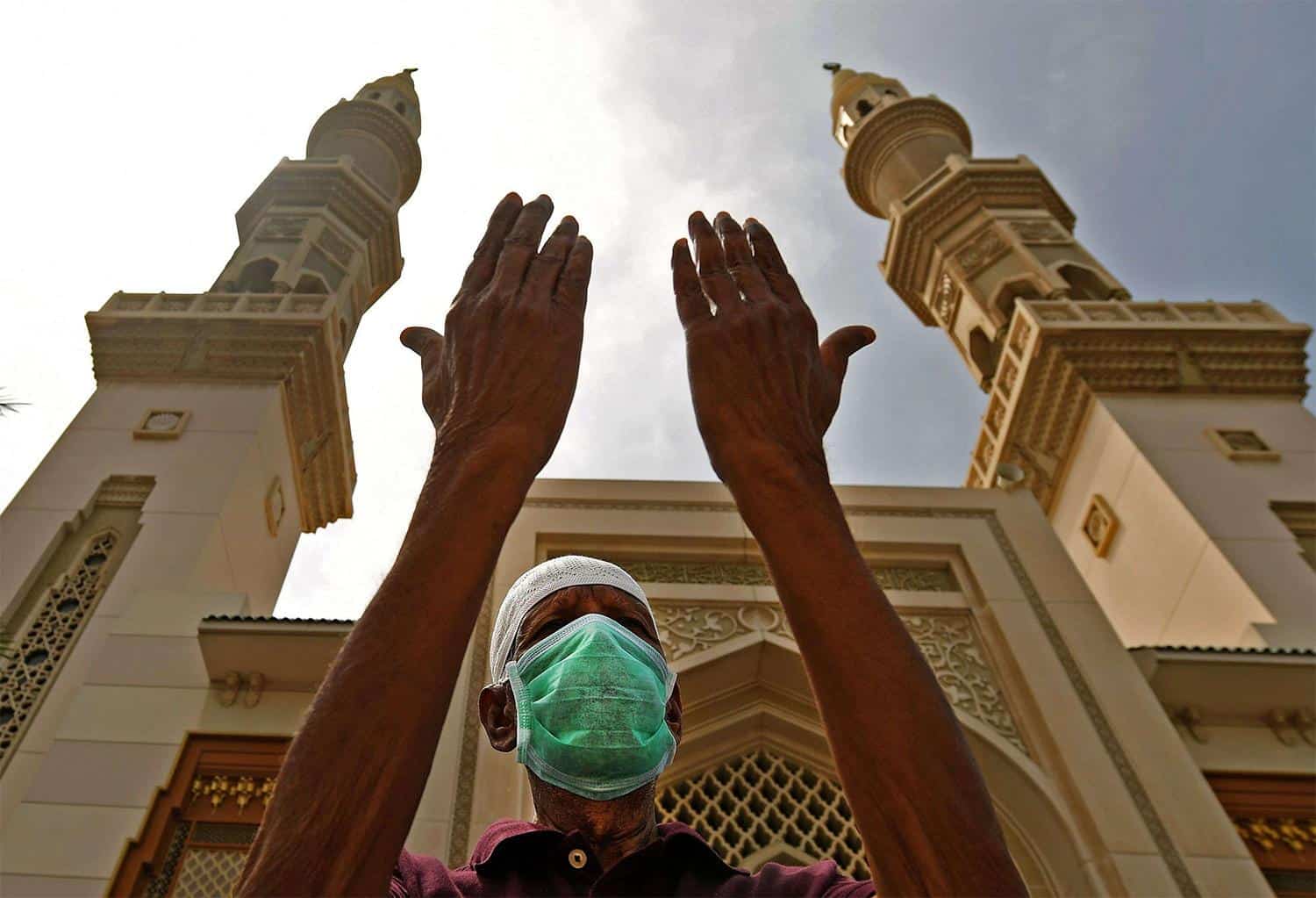
Today, April 23, Saudi Arabia and the UAE have announced the moment of the crescent moon sighting over their countries, signaling the coming of the new moon and the start of the holy month of Ramadan. The coming lunar month will start tomorrow in nations that witness the crescent moon today, and an unprecedented Ramadan will officially commence for many of the 300 million Muslims in the region.

Traditions

Ramadan marks the ninth month in the Islamic lunar calendar and symbolizes when Muslims believe Quranic scripture was first revealed to Islam’s prophet, Muhammad. The month of Ramadan entails a variety of rituals meant to spiritually cleanse believers and build an understanding of the suffering of the poor. Muslims refrain from eating, drinking, smoking, and sexual activity during their daily fasts which start at dawn and are ritually broken after sunset.

Breakfast and dinners during Ramadan are festive celebrations of togetherness. Families and distant relatives commonly reconnect as they share tables full of delicacies, meat dishes, and sweets. Muslims commonly break the fast by eating dates before sharing the festive “iftar” meal.

Fasting during Ramadan is intended to cleanse the Muslim soul, requiring self control and discipline to maintain the fast while also building empathy for those in poverty who regularly go without meals. A variety of exemptions exist for those who are sick, menstruating, or traveling. Along these lines, anyone at risk of, or suffering from a COVID-19 infection is recommended not to fast.

Relevant times for charitable giving

Muslims around the world lament that they will celebrate this year’s Ramadan without close contact with family, missing an opportunity to connect with near and distant relatives alike. At the same time, this year’s Ramadan holds a symbolic value that spreads far beyond the Islamic community. The emphasis on sympathy for the poor, the importance of providing charity and sharing one’s fortune, is a message our divided world very much needs in a time of crisis.

The importance of charity during Ramadan means Muslims emphasize giving charity to the poor during their holy month. Donations are distributed before the end of Ramadan to ensure that all Muslims can celebrate the Eid feast. Unlike the standard Zakat, one of the five pillars of Islam, which routes a fixed percentage of a household’s wealth to society’s poorest, Muslims decide how much to give during Ramdan as the rich experience how being hungry and thirsty truly feels.

A unique Ramadan

This year’s Ramadan will be one like never before as states continue to enforce lockdowns, curfews, and travel restrictions across the world. Digital technology will serve an important way for Muslims to see loved ones and family as they break their fasts and have their iftar meals in solitude. Taraweeh prayers, commonly performed with friends and neighbors in local mosques, will instead take place at home.

In Indonesia, the world’s largest Muslim nation, the start of Ramadan commonly features a gigantic exodus: Millions of Jakarta’s residents travel on motorcycles, sleeping by the side of the road, to go to their home villages to celebrate the holy month with their families. This year, a ban on the exodus means they will have to spend Ramadan in the cramped conditions of Jakarta’s slums.

Most Muslim-majority countries have announced a ban on communal prayers such as the Taraweeh rituals. Live-streamed prayers in Islam’s holy cities of Mecca and Medina will feature just a few officials instead of the packed crowds normally seen.

On April 20, Saudi Arabia’s health minister, Tawfiq Al Rabiah, highlighted that although Ramadan 2020 will be less festive, it will provide a shared experience like never before. “We are all in one boat, if we commit together we’ll safely reach the shore,” Al Rabiah said. “We used to have a lot of social activities during Ramadan, this year it will be different and I urge everyone to commit to social distancing,” he said in a televised address.

Universal lessons of Ramadan

For non-Muslims around the world, this Ramadan might hold an unprecedented secular meaning. During isolation and quarantine, people of all faiths have a reminder of the importance of togetherness and family bonds as seen at iftar meals. The value of discipline and self-control is greater than ever as the majority of people follow measures not to protect themselves but other, more vulnerable people.

Meanwhile, the need for charity and assisting those less fortunate reaches critical importance as experts predict millions will go hungry this year. As the world’s poorest feel the economic consequences of the COVID-19 pandemic, it is important for every global citizen to understand the interconnectivity that binds us all together in sickness and in health.

As Ramadan commences tomorrow in many MENA countries, Muslims and non-Muslims alike have the opportunity to share in our common humanity, protect the most vulnerable, and use self-discipline to protect our neighbors and loved ones. As the Quran says, “Humanity is but a single brotherhood: so make peace with your brethren.” (49:10) For one month, let us try to be kind to one another in this time of need and let us wish our Muslim friends and neighbors a happy Ramadan, or “Ramadan mubarak.”


Read also: Syria, Turkey, Korea: How Developing Stories Could Change the World

IATA: Middle Eastern and North African Airlines in Critical Need

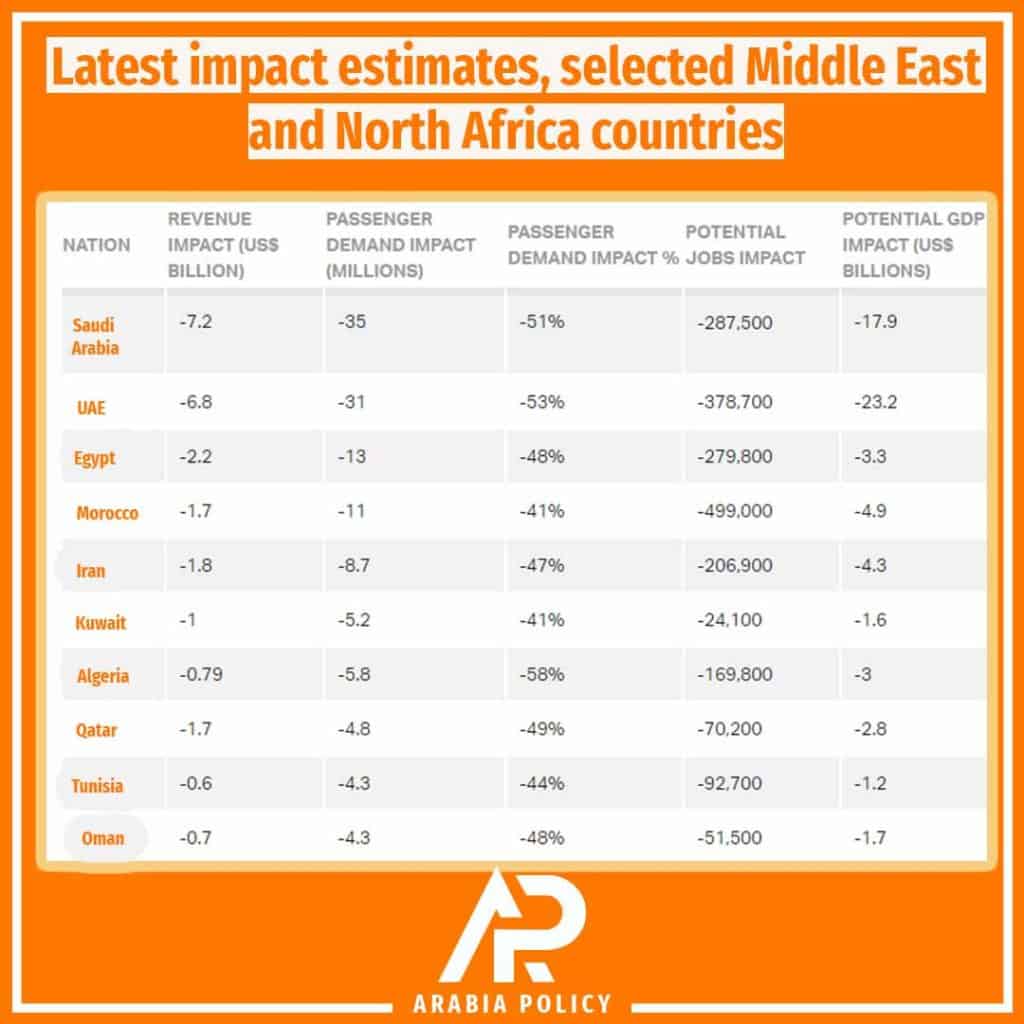
The IATA again raised its estimates of losses for Middle Eastern and North African air carriers caused by the COVID-19 pandemic. The industry body is now expecting regional airlines to lose $24 billion in passenger revenue for 2020, it announced on Thursday, $5 billion more than the IATA predicted at the beginning of April.

“We have not seen the desired movements and decisions of governments and decision makers to … put on the table the economic stimulation packages and the rescue packages, financial packages necessary to keep the airlines in the region alive,” said IATA’s regional vice president for Africa and the Middle East, Muhammad Al Bakri.

Al Bakri warns the air-travel crisis will have “devastating effects on countries’ economies,” if MENA region governments do not step up and support the aviation industry.

The body, which represents 290 airlines worldwide, is also calling for states to consider “tax relief, loans, loan guarantees and support for the corporate bond market” to help airlines overcome the deepening liquidity crisis brought on by the global coronavirus shutdown. IATA also wants governments to start working cooperatively with airlines on a “comprehensive approach to re-starting the industry” when coronavirus curbs are lifted. 

“In a region where aviation is a key pillar of many nations’ economies the effect will be much worse. Direct financial support is essential to maintain jobs and ensure airlines can remain viable businesses,” said Al Bakri.

“Re-starting aviation and opening borders will be critical to the eventual economic recovery. Airlines are eager to get back to business when and in a way that it is safe. But starting up will be complicated. We need to make sure that the system is ready, have a clear vision of what is needed for a safe travel experience, establish passenger confidence and find ways to restore demand,” the regional vice president added.

MENA region governments have remained relatively quiet on how they will support airlines through the coronavirus crisis. 

The United Arab Emirates said it is “fully committed to supporting Emirates airlines” at the end of March but did not go into specifics. On April 20, a press release from the UAE’s Federal Competitiveness and Statistics Authority published by state-run news agency WAM said the Dubai Government will be “pumping new capital into Emirates Airline, deducting 10 percent from water and electricity bills for three months, and reducing insurance premiums by 50 percent.”

On March 29, the CEO of Qatar Airways, Akbar al-Baker, admitted his airline “will surely go to our government eventually.” There has been no update on Qatar’s financing since Baker warned the airline is “burning through cash,” but Qatar is one of the region’s few transit hubs to remain open throughout the pandemic allowing the airway to keep flying, albeit at a reduced capacity. 


Read also: Emirates Airlines to Start Flying Passengers Again from April 6

Dubai Supermarket Chain Protects its Workers: ‘No Pay Cuts, No Layoffs’

Majid Al Futtaim, an Emirati company that operates grocery stores across the Middle East, is making an important promise to its staff: No pay cuts and no layoffs. The company owns and operates grocery stores and malls and employs 19,000 workers, most of whom are foreign nationals. “We have taken a decision that we are not going to furlough people,” Alain Bejjani, the company’s CEO, told the Associated Press. “We are not going to touch the basic salaries,” the executive continued.

The importance of remittances

A large swath of the company’s employees come from abroad. They work in the greater Middle East and send much of their wages to their families abroad. These called remittances provide a vital income for workers’ families in this difficult time. Many of the company’s employees come from Bangladesh, Egypt, India, Nepal, and the Philippines, where a Dubai-level wage can provide much-needed financial support.

Across the planet, people are losing their jobs and their primary source of income as pandemic lock-downs and curfews severely impact businesses. Majid al Futtaim has demonstrated that showing solidarity with staff is possible, especially when the income they make often provides for many other relatives. “It means a lot, during tough times, to make sure that we are one family and we are dealing with our people in the best possible way,” Bejjani told the Associated Press (AP).

Forward thinking

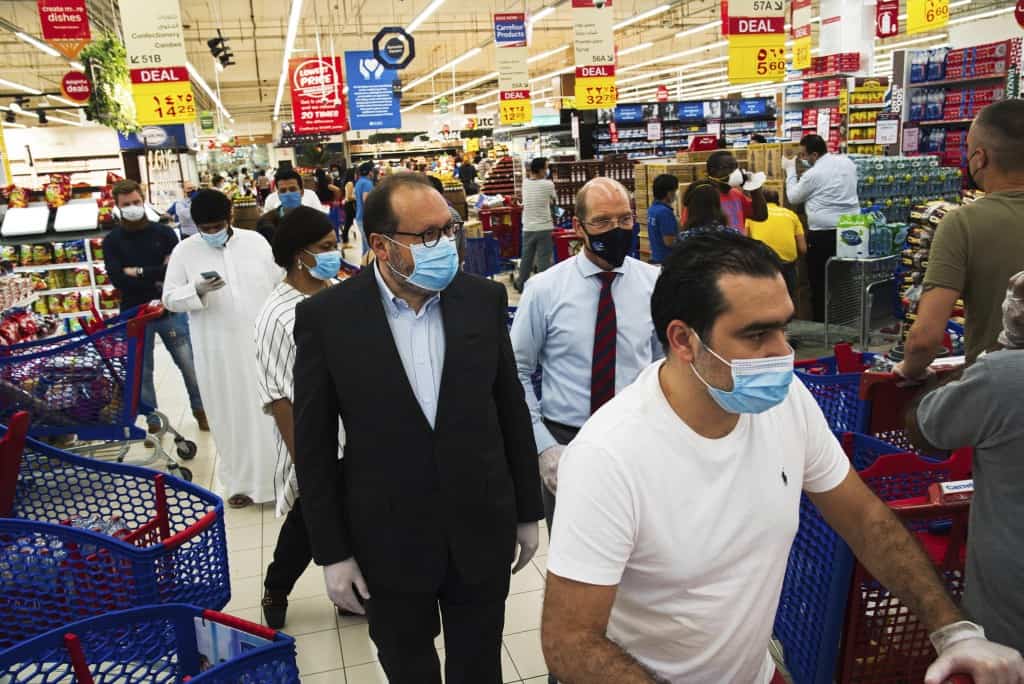
The company’s approach towards its staff is a breath of fresh air during an economic crisis where the poorest and lowest-skilled workers are often the first to lose their work. The company has implemented several security measures to ensure staff and customers can safely shop in their supermarkets. On entry, customers have their temperature checked and everyone in the store is expected to wear gloves and masks.

The current economic crisis and government lockdowns present a new paradigm for the Emirati business. While shopping in person became more limited, online shopping skyrocketed. Majid al Futtaim-operated Carrefour stores in the UAE have seen an increase of 300% in online grocery shopping, a 700% increase in Egypt, and a whopping 1,000% increase in Saudi Arabia. Bejjani thinks this is not a temporary change, but a shift in how customers approach shopping that will continue even after the pandemic subsides.

Supply chains

Grocery stores typically have very short continual supply chains. With little space to store goods, markets are constantly restocked in what is called a “just-in-time” supply chain. While this system ensures daily fresh produce and little excess storage, it does make the supply chain vulnerable to disruptions.

Because Majid al Futtaim is based in UAE, a country that imports most of its food and basic goods, the company maintains a three-month stockpile. Storing the products is expensive, but in this time of crisis this tactic has proven helpful, with shops remaining well-stocked. 

The company’s CEO does worry about food security in other countries as the pandemic and its response measures increasingly interrupt supply chains. In the national market, the executive said the pandemic “has had an impact, but you haven’t seen anything that was, I would say, disruptive.” 

Although his business is able to maintain and even increase their stockpile of supplies, the CEO worries about global food security as countries increasingly limit exports, ignoring UN recommendations to ensure global supply chains remain uninterrupted. Bejjani elaborated that “some countries decided to stop exporting some essential items they need.”

Changing habits

The CEO told the AP that changing trends in consumer behavior will likely change in a post-coronavirus world, saying, “how do you make sure that we continue to win in a post COVID-19 world, where health and safety is going to be a big reason to re-adapt customer experience.” The company’s malls have canceled rent payments for its tenants during the crisis but are aware that customers might not return after the pandemic at the same rate as they came to shop before.

Whether life will fully return “back to normal” is doubtful according to the company’s CEO. Spending patterns might change and business travel might never fully rebound, Bejjani said. Tomorrow’s shoppers will be more aware of safety precautions and getting consumers back into physical stores will require more of retail experience as much shopping moves online.

In Blow to Hirak, Algeria Passes ‘Fake News’ Laws With COVID-19 Amendment

Disseminating “fake news” that threatens security, stability, and public order is now criminalized under legislation passed Wednesday by Algeria’s People’s National Assembly. Anyone convicted of spreading fake news can now be sentenced to between one and three years in jail and fined between DN 100,000 and 300,000 ($775 to $2,330).

The parliament also approved a significant increase in the penalties for contravening the country’s novel coronavirus curbs. Individuals who violate the confinement and put others’ health in danger can be imprisoned for a period of six months to two years. The legislation also increased the minimum penalty for breaking the COVID-19 lockdown from DN 3,000 to DN 10,000.

Blow to Press Freedom and Hirak 

The false news legislation is another blow for the Hirak protest movement and press freedom in Algeria. Since April 9, three news sites, Intelligent, Maghreb Emergent, and Radio M, were reportedly blocked in Algeria for differing periods, leading press-freedom advocates to argue the new “fake news” laws will further facilitate government attacks on journalists and news outlets. 

Committee to Protect Journalists (CPJ) North Africa Program Coordinator Sherif Mansour is increasingly concerned about press freedom in Algeria and has called on the country’s authorities to “set into motion legal reform so journalists cannot face criminal penalties for their work.”

“When Algerian authorities arbitrarily censor news media just because they don’t like to be scrutinized, they show exactly why laws that equate reporting with a criminal act are more than likely to be abused and pose a grave threat to press freedom,” said Mansour in response to a draft version of the amendments on April 22.

Reporters Without Borders (RSF) North Africa Director Souhaieb Khayati seconded the CPJ, saying the new laws are just another instrument the government can use to “muzzle the press.” 

“Algeria is the country recording the largest numbers of deaths related to the coronavirus in Africa but authorities prefer to hound the free press,” said Khayati.

Time to End ‘Epidemic of False News’

The Algerian government claims the new laws are about closing loopholes, protecting citizens’ lives, and curbing what the justice minister calls an “epidemic of false news,” stemming from the COVID-19 pandemic.

Minister of Communication Ammar Belhimer told the state-run Algeria Press Service (APS) that the combined efforts of “all people, notably technicians and jurists,” were required to adapt to the phenomenon of fake news that has grown exponentially “with the use of the web” and is used by some to “harm other people’s private lives.”

According to Justice Minister Belkacem Zeghmati, fake news authors “use social networks to spread terror and fear among citizens notably during crisis or exceptional situations,” such as the coronavirus pandemic.

He also told APS that the spread of false information is a “phenomenon which has impressively spread recently following the great development of media and new technologies.”

Legislation’s Only Motivation is Political 

For Algerian League for the Defense of Human Rights Vice President Said Sahli, the new laws are just “another turn of the screw against freedoms.” 

The amended penal code legalizes “the campaign of repression which for months has targeted activists of the Hirak movement, journalists and human rights defenders,” Salhi added. 

The Hirak protests sprung up in response to Abdelaziz Bouteflika’s plans to run for a fifth term as president in February 2019. The protests have continued every Tuesday and Friday since, but were voluntarily abandoned in the wake of the coronavirus pandemic and national lockdown in Algeria. 

A  year on from Bouteflika standing down, the protest movement continues but journalists, protestors, and activists remain in jail and are subject to arbitrary arrest and detention. “Le Pouvoir” (The Power), or political and military elite that has ruled Algeria for decades, remains strong and continues to implement legislation such as the “fake news” amendment that targets the Hirak. 


Read also: Algerian Author Awarded 2020 International Prize for Arabic Fiction

Tensions With US Mount as Iran Sends First Military Satellite Into Orbit

US-Iran tensions have escalated once again after provocative posturing and rhetoric from both sides on April 22. 

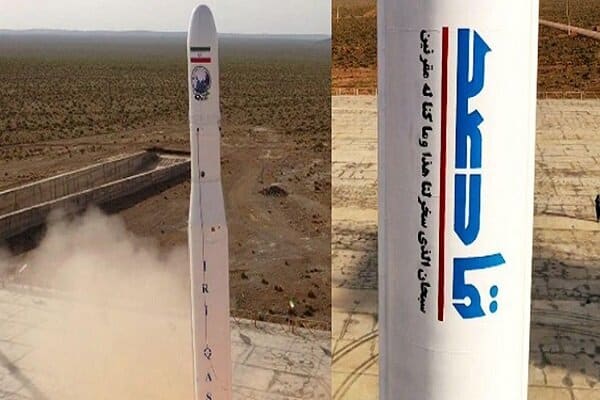
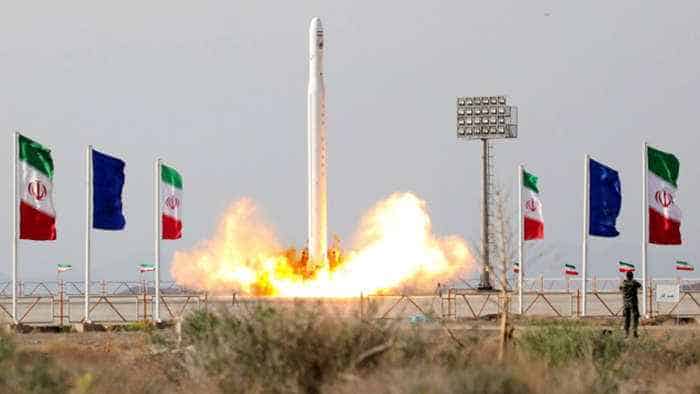
Iran’s Revolutionary Guard claims that it successfully sent a military satellite into orbit from a launch site in Iran’s central desert, state media reported. The so-called “Noor-1” (Light-1) satellite launch reportedly used a Ghased (Messenger) launcher powered by a mix of liquid and solid fuels. 

“Today, the world’s powerful armies do not have a comprehensive defense plan without being in space, and achieving this superior technology that takes us into space,” IRGC Commander Major General Hossein Salami told the state-run Islamic Republic News Agency.  

Lauded by Iranian military leaders as a “strategic achievement,” the launch is a worrying development for the US, who suspect the country could use the same technology to launch nuclear warheads. 

Meanwhile at sea, the US claims IRGC navy vessels have been running “dangerous and provocative” maneuvers close to American Navy and Coast Guard craft in recent weeks. President Donald Trump responded today to the maneuvers with ire, giving his navy the green light to retaliate.

“I have instructed the United States Navy to shoot down and destroy any and all Iranian gunboats if they harass our ships at sea,” Trump tweeted on Wednesday.  

Iranian authorities lashed back, saying that the US should focus on preventing COVID-19 from spreading through its military.

“Today, instead of bullying others, the Americans should put all their efforts toward saving those members of their forces who are infected with coronavirus,” military spokesman Abolfazl Shekarchi told the state-run Iranian Students News Agency.

On Wednesday, Iran’s Presidential Chief of Staff Mahmoud Vaezi also took a swipe at the US for blocking its IMF loan request. Meanwhile, Iran’s ambassador to the UN, Majid Takht Ravanchi, told the Asia Times that “the best thing that can happen in the region is the US withdrawal from this sensitive part of the world.”

Tensions have run high between the US and Iran ever since President Trump unilaterally pulled out of the Iran nuclear deal and re-imposed economic sanctions on the rogue nuclear state. The relationship has grown more fractious in recent months after a US drone strike killed Iranian military commander Qassem Soleimani in January, and retaliatory airstrikes on an Iraqi base killed US troops stationed there.


Iran Launches Satellite, Undermines Months of Pleas

Tuesday, saw Iran launch its first satellite into orbit after several failed earlier attempts. The move is likely to increase tensions with the US and might interfere with the Joint Comprehensive Plan of Action that intends to curtail Iran’s potential nuclear ambitions.

Iran’s Islamic Revolutionary Guard (IRGC) announced the launch, calling it “a great success and a new development in the field of space for Islamic Iran.” Iranian authorities stressed that the satellite is not intended for any offensive military purposes.

Power play

The IRGC move undoubtedly intended to provide a display of Iranian military might in a time of internal chaos. The US, UK, and Israel have accused Iran of acts of aggression in the Gulf and Strait of Hormuz while providing little verifiable evidence, but the April 22 launch is undeniably a display of power.

Iran is most likely responding to continued pressure by its geopolitical opponents. The country’s move aims to show both its own population and foreign powers that its military remains capable despite the chaos created by the uncontrolled spread of COVID-19 within its borders.

Embattled, isolated regimes often lash out militarily when unabated economic sanctions leave little resolve outside of military posturing. North Korea similarly increased its missile testing and combative propaganda when renewed US pressure had backed the nation into a metaphorical corner.

Iran’s most important military advantage is not in its ballistic missiles, drones, or manpower, but its reliance on squadrons of small gunboats. These small ships with little more than a machine gun or rocket-launching installation could “close” the Strait of Hormuz, through which much of the world’s oil is exported.

Iranian sources have reiterated that Tuesday’s satellite launch placed Iran among the world’s elite powers because of its technological sophistication, but the move may have far-ranging consequences.

A country in need

Iran is most in need of testing kits, protective medical equipment, and ventilators to deal with its spiraling COVID-19 outbreak. The impoverished nation has had little practical international support, with some countries actively blocking financial and medical aid from reaching Iran.

With sanctions continuing to wreak havoc on the Iranian population’s living conditions, the country is isolated in a time when global cooperation appears to be the greatest available remedy. Although many sanctions do not explicitly forbid medical imports, they do discourage companies from doing business with Iran which practically limits medical imports.

The country has already lived through one otherwise festive day in the midst of the crisis, with Nowruz celebrations limited for possibly the first time in thousands of years. Now that Ramadan is approaching, Iran’s population is facing another grim moment in what would otherwise be a serene and joyous occasion. The conditions in Iran are dire and the launch of the satellite will likely bring little joy to its people.

Undermining efforts

Iran currently is choosing to both appeal to our shared humanity in order to beg for a reprieve in sanctions, while also continuing its belligerent rhetoric. While Iran’s foes have certainly not granted the country any mercy during the crisis, it becomes harder to demand such mercy in the midst of conflicting military posturing.

The country’s leadership has spent nearly two months appealing to international bodies such as the WHO and IMF for support and have appealed to the UN for a temporary halt on sanctions. The country has garnered much support but with little effect. Perhaps after months of requests, Iran has simply realized that no foreign assistance will materialize in time, leaving it with few options.

The satellite launch will likely provide the United States with sufficient material to continue painting Iran as a threat. UN Secretary General Antonio Guterres, the EU, and China have supported a temporary lifting of sanctions, but this goodwill might evaporate if Iran continues with a belligerent foreign policy.

A cornered cat makes strange jumps, or so the saying goes. Perhaps the Iranian move is logical given the lack of practical response the country has received for its efforts to realize a temporary detente. With the health of Iranians and peace in the region at stake, it appears little progress has been made toward a bettering of relations amid the COVID-19 pandemic.

Unable to rely on our shared humanity in the international community, Iran has instead seemingly retreated to rely on its population’s shared opposition to its besieging foes.


Read also: Pandemic Stresses Turkey’s Economy as Case Count Surpasses That of Iran

Lebanon Legalizes Medical and Industrial Cannabis Production

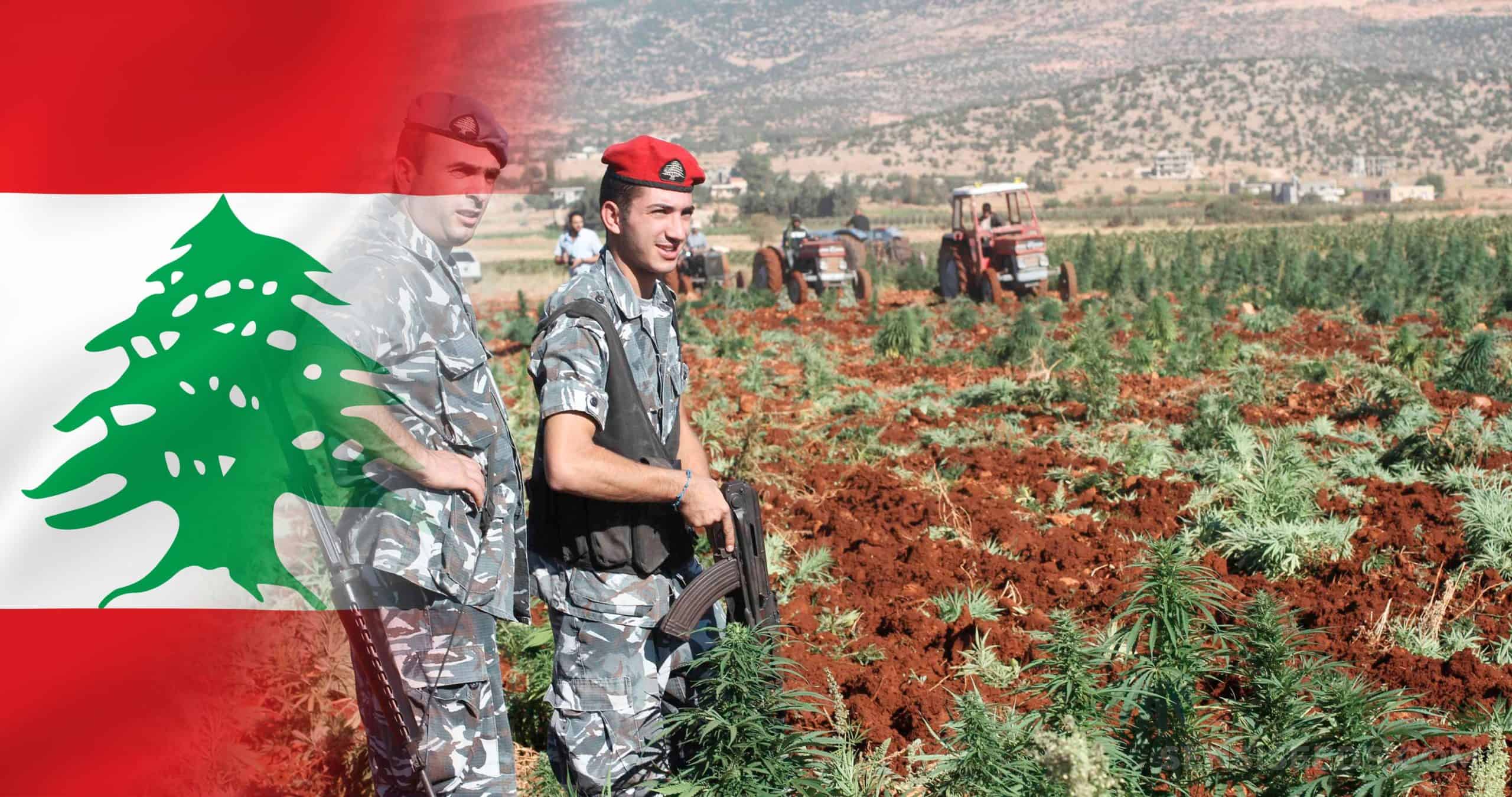
A majority of MPs passed legislation paving the way for the development of a medical and industrial cannabis industry, during a special sitting of Lebanon’s parliament at the UNESCO Palace Theatre. Politicians hope the measure can help to reduce the country’s economic crisis. Protesters defied the country’s partial lockdown and protested outside the theatre while socially-distanced MPs mulled over the legislation. 

Iran-backed Shi’ite party Hezbollah and a small minority of other MPs opposed the bill. The law was one of several proposals that prompted a special sitting aimed at addressing Lebanon’s dual economic and COVID-19 crises.  

Free Patriotic Movement MP Alain Aoun said the legislation was “really driven by economic motives, nothing else.” When asked how much it would actually bring to the ailing economy, he replied, “we don’t want to speculate on numbers … but let’s say it is worth a try.”

“We have moral and social reservations but today there is the need to help the economy by any means,” the senior party member told Reuters. 

Aoun and Lebanse Defence Force parliamentarian Antoine Habchi both argued the bill will be a boon for farmers and workers in the Bekaa Valley, as well as a boost for the national economy as a whole. It appears stringent restrictions that will stop people with a criminal record from participating will shut out the country’s century-old illegal sector.

Drug policy expert Dania Putri explained that due to high international quality standards, and the strict controls included in the legislation, production could foreseeably end up in the hands of “big pharma” or foreign agricultural companies. 

“Cultivating low-THC cannabis for industrial, and to a certain extent medical, purposes requires large or mega-scale cultivation and processing facilities, so oftentimes such production systems tend to be monopolized or “oligopolized” by a smaller number of actors,” Putri explained to Arabia Policy on March 20.

Optimism amid reservations

Meanwhile, other commentators are expressing reservations about the industry, as they believe it will further serve to line the pockets of Lebanon’s notoriously corrupt elite. 

“This is a move that aims to finance the political mafia in Lebanon,” said University of Notre Dame economist Louis Hobeika.

Former Economy Minister Raed Khoury estimated that Lebanon could generate $1 billion in revenue from medical marijuana exports per annum, while the legislation’s architect, Yassine Jaber, sees Canada as a potential export market. 

McKinsey & Company recommended Lebanon create a legalized medical and industrial cannabis sector as one of 150 initiatives to kick-start the country’s sickly economy, in a report publicly released in 2019.  

Some 3,000 to 4,000 citizens are arrested annually in Lebanon for minor drug crimes, but the legislation remained silent on decriminalization for recreational use. Putri was optimistic and welcomed the development saying, “it’s refreshing to see something happening at the parliamentary level.”

“At least it shows that there’s interest to address the cannabis issue in Lebanon and it might have opened up new avenues for public debates on other, and hopefully better and more inclusive, regulatory initiatives,” the expert added.


Read also: Lebanon: Unrest Grows in Parallel to COVID-19 and Liquidity Crises

Egypt Welcomes Chinese Support to COVID-19 Response

On March 1, Egyptian Health Minister Hala Zayed stepped off a plane onto Chinese soil. She had come to express support for the country’s people as their COVID-19 epidemic was starting to come under control, with the curve of infections flattening.

Egyptian support for China

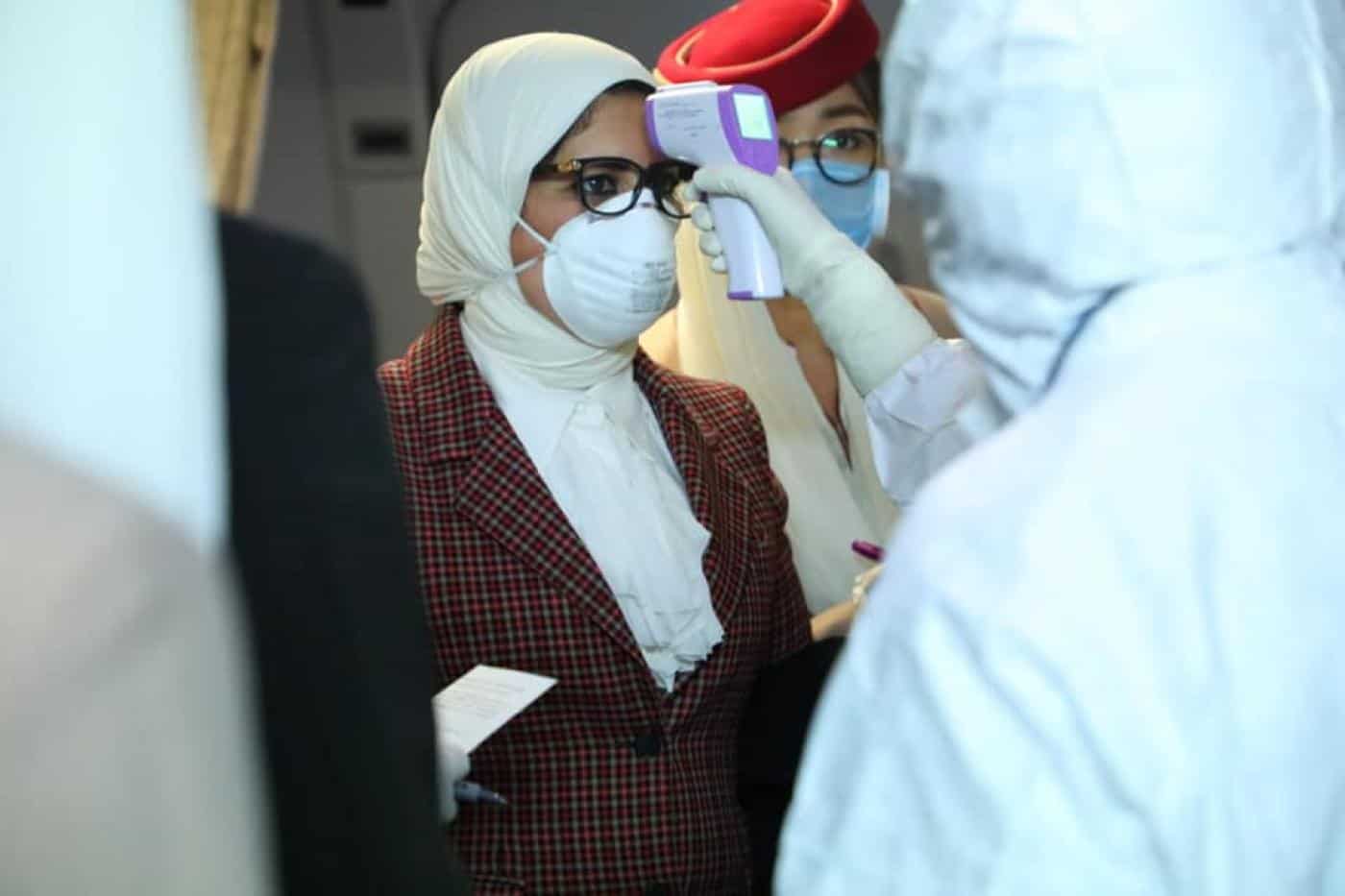
Zayed’s delegation, initiated by Egyptian President Abdel-Fattah al-Sisi, brought with it Egypt’s second shipment of medical supplies for China. The health minister returned home with 1,000 thermal detectors that had become crucial to China’s monitoring efforts. Since the start of February, Egypt had sent 10 tons of aid to China in the form of masks and disinfecting alcohol.

A projection of the Chinese flag marked Egypt’s most famous historic sites during Zayed’s visit. The Citadel of Salah El-Din in Cairo, the ancient Luxor Temple complex, and the Philae Temple all lit up with the flag’s gold and yellow. The show of support intended to demonstrate the “appreciation of the distinguished ties between China and Egypt,” according to Egypt’s Supreme Council of Antiquities.

The Egyptian support likely made little impact on the centralized large-scale Chinese efforts to combat the virus, but the Chinese noticed the gesture. In a March 23 phone call with Chinese President Xi Jinping, Al-Sisi had praised Chinese efforts and emphasized Egyptian hopes for further cooperation in aid and future trade.

China returns the favor

Nearly a month after Egypt and China’s leaders spoke on the phone, the tables have turned for both countries. While China is slowly easing restrictions on its population, Egypt is in the midst of its own COVID-19 outbreak. Egypt’s reported cases passed 3,000 last week. The number now stands at 3,490, with 264 reported deaths.

The Chinese are now in the position to provide a helping hand. On April 16, Chinese Ambassador to Egypt Liao Liqiang and the under-secretary of Egypt’s health ministry met at Cairo International Airport to welcome one of many shipments of Chinese medical supplies intended to help Egyptians.

The planes brought 20,000 N95 respiratory masks, 10,000 protective gowns, and 10,000 testing kits. April 21 saw another batch of protective equipment and tests delivered. A third batch is expected soon, and will carry 150,000 standard masks, 1 million masks specifically intended for medical staff, 70,000 medical protective suits, 70,000 testing kits, and another 1,000 thermal detectors.

Solidarity between developing nations

In the absence of global solidarity between rich and poor countries, many developing countries have resorted to bilateral cooperation in order to assist one another. The example of Chinese-Egyptian mutual support is just one on a long list of successful cooperative efforts. In the early phases of the COVID-19 crisis, China received many calls of support from its Middle Eastern and African trade partners.

Several media outlets from Western nations have labeled China’s efforts a public relations campaign, but their own countries have little to offer in terms of practical assistance. While some look upon China’s acts with distrust and suspicion, the lives saved through China’s provision of protective gear and testing kits do leave a practical and long-lasting impression at a moment when many countries do little but cast blame on China to divert attention from their own failings in handling the pandemic.

China is now returning an outpouring of support in kind, sending airliners filled with medical supplies to many countries where other prominent geopolitical powers have offered little in the form of support. How much of an effect the bilateral band-aids can provide in the absence of a global consensus on solidarity and shared responsibility remains to be seen.


Read also: China Reviews Wuhan Coronavirus Death Figures, Increases Them by 50%