Australia’s Focus on Chinese ‘Wet Markets’ is Diversionary Propaganda

In most Western countries, slaughtering animals for meat is hidden out of sight. Those who eat meat rarely see the actual animal or how it meets its end. In other areas across the world, people often purchase meat at traditional markets directly after slaughter, a more gruesome but perhaps more honest way to eat.

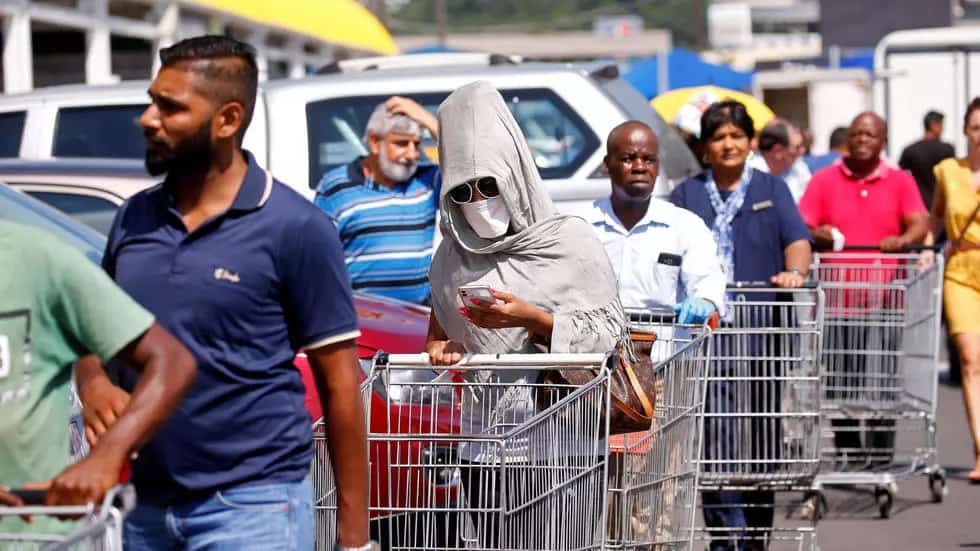
Now, these traditional markets are under fire as Australian politicians try to frame them as the cause for the COVID-19 pandemic. Highlighting the markets as uniquely different and dangerous is nothing less than an effort to frame Chinese people as responsible for the novel coronavirus.

Pictures of Chinese people eating animals that Westerners do not commonly consume have spread on social media to make Chinese people look primitive or uncivilized. “Wet markets” are now a buzzword in Australia to frame perceived unsanitary Chinese behavior as a threat to Australians.

In reality, wet markets exist all over the world. Most souks in the Arab world and farmers’ markets across Asia and Latin America employ similar means of butchering and selling meat. In places where refrigeration options are limited, these markets are often the only option for buying fresh meat.

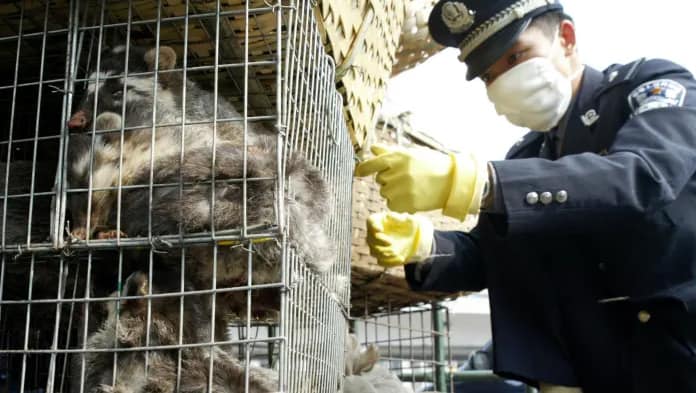
Internet users are depicting the sale of bats and other exotic animals at the markets to paint the Chinese as alien to offend Australian sensitivities. Millions of people around the world consume these animals in a way similar to British or American venison, pheasant, or locally caught seafood consumption.

Millions of East and Southeast Asians commonly eat bats, snakes, or lizards, and have been doing so for centuries. There is no specific preference for it in Hubei province, and the wet market where COVID-19 is thought to have originated did not “specialize” in selling such meats in a method that would threaten public health.

Common sense precautions

It is true that viruses like COVID-19 often transfer from animals to people through meat preparation or consumption. Eating wild animals increases this risk: Viruses that could have been contained to a certain remote species are exposed to those consuming the meat. However, similar threats exist in factory-farmed meat, a fact highlighted by the mass slaughters of pigs and chickens after the swine flu and avian flu pandemics in recent years.

Bird flu even reappeared in South Carolina this week, according to reporting by Capital Press. Still, few are contemplating calls for an outright ban on pork or chicken production or sales. Australian leaders are ignoring the fact that consuming bat meat is much more prevalent in Indonesia and the Philippines, where COVID-19 did not originate.

While a ban on hunting animals in remote forests and jungles is a good idea both for animals and humans as a whole, the focus on Chinese wet markets is nothing but a distraction offered up to anxious Australians. By making Chinese people and customs the “other,” Australian authorities divert their own responsibility and assign blame elsewhere.

Australian media have not helped to stem the racist trope, with the Canberra Times calling the markets “unfathomable,” “exotic,” and even “deadly and diseased.” Both sides of Australian politics appear focused on the issue. Anthony Albanese, head of the Australian Labor Party, specifically laid blame on China: “We need to make sure, and China needs to make sure, that this can’t happen again.”

The real motivation behind Australia’s blame game

The fact that the science-based World Health Organization (WHO) expressly approves the reopening of Chinese wet markets appears to have little impact on the Australian frenzy to blame China and its customs. “With adequate facilities, proper regulation and good hygiene practices it is possible to have safe food sold in wet markets,” the WHO told The Australian.

Similar to US President Donald Trump’s branding of COVID-19 as the “Chinese Virus,” Australian politicians’ obsession with Chinese wet markets appears to be nothing but an attempt to shift blame. Australia currently has 6,440 reported cases and 63 deaths, and the brazen campaign on wet markets reveals that Australia’s government is following a trend of diverting blame that people worldwide are admonishing Donald Trump for.

A common global consensus on eating wild meat would be beneficial, but Australia’s focus on Chinese wet markets has little to do with averting future viruses. Instead, it intends to create division and antagonism during a time when global cooperation and trust is essential.
Read also: China Leads Fight Against COVID-19 as Spread of Infection Slows

Egyptian Security Forces Disrupt Easter Terrorist Plot

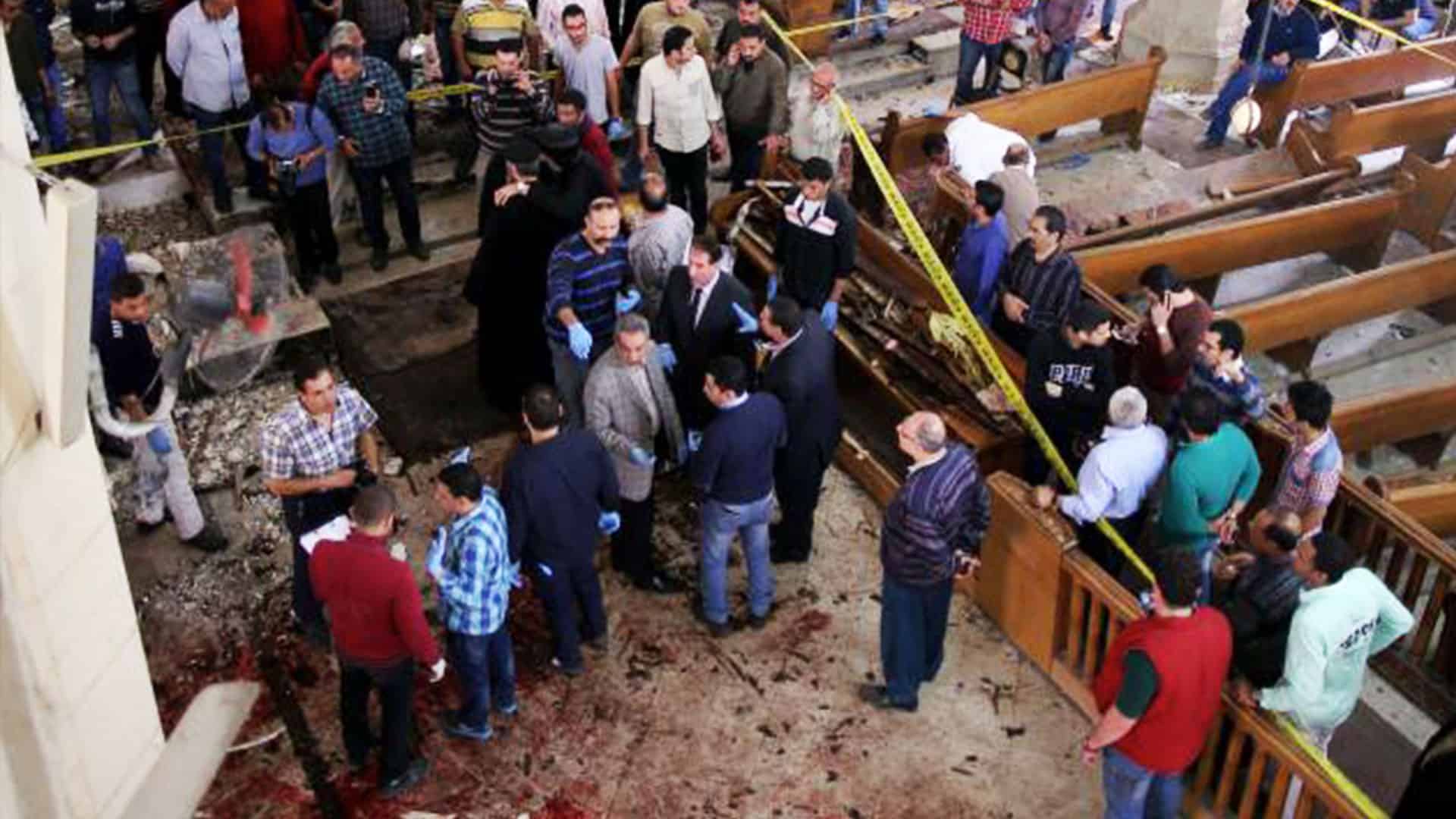
Gunshots rang out around the shuttered streets of Cairo’s Al Amiriyah neighborhood for hours as a ferocious gun battle raged between police and members of a suspected terrorist cell on Tuesday afternoon. 

A police officer died in the firefight and three of his fellow officers were injured. Seven alleged “terrorist” fighters were also reportedly killed during a raid on a hideout located in a nondescript residential building, the ministry said on April 14. 

A cache of weapons including four rifles, six machine guns, and ammunition was found at the Al Amiriyah hideout. Security officers discovered another four machine guns and associated ammunition at an address in the East Cairo suburb of Al Matariya. 

Egypt’s cabinet mourned today the loss of Lieutenant-Colonel Muhammad Fawzi Al-Hofy, an officer attached to the National Security Agency (NSA), who is survived by his two young daughters. 

The Interior Ministry said that prior to the raid, they received information advising, “there is a terrorist cell, whose elements embrace Takfiri ideology, using several areas as a shelter in eastern and southern Cairo as a starting point to carry out terrorist operations.”

Takfiri refers to a particular type of terrorism ideology concerned with infidels. The cell’s terrorists planned to attack Egypt’s Orthodox Coptic Christians during their Easter celebrations set to commence on April 19 the ministry said. 

Egypt’s Public Prosecutor Hamada Al-Sawy launched an investigation into Tuesday’s “terrorist incident,” and sent a team to analyze the scene, the government’s State Information Service reported. 

The head of the Coptic Orthodox Church of Alexandria, Pope Tawadros II, issued a statement on April 14 extending the Church’s condolences and prayers to the slain policeman’s family and to the wounded officers. The religious leader also reiterated his church’s “full solidarity” with Egypt’s security forces and their anti-terrorism efforts. 

Coptic Churches have been a focal point for attacks on the religious minority which accounts for around 10% of Egypt’s majority Muslim population, and security is routinely bumped up ahead of religious holidays such as Easter. 

Egypt’s war on terrorism has largely focused on the Sinai Peninsula, and North Sinai in particular. Since 2018 the government has orchestrated a number of operations against supposed terrorist targets but their intervention in the Sinai has drawn criticism from rights activists who claim innocent civilians, often ethnically Bedouin, frequently end up as casualties. 


 Read also: Train Crash Near Cairo Injures More Than 20 Passengers

Unidentified Men Board Chinese Tanker Near Strait of Hormuz

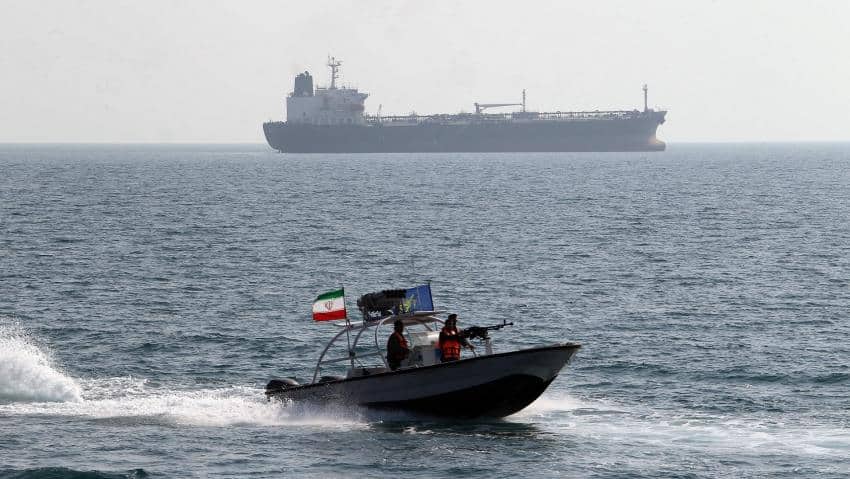
On April 14, an as-yet unidentified group of armed men boarded the SC Tapei, a Chinese oil-tanker registered in Hong Kong en route to Saudi-Arabia. 

The 160m long chemical tanker’s 22 Chinese crew-members were unharmed, according to a Dryad Global report. It remains unclear whether the tanker was in distress and requested assistance from the Iranian coast guard or whether the event was aggressive in nature.

Global media were quick to describe the event as a hostile act by the Iranian Revolutionary Guard, but little evidence exists of any hostile intent by the boarding party. The boarding of the tanker did not result in any injuries or casualties and the ship was soon on the move again as the four small boats carrying the armed men returned to the Iranian coastline.

Fox News reported the event as being part of ‘heightened tensions between Tehran and Washington,’ but how the boarding of a Chinese ship is uncertain. The US, Israel and the UK have accused Iran of attacking tankers in the area in 2019. Some media outlets have described the attacks as an Iranian display of control over the Strait of Hormuz, but little evidence has emerged to conclusively assign blame.

An Iranian plot?

If the US accusations of a hostile boarding prove correct, that would entail an unprecedented and unexpected level of hostility between Iran and China. The two countries that have often supported each other in recent times. China remains one of the few loyal customers for Iranian oil and China has been an outspoken advocate for international support in dealing with Iran’s COVID-19 crisis.

The United Kingdom Maritime Trade Operations organization released an alert saying that the Chinese vessel “had been boarded by armed men while at anchor,” before confirming its release and the ship’s captain regained control.

American media appear to consider the event an accident. Fox News reported that Iranian forces realized that the ship was Chinese after boarding it and abandoned their mission. Shipping data available to the public shows the ownership of any ship in transit across the globe. It is unlikely any military force would randomly board a ship, only to find out its registration by speaking to the crew. Websites like Marine Traffic display the name, cargo, and registration of all ships in the region, a resource any Iranian military unit would surely have access to.

Iranian state media has remained silent on the issue, sparking speculation that even within Iran the boarding remains a mystery to some degree.

The question remains whether any party in the region is served by increased tensions or hostilities. At a time when global shipping lanes are already seeing a downturn because of the global economic slowdown, no country in the region appears eager for conflict as COVID-19 remains a significant threat to most nations around the Gulf.

Dryad Global, the organization that first released the alert to the public, speculated that the move is part of an Iranian scheme to ‘distract’ from its COVID-19 crisis and exert pressure on Western nations to lift sanctions. How attacking a Chinese vessel and then releasing it would fit in this Machiavellian plot, the report did not explain.


Read also: Iran Urges IMF to Approve COVID-19 Relief Loan Despite US Opposition

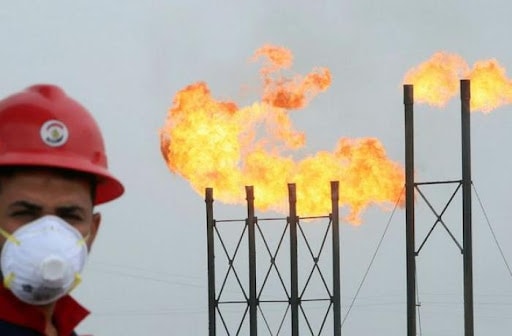
Historic Oil Deal Proves Insufficient to Increase Oil Prices

Yesterday, April 13, international media were still lauding “peace in the oil-price war” and a new “re-balancing” of oil supply in response to the COVID-19-related downturn. But as some experts and Arabia Policy predicted on Friday, the cuts have had little effect. After a small bump, prices again began to fall, with average crude oil prices now at $21.39 per barrel.

The 10% cut the major oil producers had negotiated was indeed historic, as production has never been artificially cut by this amount, but we are living in unprecedented times. The incredible drop in demand caused by the global economic collapse proved too great for the agreement to solve.

Artificial production cuts and stimulus alike serve to create brief moments of optimism with the hope that markets stabilize and improve. In contrast, worried sentiments regarding the unprecedented nature of our current dual economic and public health crises have been hard to overturn.

The nature of “good news” regarding COVID-19 has turned to stories about curves flattening and fewer people dying compared to previous days. Although this news could indicate progress, it is hardly the “good news” that would ordinarily spur market optimism.

The “peace agreement” in the Saudi-Russo standoff on oil production numbers created good press, but as experts analyzed the agreement, developments were already undermining its success.

As media headlines on April 13 were praising the agreement, Saudi Arabia’s state-owned oil production company Aramco announced it would be slashing its prices in Asia to lows not seen for decades. The move ensures Aramco will keep its significant market share in Asia, where early signs of recovery from the crisis could mean Aramco is the first oil producer to benefit from increased demand for oil in the region.

Artificial cuts are insufficient

The reality of the deal, agreed on by most of the world’s oil producers, is that it might not have been enough. A 10% cut means 90% of current oil production is still flowing straight into storage units in our current supply glut. With demand for oil hampered by a lack of economic activity, reduced international flights, and reduced personal gasoline use, there is little chance an artificial cut would change expectations.

Still, a larger cut in production is in the offering. This cut will not come through any agreement or bilateral commitments. It will come from smaller oil companies collapsing under vast debts they have accrued. In order to produce oil, significant loans usually cover the unprofitable start-up phase. Current oil prices mean it is impossible to repay these debts, as most companies are not even breaking even.

Especially high-cost oil production methods such as those used in the US shale-gas industry, Canadian tar-sands, and deep-sea offshore extraction in the Gulf of Mexico are under threat. While many oil producing countries in the Middle East can extract oil for less than the current crude oil average price of approximately $20 per barrel, extraction in the US or Canada can cost double or triple that amount. This means that companies lose money on each barrel currently produced.

The collapse of higher-cost extraction industries will reduce the current supply glut which could spell the end of such low oil prices. The reverse in oil prices could be fairly sudden, even when combined with positive news of East Asian countries reopening their economies after their lockdowns have helped stem the spread of COVID-19.

When China has fully reopened, and expensive extracting industries have gone bankrupt, supply and demand should start moving closer together. In contrast to the artificial cut announced last week, this combined cycle of collapse and reawakening should lead to a more sustainable oil price.

As daily reporting about COVID-19 remains grim, there appears to be little chance of a rapid recovery in oil prices. Many countries have poured billions or even trillions into economic stimulus separate from budgets allocated to fight COVID-19. The current chaos in oil markets is showing that every dollar spent on healthcare could be the best and most effective stimulus imaginable.

By focusing on fighting the virus itself with all available resources, the world can shorten the crisis and speed up the chances of economic recovery. Anyone who argues for economic stimulus alone should ask themselves what the United States would look like today if the country had poured its $2 trillion stimulus into fighting COVID-19.


Read also: Kuwait Boosts National Economy Amid COVID-19 Shocks, Falling Oil Prices


Algerian Author Awarded 2020 International Prize for Arabic Fiction

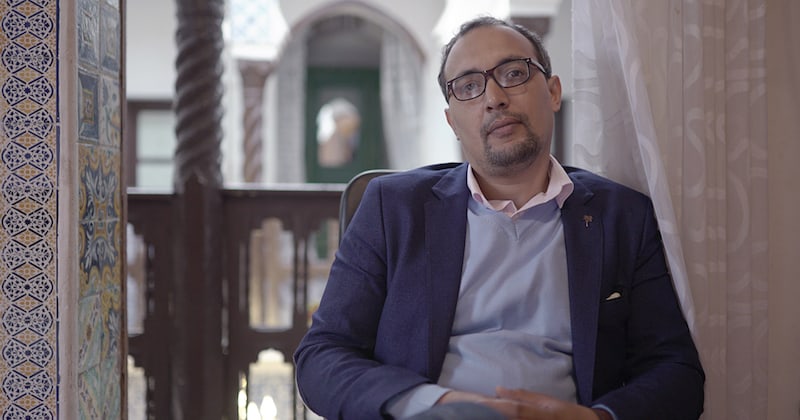
The International Prize for Arabic Fiction (IPAF) was awarded to Algerian engineer-turned-author Abdelouahab Aissaoui for his historical novel “The Spartan Court.”

In lieu of the usual glitzy awards night, the 2020 prize was this year “handed out” to Aissaoui via a virtual ceremony streamed on YouTube on April 14.

Aissaoui is the first Algerian to win the prestigious literary award, considered the Arabic Booker Prize. His winning novel, “Diwan Al isbarti” (The Spartan Court), is a work of historical fiction set in Algiers from 1815-1833. The story explores the French occupation and is told from the perspectives of five different characters.  

In addition to increased international recognition, the IPAF comes with prize money of $50,000 and funding to produce an English translation of the winning title, sponsored by the Abu Dhabi Department of Culture and Tourism and England’s Booker Prize Foundation. 

The Spartan Court was selected from a shortlist of six novels, including works by Algerian, Egyptian, Iraqi, Lebanese, and Syrian authors. 2020 Judging Panel Chair Muhsin al-Musawi said the “stylistic brilliance” of “The Spartan Court” set it apart from the competition. 

“Readers gain a multi-layered insight into the historical occupation of Algeria and, from this, the conflicts of the entire Mediterranean region, with characters embodying different interests and intersecting visions,” al-Musawi said.

“With its deep, historical narrative structure, the novel does not live in the past, but rather it challenges the reader to question present reality,” the 2020 Judging Panel chair added.

In a February interview Aissaoui said the inclusion of two Algerian authors on the IPAF shortlist was evidence of the country’s literary renaissance. “I hope it will be an Algerian win, especially since no Algerian has ever won it,” he confided to ArabLit’s Nadia Ghanem

Now with the award in hand, the electromechanical engineer from Djelfa said the prize represented a dream come true, but also an added layer of responsibility and higher expectations for his work going forward. 

“Winning the Prize is a great prospect and dream to which every novelist with a project aspires, but it also means greater responsibility, as it raises the expectations of readers, those interested in literature and critics, when they read the successful book and future works by the writer,” said Aissaoui after being awarded the prize. 

“It will not be easy for a novelist like me, who always aims to create something exceptional, to keep hold of this literary advantage, if my literary project is not continuously expanding,” Aissaoui stressed.

Road to the ‘Arabic Booker’

Engineering and creative writing may seem worlds apart, but Aissaoui credits his mathematical brain with helping him to neatly organize his novels, especially a complex polyphonic work like “The Spartan Court.”

“Mathematics are especially helpful, because there is a logic that guides the novel as events are based on causality. Engineering opens an important space for imagining a narrative space in all its multiple dimensions,” he said. 

Aissaoui’s organization and attentive historical research have not detracted from his ability to craft touching, relatable characters and scenes that truly bring 19th century Algiers to life, according to IPAF Board of Trustees Chair Yasir Suleiman.

“[The Spartan Court] is a captivating tale, a tale of many voices, truths and falsehoods. It goes back in history to excavate the past and permeate the present with intertwined narratives that keep the reader glued to its enchanting characters and their tortuous fortunes,” Suleiman said.

He continued that “its many bittersweet vignettes, and their rootedness in place and time draw the reader to worlds with myriad tones of color, sound, and smell. Abdelouahab Aissaoui has given us a work to celebrate and remember during these anguished times. For this we are grateful to him.”

Aissaoui is still a relatively young writer by literary standards but his success is not unexpected given that all his novels to date have been met with critical acclaim

“Jacob’s Cinema” (2012) received the President of the Republic Prize, “Mountain of Death” (2015) was awarded Algeria’s Assia Djebar Prize, “Circles and Doors” (2017) took the Kuwaiti Suad al-Sabah Novel Prize, and “Testament of the Deeds of the Forgotten Ones” (2017) won a Katara Novel Prize for unpublished novels.

Recognized as a rising star of the Algerian writing scene, Aissaoui credits his rapid improvement to his participation in IPAF’s Nadwa workshop series in 2016.

“This experience had a great impact on an artistic level; it clarified many points that had been absent from the artistic aspect of the story I was writing,” the writer acknowledged. 

Four years on the wheel has turned full circle and Aissaoui stands proudly as Algeria’s first “Arabic Booker” winner. As for his next novel, Aissaoui hinted that “it won’t be historical in a literal sense, but it will rely on history,” and based on his compelling canon of works to date, it will be one to watch out for.  


Distrust in Science and ‘The Other’ Undermines Global COVID-19 Response

Yuval Noah Harari, author of the bestselling trilogy “Sapiens,” “Homo Dues,” and “21 lessons for the 21st Century,” has been an outspoken defender of scientific thinking and science-based decision-making. Speaking on popular Dutch television program Nieuwsuur, the historian and philosopher connected the current COVID-19 epidemic with several political trends.

The crisis as an example of our progress

Harari describes the COVID-19 pandemic as the “biggest crisis of our era” because of its implications on our health, our economy, and our politics. What will be the outcome, will depend on the decisions we make in the next few weeks,” he says.

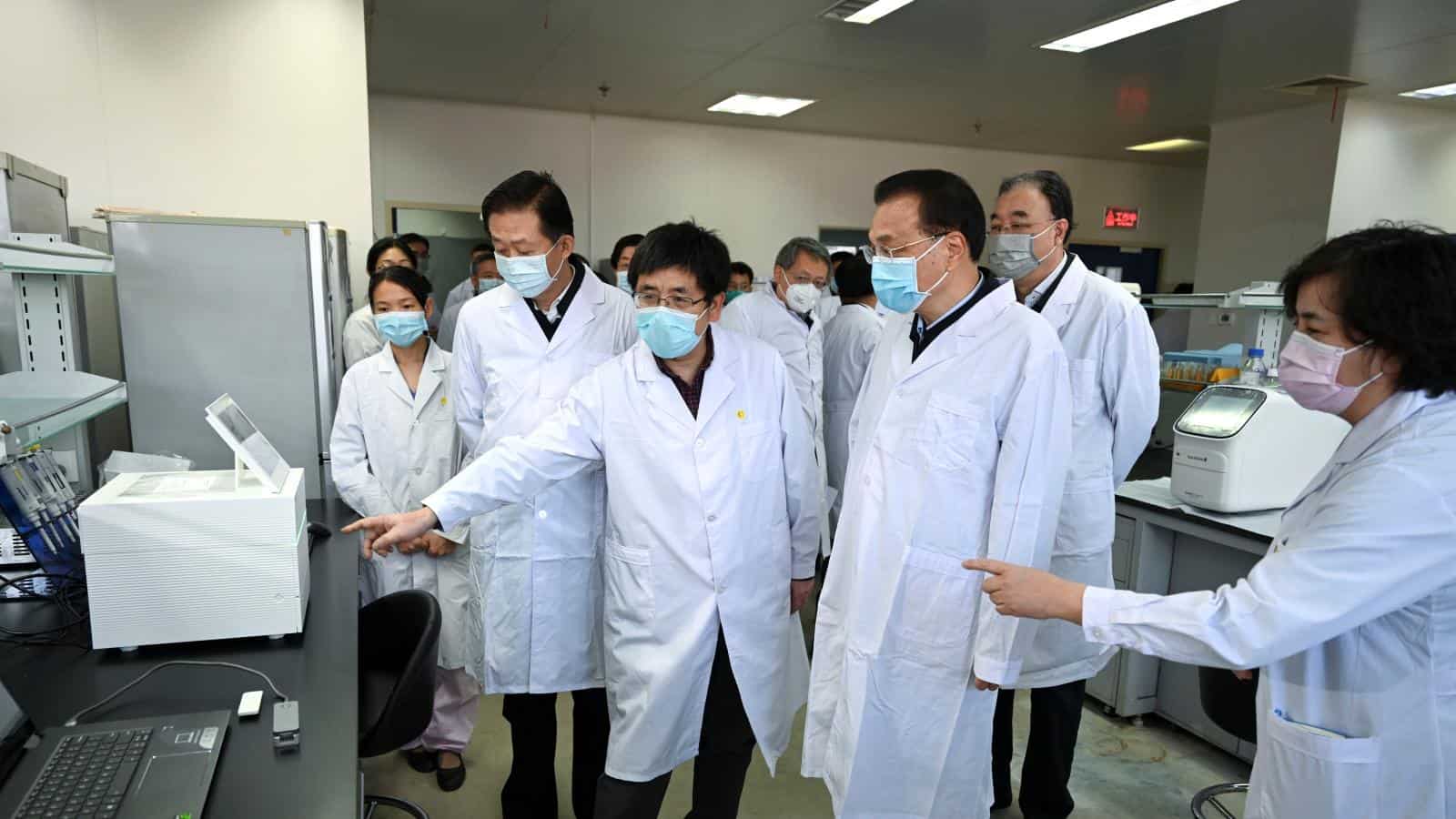
In many ways the crisis revealed how far we have come scientifically. According to the historian, “when the black death spread around, people had no idea what was killing humans and what could be done with it.” Harari sees many points of pride in the early detection of COVID-19, saying “it only took two weeks to identify the virus, sequence its entire genome and develop reliable tests.”

Harari believes that a well-informed and well-educated public, one that trusts the information it receives, is crucial to stop the spread of the virus. He does not believe authoritarian regimes have an advantage in their control over the public as its citizens will often distrust the information provided by authorities.

The author disapproves of Israeli policies that allow the secret service to track infected people through their smartphones and warn people who have been in contact with infected patients. He prefers surveillance as seen in South Korea or Singapore. In Asia, Harari says, the data “is not being monopolized by the government or security service but the data is shared with people.”

Harari emphasizes that individual countries have limited ability to monitor and solve the crisis alone. Only through shared systems and networks with neighboring countries can monitoring through surveillance ever really work, according to Harari. “It’s easier to have good cooperation when those in charge are not some sort of secret police but a health authority,” the author explains.

Distrust in science as a threat

While technological and scientific progress are something to admire, Harari is worried that recent political trends are endangering our approach to COVID-19. “Irresponsible politicians and media outlets have been eroding public trust in scientific authority, in experts in academic institutions for years, telling people they are a small elite disconnected from the people,” the historian warns.

Harari laments nationalistic populism as a source of distrust. He highlights how the scientific community is very much part of the category of “regular people,” and any notions of scientists belonging to a remote elite are unwarranted and even dangerous in these times.

The writer recognizes that people might have laughed at ridiculous conspiracies like flat earth theory or anti-vaccination movements, but they have become significant threats in our current predicament.

“To some people, maybe it looked funny two or three years ago, but now is the pay-day,” Harari warns. “Now we need a population that can distinguish between sound scientific guidelines and ridiculous conspiracy theories, and people have been losing the ability to do it.”

Learning from each other

The fragmented and often competitive actions by governments worry the historian greatly. Scenarios such as countries outbidding each other for medical equipment or the unwillingness of many to support indebted countries are examples of the choices that Harari says will be the critical factor in overcoming the crisis.

“We have a lot of important decisions to make, but in every field we have choices,” Harari says, highlighting the different approaches available. “We can choose to deal with this epidemic through nationalist isolationism and competition, each country to itself, fighting the other countries for scarce resources,” Harari claims. But the acclaimed writer acknowledges an alternative: “We can deal with it by having global cooperation and solidarity, and this choice will shape the world of the future.”

Lessons from China’s experiences with implementing and relieving its lockdowns hold great significance for our common ability to stop the global pandemic, according to Harari. The author disapproves of national leaders who have blamed other countries for the virus, and stressed that only through collaboration can humanity stop the virus.

“Blaming other countries means we cannot take advantage of our biggest asset, the ability to work together. What an Italian doctor discovers in Milan in the morning, could save a patient’s life in Amsterdam the same evening.”

The COVID-19 pandemic is not only a threat. It could also have positive consequences, according to Harari: “If this crisis results in greater global unity and greater trust in the scientific warnings of experts, in the end it would actually be good for humanity.”


Indian Nationalists Blame Local Muslims for COVID-19 Outbreak

On April 10, India Today featured a show titled “Madrassa Hotspots” with a chyron displaying alarming texts such as “children cram up in madrasas,” accusing Muslim authorities of bribing public officials to allow large groups to gather inside. The show featured continual scrolling texts accusing Muslims of purposefully and maliciously flaunting social distancing norms.

What might seem like a harmless report on public health issues to an outsider is actually emblematic of the way Indian nationalists are framing COVID-19 as a uniquely Muslim problem, or even a purposeful conspiracy against the country’s Hindu majority.

“This is not journalism, this is hate-mongering,” activist Kavita Krishnan responded in a statement decrying the India Today show. “You belong in the dustbin of Journalism,” she told the television show’s producers. “History will judge you and it will judge each of your colleagues that remain silent on this,” Krishnan stressed as she called out the channel and its employees for producing material meant to incite religious hatred. 

The activist summarized the crisis at hand: “This is absolutely shameful, that you should divide those victims of COVID-19 based on religion.”

Krishnan’s commentary highlighted the tensions between India’s majority Hindu population and its Muslim minority. Television and newspapers regularly use racist dog-whistles, employing subtle racist tropes to fuel resentment without being explicitly offensive. The India Today show did so by framing Muslims as backwards, conspiratorial, and lax about national priorities and laws.

Structural issue

What might shock outsiders even more is Kavita Krishnan’s assessment that this anti-Muslim propaganda is not produced despite government oversight, but rather to appease government officials. Krishnan accused India Today of “Grinding a communal axe during a pandemic in order to serve this government.”

Anti-Islamic resentment has flared since the election of Indian Prime Minister Narendra Modi, a Hindu Nationalist of the Bharatiya Janata Party (BJP) who has been lauded in Western media as an economic reformer. Modi’s government has revived tensions lingering from Britain’s partition of India. During the partition, entire religious populations were violently displaced, with Muslims forced towards Pakistan and Hindus forced to India.

India’s formation was explicitly secular and for decades inter-religious violence was limited to local tensions and the conflict in Kashmir. Then, Modi proclaimed India as a Hindu state. “Hindudva,” as Hindu-nationalism is called in India, originated in 1923 and gave rise to the RSS, a paramilitary Hindu group with 6 million members. This group is now a powerful force in Indian politics with its official membership counting former prime ministers and senior national officials.

The RSS sparked the rise of growing violence against the Muslim minority in 1992 when it demolished a historic 16-century mosque. Modi’s BJP party today relies heavily on the RSS to bring out voters and for political mobilization, which in turn gives the RSS disproportionate influence over the BJP government. Narendra Modi himself has attended RSS events since the age of 8, formally joining the group at age 20.

Old roots, modern problem

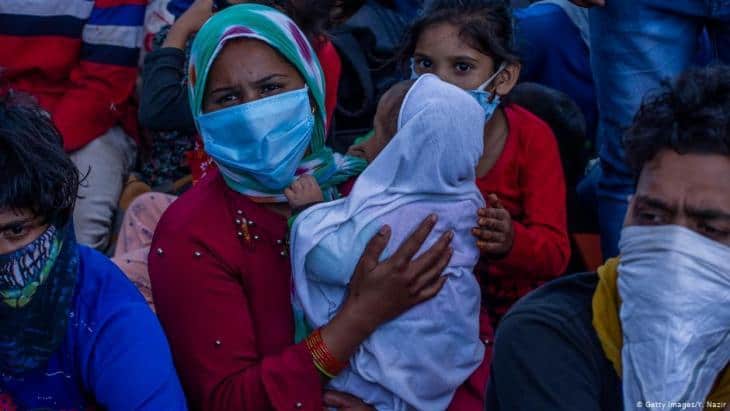
The RSS and BJP have actively engaged in inciting resentment against India’s 201 million Muslims and are now “capitalizing” on the COVID-19 pandemic to fuel the flames of inter-religious hatred. Indian media connect the word “jihad” with any issues deemed problematic in the Islamic community, and #coronajihad went viral after an Islamic conference in Delhi led to COVID-19 infections in the country.

Since the transmissions at the conference, mobs of Indian nationalists have attacked Muslims on the streets and fake memes and bigoted messages have spread through India like a virus unto itself. New and old videos from around the world are used as “evidence” that Muslims are actively trying to spread the virus as part of a deliberate and coordinated “corona jihad.”

While a large number of religious gatherings in India continued even as warnings against the virus proliferated, specific Islamic gatherings have been framed as the source of the outbreak. This has further inflamed pre-existing resentment against Indian Muslims.

Islamophobia has become a political tactic in India. As public officials and mainstream news sources continue to issue divisive propaganda, both Muslim and Hindu Indians are increasing their chances of infection as mobs gather to exact vigilante justice. Misunderstanding the threat of the virus will lead to more infections across religious demographics.

The COVID-19 virus will undoubtedly leave a lasting scar on India, but as religious tensions increase, the virus might not be the largest threat on the Indian subcontinent.

Read also: French Doctors Under Fire for Framing Africans as COVID-19 Lab Rats

Khartoum Prepares for COVID-19 Lockdown as Sudan’s Outbreak Spreads

Sudan’s Khartoum State and its eponymous capital city will be locked down for three weeks from April 18, Information Minister Faisal Saleh said on Monday evening. 

The lockdown order came after Health Minister Karam Al-Tom announced the country has recorded ten new confirmed cases of coronavirus. 

“The increasing numbers of the infections and the confirmed cases indicate that Sudan reached a stage of community spread,” Al-Tom said on April 13. 

In response, the government has decided to step up coronavirus curbs by shuttering Khartoum, a city of approximately 5 million people located at the intersection of the Blue and the White Nile.

Authorities from Sudan’s most populous state said citizens will have until Saturday to prepare themselves for the confinement.  

“Unfortunately, the announcement of the increasing numbers every day for confirmed cases, indicate that our country experiencing an advanced stage of the spread of the pandemic, a stage that requires concerted official and popular efforts to overcome this ordeal with the minimum damage,” the Khartoum state health minister said in a statement published by state-sponsored Sudan News Agency (SUNA) on April 13.  

The Ministry of Culture and Information said via its Twitter account that further details about the lockdown conditions would be provided in coming days. 

A total of 29 cases of COVID-19 have been identified in Sudan and four people have died from the virus. 

Sudan is already in the midst of a nationwide coronavirus curfew that has left airports shuttered and restricts inter-city bus travel. $120 million is needed to upgrade the country’s ailing medical facilities and purchase essential COVID-19 equipment such as ventilators, the health minister told Reuters on April 11.  


Read also: Sudan’s Defense Minister Dies of Heart Attack

UAE Sends Aid Plane to Assist Somalia’s Efforts Against Coronavirus

The UAE is providing aid to several struggling countries in an effort of solidarity against the global coronavirus pandemic.

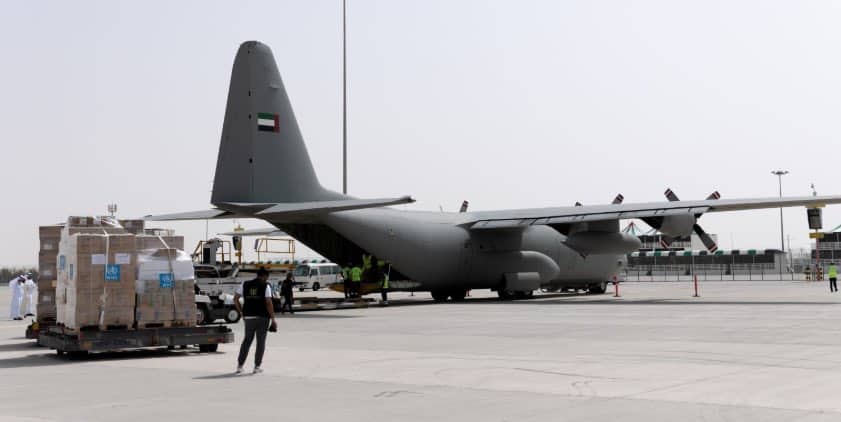
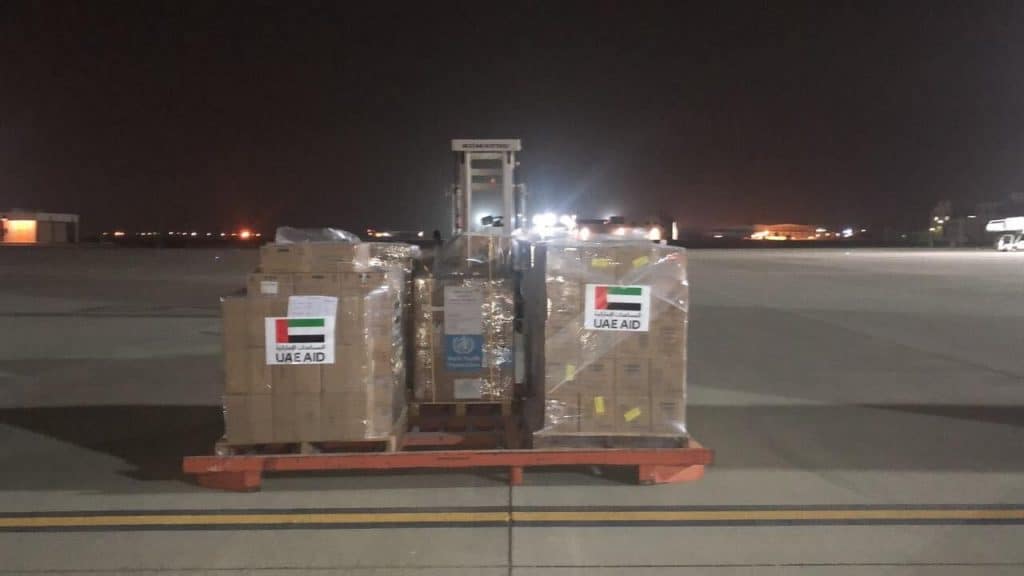
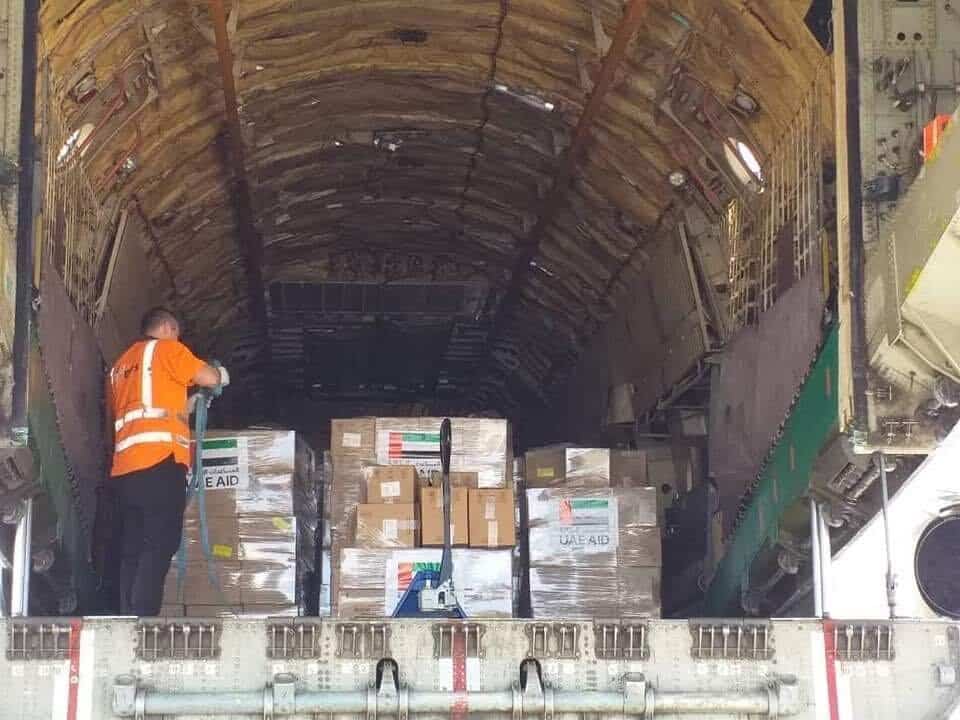
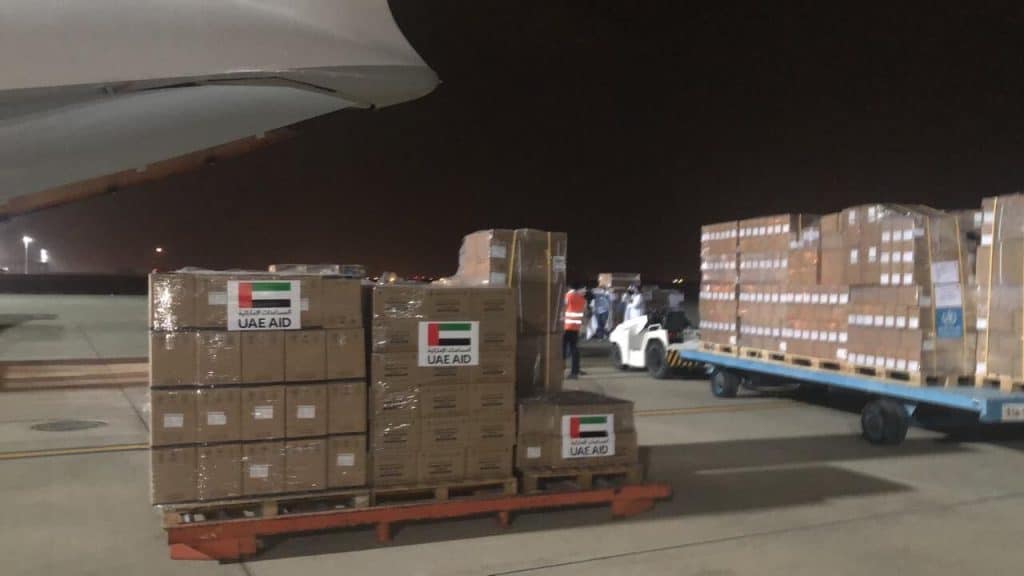
In a coordinated effort, the UAE and the World Health Organization (WHO) sent an aid plane carrying 27 tons of medical supplies to Somalia, Emirates News Agency (WAM) reported on April 14.

The WHO engaged the UAE’s “advanced air logistics capabilities” to effectively send urgent help to Somalia. 

The aid includes seven tons of medical supplies and protective gear from the UAE and 20 tons from WHO. 

The shipment aims to help approximately 27,000 workers in Somalia’s medical sector to confront the country’s emerging coronavirus outbreak.

Since the election of Somali President Hassan Sheik Mohamud in 2017, the previously warm relationship between UAE and Somalia has waned. 

Somalia has declined to cut ties with Qatar, claiming neutrality in the Gulf rift. 

Despite the rocky relationship with the sitting president, the UAE’s total aid to Somalia from January 2010 to March 2020 amounted to $326.7 million, benefiting more than 1.2 million Somalis.

The aid assisted 14 major sectors and more than 30 sub-sectors. Over the course of a decade, the funds went towards public programs and services, along with the education, health, and social services sectors.

Other UAE aid beneficiaries

The UAE also sent an aid plane carrying eight tons of medical supplies to Cyprus, which will support approximately 10 thousand medical workers in the fight against COVID-19, according to WAM’s report.

“Providing support to countries affected by COVID-19 is a humanitarian obligation upon all countries, as strengthening multilateral cooperation is necessary to overcome this crisis,” said the UAE Ambassador to Cyprus, Sultan Ahmed Ghanem Al Suwaidi.

The plane sent to Cyprus joins a growing list of aid shipments the UAE has mobilized over the course of the crisis, in cooperation with WHO, Al Suwaidi continued. The ambassador added that the coordinated efforts urge a “more robust” global pandemic response.

The UAE also announced that it sent a plane carrying 33 tons of medical supplies to Ethiopia to support approximately 33,000 medical workers.

“The UAE is committed to a humanitarian approach that upholds emergency relief in areas of need as a key tenet,” said the UAE Ambassador to Ethiopia, Mohamed Salem Al Rashedi.

The shipment included 15 tons of supplies provided by each of the UAE and WHO, and approximately three tons of supplies provided by the African Union. 

“Through our partnership with the World Health Organisation, we are proud to honor this mandate in facilitating the delivery of critical aid to Ethiopia as it exerts all efforts to contain COVID-19,” Al Rashedi emphasized.


Read also: UAE Withdraws Troops from Yemen, Celebrates 5-Year Achievements

LNA Forces Launch Retaliatory Attacks on Tripoli After GNA Victories

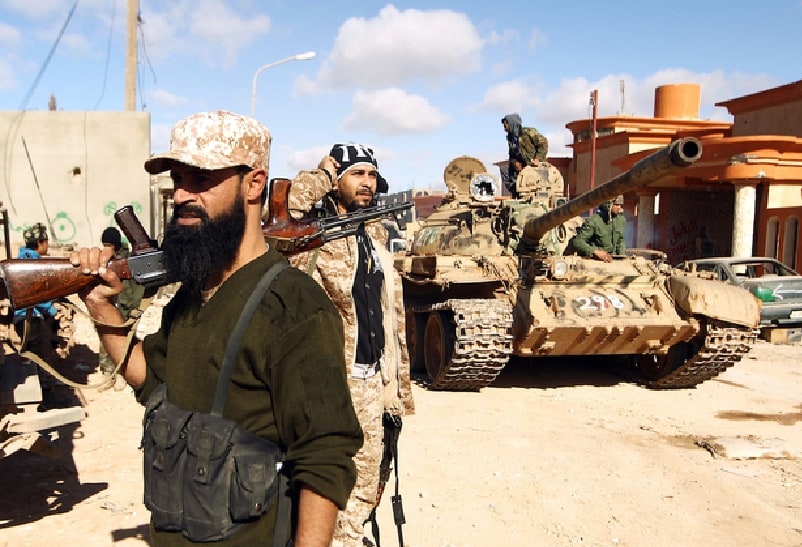
Libyan National Army (LNA) forces launched a volley of rocket attacks at Tripoli and the area around Misrata Airport in retaliation against the gains made by the UN-backed Government of National Accord (GNA) along the western coast over the weekend. 

Round after round of rockets peppered Tripoli and its surroundings overnight, damaging several homes, according to French Press Agency (AFP) journalists. There are no reports yet of casualties but the GNA has criticised the LNA for allegedly targeting civilians. 

“The criminal militia and mercenaries have taken out their anger on residential neighbourhoods of Tripoli to avenge their defeat, firing dozens of rockets and missiles on the capital indiscriminately,” said GNA military spokesperson Mohamad Gnounou.

Gnounou confirmed media reports, also announcing on Tuesday that GNA troops had retaken approximately 1,860 square kilometres of territory, held by forces loyal to General Haftar, centered around the cities of Sorman and Sabratha.

According to local municipal council authorities who recognize the LNA, drone strikes were a key feature of the attack. 

“The sound of the drones above the city was like a beehive. There were many air strikes,” a local resident told Reuters.

The LNA said today on Twitter that the Government of National Accord burned down the Sabratha police station and conducted a number of public executions after retaking Sabratha and Sorman.

The same source is reporting that LNA troops captured a number of Syrian and Turkish fighters during April 13 and 14 ground assaults on areas surrounding Tripoli. 

Sorman and Sabratha, which are 60 kilometers and 70 kilometers west of Tripoli, were held by forces loyal to Haftar. The general launched a bloody, but as-yet unsuccessful campaign to wrest control of the capital in April 2019.

Leveraging resource access

The latest spate of fighting and rounds of rocket attacks on Tripoli come after a Shwerif-based group  cut off the water supply to approximately 2 million city residents for more than a week, before supply was restored over the weekend. 

It appears the incident was unrelated to the general fighting and instead was “disrupted by a group in the Shwerif area as a pressure tactic to secure the release of family members.” 

“Water should never be used as a pressure card nor as a weapon of war. It is particularly reprehensible to deliberately cut off water supplies from people anywhere in Libya,” UN Humanitarian Coordinator in Libya Yacoub el Hillo said on April 10.

“This deplorable water cut is coinciding with a serious power outage in the western region, also imposed as a result of another individual dispute,” el Hillo added.

In separate but similar circumstances, power was cut for a number of days prompting criticism from the United Nations Support Mission in Libya. 

Haftar’s international legitimacy increased in recent months. The general met unilaterally with French President Emmanuel Macron and Germany’s Chancellor Angela Merkel in early March to discuss political solutions to the nearly decade-long conflict.

Meanwhile, the GNA ordered Turkish mercenaries to intervene, eroding its sovereignty and legitimacy in the eyes of the international community. 

Sudan was again accused of sending foreign fighters into the Libyan conflict, but the Sudanese Ministry of Foreign Affairs staunchly denied the accusations in a statement issued on April 13. 

In addition to repudiating involvement in the fighting, the ministry called for its “fellow Libyan brothers to stop the military escalation and fighting to end the human suffering of the Libyan people, and to mobilise efforts and resources to combat the coronavirus pandemic, which represents the greatest threat facing humanity at the present time.”

The Libyan civil war has become a proxy for a regional power struggle. 

On one side, the UN-recognized GNA, based in Tripoli, led by Prime Minister Fayez Sarraj, is backed by Qatar, Turkey and Italy. 

On the other is the Libyan National Army (LNA), led by General Khalifa Hafter and based in eastern Libya, supported by Egypt, France and Russia.


Read also: Washington Refuses to Approve Algerian Ramtane Lamamra as UN Libya Envoy