Egyptian IS Fighter arrested in Southern Spain

Spanish police raided on an apartment in the Andalusian city of Almeria and arrested three people, including an Egyptian national suspected to be Abdel-Majed Abdel Bary, late on April 21.

“The detained man spent several years in the Syria-Iraq area and presents peculiar personality features such as an extremely violent criminal profile which caught the attention of police and intelligence services in Europe,” Spain’s National Police said in a statement.

The Egyptian national, thought to be ISIS fighter Abdel Bary, was considered a major threat by Spanish police “both because of his criminal trajectory in the ranks of Daesh (Islamic State) and because of the high danger that he represented.”

It is believed that the trio transited through North Africa to reach Spain where they holed up in a rented apartment amid the COVID-19 lockdown. 

“The detainees adapted their behavior to the circumstances of the ‘state of alarm’ as a consequence of the Covid-19 pandemic, making few exits, separately, and always with masks to avoid being detected,” a police spokesperson explained.

Police said they are still trying to verify the identity of the two other detainees and what they were doing with the Egyptian national. Security services are yet to determine if the duo are fellow returned foreign fighters, were providing “security and logistical support for entry into Europe,”or planning fresh terrorist attacks against Spanish targets. 

All three men are expected to appear before the National Court in Madrid court on Wednesday, an anonymous court spokesman told the media. 

Abdel-Majed Abdel Bary grew up in Maida Vale, London and had a brief rap career before leaving the UK after his Egyptian father was deported to the US to face terrorist charges relating to the bombing of US Embassies in Africa in 1998. It is believed he became radicalized around 2012, when his father was sent to trial in the US. The young man then left the UK to join ISIS in Syria sometime between 2013 and 2014. 

From 2014 onwards, Abdel Bary appeared in gory ISIS propaganda, brandishing the head of a dead soldier in one photo posted to Twitter. 

UK Islamic Radicalization expert Shiraz Maher told the Associated Press Abdel Bary had become disillusioned with ISIS in recent years and “dropped off the radar,” but should still be prosecuted for his crimes

“He was a member of ISIS and clearly participated in all kinds of horrors the group was involved in and should face punishment for those crimes,” said Maher, who works at Kings’ College London. 

“At this stage, he is more likely to be someone who was trying to save himself in Spain,” he added. 

Around 400 people suspected of being returned foreign fighters have been arrested by Spanish security services since 2012.


Read also: COVID-19: Turkey Seizes Respirators Destined for Spain

Saudi, Chinese Citizens Most Satisfied With State Environmental Efforts

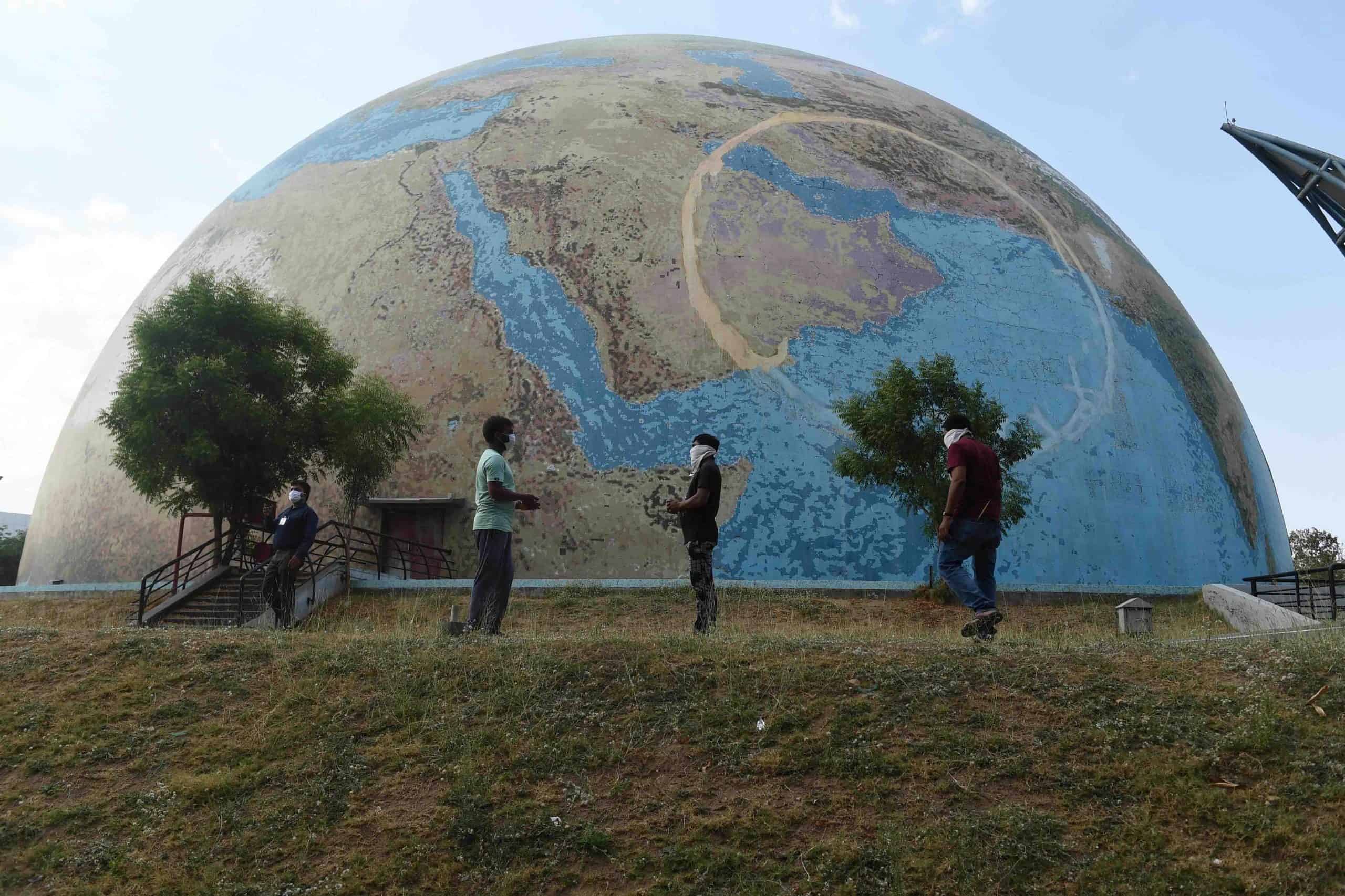
April 22 marks the 50th anniversary of Earth Day, an international day of support for measures to combat climate change, provide cleaner energy, and safeguard environmental health. While the climate crisis might not be the top crisis occupying the public’s attention, American polling agency Gallup used the opportunity to use data from its polls on citizens of 145 countries to gauge their satisfaction with their government’s efforts on the issue.

Preserving the environment

Gallup polled people’s satisfaction with government efforts to preserve the environment, focusing on the countries that emit the most carbon dioxide. The list included China, Saudi Arabia, India, Germany, Iran, the USA, Japan, South Korea, and Russia and produced insightful results.

Russian citizens are most dissatisfied with their government’s efforts to preserve the environment. As one of the world’s top hydrocarbon producers, Russian citizens appeared well aware of their country’s dependence on the industry and its potential consequences. Saudi Arabia’s citizens appeared impressed with the country’s efforts to “green” their economy as 79% of citizens reported satisfaction with government policies.

The US, Japan, Iran, and South Korea all featured near the bottom, with only 42-46% of the population happy with government policies impacting the environment. Japan and South Korea are top emitters of carbon dioxide because of manufacturing while Iran and the USA also have major hydrocarbon-producing industries that impact the environment.

Quality of water

Of all polled people, 73% declared they were satisfied with local water quality. Saudi Arabia, Germany, and Canada expressed the most satisfaction among top emitting countries, while Russia and Iran featured at the bottom with 64% and 60%, respectively.

Only 11% of Saudi Arabian citizens have reported dissatisfaction with local water quality even though the country is situated in one of the driest areas on Earth.

The world’s highest-populated countries, India and China, featured fairly low in the ranking as only 76% of Chinese citizens and 75% of Indian citizens reported they were happy with their water quality. Because of the size of these countries that means almost half a billion people might be dissatisfied with their water quality in just these two nations.

Quality of air

Over three out of four people polled (78%) expressed satisfaction with local air quality. China’s polluted megacities have received much media attention as local industry and coal plants reduce visibility and limit air quality. Still, 81% of Chinese citizens are satisfied with local air quality according to the poll, perhaps explained by China’s shrinking but still immense rural population.

South Korean citizens reported the lowest satisfaction with air quality. Only 53% of participants reported satisfaction while 44% reported to be dissatisfied. The WHO in the past has issued warnings over high concentrations of chemicals in South Korea’s air and citizens have clearly noticed.

Work to be done

The study reveals that citizens are indeed impacted by manufacturing and hydrocarbon extraction and that many would appreciate further action from their governments. China’s population clearly recognizes the country’s much-publicized efforts to move to greener energy, and other governments could find hope in this public appreciation. 

While COVID-19 may dominate the news cycle, the planet is experiencing a historic Earth Day, with the recent fall in emissions offering the earth a moment to breathe. How much citizens will emphasize a more sustainable future will likely influence how seriously politicians take the energy transition. Data like Gallup’s can only further strengthen the argument that it is time for governments to take climate change seriously.


Read also: Turkey Bans News Sites, Escalating Information War With Saudi Arabia, UAE

UN Raises Alarm on Possible War Crimes as Fighting Intensifies in Libya

The United Nations Support Mission in Libya (UNSMIL) is mandated with overseeing the political solution to Libya’s conflict. In the past week, the organization has expressed its growing alarm at escalating violence and tactics that different parties to the conflict are employing. 

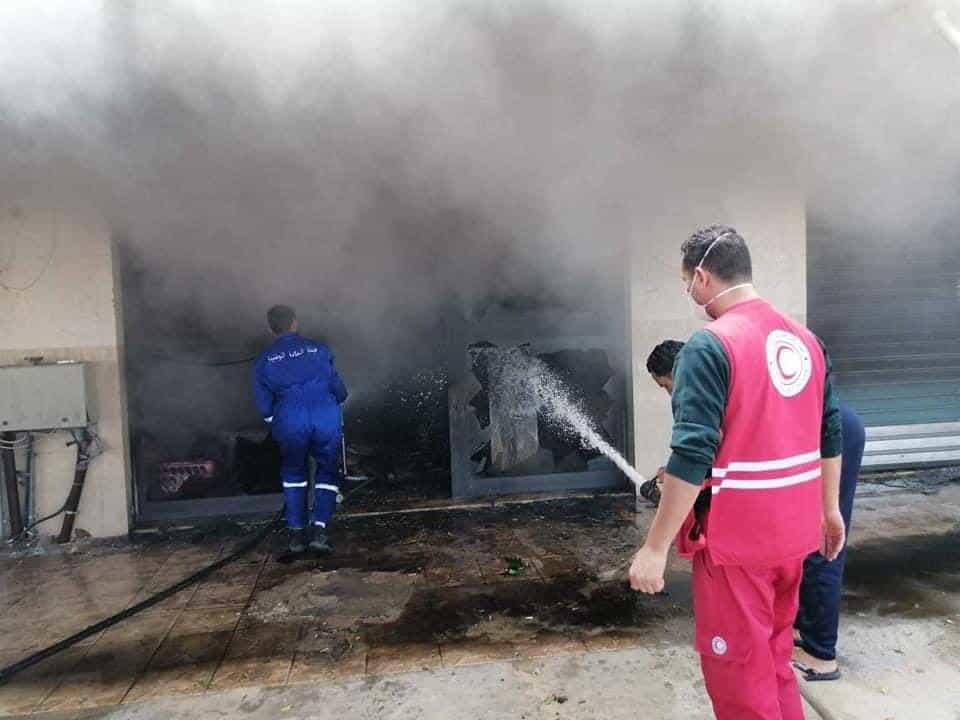
In an April 20 statement, the UN mission said the humanitarian situation is “rapidly deteriorating,” singling out the indiscriminate shelling of Tripoli and retaliatory acts in western coastal cities such as Tarhouna as drivers of the worsening conditions.

“UNSMIL reminds all parties to the conflict that indiscriminate attacks, as well as the targeting of hospitals and other medical facilities, and intentionally cutting off electricity, fuel, water or food supplies are violations of international humanitarian law and could, depending on the circumstances, amount to war crimes,” a statement posted on the mission’s website said.

The UN reported that indiscriminate shelling in and around the capital Tripoli in recent days killed five civilians and injured 28 more. They also noted that a rocket attack on April 17 caused significant damage to the intensive care wing at the Royal Hospital in Tripoli but did not identify the forces responsible. 

“UNSMIL is also alarmed by the deteriorating humanitarian situation in Tarhouna, due to the military escalation in and around the city, resulting in the fresh displacement of civilians,” the statement went on to say. 

The UN body also called for an end to retaliatory electricity and gas cuts which it said equated to “collective punishment” for those affected, who are mainly civilians. The statement highlighted concerns over reports of “arbitrary arrests of civilians and mistreatment of both civilians and fighters in Tarhouna.”

The United Kingdom’s Embassy in Libya joined UNSMIL in calling for a de-escalation to the violence, to prevent further civilian casualties and allow parties to focus on fighting the novel coronavirus. 

The embassy said via Twitter that it is “concerned by violence in western Libya and the cost in civilian casualties.”  

“We urge against all escalation. Fighting must stop if for no other reason than to save lives and respond to shared threat of COVID,” the embassy tweeted on April 19.

A proxy struggle rages on

Tripoli has been the object of the Libya National Army’s (LNA) offensives since April 2019. One year later, they have failed to take the capital that seats the Government of National Accord (GNA), but have inflicted significant damage with sustained rocket attacks. 

Meanwhile, the GNA, with backing from Turkish mercenaries, has made significant advances on Libya’s western coast in the past week. Hired forces composed largely of Syrian fighters retook Sorman and Sabratha, which are 60 kilometers and 70 kilometers west of Tripoli, on April 14. In recent days, with overhead support from the Turkish Air Force, militias supportive of GNA took Tarhouna.

The recapture of the western coastal areas was a heavy blow for Haftar’s forces and cut off valuable supply lines. The LNA hit back with a vengeance, waging a concerted campaign of retaliatory rocket attacks on Tripoli and surrounding areas. The UNSMIL statement failed to identify who perpetrated the various humanitarian violations it has learned of in recent weeks. \

Haftar’s international legitimacy has increased in recent months, primarily off the back of Turkish involvement on the behalf of the GNA. Foreign fighters’ backing of the Tripoli-based government has eroded its sovereignty and legitimacy in the eyes of some members of the international community. 

The Libyan civil war has become a proxy for a regional power struggle. 

On one side, the UN-recognized GNA, based in Tripoli, led by Prime Minister Fayez Sarraj, is backed by Qatar, Turkey and Italy. 

On the other is the Libyan National Army (LNA), led by General Khalifa Hafter and based in eastern Libya, supported by Egypt, France, and Russia.

Read also: Escalating Fighting in Libya Raises Concern over Painful Impasse 


Syria, Turkey, Korea: How Developing Stories Could Change the World

This week marked three developments that could reshape long-standing geopolitics. While peace hangs in the balance in the Levant, Eastern Asia could have a potential window for peace while the North Atlantic Treaty Organization (NATO) could lose a powerful member.

While it seems all news is related to COVID-19, the developments could reshape our world in unexpected ways:

Syria

A tentative ceasefire between Russian and Turkish forces in Idlib province is on the verge of breaking. Turkish President Recep Tayyip Erdogan has accused Syrian forces of violating the truce. “Should the regime, which has violated the cease-fire and other conditions of the agreement, continue in this way, it will pay a price with heavy losses,” Erdogan said in an address to the nation as he reaffirmed Turkey’s commitment to the agreement.

Idlib is now a cause for concern. The war-ravaged province has seen 185,000 Syrians return to their native country since the ceasefire was agreed, according to Anadolu Agency. The truce between Turkey and Russia came as the threat of COVID-19 started to spread in early March. Concerns are now rising for a resumption of hostilities in the midst of a public health crisis.

North Korea

In Eastern Asia, Kim Jong Un is battling for his life in a North Korean hospital, according to US intelligence sources. The 36-year-old ruler of the isolated communist country was reported to be suffering from complications after undergoing cardiovascular surgery. Kim has not been seen in public since April 11 when he discussed COVID-19 measures and elevated his sister Kim Yo-jong within North Korean ranks.

Kim Yo-jong rose to prominence in Pyongyang in recent years as a spokeswoman, representative, and propagandist in the secretive regime. If her brother’s condition worsens, some expect her to take the reins of power, although a range of senior military officials could also make a power grab. If the country’s current ruler, who is known to be a heavy smoker and unhealthy eater, does not recover, we could see the first official female-led dictatorship.

Turkey

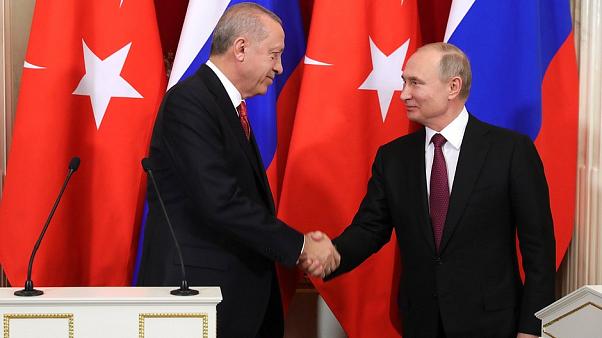
While Turkey and Russia are on opposing sides in Syria, a rapprochement is underway between strongmen Vladimir Putin and Recep Erdogan. Both national leaders are under fire for their handling of their national COVID-19 outbreaks, and both could use some “good news” on foreign policy. That good news would be seen very differently in Europe and the United States as Turkey prepares to activate its Russian S-400 missile system, potentially signaling a break with NATO.

On Monday, Reuters cited a Turkish official as saying the plans would be delayed because of the pandemic, but today, US State Department Spokesperson Morgan Ortagus told the same outlet that the US is deeply concerned that Turkey might soon activate the system. If it does, it would mean Turkey is likely to exit NATO: The Russian system directly interferes with an expensive new fighter jet that NATO sees as its trump card for the coming decades.

Although none of these stories would grab traditional headlines, all three have the potential to change our geopolitical structure. Having NATO’s second largest army leave in favor of an alliance with Russia would change the balance of power in Eastern Europe and the Middle East. Without Kim Jong Un, North Korea might see a power struggle with unexpected results. If fighting recommences in Idlib, the consequences for Syria and the region could be far-reaching: A conflict zone would provide the “perfect” breeding ground for COVID-19.

In the midst of a flood of COVID-19-related stories, these three developments could potentially change the world in many good, bad, and unexpected ways.

Third Time’s the Charm: Israel Forms National Emergency Government

Israel finally has a government after three elections and a year of political deadlock. On Monday afternoon, Blue and White Party leader Benny Gantz and long-serving Prime Minister Benjamin Netanyahu finally reached an agreement to form a “national emergency government” to deal with the country’s COVID-19 pandemic.

“We prevented a fourth election. We will protect democracy. We will battle corona and we will worry about all the citizens of Israeli. We have a national emergency government,” Gantz told Twitter followers on Monday evening.

The agreement will stave off a fourth round of national elections, and ensure Gantz a tilt at the premiership in 18 months. Under the power-sharing deal, Netanyahu will stay on as prime minister for half of a three-year term, before a switch to allow Gantz to take the reins. 

“I promised the State of Israel a national emergency government that will act to save the lives and livelihoods of Israeli citizens,” Netanyahu Tweeted after the deal was sealed. 

Devil is in the Detail

It will also deliver a large, mixed cabinet of 32 ministers with spots for members of Likud and the Blue and White Party, including the role of deputy prime minister and plum defense minister Gantz. Blue and White deputy-leader Gabi Ashkenazi will serve as foreign minister, and party colleague Avi Nissenkorn is set to lead the justice ministry. The key roles of finance and public security ministers and Knesset speaker will go to Likud.

During consecutive election campaigns, Gantz had promised not to partner with Likud to form a majority coalition, as long as Netanyahu remained Prime Minister. Netanyahu is facing charges of bribery, fraud, and breach of trust, connected to three separate cases, the trials for which have been delayed until May by the COVID-19 outbreak. 

Therein lies one of the most controversial aspects of Gantz and Netanyahu’s emergency coalition government. Under the arrangement, the Judicial Appointments Committee will be headed by Blue and White’s Zvi Hauser and the right-wing Likud will retain veto power over the committee’s decisions. 

Gantz Alienates Opposition

The compromise drew the ire of former Gantz ally, Yesh Atid-Telem leader Yair Lapid, who campaigned alongside Blue and White in all three elections but dropped support for Gantz after he accepted the role of parliamentary speaker. 

Lapid took to Twitter to lambast the deal saying, “the compromise on the Judicial Appointments Committee is that Bibi [Netanyahu] chose all its representatives.” 

“Gantz and [Blue and White MK Gabi] Ashkenazi agreed to allow the criminal defendant to appoint the judges that will adjudicate his affairs,” he said, referring to Netanyahu’s upcoming trials. 

Yesh Atid-Telem, Avigdor Lieberman’s far-right Yisrael Beytenu, and the Arab Joint List will likely sit in opposition and have been forthcoming with their criticism of Gantz. Despite holding disparate political values, they all seem united in their disdain for Gantz and his inability to unseat Netanyahu.

“This is another government of Netanyahu and his Haredi-messianic bloc with a fig leaf of two senior [generals],” Liberman told Facebook followers, denoting Gantz and foreign minister-to-be Ashkenazi.

“Gantz wasn’t brave enough to win, and chose to give a kosher stamp to annexation [in the West Bank], racism, and corruption,” Joint List leader Ayman Odeh jibed in a statement.

Deep Distrust Marked Negotiations

Another sticking point of the negotiations was what would happen to Netanyahu if he was convicted, whenever his trials can go ahead, according to Israeli political analyst Avraham Diskin who was privy to some of the talks.  

“There was a total lack of trust. I pray that the government will hold up and won’t miss the opportunity with fights over nonsense,” Diskin told the Associated Press. 

Likud sought assurance that Netanyahu would not be forced to stand down at the end of his 18 month premiership, and Blue and White likewise sought assurance that the government would hold for long enough to give Gantz his chance as prime minister. 

Under Israeli law, any parliamentarian facing judicial action must step down, except the prime minister, who has immunity from prosecution.

Netanyahu claimed victory in the March 2 poll but still failed to win enough seats to gain a governing majority. President Reuven Rivlin gave Benny Gantz the opportunity to form a coalition government, but talks failed and the president handed the responsibility of forming government to Knesset members on April 16. 

It is unclear whether the new “emergency coalition” government will be able to survive its initial six-month tenure and successfully transition into a fully functioning majority coalition. Right-wing Likud and center-left Blue and White have such vastly different policy agendas and ideological positions that governing together will no doubt be tricky. 


Read also: Israel to Ease COVID-19 Curbs While Morocco Extends Lockdown

How Oil Prices are Impacting Kuwait and Iraq

The oil market is “officially broken,” an exasperated oil market expert told CNN on Monday, April 21. Bjornar Tonhaugen, head of oil markets at Rystad Energy, said he was “shell-shocked” by the negative oil prices in the heart of the US after May futures were set to expire.

The global oil market is experiencing turmoil unlike any other time in history, outside of world wars. Storage capacity is rapidly running out around the world as oil-producing nations continue to churn out tens of millions of barrels of oil every day. The first victims of the current supply glut will likely be US oil producers, but the sustained low prices are having a dire effect on the budgets of Middle Eastern countries.

Iraq and Kuwait are two examples of countries where state revenue is heavily tied to oil prices.

Iraq

Despite political unrest and the continuing aftereffects of its struggle with ISIS, Iraq started 2020 hopeful with its largest budget in history. The budget aimed to improve the country’s broken infrastructure and invest heavily in the nation’s youth. With a median age of 21 and political unrest rife on Iraqi streets, the government had hoped to build support by investing heavily in the future of the nation.

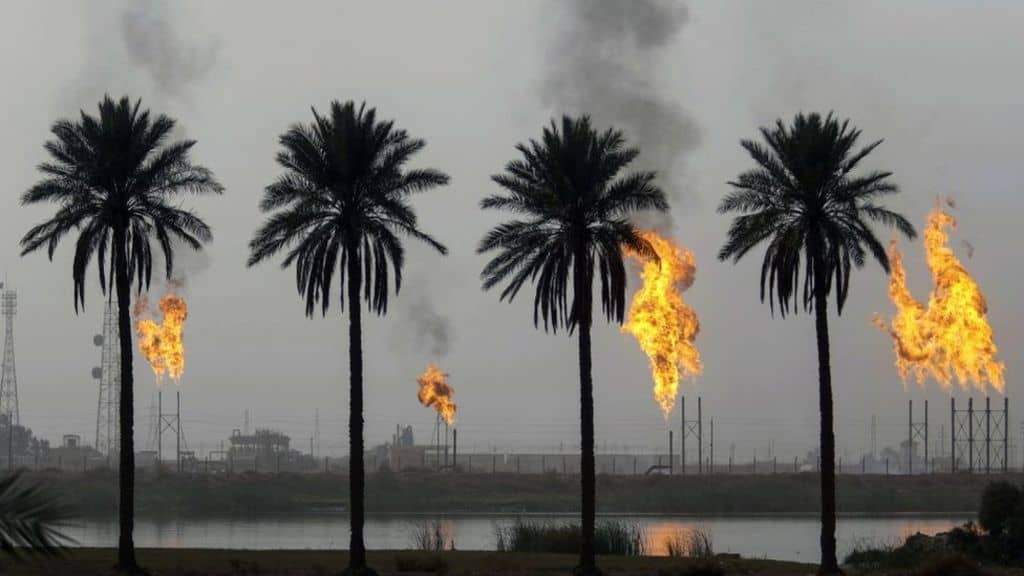
Iraq’s budget became a major worry as oil prices slid along with global demand amid the COVID-19 pandemic. With 93% of Iraq’s revenues based on oil, the $135 billion dollar contribution from Iraqi oil production started to diminish. When outlining the national budget, the country’s government had expected oil prices to hover around $56 dollars per barrel.

The country is still in disarray after ISIS ravaged and occupied significant swaths of its territory. Citizens achieved a change in leadership through protests, but repeated prime ministerial appointees have failed to form a government in the divided nation. Now that Iraq stands to lose roughly two-thirds of its oil revenues, few options remain to stabilize the nation.

Kuwait

Kuwait enjoyed a decade of relative stability compared to Iraq, but its budget hinges on average oil prices of $81 per barrel. Analysts predicted the budget would have a $30 billion deficit, breaking even if Brent prices would remain around $81, but the current global averages mean the country could be in big financial trouble.

Just like Iraq, Kuwait’s production levels are closely linked to Saudi state-owned oil giant Aramco. Following a failed Saudi-led agreement to curb production between Russia and OPEC, agreed-upon production cuts damaged Kuwait’s budget.

Kuwait’s finance minister, Mariam al-Aqeel, has promised to fund some of the deficit from state reserves. As the country heads towards its sixth consecutive year running significant deficits, Kuwait’s National Assembly has, so far in vain, debated whether to raise public debt ceilings. Kuwait’s current predicament could easily lead to a downgrade by international ratings agencies, making it more expensive for the country to borrow money and finance its debt.

Powerless nations

Kuwait and Iraq are both dependent on larger oil-producing nations to set production levels and stabilize prices. The current price war has eased somewhat with the agreement between OPEC and non-OPEC countries, but there will be little hope of recovery without a significant rise in demand.

With revenues from hydrocarbon production unable to pay for state budgets, both countries are left with little agency to diversify their economies and break their reliance on oil revenues. Only a major destruction in supply, such as a collapsing oil industry in the US, could potentially raise prices in the near future.

Prices may rebound to some extent if the coming months witness a total collapse of the US shale gas industry. Combined with a renewed positive economic outlook for China, a recovery in oil prices is now closely linked to how COVID-19 develops. A renewed outbreak in countries where lockdowns are lifting could mean Iraq and Kuwait will face significant deficits and will likely present much less ambitious budgets for 2021.


Read also: US Oil Prices Negative for First Time in History

US Oil Prices Negative for First Time in History

American oil prices fell to historic lows on Monday, April 20. As the day dragged on, prices fell over 300% to negative $40 per barrel, meaning producers would pay customers to take oil off their hands. For the first time in history, some of the world’s oil supply was essentially worthless as suppliers were rapidly running out of storage for the unprecedented production glut.

The primary reason for the oil price collapse over the last month is that one third of demand in global markets evaporated. Factories remain shuttered, airlines are grounded, and consumers are staying home. Oil prices fell below $0 in the US where storage capacity is running out, and many producers fear a spree of bankruptcies in North American hydrocarbon production.

Why the negative prices?

Prices fell into negative values on Monday as traders who had bought and sold contracts for oil to be delivered in May realized they could not sell the contracts to others. When investors “trade oil,” what they do is buy “futures,” meaning a contract to have oil delivered at a future date. Often traders buy these contracts not with the intent to use the oil, but to sell it at a higher price before the physical oil would be delivered.

In a way, oil traders gamble that the delivery contract they buy will be worth more closer to delivery when they can sell the contract to someone who actually intends to use the oil. The gamble did not pay off this month as a fall in global demand means more oil is produced than is used. With no one to buy the physical oil that is bound to be delivered shortly, traders were willing to pay others to take the contracts off their hands.

Why did this happen where it did?

The need for storage is especially important when it comes to West Texas Intermediate (WTI) crude, a specific type of oil produced in North America that is traded via a transport and storage hub in Cushing, Oklahoma. This hub is home to storage facilities capable of holding roughly 91 million barrels of oil, but this tremendous capacity is rapidly running out. Within two weeks, US storage is expected to reach “tank tops,” meaning there will be no more space to store excess oil.

Because much of the locally produced oil has to be shipped over land, there are limited storage facilities available to producers and buyers of crude oil. Contracts due in May would require oil buyers to either use or store the oil. Sellers were desperate to offload the contracts they had bought with no intention to use the oil, not wanting to pay for storing the crude.

Why not temporarily halt production?

Shutting down an oil well can be a complicated and even dangerous process. Wells can suffer damage which prevents them from ever reopening. Shutting off an oil well during a fall in demand is similar to tearing down a supermarket when there are no customers. It would reduce short-term losses, but tremendous costs would be required to rebuild the supermarket when demand increased again. 

Oil and shale gas production requires constant pressure on wells to keep hydrocarbons flowing to the surface. Once this pressure is taken off, the well may collapse or suffer irreparable damage.

Another problem lies in the debt smaller US oil producers have taken on to finance the purchase of oil wells, which can easily cost $10 million to $20 million. Shutting these wells down properly requires a company to pay large amounts of money. At the same time, the company’s debt grows and they have no future prospect of income from the well without again investing large sums at a later date.

Is this a uniquely American problem?

Usually large quantities of oil flow south from Oklahoma to Houston, Texas for export, but as the global oil market has shrunk by at least one third, few are now buying.

Brent Crude, a similar light sweet crude produced in the North Sea, sets a benchmark price for European, African, and Middle Eastern oil. Although Brent dropped 10% after WTI fell into negative values, it still hovers around $20 per barrel in what is seen as a more realistic indicator of true oil prices. Brent oil is produced offshore and can be shipped to a variety of storage facilities, making storage issues less urgent compared to the situation in North America.

While $20 is still a very low oil price that is not sustainable for many producers in the long-run, the effect that WTI’s current price of negative $8.50 will have on hydrocarbon production in North America could become a long-term positive for oil producers in Europe, Africa, and the Middle East. 

Rystad Energy earlier shocked the industry with their estimate that hundreds of US energy producers might soon file for bankruptcy, but this prediction factored in an oil price of $20. If prices go below $10, previously thought to be highly unlikely, more than 1,000 oil production companies across the US could go bankrupt.

Government response to negative prices

Last week Donald Trump received nearly universal praise from market analysts for striking a “historic” deal to cut global oil production by 10 million barrels per day. The agreement has still not come into effect, and any positive impact from the deal will evaporate before the cuts become a reality.

Ironically, the only realistic way for oil markets to make a modest rebound is through the collapse of the US shale gas industry. The expansion of this industry has turned the US into a net exporter of oil. In the absence of competitive prices, many industry companies will collapse, reducing global oil production significantly and potentially re-balancing supply and demand.

The US oil industry employs roughly 10 million Americans. With a historic 22 million Americans filing for unemployment benefits since the pandemic hit, Trump can ill afford a collapsing oil industry. The US president offered to either buy or lease storage space for 75 million barrels of oil in US strategic reserves, which would buy some time but would not reverse the trend. Trump downplayed the negative oil prices as a “financial thing,” referring to the trade in futures, but offered little in the way of reassurance that all will be well in the oil industry.

A sign of coming economic trouble

In response to the historic drop in oil prices, the Dow Jones dropped nearly 600 points. Markets had been cautiously optimistic over flattening curves in the COVID-19 pandemic, still enjoying the effects of unprecedented stimulus and support provided by the US government and Federal Reserve. This optimism waned as oil prices fell, a historic indicator that difficult times are ahead.

The economic uncertainty is confounded by the structural nature of oversupply in oil markets amid significant doubts that a rapid economic recovery could materialize. While national leaders around the world appear eager to reopen their economies, without sufficient evidence that the pandemic is truly under control, there is little chance of a successful return to ‘normal’.

The trouble is most acute for oil producers. In areas where production is expensive, such as Brazil’s offshore industry or Canadian tar-sands, shutting down production now could mean shutting down production forever.

Apple Expands Product Offering in MENA Region

Apple announced on Tuesday that it would make its games and applications shop, the App Store, available to 20 more countries and its audio streaming service, Apple Music, available to 55 new markets including a large number in the Middle East and North Africa.

“We’re delighted to bring many of Apple’s most beloved Services to users in more countries than ever before,” said the vice president of Apple Music and international content, Oliver Schusser.

“We hope our customers can discover their new favorite apps, games, music, and podcasts as we continue to celebrate the world’s best creators, artists, and developers,” Schusser said in a Tuesday press release

In addition to the App Store and Apple Music, users in Libya, Morocco, Afghanistan and Iraq can now also access game subscription service Apple Arcade, Apple Podcasts, and cloud storage through iCloud.

Apple Music will be made available in 52 countries and regions for the first time, under the 2020 expansion which coincides with worldwide shutdowns prompted by COVID-19. In the MENA region, listeners in Algeria, Mauritania, Tunisia, Kuwait, Qatar, and Yemen can now access some 60 million songs through the popular audio streaming service. 

The expansion that debuted on Tuesday is Apple’s biggest since 2012, and means the App Store is now available in 175 countries, while Apple Music is accessible in 167 countries worldwide. The move places Apple Music leaps ahead of its closest music streaming sector competitor Spotify which is available in only 79 countries. 

Apple CEO Tim Cook boasted record earnings for the first quarter of 2020 off the back of all-time high revenue from its services and wearable products, and the highest quarterly revenue from hardware such as the iPhone and the MacBook. 

The 2020 expansion, particularly into the African market, is a nod to the fact that while hardware purchases may remain out of reach, music or games subscriptions accessed via cheaper Android devices can unlock a previously untapped revenue stream for the company.  Apple has also adjusted its prices down and increased the free trial period to attract more new customers. 

Stray Grenade Found by Children Explodes, Killing 5 in Jordan

The grenade blast on Monday killed a mother and her four children, who allegedly brought the unexploded ordnance back to their neighborhood in Mafraq, 8 kilometers north of the Jordanian capital Amman.  

An investigation into the tragic incident is underway, a spokesperson for Jordan’s Public Security Department told the state-run Jordan News Agency. The area is home to a number of military installations.

Meanwhile in Amman, Jordanian Foreign Minister Ayman Safadi reiterated his country’s support for a political solution to the conflict in neighboring Syria during a Monday phone conversation with the UN Special Envoy for Syria, Geir Pederson. Over 740,000 refugees are currently registered in Jordan, approximately 656,213 of whom come from Syria alone, according to UNHCR data.

Jordan places the number of Syrians residing within its borders closer to 1.3 million, and Safadi highlighted to Pederson the important humanitarian support the kingdom has provided throughout the Syrian conflict.   

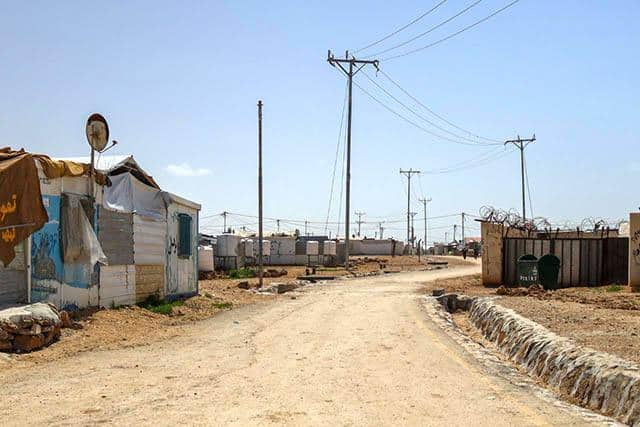
Safadi stressed to Pederson that due to the threat of novel coronavirus, Jordan will not permit any aid access to the Al-Rukban Syrian displaced persons camp from its side of the border. 

The foreign minister told Pederson that Jordan “will not allow any aid to enter Al-Rukban Camp from its territory or allow the entry of any person from the camp to the Kingdom for any reason whatsoever.” 

“The protection of Jordanian citizens from the coronavirus pandemic is a foremost priority,” Safadi added.

Jordan has recorded 425 coronavirus cases and seven fatalities, while Syria has reported just 39 cases and three deaths to date.  

Some internally displaced Syrians have decided it is safer to abandon overcrowded camps such as Al-Rukban and return their homes, many of which have been reduced to piles of rubble by government airstrikes and opposition shelling.

Camp residents face a harrowing choice: Stay in an overcrowded environment with a high risk of contracting COVID-19 or return to a potentially bombed-out home, hoping the ceasefire holds.

“The number of returnees until the date of April 16, 2020, after the ceasefire in the region, reached more than 119,583 people distributed over the countryside of Aleppo and Idlib within the villages and towns far from the areas of contact with the Syrian regime forces,” Syrian Response Coordination Group said in a statement shared via Twitter. 

Read also: Inside a Drastic Lockdown : Living and Working through Confinement in Jordan


Will the Pandemic Change our Global Geopolitical Structure?

Our world is facing an unprecedented reckoning. As national governments and central banks continue to grapple with the current short-term implications of the COVID-19 crisis, more revelations are surfacing about the workings of our political structures than ever before. The coming weeks and months could change the trajectory of history as trust in healthcare systems, democratic representatives, and the media hangs in the balance.

The current crisis could lead humanity in a variety of directions. As the pandemic spreads, we see global trends evolve in different ways. Nationalist populism and xenophobia are increasingly becoming mainstream, demonstrating an upswing in a trend witnessed for over a decade. Globalization and growing inequality mean that for the majority of people in the world, there is little support or opportunity when life gets hard. Trillions are pumped into big business while the poor must fend for themselves.

The reverberations of these global trends could significantly change how we see our economy, government, and global society. There are three plausible scenarios worth investigating that might provide a tentative glimpse into our future. The first is the one that most politicians appear desperate for: A return to the status quo.

The ‘Status Quo’ scenario

The “reopening of the economy” that most national leaders are pining for is painted as a quick and painless “return to normal.” After the virus comes under control, governments lift lockdowns and the economy reemerges from its slumber. Although most businesses and indeed countries have accrued significant levels of debt, life returns to the status quo of our pre-coronavirus world.

The scenario means that the global power balance remains intact. Indebted countries become more indebted and rich countries suffer the least, as they can borrow money at lower rates and more easily revive their economies. Businesses re-hire employees with the same precarious conditions that allowed them to be fired earlier. More and more people do not have a contract at all, as the gig-economy continues to push people into “self employment.”

Global institutions such as the UN, WHO, and IMF remain prestigious but toothless as international politics continue to undermine their workings. The balance between the need for international cooperation and the protection of national sovereignty continues to produce well-meaning but powerless organizations.

The ‘Protectionist’ scenario

A sudden lunge toward nationalism and isolationism shifts our future radically. Dire conditions lead citizens to search for strong and decisive leadership amid chaos. Normally liberal countries turn more authoritarian as shortages of medical supplies and economic options result in a flurry of competitive self-interest.

The balance of power changes in favor of large and rich countries as each nation exerts its power. Indebted countries hard-hit by COVID-19, like Spain and Italy, see a significant drop in living standards as austerity measures cut public services in order to service debts. As protectionist policies see national industries try to compensate for expensive foreign products, production worldwide becomes less efficient.

Global institutes are hollowed out in such a situation, if they do not cease to exist entirely. International treaties like NATO and the EU become obsolete as national interest trumps collaboration. A network of bilateral alliances emerges that could easily lead us into a geopolitical powder-keg, potentially resulting in another world war, echoing the lead-up to WWI.

The ‘Collaborative’ scenario

The pandemic highlights the need for global cooperation and the importance of our public institutions. Billions of people experience unemployment and reliance on the government by no fault of their own. As the pandemic spreads, science and global institutes like the WHO lead the way and reveal how similar we all are biologically.

After the crisis, international conventions and new treaties redistribute power more equally. The UN Security Council is reshaped so that it no longer gives the world’s nuclear powers a veto over all decisions. The International Labor Organization is empowered to produce a new global standard for labor rights. Measures are implemented to prevent the concentration of wealth among a few billionaires while millions live in poverty.

Nation states have to cede some of their sovereignty over issues such as global health in order to allow a better response to the next pandemic. A re-balancing of the post-colonial world sees an emphasis on empowering developing nations and opening borders in the Global North to allow working people freedom of movement.

A crossroads

We are currently at a crossroads between these and an unimaginable spectrum of other scenarios. Every day decisions are made that subtly move us in one direction or another.

A reemergence of the status quo could become reality. Germany and the Netherlands refuse to share the economic pain with their southern neighbors, while eagerly looking to reopen their economies. Hungary implements authoritarian rule as a “temporary measure” that could move our zeitgeist closer to a more protectionist scenario. Meanwhile, planes full of Cuban doctors land in Italy to help with their outbreak, providing a glimpse into a collaborative future.

Looking into the future with surety is impossible, but we do have the ability to shape it. Everything we took for granted has changed in a few months. Humanity’s response will determine whether the world becomes a more fair place or devolves into a chaotic scramble for resources.

Changing the future

Being informed and speaking truth to power is more important than ever. By supporting each other based on our common humanity we could shed ourselves of seemingly immovable power structures. COVID-19 has shown us how quickly giant amounts of money can be made available to solve urgent crises, and perhaps poverty or hunger could finally receive similar global urgency.

When airlines restart their engines, we could demand a carbon tax to help accelerate a transition to sustainable energy. When industries reboot, we could demand a priority of workers’ rights over shareholders’ rights and empower those that create value in our economy. As schools and universities reopen we could ensure that quality education is available to anyone, regardless of their nationality, ethnicity, gender, or sexual preference.

As our global society begins to slowly reawaken from a nightmare, how much of our dreams become a reality is up to each person. If this pandemic results in people being better informed and making their opinions heard, perhaps this crisis could lead us into a better tomorrow.