Trump Declares National Day of Prayer in Light of COVID-19 Outbreak

The outbreak of the novel coronavirus (COVID-19) in the US has inspired President Donald Trump to announce on Twitter that Sunday, March 15, will be a national day of prayer.

“It is a great honor to announce that Sunday, March 15 is the national day of prayer. “We are a country that, throughout our history, has looked to God for protection and strength in times like these [sic],” the President tweeted.  

“No matter where you may be, I encourage you to turn towards prayer in an act of faith,” Trump added in a follow-up tweet. “Together, we will easily PREVAIL!”

The President’s announcement came shortly after he declared a state of national emergency in the US due to the spread of COVID-19. 

Trump dubbed the coronavirus outbreak a “contagious disease emergency” based on the 1988 law that allows the Federal Emergency Management Agency to provide funds to states and deploy support teams.

He called upon all US states to establish emergency centers to help combat the spread of the virus.

American health authorities are set to receive five million test devices for the novel coronavirus, Trump added, clarifying that citizens should only seek out tests if they develop symptoms of the virus. 

“Coronavirus testing in America will be conducted on a large scale soon,” the President stated during his declaration of a national emergency. However, he gave no details on how this will be achieved.

The US President demanded that citizens have easier access to medical treatment under the state of emergency and criticized the American Center for Disease Control and Prevention, one of the most important American institutions in the fight against the virus, for using a testing system that he said will always be “inaccurate and slow to deal with a large epidemic.”

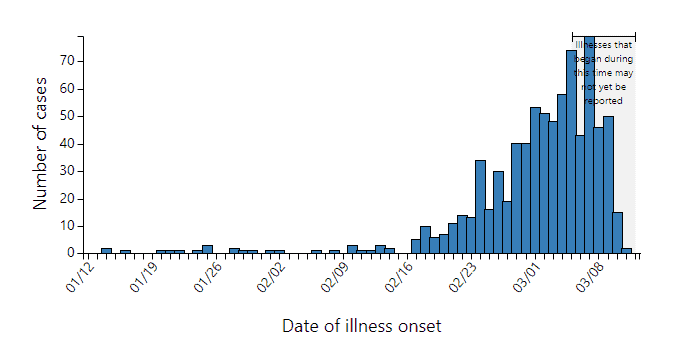
COVID-19 cases in the United States by date of illness onset, January 12, 2020, to March 12, 2020.

Confirmed COVID-19 cases in the US currently stand at 1,629 with 41 reported deaths, according to the Center for Disease Control and Prevention.


Read also: Donald Trump Tries to Calm Investors as Market Panic Ensues

Fate of Qatar Gas Production Could Reveal Global Trend

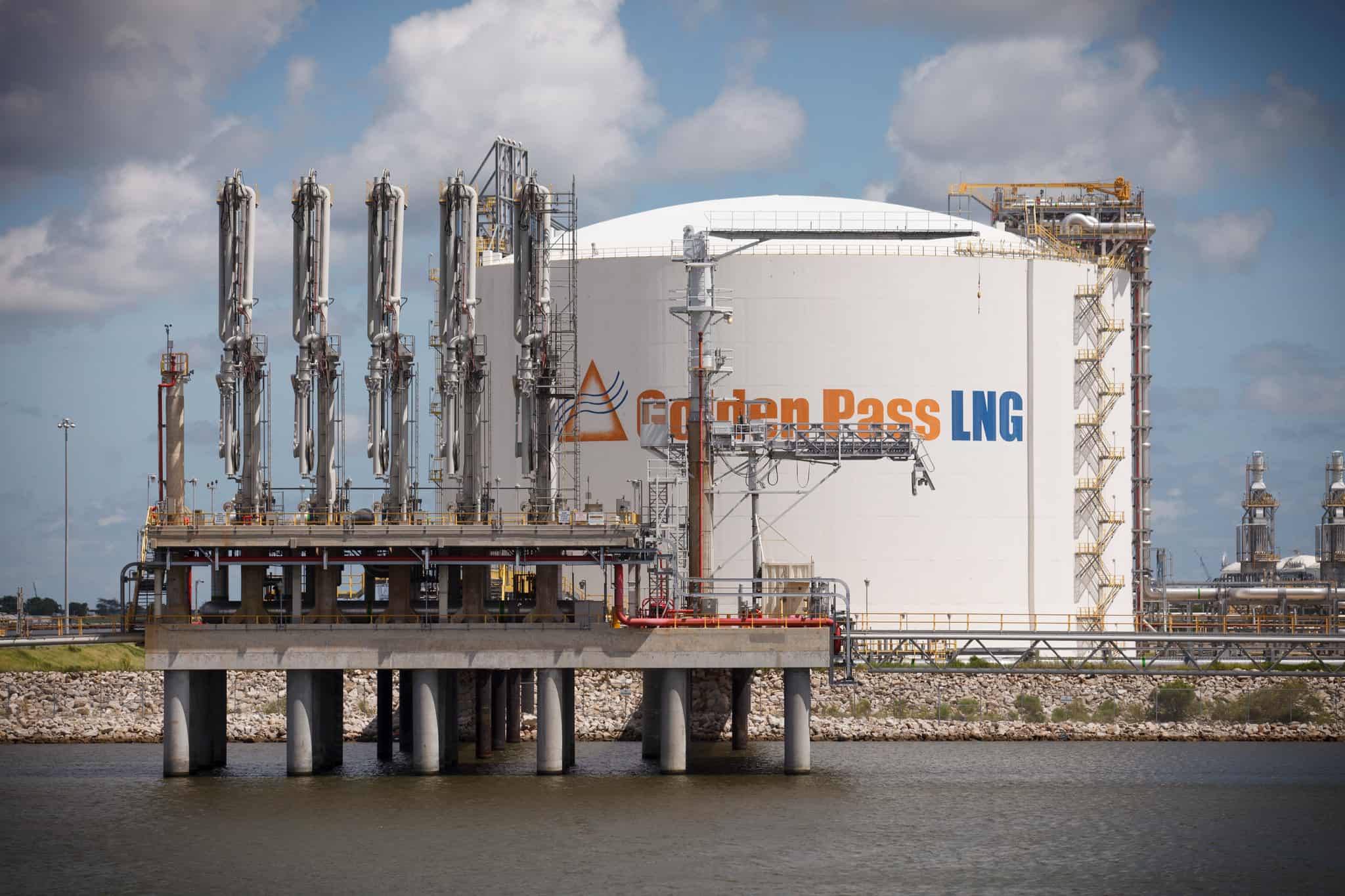
Nowhere in the world is it cheaper to extract LNG, or Liquefied Natural Gas, than in Qatar. And, no country has as much natural gas than the tiny island emirate in the Arabian Gulf. The global ‘super-majors’, giant multinational oil and gas companies, had already invested billions of dollars into local LNG production, and had, for decades, been eagerly waiting to be ‘allowed’ by state-run Qatar Petroleum to invest further billions. Now that a moratorium limiting gas production had been lifted, these multinationals were waiting in line to jump in.

But, under the best conditions, the production of LNG is becoming less appealing, even before the collapse of oil prices as a result of the COVID-19 pandemic.

Long seen as the ‘compromise hydrocarbon’ by global energy firms, LNG’s lower carbon emissions were seen to make it an ideal product to bridge global energy demand as green technology would replace coal and oil as sources for energy production.

With the United States increasing market-share in global LNG production, and prices falling because of reduced energy consumption in China because of the COVID-19 outbreak, investment in LNG production is diminishing.

Qatar delay

Last month’s announcement that Qatar Petroleum is delaying its search for partners to invest in LNG expansion plans, therefore, comes as no surprise.

Reuters quoted a source involved in the decision saying: “I think Qatar has decided to firm up the capex of the project before they go to international oil companies. I think the decision should be ready by the end of 2020.”

What is not certain, is the role of gas when prices start increasing again. The current global LNG glut is causing increasing financial difficulty for American gas production, where production from shale-gas is much more expensive and could lead to the collapse of smaller US gas producers.

Reduced supply from smaller US firms would radically change global market-share and a potential rebound in prices.

“While we see weak market conditions today due to record new supply coming in, two successive mild winters and the coronavirus situation, we expect equilibrium to return, driven by a combination of continued demand growth and reduction in new supply coming on-stream until the mid-2020s,” Maarten Wetselaar, Integrated Gas and New Energies Director at Royal Dutch Shell stated in the multinational’s 2020 LNG Outlook.

Reuters estimates that Qatar Petroleum will need an investment of a minimum of $60 billion to expand its gas production. When the search for partnership is reopened at the end of 2020, how eager multinational energy firms are to invest will give a clearer indication as to the future of LNG in the global energy market.


Read also: Qatar Coronavirus-Cases Increase Tenfold in a Single Day

Egypt ‘Combats’ Money Laundering

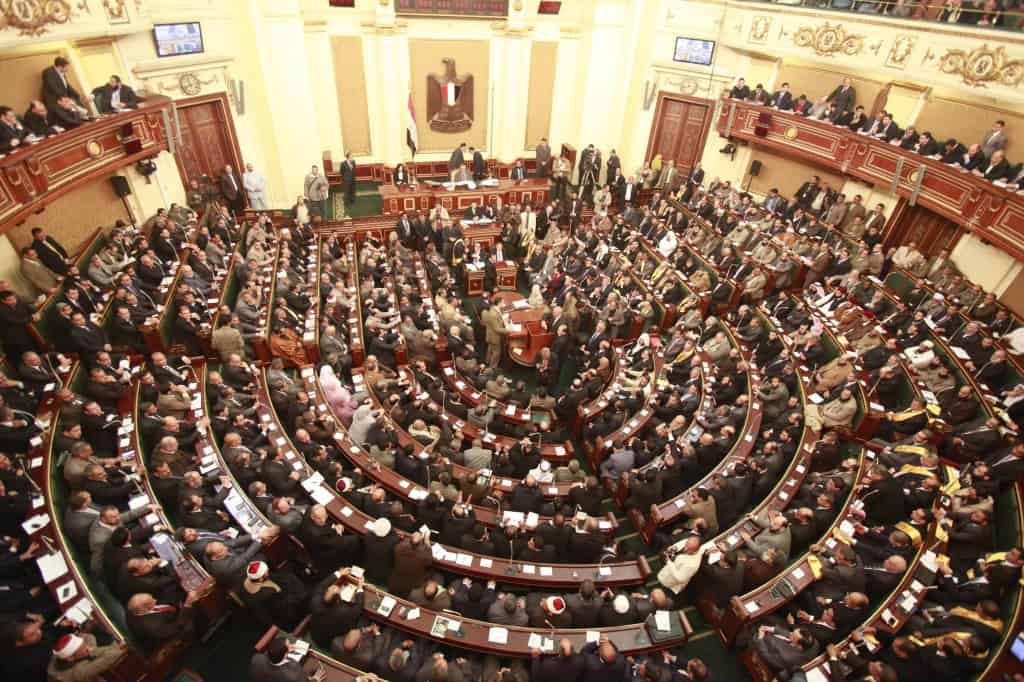
On Monday, March 10, the Egyptian parliament approved amendments to the 2002 anti-money laundering law. Egyptian politicians linked the new amendments to the controversial recent changes in the country’s stringent anti-terrorism legislation.

Speaker of the House of Representatives, Ali Abdel-Aal, justified the changes as relevant to the government’s focus on terrorism, saying: “These amendments come just two weeks after we approved amendments to the anti-terror law and terrorist entities law, and all seek to target terrorist movements which resort to new forms of money laundering activities to commit their crimes.”

“Eighty percent of terrorist crimes” are funded by laundered money, MP Gamal Essam El-Din claimed.

Egypt’s recent changes to its anti-terrorism laws have been criticized internationally as a crackdown on local dissent. The original law, enacted in 2015, had already raised concerns among Egyptian civil society, even prompting some politicians and judges to speak out. No such objections were registered this week as the law’s wide definitions of terrorism were broadened even further.

After the amendments were approved in mid-February, the Associated Press reported that the newly amended law “established an extremely broad definition of terrorism, describing it in one article as any act that disturbs public order with force. Some charges, such as leading or organizing a terrorist group, carry the death penalty.”

According to Egyptian weekly Al Ahram, Bahaaeddin Abu Shoka, leader of the opposition Wafd Party, told MPs that “the amendments, approved by the committee on 2 March, generally aim to upgrade the law in terms of widening the scope of the definition of money laundering to include the selling and smuggling of oil, natural resources, securities, and cryptocurrency, among other assets.”

Pending review

The true reason for the approval of the new amendments might be slightly more obvious than the convoluted justifications given. In the coming months, Egypt will be paid a visit by the FATF, the Financial Action Task Force (on Money Laundering). The organization evaluates countries’ efforts in combating money laundering, with a specific focus on the financing of terrorism.

The FATF is a powerful organization that can make it easier or more difficult for a country to trade and attract foreign investment. Several countries are enacting legislation and committing large amounts of money to anti-terrorism initiatives in order to get off the FATF’s ‘gray list’ of countries that fail to comply with the organization’s standards.

The renewed attention to the topic might have been triggered by recent FATF action against the Islamic Republic of Iran. On February 21, the FATF announced its intention to additional measures mandating audits on a variety of transactions, making it more difficult for foreign investors to do business in Iran.

Foreign investment and trade are crucial for Egypt’s unstable economy, especially after a worldwide collapse in tourism, a sector that normally accounts for roughly 12% of Egyptian GDP.

Egypt’s parliament is most likely sincerely concerned with terrorism, but money laundering is an essential element of corruption, which is rife in Egyptian society. How many Egyptian parliamentarians have themselves used money laundering to enrich themselves is unclear in the opaque Egyptian political system. 

With the new amendments approved, and the link between terrorism and money laundering firmly established, any guilty parliamentarian will undoubtedly think twice before criticizing El-Sisi’s government in the future.

Read also: Lebanon in ‘Turbulent Seas’ as Eurobond Default Looms

US now describes Palestinians living in East Jerusalem, as ‘Arab residents’

The 2019 annual report released on Wednesday refers to them as “non-Israeli citizens possessing Jerusalem identity cards issued by the Israeli government.” In 2018, and 2017 versions, they were referred to as  “Palestinians in East Jerusalem” or as “Palestinian residents of Jerusalem.”

The report did at least acknowledge some of the human rights challenges faced by Palestinians.

“Significant human rights issues included: reports of unlawful or arbitrary killings, including targeted killings of Israeli civilians and soldiers; arbitrary detention; restrictions on non-Israelis residing in Jerusalem including arbitrary or unlawful interference with privacy, family, and home; and significant restrictions on freedom of movement,” stated the 2019 Country Reports on Human Rights Practices: Israel, West Bank, and Gaza.

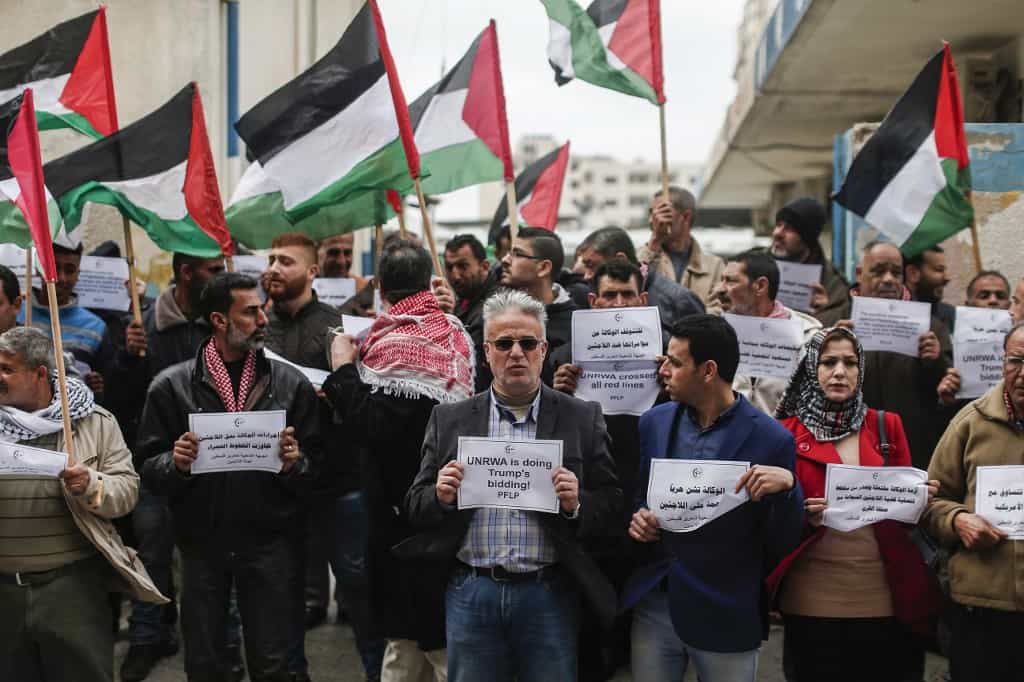
The change in terminology may seem subtle but has drawn heavy criticism from Palestinian leaders, like senior Palestine Liberation Organisation official Hanan Ashrawi.

“Palestinian Jerusalemites are Palestinians, and they’ve been living there for centuries,” Ashrawi told Reuters.

“Just to decide this, to eradicate their identity and history and culture and rename them at will, is not only preposterous, its unconscionable,” she emphasized.

Ashwari is herself a Palestinian that holds a Jersusalem residency permit. She, like the majority of Palestinians living in East Jerusalem identify themselves as Palestinian residents, not ‘Arabs’. 

At present, around 340 000 Palestinians live in East Jerusalem, most hold Israeli residency permits but very few have Israeli citizenship. 

Israel captured and annexed the city’s east in the 1967 war, a move that is still not internationally recognized. Palestinians have long considered the area would become the capital of a future state, while Israel claims the holy city as its eternal and undivided capital. 

The change comes a little over a month after US President Donald Trump released his ‘Deal of the Century,’ also known as the Peace to Prosperity Plan. Benjamin Netanyahu attended the plan’s Whitehouse launch and Israel was quick to embrace a deal that Trump said would be “a win-win solution for both sides.” 

Palestinians, on the other hand, have rejected it outright. Palestinian President Mahmoud Abbas said, “A thousand no’s” to the deal. It has been heavily criticized by commentators as pro-Israel and a raft of measures, such as enabling Israel to annex settlements, fly in the face, of years of international consensus on how to resolve the intractable conflict.


Netanyahu Calls for Forming of Emergency Government in Face of COVID-19

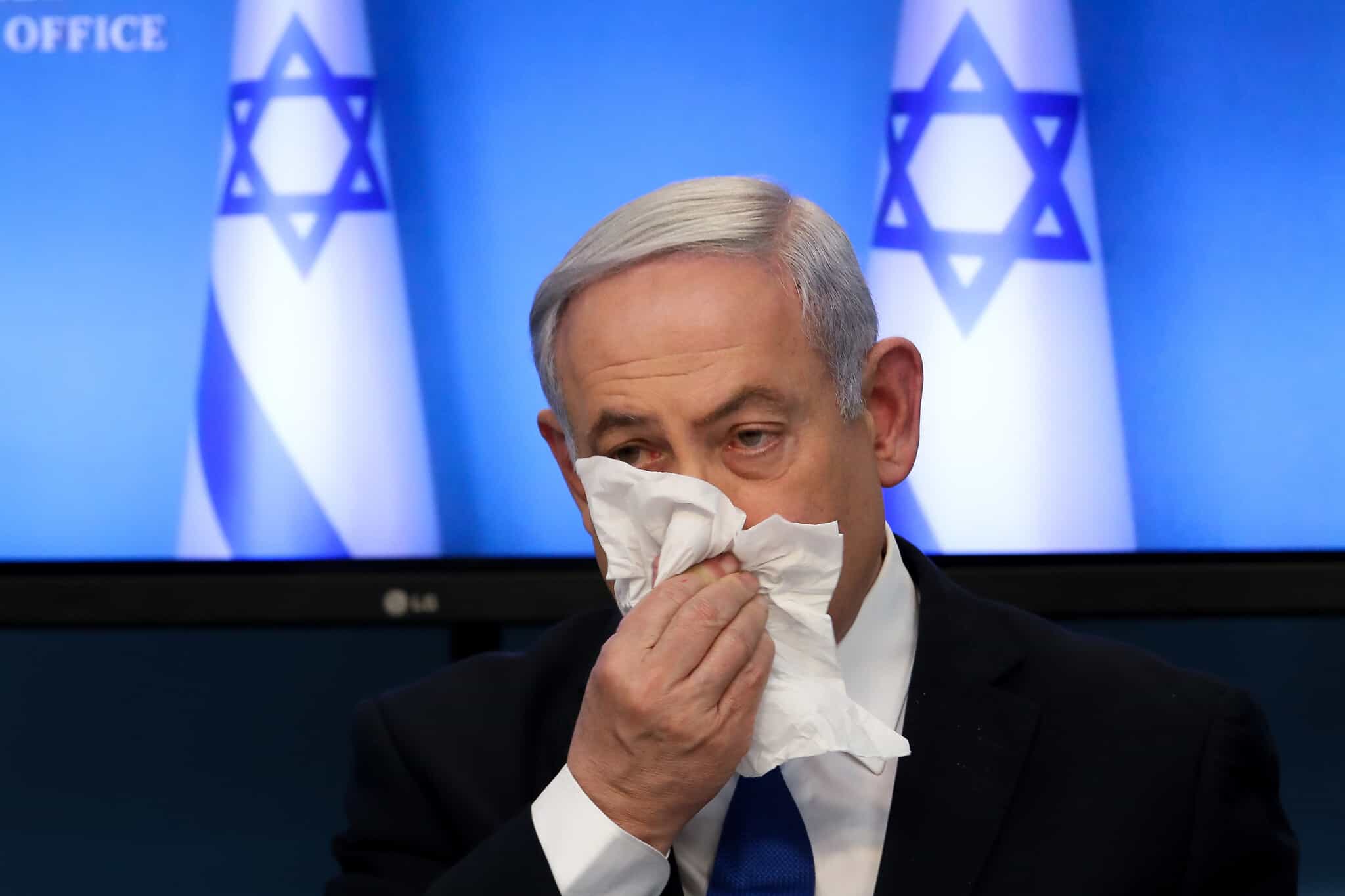
Israeli Prime Minister Benjamin Netanyahu has closed schools and universities and called for the immediate formation of an emergency government to combat the novel coronavirus (COVID-19) outbreak.  

In a televised broadcast on the evening of Thursday, March 12, Netanyahu announced the government must be reformed “in order to save the lives of many Israeli citizens.” 

 “I call for the formation of an emergency government for a specific period, starting this evening,” he stated. “Let’s leave politics aside, we can return to it later.”

The primary elections on March 2 failed to grant the sitting PM the 61 seats needed to form a government. 

Meanwhile, his main rival and leader of the Blue-White party, Benny Gantz, has sought in recent days to form an alliance.

Gantz supported Netanyahu’s call for the immediate formation of an emergency government to respond to the coronavirus. 

Israel’s efforts to fight the spread of COVID-19 in the country include banning foreigners from entering Israel, with the exception of those who can confirm that they can remain in isolation for two weeks. 

The Chief Rabbinate of Israel called on believers to respect the directions of the authorities as if it was a “religious duty.”

The economic impacts of the novel coronavirus have already shocked the world, triggering a drop in oil prices, stock market crashes, and drastic setbacks in trade and investments. However, it will take a few months to f see the full extent of the fallout. 

The global tourism industry is also expecting losses between $30 and $50 billion, according to the World Tourism Organization (UNWTO), due to travel restrictions and the widespread fear of flying or traveling by boat. 

Airlines and hotels are already suffering from cancellations.

The World Health Organization (WHO) officially labeled the novel coronavirus outbreak as a global pandemic on Wednesday, March 10.

COVID-19 has spread to every continent, with more than 134,000 confirmed cases. Meanwhile, the global death toll has risen to 5,000. However, close to 70,000 patients around the world are reported to have recovered from the virus.


Read also: Benjamin Netanyahu Claims Victory in Israeli Elections, Polls Show Majority Unlikely

US Denies that ‘Defensive Precision Strikes’ in Iraq Killed Policemen and Kitchen Staff

On Wednesday, March 11, rockets hit the Camp Taji US Air Base, killing three military personnel and wounding roughly ten. The rockets, fired from a WW2-era Katyusha rocket-launcher, damaged the base and claimed the lives of one British medic and two American soldiers.

The following day, US Secretary of Defense Mark Esper discussed the issue with President Donald Trump. 

Esper later summarized the conversation for reporters: “He’s given me the authority to do what we need to do, consistent with his guidance.” 

“I’m not going to take any option off the table right now, but we are focused on the group – groups – that we believe perpetrated this in Iraq,” he added on the subject of potential retaliatory strikes.

The ramifications of the comment became clear after midnight, when US military aircraft in Iraq took to the air in order to launch retaliatory ‘precision’ strikes, targeting what the Pentagon called “five weapons storage facilities used by Kataib Hezbollah militants”. 
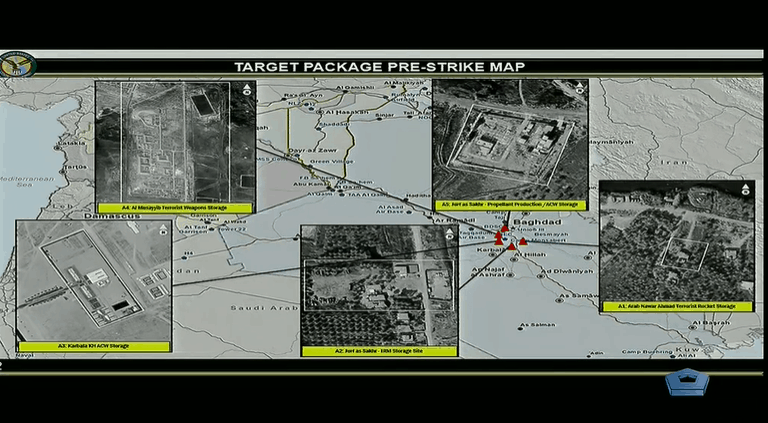
At the time, western news sources reported the strike as a proportional response to the Camp Taji attack, with Reuters even reporting “there was no sign of the kind of high-profile killing that President Donald Trump authorized in January, when the United States targeted a top Iranian general, Qassem Soleimani”.
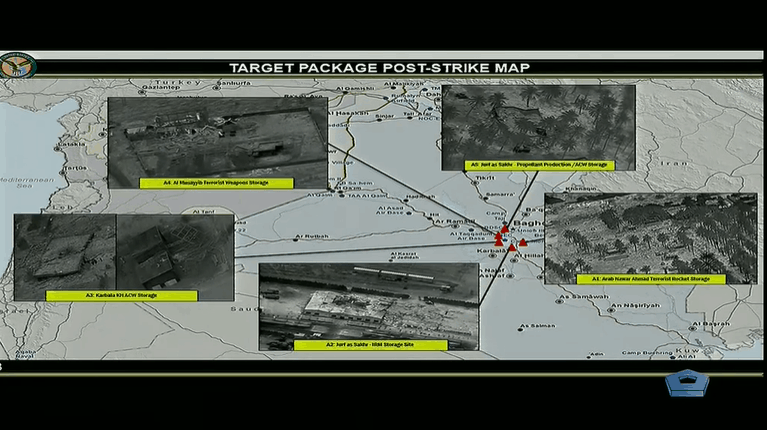
A proportionate response, that could have been much worse, if not for US caution.


What really happened only became clear when the dust settled the following morning.

A bloody aftermath of lost innocent lives

The US airstrikes had managed not to kill even a single Shia militia-member, instead six innocent lives were pointlessly extinguished in what could hardly be described as  ‘precision’ strikes.

Three Iraqi soldiers and two policemen, all of whom had received training and equipment financed by the US over the last decade, would not return to their families that morning.

The scale of the calamity only became more obvious when reports from Al-Arabiya started coming in. A cook, working in the kitchen at a civilian airport under construction, has similarly been killed by the US retaliation.

In total, the strike killed six and wounded a dozen others, with no relation to the attacks at Camp Taji. These blatant attacks on non-combatants could constitute war crimes, as stipulated by the United Nations and the 1949 Geneva convention.

This morning, the Iraqi foreign minister summoned British and American envoys to discuss the matter, Arab News reports.

Iraq’s Joint Operations Command released a statement today:

“The pretext that this attack came as a response to the aggression that targeted the Taji base is a false pretext; one that leads to escalation and does not provide a solution. This action is against the will of the Iraqi state and a violation of its sovereignty, it strengthens outlaws. No party has the right to substitute itself for the state, its sovereignty, or its legitimate decisions.”

American response to accusations
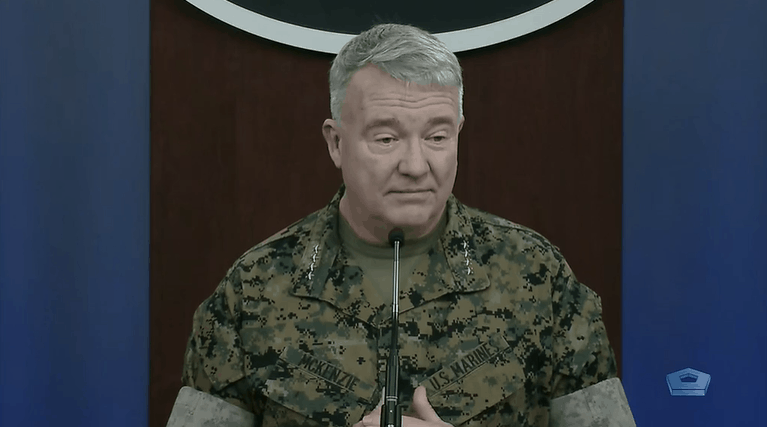
Today, Arabia Policy attended via live-stream, the US press conference on the strikes. General. McKenzie Jr., Commander of U.S. Central Command took questions from reporters after extending his condolences to the families of the US and UK military members who died in the Camp Taji attack.

With no comments about Iraqi lives lost in the attack, the top general in the region produced aerial footage of the targets and reiterated several times the “defensive nature” of the retaliatory strikes, while admitting that “of course dropping a bomb from an airplane is always an offensive act.”

US Military command claims the targeted locations held the “advanced Iranian weapons” used in the Camp Taji attack, while later acknowledging that the 107mm missiles used were actually relatively low-tech (the Katyusha rocket launcher was actually developed, and used, by the Soviets to defeat Nazi Germany in the Second World War).

“We have degraded these Iranian-backed militias’ ability to attack in the future,” the general said, as US media continued to press him on why there had not been even more airstrikes. Several times the general reiterated close collaboration with the Iraqi military but admitted that this weeks’ airstrikes had been reported to the Iraqis “in the wake” of the move.

Evidence of the impact of the airstrikes was unavailable, the general continued, because of bad weather in the Baghdad region. The civilian airport where an innocent cook died that night, was clearly storing “advanced Iranian” weapons that posed a significant threat to the United States.

US military leadership is clearly presenting events as a cautious and precise defensive act, against a cowardly enemy that is now severely hamstrung by the airstrikes.

Where the truth lies, and whether the truth will have any impact on future decisions, remains to be seen.

 

Read also: UN Envoy Tells Iraqi Politicians to Stop Squabbling and ‘Step Up to the Plate’

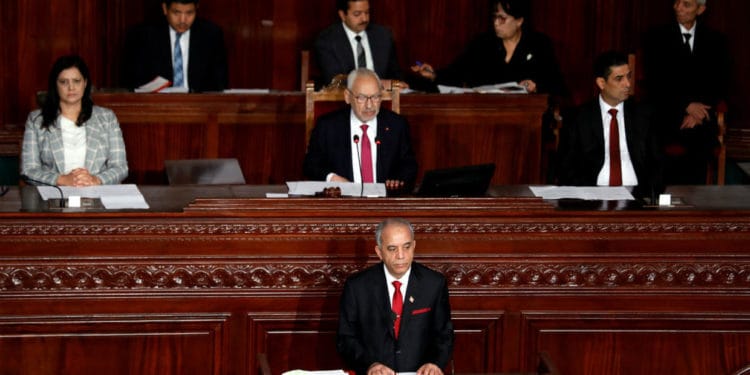
More Trouble in Tunisia’s Parliament as 11 Qalb Tounes MPs resign from party

Eleven members of Qalb Tounes (Heart of Tunisia), the party with the second-most seats in parliament (38), staged a spectacular mutiny when they resigned on Tuesday, but one has already returned to the fold.

Tunisian MP Hassen Belhaj Brahim, who resigned from the Qalb Tounes just days ago, has now asked the president of the HPR office for his resignation to be rescinded.

On Thursday, a Qalb Tounes press release confirmed Brahim had been reintegrated into the party and that the cancellation of his resignation was accepted.

The ten members to slam the door on their party, included high ranking members like Hatem Mliki. Mliki and Ridha Charfreddine, Khaled Gsouma, Naïma Mansouri, Amira Charfeddine, Safé Ghribi, Souhir Askri, Mariem Moghmani, Samira Ben Slama, and Imec Awled Jebrilwill now sit on the crossbenches of Tunisia’s disparate parliament and it is still unclear how they will vote.  

The party subsequently announced that Oussama Khelifi will be the new parliamentary leader of the party, and economic expert Sadok Jabnoun the new party spokesman.

Tunisia went through four months of political negotiations and instability after the October 2019 elections failed to deliver a clear result and mandate for a new government. No party gained more than a quarter of the vote, leaving the parliament deeply fragmented. 

On February 27 the 32-person cabinet of Prime Minister-designate Elyes Fakhfakh was given the green light to form a government following a confidence vote in parliament. 

The coalition government included members of Ennahdha, the party with the most seats in parliament, plus 17 independent members, but notably excluded members of Qalb Tounes.  

Left out of government, Qalb Tunes have so far positioned themselves firmly in opposition to Fakhfakh’s government. From the outset, they voted against the Prime Minister-designate’s proposed cabinet. Then on March 5, they voted down a motion on the African Continental Free Trade Area, which promised to open up valuable opportunities for the Tunisian economy in the broader African market. 

“We don’t want to be in a destructive opposition,” now ex-Qalb Tounes party spokesperson Hatem Mliki emphasized when detailing reasons for his colleagues’ resignations.  

Commentators believe that the disintegration of Qalb Tounes is an example of the trend towards ‘single-use’ or ‘disposable’ political parties in the nascent democracy. A phenomenon where parties tend to form around an individual or issue but have little else in common, making them highly volatile. 

Marouen Achouri, said it’s no wonder that Qalb Tounes is experiencing such serious internal divisions, given the party was formed around Nabil Karoui with the sole purpose of elevating him to the presidency. 

Achouri argues it lacks the basic requirements of any political party‒shared political ideas and values ‒ and therefore was always destined to fail. 

One of the MPs to resign, Mliki cited the absence of internal party governance and lack of collaboration on decision-making regarding their engagement with the government and President, as key reasons for the mass exodus.

When Fakhfakh formed government in late February, many questioned if he would succeed in maintaining unity and finding consensus amongst such a disparate group of deputies. What remains to be seen now is how the split in Qalb Tounes will materialize when it comes to voting on legislation addressing the key socio-economic challenges facing Tunisia, and if more resignations are to come. 


Read also: Tunisia Forms New Government Promising Stability and ‘Deep’ Reform


UN Names American Stephanie Turco Williams as Acting Special Representative in Libya

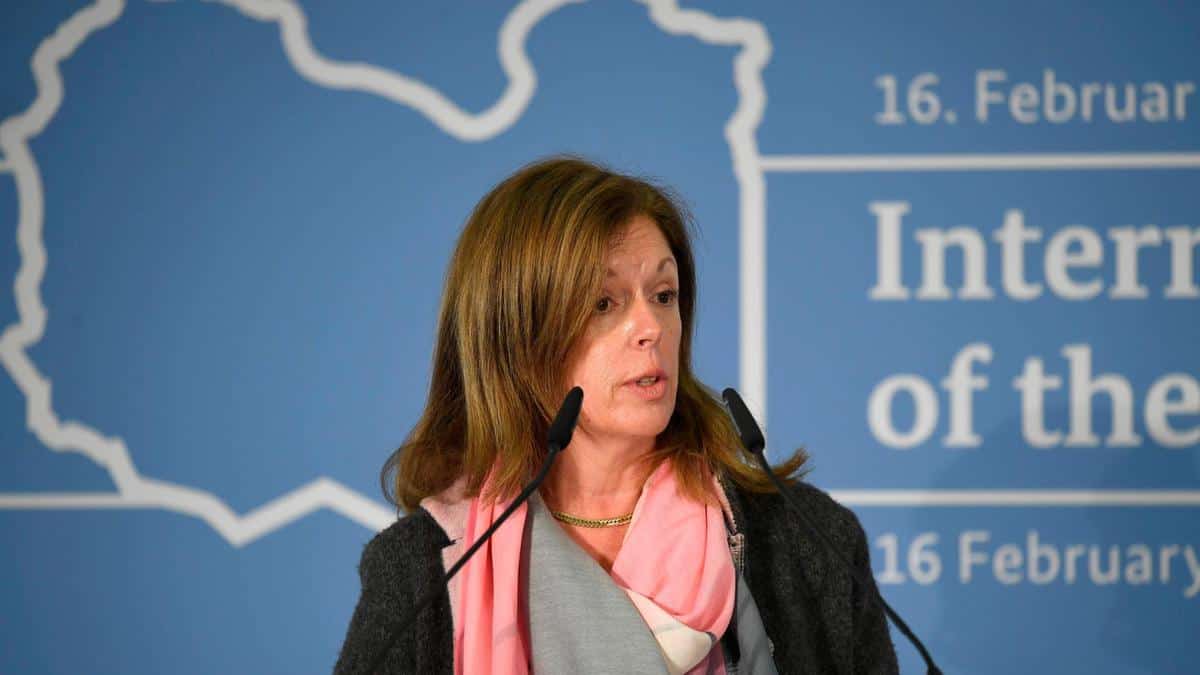
On Thursday, United Nations Secretary-General António Guterres released a statement announcing that American Stephanie Turco Williams will be the new Acting Special Representative and Head of the United Nations Support Mission in Libya.

“Ms. Williams will act as Special Representative in Libya until the appointment of a successor for Ghassan Salamé of Lebanon,” the statement said.

The note reiterated: “The Secretary-General is grateful to Mr. Salamé for his accomplishments at the helm of UNSMIL, and his tireless efforts to bring peace and stability back to Libya.”

The news comes little more than a week after the former Head of UNSMIL, Ghassane Salame. resigned citing stress. After leading the Libyan peace process for two years, Salame said in a Tweet “my health no longer allows for this pace of stress.”

UN spokesperson Stephane Dujarric assured there would be a “smooth transition so as not to lose any momentum on the gains” made by Salame. William’s quick appointment indicates the UN’s intention to uphold that commitment.

There has also been pressure in recent days from Egypt for Guterres to act fast and appoint a new envoy, while rumors circulate that former Algerian Foreign Minister Ramtane Lamamra may be nominated for the role. 

In a phone call on Tuesday, Egyptian Foreign Minister Sameh Shoukry urged the Secretary-General to appoint a successor to Salame as soon as possible, said a statement from Egyptian Foreign Ministry spokesman Ahmed Hafez.

Meanwhile, reported that on Wednesday rumors began circulating that Guterres had sounded-out security council members about the possibility of nominating Lamamra. 

Anonymous diplomatic sources told LibyanExpress that. 

Williams is a career diplomat and Arabic speaker who has a deep knowledge and understanding of the Middle East, including the Libya portfolio. She served as Deputy Special Representative (Political) in UNSMIL for the last two years and prior to joining UNSMIL in 2018, was the Charge d’Affaires at the US Embassy in Tripoli. 

The Acting Special Representative and Head of UNSMIL’s career spans the length and breadth of the Middle East. Williams has worked for the US State Department at its embassies in Iraq, Jordan, and Bahrain. She was a senior adviser on Syria for the US Embassies in United Arab Emirates, Kuwait, and Pakistan and worked on the Jordan Desk and as Deputy Director of Egypt and Levant Affairs, and the Director of the Maghreb Office. 

Williams’ previous experience in the region and work with UNSMIL place her in good stead to continue Salame’s work and forge ahead with efforts to find a peaceful political solution to the long-running conflict. 


Read also: UN’s Envoy for Libya Ghassan Salame Resigns, Cites Stress

Train Crash Near Cairo Injures More Than 20 Passengers

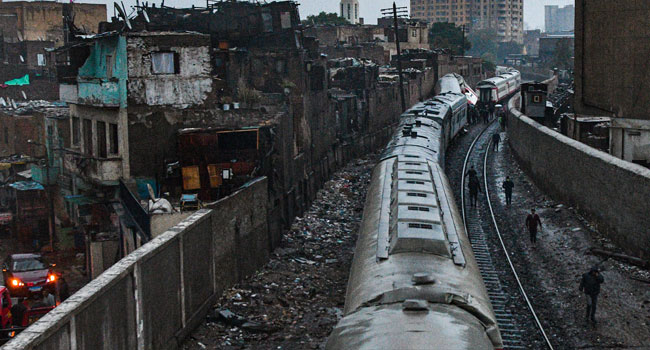
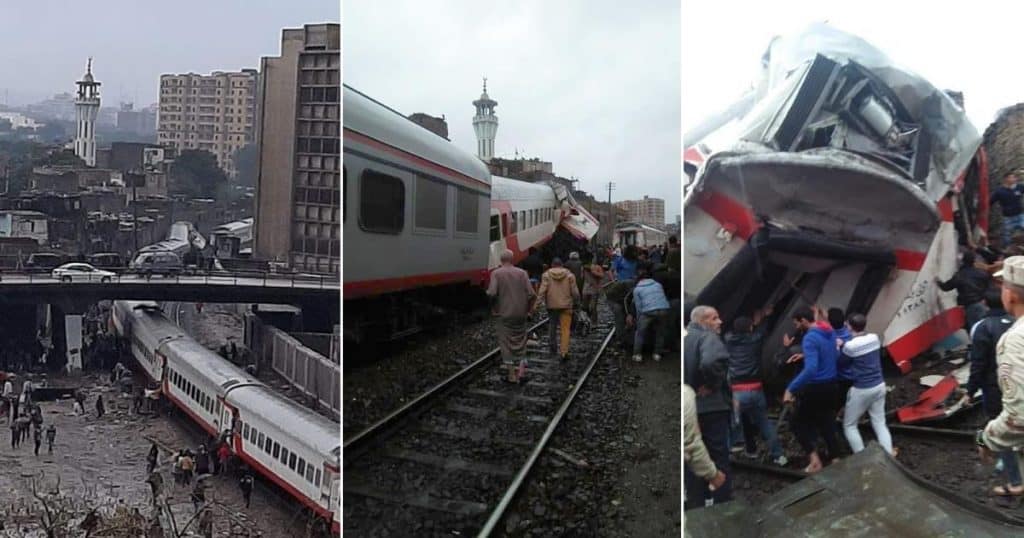
Two trains crashed on March 12 in the Rawd Al-Farag area between Imbaba and Ramses, west of Cairo, causing multiple reported injuries but no deaths. 

Social media

Dangerous weather conditions caused a train coming from Aswan to collide with the back of another train traveling from the Sohag governorate. 

The Egyptian Railway Authority suspended the movement of all trains following the accident and did not reveal any further details of the crash. 

The Egyptian Meteorological Authority previously warned that the country will be exposed to severe instability caused by severe weather conditions from March 12 to 14, predicting strong winds, sand and dirt storms, and heavy rains.

Egypt’s Minister of Health and Population, Hala Zayed, is overseeing a crisis management team to assess developments and follow up on any emergencies that could arise because of the unstable weather.

The government has advised the public to stay indoors throughout the duration of the storm.


Read also: Egyptian Politician and Lawyer Jailed for ‘false News’ Interview with BBC

Dozens Of Iranians Die From Alcohol Poisoning Attempting to Cure Coronavirus

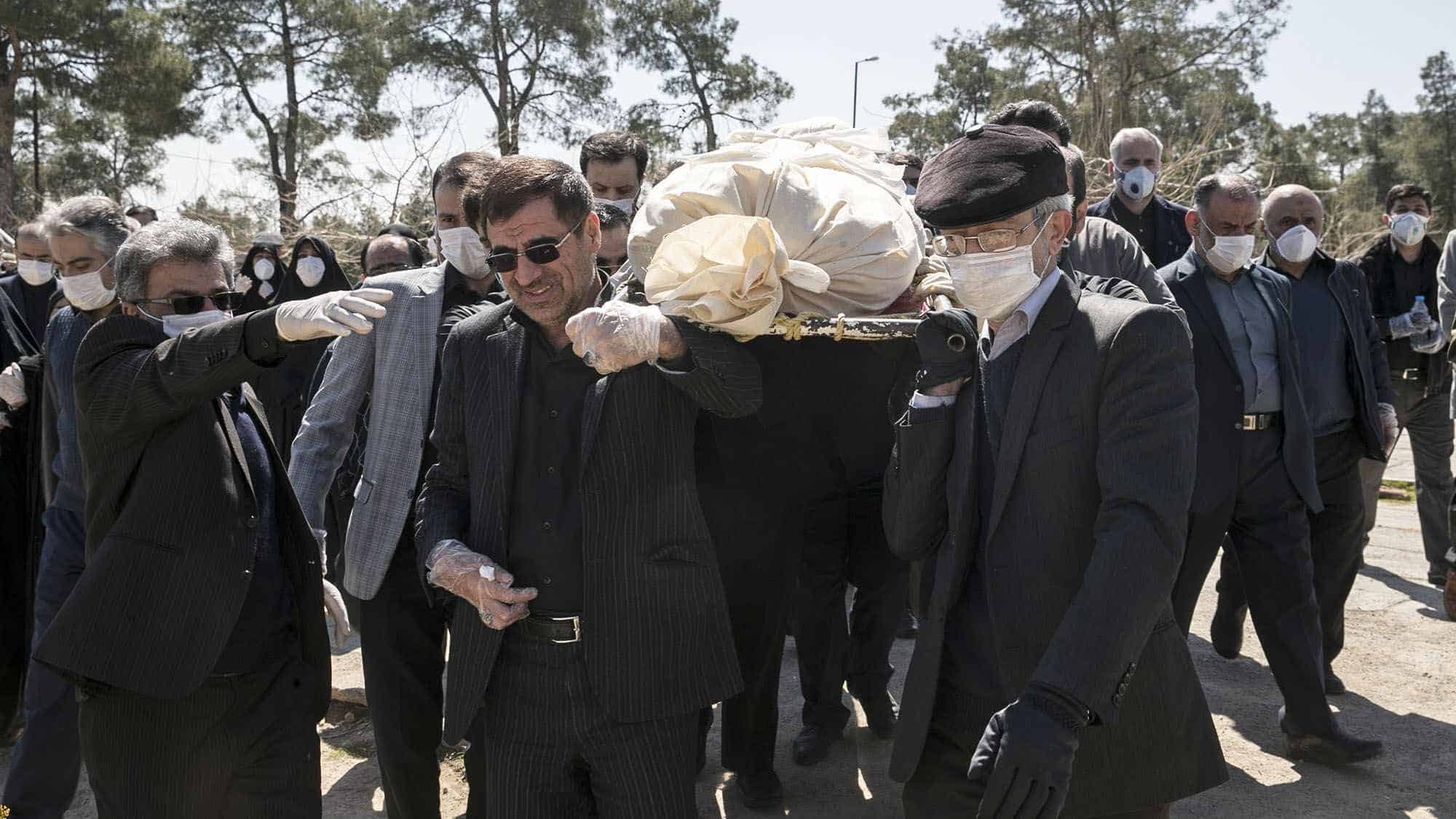
Up to 73 people have reportedly died from alcohol poisoning across Iran in the last week after a rumor spread that drinking alcohol would prevent or cure the virus. 

An Iranian official said the death count from alcohol poisoning had reached 73, the Anadolu Agency reported on Thursday. The report specified that 46 people died in Khuzestan, 15 in Alborz and 12 in Mazandaran.

On Tuesday, state news outlet the IRNA said 44 people had died from imbibing toxic drinks. The hardest-hit province is Khuzestan, where 500 people presented at local hospitals with alcohol poisoning. 

“Some of the citizens of Ahwaz had heard that drinking alcohol could help them fight the coronavirus, so they used it as a preventive measure,” said Ali Ehsanpour, a spokesperson for Ahwaz University of Medical Sciences.

Apparently some of the bootleggers had substituted deadly methanol for ethanol then used bleach to doctor the color of the homemade liquor, Ehsanpour added. 

Muslims are banned from drinking, producing and selling alcohol in Iran, so when rumors circulated it could help treat novel coronavirus, people allegedly turned to drinking homemade alcohol or poisonous industrial alcohol in an attempt to avoid the deadly virus.

The alcohol rumor is just the latest in a plethora of false health advice circulating in traditional and social media in Iran, the epicentre of the virus outbreak in the Middle East. The country has been devastated by coronavirus and at last count, there were 10751 confirmed cases in Iran and 429 deaths from the disease. 

Iran’s health system was ill-prepared for the outbreak and supplies already due to US sanctions. Though it has already received support from the World Health Organization, the country’s Foreign Minister Mohammad Javad Zarif said Iran has asked the International Monetary Fund for an additional $5 billion in emergency funding to deal with the pandemic. 

Read also: Iran Requests $5 Billion From IMF to Fight Coronavirus Outbreak