Is the EU Too Divided to Avoid Disaster?

The EU’s senior citizens are dying at an unprecedented rate, brave healthcare workers are contracting the virus because of shortages in protective equipment, and no help is coming from the bloc’s elite.

In what may be one of Europe’s darkest and most shameful days since the end of colonialism, Europe’s elite has been unable to agree on an economic stimulus bill. After an all-night video conference between the finance ministers of the Eurozone, a disagreement over sharing the financial pain of the crisis has left European citizens with no help from their elected representatives.

Sixteen hours were not enough to come to an agreement, while hundreds of Europe’s elderly and sick people died before the meeting was called to an inconclusive end. Portuguese finance minister Mario Centeno suspended the talks after the traditional north-south divide in EU politics spelled doom for any agreement.

The culprits of the disaster appear to be the bloc’s richest nations. The Netherlands, highly reliant on trade with the EU for its income, had little compassion for Italian and Spanish representatives. Similarly, the richest nation in Europe, Germany, ensured the EU would continue to spiral in chaos and division as they too opposed the agreement.

The Netherlands and Germany did not agree with Mediterranean countries that the debts accrued during the crisis should be shared among EU members. Instead they argued that countries such as Spain and Italy would face higher costs for using the credit lines the agreement proposed.

Southern EU countries have higher national debt and, as such, would pay higher interest when using credit. The bloc of Mediterranean nations asked for EU nations to issue ‘coronabonds’ to share the cost of credit made available to fight the economic impact of the COVID-19 crisis.

After a month of rhetoric about solidarity, the governments of Angela Merkel and Mark Rutte had little compassion for their Southern neighbors. If those countries with higher national debts wanted to use available credit, they would have to pay for it.

The COVID-19 crisis has revealed that the EU’s efficient healthcare systems, cut down by a decade of austerity, did not deserve their top-tier rankings among the world’s best healthcare systems. Shortages of personal protective equipment, caused by healthcare systems unable to provide much more than its regular daily tasks, have resulted in those on the front-lines of the pandemic contracting the virus themselves.

After Brexit, EU nations highlighted how Britain would now not be able to count on the solidarity of the European Union. Now that a health crisis has tested the EU, it has become clear that solidarity might have been an illusion all along.

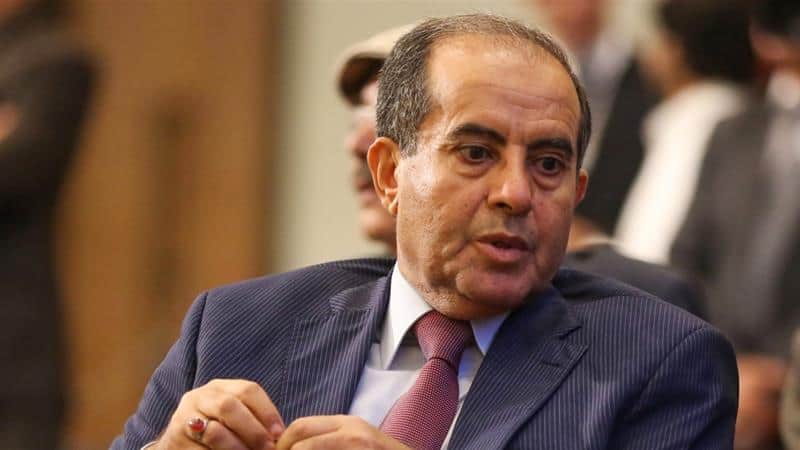
Former Libyan Prime Minister Mahmoud Jibril Dies After Contracting COVID-19

Former Libyan Prime Minister Mahmoud Jibril died on April 5 from serious health complications after contracting the novel coronavirus.

Jibril was the first interim prime-minister of Libya during and after the fall of dictator Muammar al-Qaddafi. Widely considered as an optimist and enthusiastic secular politician, Jibril transitioned from being part of the Gadaffi-regime to taking a leading role in the post-dictatorship transition.

The former PM blamed the failure to form a stable government on “political Islam.” He resigned after the fall of Sirte, which he recognized as the official end of hostilities. Jibril came close to becoming the elected prime minister of the country but was ultimately defeated by Mustafa Abushagur after a second ballot.

Jibril was diagnosed with  COVID-19 virus on March 26. He died in Egypt after having been quarantined in Cairo.

The Libyan politician was one of a number of politicians who have contracted the virus. In the US, five members of Congress, one senator, and at least 29 State politicians have been diagnosed with the virus. 

Australia’s Home Affairs minister and two senators have contracted the virus.

Brazil’s controversial president Jair Bolsanaro’s inner circles have not been spared either. Fabio Wajngarten, the president’s press secretary tested positive along with the country’s security advisor, the head of Brazil’s senate, and the Brazilian Mines and Energy minister.

In Africa, several politicians have become ill with respiratory complications linked to the virus. In Burkina Faso, four members of the government have contracted the virus, including the minister of mines, the minister of education and the Interior minister. Nigeria’s presidential chief of staff and the governor of Bauchi state have confirmed infections.

Canada’s first lady, Sophie Trudeau was diagnosed after returning from a trip to Great Britain where several members of the elite have become infected. The UK now counts Prince Charles, Britain’s health secretary and its health minister as high-profile cases with the country’s prime minister in intensive care after his infection requiring hospitalization.

In Europe, the French minister of culture and the secretary of state have reportedly been infected and several members of the National Assembly have also tested positive. Germany saw one of the contenders to lead the Christian Democratic Union party contract the virus, while the EU’s Brexit negotiator Michel Barnier is suffering from COVID-19 related complications.

Europe’s worst-hit countries, Italy and Spain have reported several high-profile infections. Italy’s leader of the Italian Democratic Party and a senior health expert have reported infections and the mayor of Cene in Lombardy died of COVID-19 complications. The wife of the Spanish prime minister, the country’s equality minister, the secretary-general of Vox party and several Catalonian politicians have all contracted the virus.

By far the worst hit national elite is that of Iran, with 24 infected members of parliament alone. Two politicians have died of their complications already and a worrying number of people working on the coronavirus-response have fallen ill.

As Libyan supporters of Mahmoud Jibril mourn, the COVID-19 pandemic continues. Across the world, the virus has shown no regard for class or status. Even early detection and the best possible healthcare has not been able to protect the political elite.

New York State’s Andrew Cuomo, who has contracted the virus himself, called the virus the “great equalizer,” many people are worried about the impact of the virus on those without the support structures these politicians have been able to benefit from.

Read also: Libya’s Coronavirus Outbreak Grows as Conflict Ensues in Tripoli

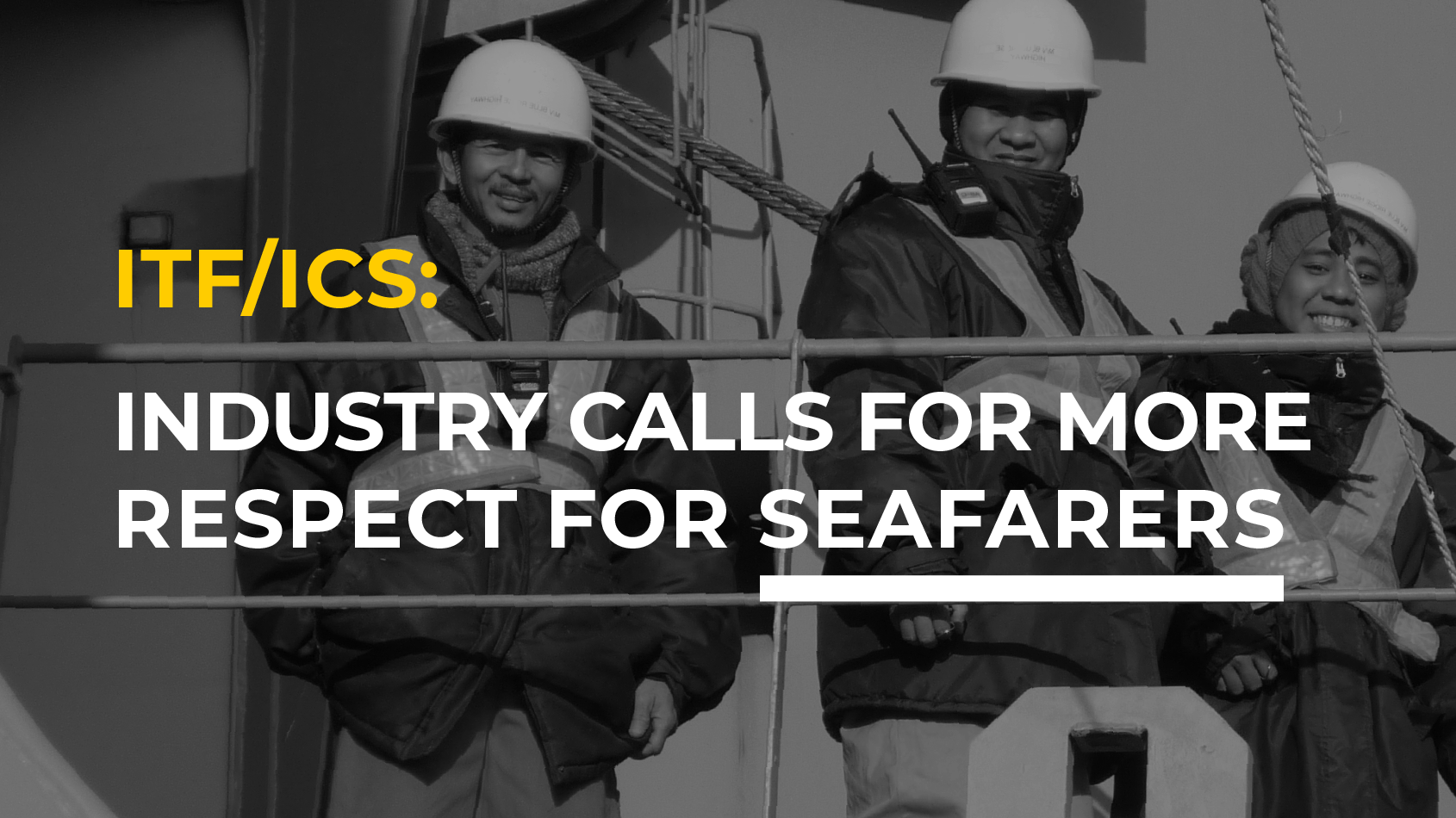
Shipping Industry: Seafarers Key to Keeping Trade Afloat Amid Pandemic

The shipping industry is one of very few sectors to remain relatively untouched by the coronavirus pandemic. The International Chamber of Shipping association (ICS), and the International Transport Workers’ Federation (ITF), however, warned on Tuesday that global COVID-19 transport lockdowns are putting the industry’s vital work in peril.

The industry bodies warned the G20 that COVID-19 curbs are starting to affect the movement of seafarers, saying that, “without coordinated global action, the efficient flow of imports and exports carried by sea will be jeopardised.”

“The issue of crew changes has the potential to become a massive problem for the global economy if governments do not address our concerns,” said ICS Secretary General Guy Platten.

“National lock downs, travel bans and port restrictions are making this crew change more difficult,” Platten added.

Approximately 90% of world trade is facilitated by maritime transport and there are some 1.2. million merchant sailors on the water at all times. 

An estimated 100,000 crew members need to be rotated each month, but the ICS and ITF say the current restrictions on flights is becoming a major obstacle to completing crew changes “which are critical for safe and efficient maritime transportation activities to continue.”

Merchant crews are also coming up against more stringent immigration and health screening protocols when they dock. According to the industry bodies, there are tens of thousands of seafarers whose tours of duty have to come to end, waiting to be repatriated.

“The current deadlock not only threatens seafarers’ personal health and wellbeing, but also increases the risk of marine accidents,” ITF general secretary Stephen Cotton said.  


Iranian Parliamentarian Defends Downing of Ukrainian Plane

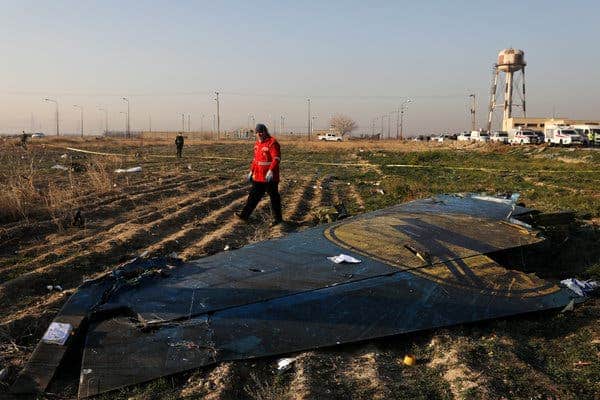
Iranian parliamentarian Hassan Norouzi supported the Revolutionary Guards’s downing of a Ukrainian plane on January 8, which killed 176 civilians.

An Iranian missile hit the Ukrainian passenger plane on January 8 when the Iranian defenses were on high alert. Iran had been anticipating US retaliation for Iranian strikes on American forces in Iraq, which came in response to the US killing General Qasim Soleimani on January 3.

Norouzi said that the Revolutionary Guards were justified in shooting down the Ukrainian civilian airliner. Contrary to official allegations, he continued, no one has been arrested or held accountable.

The parliamentarian said the plane was under external control and Iran had no choice but to shoot it down and argued it is not reasonable to arrest those responsible for the downing. 

He also alleged the plane’s “security system was hacked and intercepted” while in Israel a week before the incident. 

In the immediate aftermath of the downing, Iranian civil authorities insisted that the cause of the crash was a technical failure, denying reports of an intentional missile strike. 

Iran then admitted on January 10 that the plane was shot down due to “human error,” and President Hassan Rouhani said investigations will continue to ensure the prosecution of those responsible.


The commander of the Air Force of the Iranian Revolutionary Guards, Amir Ali Haji Zadeh, claimed full responsibility for the incident. However, he has not faced any official legal action. 


On January 11, amateur video posted on social media showed protesters gathered outside Tehran’s Amir Kabir university chanting “dishonorable,” an apparent reference to Iranian leaders, and calling for justice.

The majority of the plane’s passengers were Iranian civilians. Passengers from Afghanistan, Britain, Canada, Sweden, and Ukraine were also on board.


Read also: Iran to Restart ‘Low-Risk’ Economic Activity Despite COVID-19 Warnings

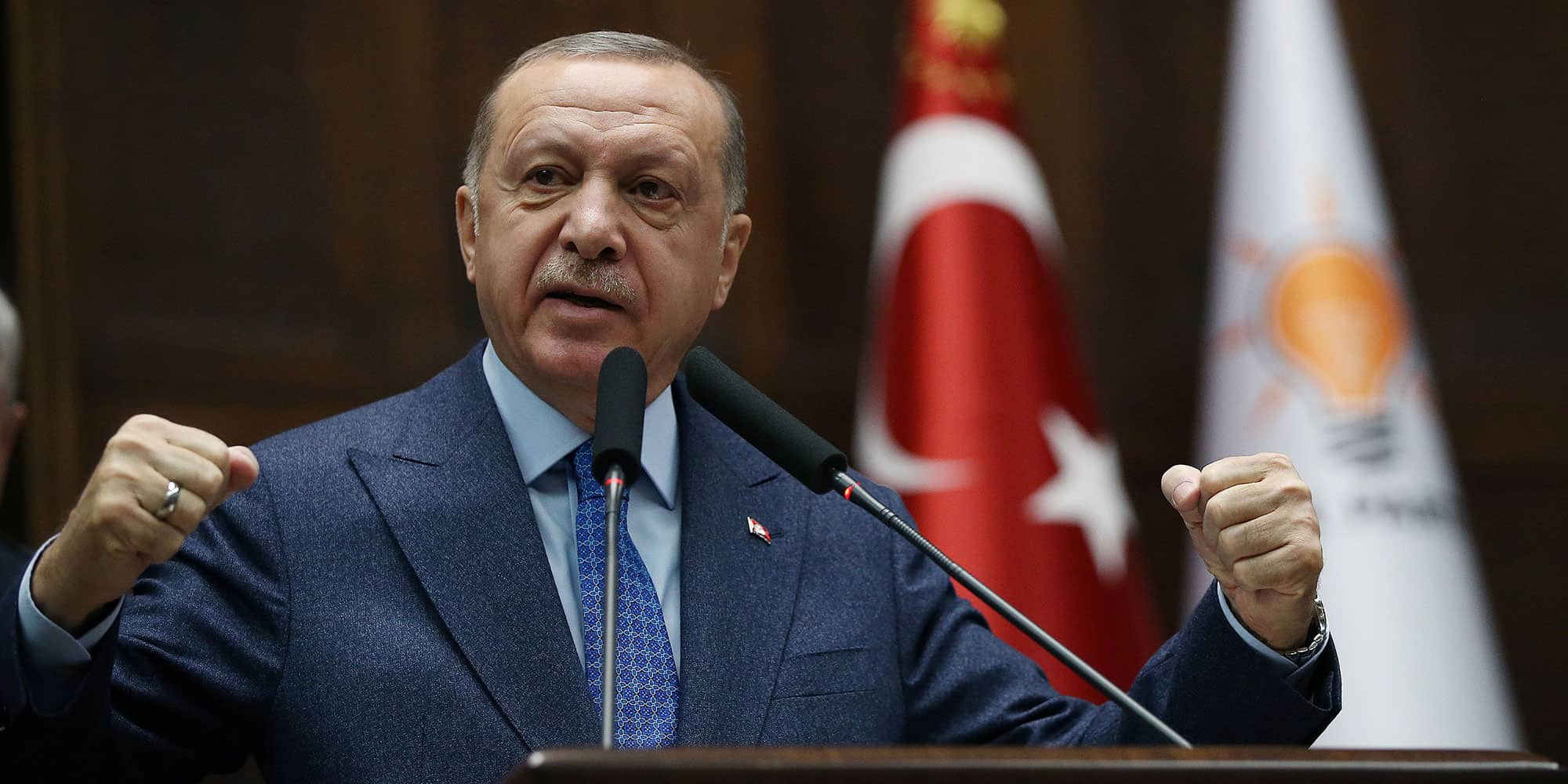
COVID-19 is exposing Erdogan’s flaws

The COVID-19 pandemic is revealing mismanagement and incompetence in Recep Tayyip Erdogan’s policies and tactics, after the president’s 17 years as the head of the Turkish state. 

For the better part of three decades, Recep Tayyip Erdogan has been an active participant in Turkish politics. He grew up in the secular state envisioned by Mustafa Kemal Ataturk, founder of the current Turkish state after the fall of the Ottoman Empire, following the First World War.

Erdogan attended one of the few remaining religious schools in a country with a specific goal: Creating a secular society. The leader’s resistance to Turkey’s secular nature grew over the years. As a child, Erdogan often felt discriminated against for his faith. Erdogan grew up in a country that faced repeated coups as the military used its power to maintain the state’s secular nature, as envisioned by Ataturk. 

The chaos in the country meant economic development was weak, causing many of Erdogan’s countrymen to migrate to Europe or the United States seeking better economic opportunities. Erdogan first experienced politics as at a young age as part of an anti-communist student union. At the time, he had joined a national Islamist party, where he quickly rose through the ranks to become head of its youth branch.

Erdogan’s political instincts helped him become mayor of Istanbul in 1994, where he was generally successful in solving day-to-day problems. The now-president was shaped by his first foray in National politics when the Islamist party he supported was declared illegal because of alleged anti-secular tendencies. Authorities arrested and jailed Erdogan after he read a controversial religious poem on charges of inciting violence and religious hatred.

The conviction meant a ban from national politics but his time in jail made him a nationally recognized figure. Erdogan used his new popularity to found the conservative Justice and Development Party (AKP). In 2002 he participated in national elections and his party won over one third of the vote. The victory allowed AKP to form its first national government, but Erdogan was unable to become prime minister as he still faced a ban from political participation. Authorities lifted this ban in 2003, and Erdogan was able to rise to the top of Turkish politics.

National policy

Erdogan’s party’s victory in 2002 was seen internationally as a sign of further democratization in Turkey. During its first five years in power, resistance grew against Erdogan’s conservative tendencies. In 2007, hundreds of thousands of Turkish citizens took to the streets to protest a possible Erdogan candidacy, but the AKP party won the election with 46.7% of the votes.

The more power Erdogan gained, the more he used it to further consolidate power. He limited the power of the military, which had repeatedly prevented Turkish desecularization, but his advocacy for Turkish membership in the European Union (EU) limited international criticism. 

A lifetime of seeing religious political parties banned made Erdogan skilled in promoting “conservatism” without explicitly calling for Turkey to become more religious. The AKP was the first Turkish party to win three consecutive elections in 2011, and the political and economic stability resulted in a rising standard of living.

Erdogan’s government faced a number of resignations and political turmoil in 2013 but he used his power to overhaul the judiciary and limit freedom of the press. When in 2014 his own party rules prevented him from running for prime minister again, he instead ran for president. The function of president was mostly ceremonial at that point, but Erdogan transferred powers from the prime minister to his new position.

Turkey’s transition into a conservatitve religious state became clearer when he declared gender equality to be “against the rules of nature” and restricted acces to abortions and alcohol. 

The Turkish military intervened to keep Turkey secular in 2016, not for the first time. Erdogan framed the intervention as a “coup” by a religious leader in exile and used the resulting chaos to further solidify his power. He declared a state of emergency and detained 40,000 Turks while removing over 80,000 people from their jobs as judges, prosecutors, teachers, or academics. 

The following year he forced a constitutional referendum upon the Turkish people. In elections deemed questionable by foreign election observers, he won 51.4% of the vote to give himself unprecedented new powers. By creating an “executive presidency,” Erdogan abolished the position of prime minister and curbed parliamentary power, extending his possible rule to 2029. 

Foreign policy

As Erdogan used his political powers to establish himself as the most powerful person in Turkey, he took a page out of Vladimir Putin’s playbook and built national support through aggressive foreign policy. As Erdogan’s power at home grew, his foreign policy posturing became more brazen. 

Early in his career Erdogan was hailed as a force that would bring the EU and Turkey together, but as his power increased, so did his international combativeness. The leader leveraged the presence of refugees destined for Europe in order to gain major financial support. As the Syrian civil war evolved and hundreds of thousands fled north, he used European xenophobia and fear of mass immigration as a political tool to gain concessions.

Erdogan built a relationship with Donald Trump in 2012 when Trump licensed his name for an Istanbul “Trump Tower.” Erdogan used his friendship with the unexpected 2016 presidential victor to gain an unquestioning ally with a reverence for political strongmen.

The Turkish president leveraged his friendship with Trump into a US troop withdrawal from Northern Syria as Turkey planned an invasion. The US abandoned their Kurdish allies that had done much of the “dirty work” in defeating ISIS, and cleared the field for Turkish control. 

Erdogan’s friendship does not guarantee loyalty, as Trump learned when the Turkish president entered into a rapprochement with Russia. Turkey’s role as NATO’s second largest military positioned Erdogan as an important international player, but his decision to purchase Russian S-400 weapons systems quickly soured the relationship. Erdogan is currently using the threat of the Russian system to secure concessions from Europe and the United States, a ploy that might easily backfire.

Turkey signaled its increasing role as a prominent power in the Middle East by intervening in the Libyan civil war. Supporting the UN-backed Government of National Accord, Erdogan shipped thousands of Syrian mercenaries to the already chaotic battlefields of Libya. The Turkish intervention in Libya rebalanced the equilibrium of power and is sure to extend through the length of the brutal conflict.

COVID-19 response

Erdogan’s political acumen and posturing gave him unprecedented political power in Turkey and the Middle East, but gaining power is different than effectively wielding it. The difference between the two became clear after a bungled response to the COVID-19 pandemic. 

As the novel coronavirus spread across the globe, Erdogan proudly announced his country to be free of the virus, and his party even insinuated that Turkish genetics came with immunity. For weeks Turkey boasted about its COVID-19 status until citizens returning from Europe started raising the alarm at airports.

Within three weeks, Turkey went from announcing the absence of the virus to admitting it had over 30,000 infections. The scale of the crisis proved much bigger than the reported cases suggested. On April 2, Turkey had to admit that 601 of its medical personnel dealing with the crisis were infected themselves. 

Hundreds of Turks died by April 4 and the government’s focus shifted to performing as many tests as possible. Erdogan has now implemented many of the restrictions seen in Europe, but the opaque nature of his approach means Turks have no idea in what province or city the virus is most prevalent. 

Turkish medical staff have publicized fears that Turkey’s outbreak could follow Italy, as local healthcare professionals estimate the presence of thousands of unreported cases. The news highlighted Turkey’s diminished free speech as one doctor who questioned the numbers “released an apology” for the act on Twitter. 

Erdogan’s decades of rule have left the Turkish state incapable of handling the crisis. Limits on press freedom resulted in a state of confusion and fear, and the public does not know what numbers to trust. The 2016 crackdown led to many qualified administrators, teachers, and academics finding themselves unable to assist when they are most needed. Skepticism about government announcements has resulted in many people dismissing advice to wash hands and maintain social distancing. 

The Turkish president is clearly skilled at the political game. He rose by consolidating the power of democratic institutions in his hands. If Erdogan was a skilled administrator and manager of the state, this would result in swift government action similar to what is seen in Saudi Arabia or the UAE. Instead, the COVID-19 crisis is revealing that Erdogan has grabbed more power than he can effectively wield.

Erdogan continues to play games with foreign policy. He holds the lives of refugees in his hands as a negotiating tool against the EU and continues to push NATO in order to get concessions. All of Erdogan’s political skills will not mask the catastrophe his policies have created in Turkey. No propaganda or political tricks can hide that as of April 7, Turkey has become the nation with the fastest rising infection rate in the world.

 

Read also: COVID-19: Turkey Seizes Respirators Destined for Spain

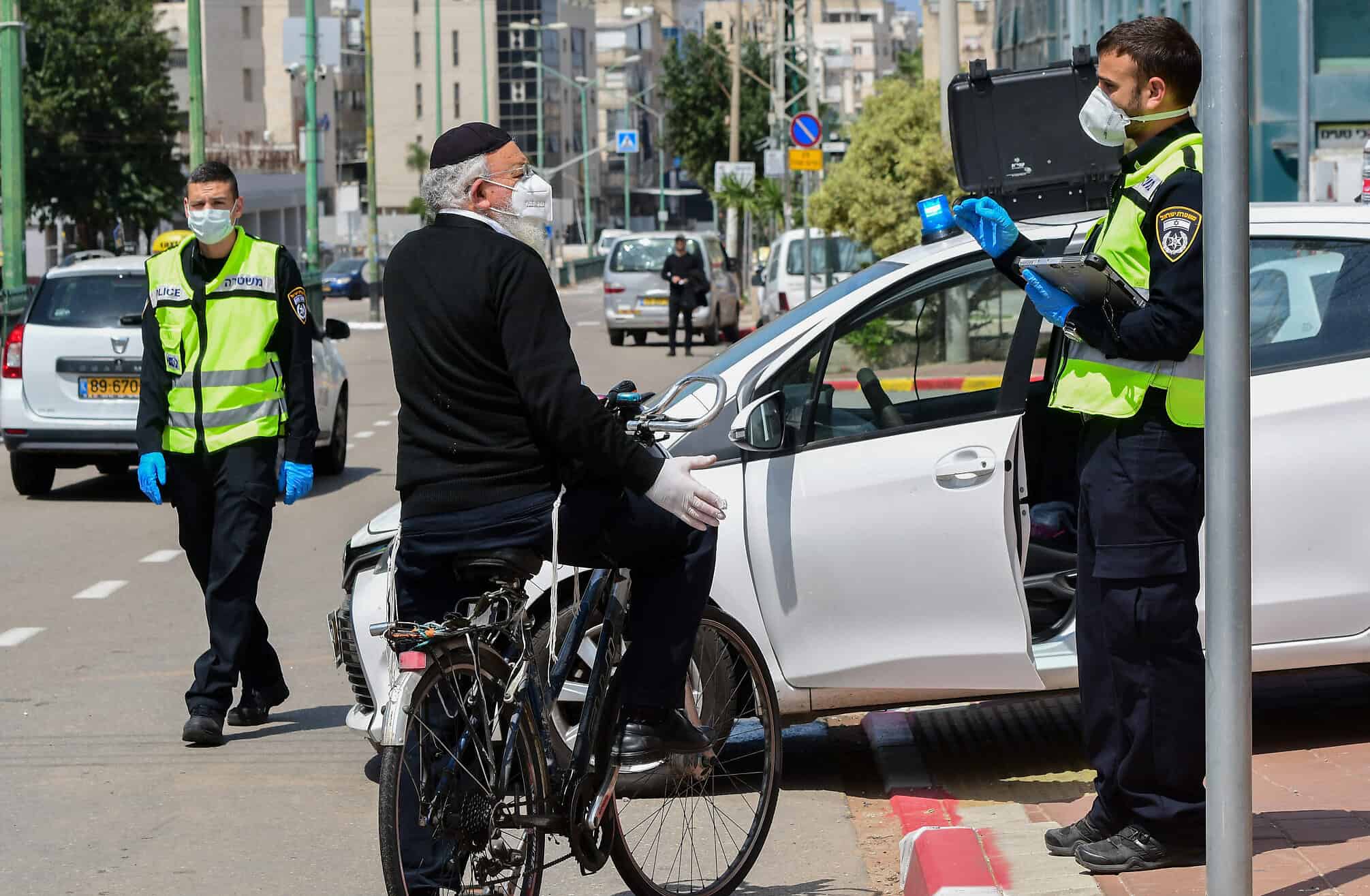
Israel Tightens Lockdown to Prevent COVID-19 Spread During Passover

Israel’s cabinet approved new COVID-19 measures today, including a ban on travel between cities and towns from 7 p.m. on Tuesday, April 7 until 6 a.m. on Friday, April 10. 


The existing curfew will be extended from 3 p.m. on Wednesday, April 8 to 7 a.m. on Thursday, April 9. The measure will prevent citizens from venturing farther than 100 meters from their homes at a time when they would normally travel to join family for a festive Passover Seder meal. All businesses will also close during this period.

Jewish people traditionally travel and gather with family to mark Passover and the Seder dinner, which focuses on the story of the Jewish exodus from Egypt.  

“Every family will hold the seder alone, you will celebrate only with the limited number of family members now in your home,” Prime Minister Benjamin Netanyahu said in a televised address on Tuesday morning.

Jerusalem has been sectioned off into seven zones, with residents’ movement restricted to their respective zones from Tuesday to Friday. Israel’s Arab population will be exempt from the Passover Seder curfew restriction. 

Netanyahu also said that if Israelis respect the new measures, and the curve flattens further, an “exit strategy” could be rolled out soon.

“There is a realistic chance that if the trends continue, we’ll begin to gradually exit from the lockdown after Passover and Mimouna (the day after Passover),” said the prime minister.

“It depends on you. It depends on the fulfillment of the tough directives… Don’t get complacent,” Netanyahu stressed.

Anyone who ventures outside in Israeli is now required to wear a protective face mask. Under the curfew, citizens are only permitted to go beyond a 100 meter radius from their homes to purchase essentials or access medical treatment. 

As of Tuesday, April 7, there were over 9,000 recorded cases of COVID-19 in Israel, including 60 deaths. According to the Health Ministry, 113 coronavirus patients are currently on ventilators, and the ministry was quick to assure Israelis that the country now possesses a stock of 3,000 life-saving machines. 

Religious practices and holidays have been disrupted around the world as the COVID-19 pandemic forced the closure of places of worship and restricted worshippers’ movement. 


Read also: Research Reveals Israel Spraying Herbicides in Gaza

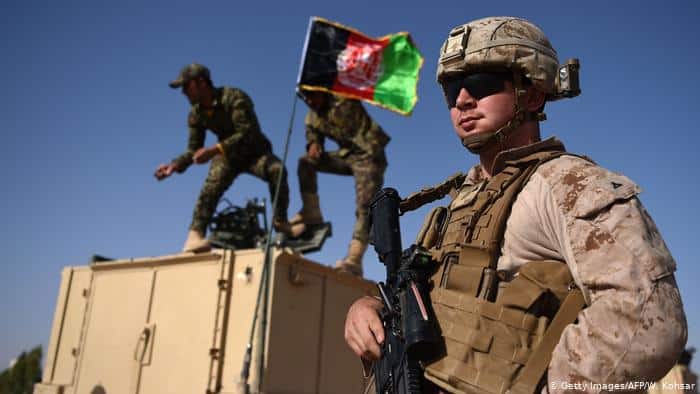
Afghan-Taliban Negotiations to Stall as US Withdraws Troops

The Taliban announced today they will no longer negotiate with the Afghan national government. Via a tweet sent just after midnight, the Taliban lamented the “fruitless meetings” their negotiating teams experienced with Afghan government representatives over the release of captured Taliban forces. The prisoner release was agreed upon in earlier talks, but the fact that Afghan negotiators had been excluded from these talks, which took place between the US and the Taliban, created an impasse.

“Peace is maintained by the equilibrium of forces, and will continue just as long as this equilibrium exists, and no longer.” These are the words of Karl von Clausewitz in his famous work on military strategy, “On War.” Every American general in Afghanistan will have had Clausewitz as required reading in their military education. All the same, the US is ignoring this essential idea that removing a balance of power will facilitate war.

Instead of ensuring that the balance of power remains intact while the negotiations proceed, US Secretary of State Mike Pompeo delivered a scolding message from US President Donald Trump: “Work together, or you are on your own.” Pompeo  directed the message to both the Afghan national government and Adbullah Abdullah, the presidential candidate that continues to claim the presidency as his own.

In agreeing to prisoner releases ahead of the talks, the US severely crippled the Afghan government’s negotiating power. The US cut $1 billion in support and continues to withdraw its troops. The “equilibrium of forces,” as Clausewitz calls it, has been severely disrupted for weeks, as Afghan security forces now lack the funding to operate and are losing the support of US military forces.

A Taliban victory lap

Some imprisoned troops were returned to the Taliban, and as Afghan security forces weaken, the Taliban is becoming the dominant military force in the country. After defeating the Soviet invasion, it appears it is now ready to proclaim victory over the United States.

This may appear an unlikely feat for a low-tech guerrilla force like the Taliban, but historically effective circumstances proved valuable once again: The Taliban had simply to wait for the US to exhaust itself, just as the USSR exhausted itself in decades past.

This type of warfare has been successfully applied since the 1700s. As the defending party, the Taliban always had the advantage, according to Clausewitz: “In tactics every combat, great or small, is defensive if we leave the initiative to the enemy, and wait for his appearance in our front. From that moment forward we can make use of all offensive means without losing the said two advantages of the defense, namely, that of waiting for, and that of ground.”

If ever there was a national military that should understand the difficulty of winning a war against a hidden local guerrilla force, it would be the US. The conflict in Afghanistan already mirrored many aspects of the US conflict in Vietnam in the 1960s and 1970s, and current developments are eerily similar to how the US eventually lost the war.

In 1973, the US signed a peace agreement with the Northern and Southern Vietnamese, signaling its withdrawal. Although the agreement was often violated, the US continued with its withdrawal as “equilibrium of power” between the two local parties shifted radically. Within two years of the US withdrawal, the North Vietnamese communists that the forces had fought had conquered the South and achieved total ideological control over the country.

This passage of history may be repeated, as the US withdraws from Afghanistan, leaving a withering ally to contend with the force it was unable to defeat. The negotiators of the eventual US-Vietnam peace process received the Nobel Peace Prize. Donald Trump has clearly read this part of history, as he is already claiming that if he does not receive the prize for leaving Afghanistan, the Nobel committee must be “rigged”.

Afghanistan faces turbulent years ahead, with the Taliban as the likely winner of a renewed civil war. The US appears on a path to continue ignoring lessons from history. By refusing to learn even basic military strategy as taught by Clausewitz, the US could have “another Vietnam” on its hands.


Read also: Planned $1 Billion Cut in US Aid Imperils the Afghan Peace Process

Civil Society Campaigns for Developing Country Debt Cancellations

The 161 charities and networks headed up by the UK’s Jubilee Debt Campaign are campaigning for lenders including the International Monetary Fund (IMF), World Bank, G20 nations, and private creditors to release the pressure on developing countries’ economies by canceling debt completely.

“Developing countries are being hit by an unprecedented economic shock, and at the same time face an urgent health emergency. The suspension on debt payments called for by the IMF and World Bank saves money now but kicks the can down the road and avoids actually dealing with the problem of spiraling debts,” said Director of Jubilee Debt Campaign Sarah-Jayne Clifton on April 7.

The debt cancelation coalition is adamant that repayments should not just be pushed back to another year, and that “a process to reduce debt burdens to sustainable levels through overall debt cancellation in coming years” is badly needed. 

“Debt payments need to be canceled with immediate effect, including payments to private creditors. This is the fastest way to keep money in countries to use in responding to COVID-19, and to ensure public money is not wasted bailing out the profits of rich private speculators,” Clifton explained.

The IMF has already made available $50 billion, and the World Bank a further $14 billion, in emergency COVID-19 response funding to date. Together, the IMF and World Bank are also urging a 14-month suspension of debt payments for low-income countries starting from May 2020. 

“Out of the 69 low-income countries we are talking about, at least 45 of those are going to need to request emergency funding just to get through 2020,” said Mark Perera, a policy manager for campaign signatory European Network on Debt and Development.

The debt cancelation campaign echoes the growing concerns voiced by African governments. Chair of the joint World Bank-IMF Development Committee Minister Kenneth Ofori-Atta has been coordinating with South Africa, which currently chairs the African Union, to develop a joint African response to the pandemic. As a result, African finance ministers have requested $100 billion in support, including debt relief, to date.  

Ofori-Atta, who is also the Ghanian finance minister, described the dual public health and economic crises caused by the coronavirus pandemic as “an apocalyptic moment.”

“The question for countries like ours with very little savings, how do you manage this period? It brings into question this whole issue of debt sustainability and therefore what to do… It’s a very difficult period and trying moment,” Ofori-Atta said during a conversation exploring COVID-19 and development organized by the Center for Global Development on April 6.  

International charities including Oxfam, ActionAid International, and Save the Children have signed their names to the campaign alongside regional non-governmental organizations, primarily based in Africa and Europe. 


Read also: Europe Urges IMF to Support Iran and Venezuela


COVID-19: Culture on Pause in Moroccan Streets, Present in Moroccan Spirit

The coronavirus is everywhere: In the news, in our conversations with family and loved ones, and in our places of work.

Coronavirus has overtaken weather as the subject people talk about most.

Let us not panic. The stakes are high, but there is much we can do to curb the spread of the virus: Namely, practicing good hygiene and social distancing.

That should not be too difficult, as many countries have decided to cancel or postpone all public events imminent on our calendar.

Cancelation of culture

Local authorities have canceled musical festivals such as Mawazine and Timitar, and national and international forums including Crans Montana and Meknes’ International Agricultural Exhibition.

Museums have followed suit.

A statement on the website of the National Foundation of Museums announced that their services would shut down until further notice. 

“The exhibitions ‘Enchanted illusions, great figures of African modernity,’ ‘Delacroix, memories of a trip to Morocco,’ and the ‘Entry into matter’ retrospective of Fouad Bellamine, planned at the Mohammed VI Museum of Modern and Contemporary Art, are effectively postponed,” the statement read.

Cinemas, art galleries, and theaters throughout the country have also announced that they would close immediately and remain shuttered for a good while.

We are talking about a near complete halting of the cultural and entertainment industry, the largest-scale shutdown of national art and cultural centers.

With Morocco’s broader cultural scene coming to a coronavirus-prompted close, industry professionals are tallying the potential financial impact.

Consequences of the coronavirus on the arts and entertainment industries will likely be felt by artists, filmmakers, theater and cinema owners, staff members at these institutions, and more for months to come, at a minimum.

The halt to cultural performances will leave the people who depend on cultural activities for their livelihood financially vulnerable. It also raises questions about how artists and other staff members of arts organizations will maintain their livelihoods, with their events canceled.

The whole sector will be hit especially hard when we factor in the cost to cinemas, shows, and institutions involved, along with COVID-19’s impact on the wider Moroccan economy.

The Moroccan Ministry of Economy and Finance sits on the country’s newly created Economic Monitoring Committee (ECV), formed to address the impacts of the novel coronavirus across Morocco’s economic and social sectors. 

The committee “will be in charge of closely monitoring the development of the economic situation through evaluation mechanisms and identifying appropriate measures to provide support for the affected sectors,” the ministry said in a press release.

We can hope that this will mitigate the effects of the coronavirus on the fledgling arts and entertainment industry.

How to benefit from arts and culture during lockdown

For those of you sticking to social distancing, as recommended by officials, the best thing to do now is to cobble together alternative entertainment.

This is the time to catch up on reading. Start with those books that have been sitting on your shelves for a while.

Since libraries and bookstores will be closed, you can also freely download e-books and audiobooks. The National Library of Morocco in Rabat (BNRM) has lists of available materials for adults and children on its website, free of charge.


If you are art-savvy, this is the time to take a virtual museum tour. Google Arts & Culture has a collection of virtual walk-throughs for various international museums, from Paris to New York. Morocco’s Mohammed VI Museum of Modern and Contemporary Art is also offering “virtual immersion” tours on its websites, and anyone interested can check out the museum’s current collections for free.

Now is also the time to catch up on the latest film releases or rewatch some old classics. Many platforms are available online and you can watch anything from American to Chinese to South Korean movies. Oscar-winning Parasite, anyone?

You can also binge watch many international series. One benefit of a television binge: You will not feel the time passing as series usually span many seasons, some more than 15.

Keep this in mind: You do not need to be a shut-in when social distancing.

You can get out of the house on the sole condition of maintaining at least one meter of distance from other people. Avoid crowds and go in nature.

But let us be clear: While there are enjoyable, accessible ways to pass the lockdown, coronavirus is no joke. 

The virus spreads person-to-person through respiratory droplets, meaning the chance of infection is high.

Many countries are simply overwhelmed and trials for potential vaccines may take some time. It is better to be safe than sorry.

Morocco has confirmed 1,141 novel coronavirus cases, including 88 recoveries and 83 fatalities, as of April 7. The country’s state of health emergency lockdown is scheduled to continue until April 20.


Read also: Coronavirus Hits Morocco, Government Confirms First Case

Saudi Arabia Imposes COVID-19 Curfew in Major Cities

Saudi Arabia announced on Monday, April 6 a 24-hour curfew in five major cities and four governorates, after the country recorded 82 new cases of COVID-19, raising the Gulf state’s total to 2,605.

Saudi television channel “Al-Ekhbariya” shared the statement from the country’s Ministry of Interior the same day. 

The curfew will apply to the capital, Riyadh, as well as to the cities of Jeddah, Dammam, Dhahran, Tabuk, Hofuf, Taif, Al Qatif, and Khobar, the interior ministry said in a statement published by the state’s official Saudi Press Agency.

All commercial entry to or exit from those areas will not be allowed, except for vital workers. Residents are allowed to leave their homes for medical or food needs inside their residential area and between 6 a.m. and 3 p.m. only.

The country’s 2,605 cases included 38 fatalities and 551 recoveries, according to the statement.


Exceptions for necessities

Saudi authorities said that residents of the two cities will be allowed “to leave their homes to meet only necessary needs, such as health care and food supplies food supplies,” further specifying that residents are only allowed to access such needs in their immediate neighborhoods, during the period of 6 a.m. until 3 p.m.

Authorities prohibited commercial activities inside the two cities’ residential neighborhoods, except for pharmacies, grocery stores, gas stations, and banking services, according to the same source.

The Ministry of Interior is calling on citizens and residents to engage express delivery services through smartphone applications. Residents can use the applications to request food, medicine, and other excluded goods and services for home delivery.

Mecca and Medina were already in lockdown

The decision follows Saudi Arabia’s previous decree that forbids unnecessary movement in the cities of Mecca and Medina, issued last week.

Minister for Hajj and Umrah Mohammed Saleh Benten asked Muslims to defer preparations for the annual Hajj pilgrimage scheduled for late July on state television on April 2. 

The kingdom restricted movement in the two cities 24 hours a day, and prevented entry to or exit from the cities until further notice.

Banten added that the curfew does not prohibit the entry and exit of vital sector employees.

Air traffic is also restricted

The kingdom has taken several strict measures regarding movement, including stopping international flights, suspending Umrah for the duration of the year, and closing mosques, schools, markets, and restaurants.

The Gulf states have taken strict measures to cope with the outbreak of the virus. with the major airports in Dubai and Abu Dhabi in The United Arab Emirates announced a temporary suspension of all passenger flights to and from the major airports in Dubai and Abu Dhabi effective March 26. Emirates and Etihad airlines have suspended all flights, and the UAE has urged people to stay at home. The UAE closed some stores in Dubai’s shopping centers, but has not announced an official curfew or suspension work. 

Isolation measures in neighboring Kuwait

Kuwait also imposed a curfew, and said that violators of the measure from foreign countries would be deported. The government also imposed complete isolation of two densely populated areas and decided to suspend business in ministries, agencies, and public institutions until April 26, as a precautionary measure to combat the coronavirus pandemic.

Authorities extended the partial curfew by two additional hours, effective April 6 until further notice. Curfew allowances now start at five a.m. and continue until six p.m. The Ministry of Interior urged citizens to remain in their homes, even during daytime hours.

Jleeb Al-Shuyoukh and Mahboula, which are densely populated and inhabited by poor migrant workers, will be subject to complete isolation.

The number of coronavirus cases worldwide exceeded 1 million on April 6, including over 73,000 fatalities and more than 277,000 recoveries. 


Read also: Saudi Arabia Calls for Pilgrims’ Patience over Hajj Contracts