UN Secretary General Guterres Calls for Unity Among Faiths

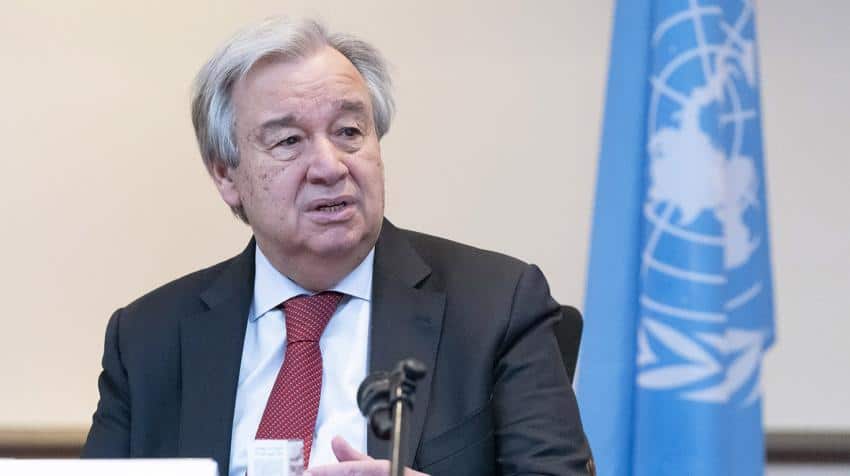
On Saturday, April 11, UN Secretary General Antonio Guterres called on solidarity from the world’s religious leaders. “Today, I want to make a special appeal to religious leaders of all faiths to join forces to work for peace around the world and focus on our common battle to defeat COVID19,” the secretary general said.

The head of the UN linked his speech to this weekend’s Easter and Passover celebrations and the upcoming Islamic holy month of Ramadan. Guterres said, “I extend my warmest wishes to all those observing these important moments. We have always known these occasions to be moments of community. Of families coming together. Of hugs and handshakes and the gathering of humanity. But this is a time like no other.”

With global COVID-19 cases nearing 2 million, and total deaths nearing 120,000, Guterres called on religious leaders to come together to fight the virus as a shared enemy. “Let us all take inspiration from the essence of these holy occasions as moments for reflection, remembrance and renewal,” the secretary general said in the speech, which was broadcast on the United Nations’ official Youtube channel. 

“As we reflect, let us spare a special thought for heroic health workers on the frontlines battling this awful virus – and for all those working to keep our cities and towns going.”


Powerless pleas

Guterres highlighted the plight of refugees amid the global virus-related chaos. The UN High Commissioner for Refugees (UNHCR) started a live blog four weeks ago to report on developments regarding refugees in this difficult time. “Let us remember the most vulnerable of the vulnerable around the world,” Guterres said, echoing his earlier call for a global ceasefire. 

The secretary general asked all parties to remember “those in war zones and refugee camps and slums and all those places least equipped to fight the virus.”

Global institutions like the UN are demanding attention from global leaders. The UN is urging for more support for the World Health Organization (WHO) as the global organization’s advice has often been ignored. Even though the WHO issues very specific guidance and examples of successful policies, most world leaders have chosen their own plans.

The constant struggle between world leaders and global institutions has laid bare how little power intergovernmental bodies like the UN and its WHO agency have. These organizations have been portrayed by nationalists as supranational organs that dictate their policies to member states, but their inability to change members’ behavior even in a pandemic indicates otherwise.

As Guterres’ desperate pleas for solidarity continue, it appears that governments internally are more often looking ahead to a moment to “reopen” their economies than looking to effectively combat the virus. Countries have sovereignty over their own decisions. Whether that is always positive remains to be seen as our global patchwork of measures creaks under the pressure of COVID-19.


Read also: UN: Lift Unilateral Sanctions Amidst COVID19

Emirates, Etihad Scale Up Outbound Passenger Flights to Select Destinations

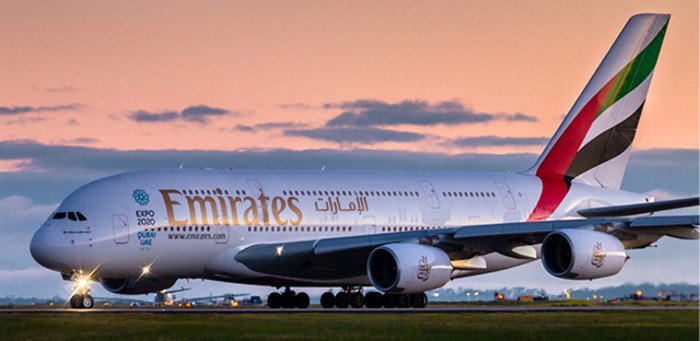
Dubai-based airline Emirates announced today it would start operating outbound flights to another seven destinations, after resuming flights to London and Frankfurt on April 6. One day earlier Etihad also said it would increase its offering of special outbound-only flight services. 

The United Arab Emirates flag carrier issued a press release on April 13 saying flights to Tunis, Jakarta, Manila, Algiers, Taipei, Chicago, and Kabul will recommence from Terminal 3 at the Dubai International Airport, but did not specify when the additional services will begin. 

“These services will facilitate residents and visitors wishing to return home,” Emirates said, adding that passengers will be able to book directly with the airline or via their travel agent.

“Only citizens of the destination country and those who meet the entry requirements will be allowed to board. Passengers will be required to comply with each country’s requirement,” the airline specified. 

There will also be stringent controls on cabin baggage, with passengers only permitted to carry a laptop, handbag, briefcase, or baby items. 

On April 12, Abu Dhabi-based Etihad announced it would begin running “additional special flights” to Brussels, Dublin, London Heathrow, Tokyo Narita, and Zurich. These services are in addition to existing special flights running between Abu Dhabi and Amsterdam, Jakarta, Manila, Melbourne, Seoul Incheon, and Singapore.

“Etihad Airways has been operating special flights which have allowed passengers stranded in the UAE due to COVID-19 restrictions, the opportunity to return home. The flights also support the ‘UAE Food Security Program,’” the airline said in an online statement.

“The airline continues to repatriate UAE citizens on return sectors, where possible, and carry fresh produce as belly-hold cargo back to Abu Dhabi,” Etihad Airways added.

Etihad and Emirates were forced to hit the pause button on passenger services when the UAE’s National Emergency Crisis and Disasters Management Authority (NCEMA) and the General Civil Aviation Authority (GCAA) ordered the suspension of passenger flights on March 25 to curb the spread of coronavirus. 

The carriers were permitted to begin flying again in earnest on April 6, but both appear set to limit themselves to running a small number of outbound flights for the foreseeable future. 

Outlook on Moroccan flights

Etihad Airways has begun telling customers who want to fly out of Morocco that they expect to recommence flights from April 21, according to an Arabia Policy source.  

“We are expecting to resume flights from 21 April. Please check our website for the latest updates and available flight options,” the airline said in an email to an Australian customer seeking to leave Morocco.  

International flights in and out of Morocco are currently suspended and the entire country is subject to a lockdown, scheduled for review on April 20. It is possible that the April 21 date given by Etihad is arbitrary and entirely dependent on how Moroccan authorities decide to proceed with their COVID-19 curbs on April 20. 

The news that Etihad may recommence operations as early as April 21 was met with cautious excitement by a group of Australian stranded in the North African country. They were, alongside many foreign visitors, caught unaware when Morocco closed its international airspace on short notice on March 15.

A number of commercial flights from the UK, Europe, the US, and Canada were allowed to operate after Morocco’s flight suspension began in order to repatriate stranded tourists. Australians struggled to secure seats on those flights, as companies privileged nationals of their base country over foreigner travelers. 

Family and friends of Australians stuck in Morocco due to COVID-19 have started campaigning politicians for a repatriation flight and launched a petition on Change.org. The petitioners are concerned Morocco’s lockdown will drag on past April 20 as rumors swirl it will be extended until throughout the Muslim holy month of Ramandan, scheduled to finish around the end of May. 

Markets rally amid alarming numbers of deaths and unemployed

As the global total number of confirmed COVID-19 cases races to 2 million, and global unemployment continues to rapidly increase, markets have just experienced their best upswing since the 1970s. The term “best week” relates to the increase relative to the terrible month that predated last week’s rally. American markets took a number of factors into consideration that lead to their current state of optimism.

While markets are still down compared to pre-coronavirus numbers, last week’s rally appears to have come from an increase in knowledge about the US outbreak, the decision by major oil producing countries to cut oil production by 10%, and the apparent willingness of the Federal Reserve and US government to provide any stimulus needed.

The stock market is not supposed to be an indicator of present fortunes, but forecasts for the future and last week’s rally can serve as a signal that market watchers consider that COVID-19 news should start to improve. The short-term market consideration also saw investors pick up some quick profit by buying and selling in last week’s rally.

Another reason for increased confidence in investing is the fact that there are no more bad businesses or potential bankruptcies. Stimulus and government guarantees are ensuring that even the worst-run businesses will survive the current crisis and businesses that do not need stimulus are simply adding to their already sustainable results.

Will it last?

Last week’s market rally appears to show growing optimism among investors. Investors hanging onto any shred of good news regarding COVID-19 and further stimulus announcements by the Federal Reserve and government benefited the rally. While markets initially seemed to respond positively to the news of an impending deal between Russia and Saudi Arabia in the recent war for oil prices, oil still fell slightly as a supply glut and historically low demand continue to worry many.

Markets take comfort in the Federal Reserve creating money at unprecedented levels. Signals from all branches of the US government about their willingness to give away as much borrowed stimulus money as would be demanded are giving investors courage. Still, markets appear to ignore that these unprecedented levels of quantitative easing and stimulus spending are the result of an unprecedented economic crisis the “real world” is facing.

The more reality meets the current optimistic market predictions, the worse the eventual drop could be. Yes, several countries have seen a “flattening of the curve,” but that does not mean people will stop dying anytime soon. Yes, there is more “free money” available than ever before, but it accompanies skyrocketing US debt and a greater imbalance with China, the country’s main creditor.

A focus on stimulus for business with little structural assistance to citizens was a Trump administration gamble. Whether market optimism is warranted will depend on global developments outside the market’s control. If the worst is behind us, markets could stabilize, but expert predictions that the COVID-19 pandemic will continue to escalate could easily spell doom.


Read also: Despite Passing of Historic Stimulus, Markets Slide at COVID-19 News

Egyptian Authorities Lament Disruption of COVID-19 Doctor’s Burial

Egyptians were shocked on Saturday when villagers disrupted the funeral of 64-year-old doctor Sonia Aref, in her hometown of Shubra al-Bahw on the Nile Delta, for fear of coronavirus. 

Prime Minister Mostafa Madbouli issued an apology to the doctor’s family after the protest, while Egypt’s Grand Mufti responded by issuing a fatwa on interfering with the burial of “coronavirus martyrs.”                                        

The “disgraceful” incident prompted Prime Minister Madbouli to personally call and apologize to Aref’s family, extending his condolences and promising to bring the perpetrators to justice. 

“All Egyptians appreciate the efforts and sacrifices made by the medical staff,” Madbouli told Aref’s husband in a phone conversation, according to Egypt’s State Information Service. 

“We will not allow anyone to insult the medical personnel, who represent the first line of defense in our response to the novel coronavirus pandemic,” vowed the prime minister.

Egypt’s Muslim leadership has also decried the burial rejection, urging devotees to respect health authorities and maintain their humanity in the face of COVID-19.

Egypt’s Grand Mufti Shawqi Allam issued a fatwa against such acts, stating “it is impermissible for anyone to deprive any human of the divine right of burial.”

“The fatwa also prohibited the gatherings that could be staged by the relatives of the deceased people. The demagogic objection to the burial of coronavirus martyrs is religiously rejected,” Allam declared.  

The Grand Imam of Al-Azhar, Ahmed Al-Tayeb, told followers that “the repeated scene of the refusal to bury the doctor who died from the coronavirus is a far cry from ethics, humanity, and religion.” 

The holy man added, “it is dangerous that humanity could lose and selfishness prevails,” in a Facebook post on April 12. 

Video footage shows a large group of people barring the ambulance carrying the doctor’s remains from entering the local cemetery. Police resorted to firing canisters of tear-gas to disperse the protesters and facilitate Aref’s burial.

On April 12, Egypt’s prosecutor general ordered the arrest of 23 people suspected of involvement in the burial protest. Those held responsible are to be detained for 15 days while police investigate charges including “blocking a public road, terrorizing and attacking people, using violence and threats against public servants.” 

Egyptian authorities reported 126 new cases of COVID-19 today, April 13, bringing the total number of confirmed cases to 2,065. Health Ministry Spokesman Khaled Megahed said that the country’s death toll now stands at 159, accounting for 13 more COVID-19 deaths in the past 24 hours.


Read also: Egyptian Airlines Request State Support in Managing COVID-19 Losses

Can the US Learn From Italy and Spain’s Bungled COVID-19 Response?

The spread of the coronavirus across the globe comes as no surprise. For months the WHO and UN have warned of such a scenario. What is surprising is where the virus has had the worst impact. For weeks the world has watched in shock as death tolls in Italy and Spain continued to rise. Italy has recorded 156,363 cases to date, including almost 20,000 deaths, while Spain has confirmed 169,496 cases including 17,489 fatalities.

The two countries have reported unimaginable stories. Elderly people have been left to die alone in their beds in abandoned retirement homes. Poorly equipped healthcare workers have become infected while fighting the pandemic. Hospitals have been overwhelmed by the need for beds in intensive care units and ventilators to assist people suffering from respiratory distress.

According to a pre-coronavirus WHO World Health Report, Italy’s healthcare system ranked second in the world, with Spain in seventh place. Countries going through the earlier phases of the pandemic would be wise to learn from the mistakes that compounded Spain and Italy’s crises. This is especially relevant now, as the country with the world’s 37th “best” healthcare system, the US, overtook Spain and Italy.

What went wrong in Italy and Spain?

A large factor in the initial spread of COVID-19 in Italy and Spain was a sense of overconfidence. Even after the first initial cases were recorded, both countries’ governments continued to drag their feet, hesitant to implement measures already proven effective in East Asia.

Because of the slow response, many people gathered for large public events such as protests marking International Women’s Day, football matches, and religious gatherings. The lack of lockdowns meant that by the time these unpopular measures were eventually implemented, the virus had already been allowed to spread.

Mistakes in anticipating the scale of the crisis led to shortages in important Personal Protective Equipment for healthcare workers, and in beds and ventilators for patients. Years of austerity following the 2008 financial recession left the countries with efficient systems that were geared to perform under optimal conditions.

Different regional responses in Italy led to a further disproportionate spread of the virus. People traveled out of those certain cities and regions put under lockdown. This effectively meant infected people were spreading all over the country, just as isolation measures were starting to take shape.

Lessons for the US response to COVID-19

If the US wishes to prevent making similar mistakes to Europe’s worst-hit countries, there are certainly lessons available. Centralizing the national response can ensure sufficient stocks of life-saving equipment and avoid a patchwork of contradicting lockdowns. Having patience and remaining humble about the gap in knowledge surrounding the virus is crucial to avoid a dependence on “quick fixes” such as unproven remedies.

The most important lesson from the Mediterranean nations is to rush measures to combat the virus, such as testing and lockdowns, but not rush a return to “normalcy.”

If there is anything the COVID-19 pandemic has shown, it is that humility, solidarity, and compassion are the most important factors to stop a threat to humanity as a whole. As the coronavirus spreads across the United States, a blossoming of these three crucial factors could limit the pending disaster and provide a positive example of American leadership in a post-coronavirus world.


Read also: European and American Right Wing: Sacrifice the Elderly, Save the Economy

Turkish Minister Tends Resignation as Thousands Violate COVID-19 Curfew

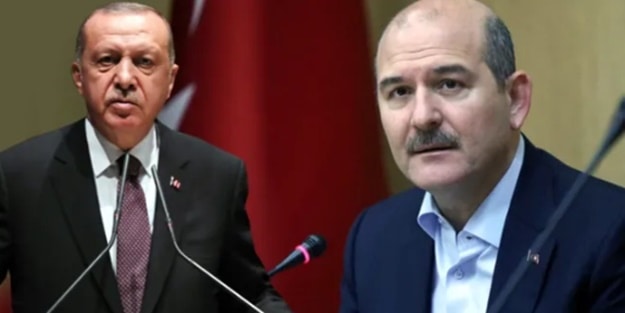
The architect of Turkey’s poorly organized weekend curfew, Interior Minister Suleyman Soylu, tendered his resignation on Sunday night after thousands ignored social distancing, rushing to buy essentials after the last-minute announcement. The incident is just the latest in Turkey’s slow response to COVID-19 that has caused case numbers and disease-related deaths to soar. 

A statement from the Communications Ministry confirmed the senior Erdogan regime figure’s resignation was not accepted, but criticism continues to fly over his handling of Turkey’s latest COVID-19 curb. 

“Responsibility for implementing the weekend curfew decision, which was aimed at preventing the epidemic, belongs entirely to me,” the Interior Minister said via a Twitter statement.

“The incidents that occurred ahead of the implementation of the curfew were not befitting the perfect management of the outbreak,” he said in the Tweet.

Soylu ordered 31 Turkish cities, including the population center, Istanbul, and the capital city, Ankara, to follow a 48 hour curfew from midnight on Friday, April 10 to midnight on Sunday, April 12. 

The Interior Minister’s announcement at 10 p.m. on Friday came as a shock to citizens and prompted thousands to rush out in order to “panic buy” essentials before the curfew began at midnight. 

Photos and videos circulated showing large groups of people queuing outside local stores, many without their now-mandatory face masks. 

Soylu acknowledged that he should have foreseen the panicked response to his last-minute curfew, saying his “countless experiences should not have led to such scenes.”

Resignation Rejected

The 50-year-old minister, one of the most senior and trusted figures in the Erdogan government and Justice and Development (AKP) Party, is tipped by some as a potential successor to the president. Erdogan said he “did not find the request suitable” and now a “humbled” Soylu will continue on in his role as interior minister.

If his resignation had been accepted, Soylu would have been the second minister to lose his job over the coronavirus pandemic after Transport Minister Mehmet Cahit Turhan was removed from office on March 27. 

Turkey-based correspondent Jasper Mortimer explained that Erdogan rejected the powerful interior minister’s resignation because the AKP cannot be seen to take a backward step. 

“Soylu is a power in his own right and is seen as a possible successor to Erdogan. So, if he had stepped down it would have been a blow to the ruling party. Soylu is also an arch champion of Erdogan’s crackdown on dissenters, on opposition parties, the Kurds and so on. So if he had stepped down, Turkish liberals would have been happy to see the back of him,” the FRANCE 24 journalist said. 

On Monday, after its chief Soylu received a resignation reprieve, the Interior Ministry released a conflicting statement claiming the curfew had been “largely obeyed,” but stated 18,770 people were penalized for violating the stay-home order. 

According to the statement, violators received “administrative and procedural penalties.” The communique also reminded citizens that Turks over 65 and under 20 are still subject to movement restrictions, and closures of public places, eateries, and places of worship remain in place. 

Turkey’s Handling of COVID-19

The weekend curfew is the harshest anti-coronavirus measure implemented in Turkey to date, where the dramatic rise in virus cases has drawn alarm from the World Health Organisation (WHO)

“We are alarmed that Turkey has seen a dramatic increase in virus spread over the last week. 60% of cases were reported from Istanbul,” WHO/Europe tweeted on April 8.


The same day, the Turkish Medical Association claimed the government was not using the correct codes when reporting COVID-19 deaths to the WHO, leading to underreporting of disease fatalities.   

President Recep Tayipp Erdogan continues to hold out on enforcing a general lockdown, instead encouraging citizens to enter their “own state of emergency,” while the nation’s workers ensure the “wheels [of production] carry on turning.”

“Our most important sensibility is the continuation of the supply of basic needs and ensuring the uninterrupted continuation of production to support exports,” Turkey’s strong-man president said last week. 

After declaring their first case on March 11, Turkey, a country of 82 million, has seen its case numbers grow dramatically. The current figures stand at 57,000 confirmed cases of COVID-19 and 1,198 fatalities, giving Turkey the unfortunate distinction of having the second largest MENA region outbreak after neighboring Iran.

Some 165 towns across Turkey have also been quarantined in an attempt to prevent the virus’ spread, and the government made wearing face masks in public spaces and on transport services compulsory on April 5. 

Google’s latest Community Mobility Report for Turkey shows that movement in areas outside of private homes is down across the board despite the country’s lack of a strict lockdown. 

Visits to retail and recreation facilities are down 76%, visits to parks slid by 61%, and visits to essential grocery outlets and pharmacies dipped by 40%. Transit stations have seen a 76% decline in traffic, while workplaces have been less affected with mobility trends showing 48% fewer visits. Meanwhile, places of residence have seen a 19% increase in access according to the data released on April 5. 

UK Pledges £200 Million in COVID-19 Aid for Disadvantaged Populations

Despite being hard hit by the COVID-19 pandemic, the UK announced £200 million in aid aimed at preventing a deadly second wave of the virus developing among the world’s most disadvantaged populations.

The number of COVID-19 cases worldwide ticked over 1.6 million this week and the death tally now exceeds 105,000, according to the World Health Organization (WHO). 

The outbreak in the UK has been severe, with nearly 79,000 cases recorded to date, including Prime Minister Boris Johnson who was discharged from the hospital today, April 12. 

International Development Secretary Anne-Marie Trevelyan said the UK was very concerned about the virus’s impact on populations already burdened by conflict and humanitarian crises.  

The UK has identified countries such as Yemen, the site of the world’s worst humanitarian disaster, and Bangladesh, which hosts 850,000 displaced Rohingya refugees, as facing immense threats from COVID-19 and possible breeding grounds of a second deadly wave of the virus. 

“Our new UK aid support will help stop the virus from infecting millions of people in the poorest countries, meaning we can end this global pandemic sooner and prevent future waves of infection coming to the UK,” explained Trevelyan.

WHO and Red Cross welcome aid

WHO Director-General responded to the announcement, saying, “We are all in this together, which means protecting health around the world will help to protect the health of people in the UK.”

Meanwhile, British Red Cross Executive Director of International Operations Alexander Mattheou said the effects of the virus were being felt most keenly in vulnerable communities. 

“The pandemic also creates other challenges—from women and girls who become more vulnerable to abuse, to people experiencing chronic hunger who lose access to food support, to camps and hospitals who have critical supplies cut off,” said Mattheou.

“The COVID-19 response must include the immediate and the secondary impacts of the pandemic,” the Red Cross spokesman added.

Food security has already been identified as a major secondary impact of the pandemic.

Countries are reducing exports of key commodities in order to shore up their own supplies, disadvantaged populations lack liquidity to purchase essentials, and food access is restricted under lockdown conditions.

The issues are exacerbated in countries that lack social security safeguards or are already experiencing a humanitarian crisis. 

In war-torn Yemen, which confirmed its first COVID-19 case on April 10, around 80% of the population already requires humanitarian assistance. The combination of the coronavirus pandemic and growing bands of desert locusts are likely to worsen food insecurity. 

Meanwhile, Human Rights Watch (HRW) reported on April 8 that millions of Lebanese citizens could be plunged into hunger by the virus outbreak.

“The lockdown to slow the spread of COVID-19 has compounded the poverty and economic hardship rampant in Lebanon before the virus arrived,” said HRW senior poverty and inequality researcher Lena Simet.

“Many people who had an income have lost it, and if the government does not step in, more than half the population may not be able to afford food and basic necessities,” Simet warned.

Details of aid package

The new funding was welcomed by WHO and the British Red Cross who will both benefit from the aid money, alongside international non-governmental organizations and British charities.

The UK has specified £15 million for the World Food Programme and £10 million for the UN Population Fund (UNFPA). The remaining funds will go to the International Red Cross and Red Crescent Movement (£50 million) and to various NGOs and British charities (£20 million). 

The lion’s share of the UK’s newest contribution towards the fight against COVID-19 will go to the United Nations virus appeal. Of the £130 million for the UN, £65 million is earmarked for the World Health Organization, while £20 million will go to UNICEF and the UN Refugee Agency (UNHCR).


Read also: Blindsided Airbnb Hosts to Receive $250 Million in Compensation

Saudi Arabia Extends COVID-19 Curfew as Cases Rise

Saudi Arabia’s King Salman bin Abdulaziz Al Saud ordered the extension of a nationwide curfew for an indefinite period on Sunday, April 12. 

The king announced the latest measure just prior to the end of a 21-day curfew period imposed on March 24, and will be in place “until further notice.” It also comes two days after the most recent meeting of the country’s coronavirus committee on April 10. 

Within the Gulf, Saudi Arabia has some of the highest numbers of COVID-19 despite lockdown orders being in place for almost three weeks.

Today’s World Health Organization (WHO) figures show Saudi Arabia recorded 382 new cases of the coronavirus to take its total to 4,033 confirmed cases, and five new deaths to take the count to 52 deaths.

Based on its latest COVID-19 count and WHO modeling, the worst affected Gulf state appears to still be some way off from “flattening the curve.”  

The state-run Saudi Press Agency said that the Ministry of Interior has also renewed its calls for people to “abide by the royal order so as to preserve their health and safety.”

They added, “all special precautionary measures that were previously announced in a number of cities, governorates and residential areas, in addition to preventing movement across the 13 regions of the Kingdom,” remain in place and must be respected.

Saudi Arabia’s populace of 30 million has been under a partial curfew since March 24 in order to halt the spread of the virus, while the capital Riyadh and eight other cities have been under a 24-hour lockdown since April 6. 

Under the curfew, inner-city travel is banned and residents are only permitted to leave their homes between 6 a.m. and 3 p.m. to purchase essentials or seek medical treatment within their immediate residential area.  

In addition to the curfews, Saudi Arabia has suspended flights in and out of the country, halted domestic travel, and undertaken a broad sanitization program of public spaces to try and slow the spread of the virus. 

The current restrictions are having a major impact on pilgrimage revenues, which are a key source of non-oil related income for the Saudi economy. Authorities have already suspended the Umrah pilgrimage and are calling for Hajj pilgrims’ patience, as they try to ascertain how COVID-19 will impact the annual event.


Read also: Saudi Arabia Imposes COVID-19 Curfew in Major Cities

Lessons from Wuhan: What Will ‘Getting Back to Normal’ Look Like?

The citizens of Wuhan in the Chinese province of Hubei are experiencing a global first. As their lockdown winds to a close, the local community is the first in the world to again taste freedom after a large-scale local epidemic was brought under control. While still facing stringent controls and measures, Wuhan’s population are experiencing a unique moment that self-isolated people in Milan, Madrid, and New York City are pining for.

While other less-affected areas in China lifted lockdowns earlier, Wuhan is the first city to go from being terribly affected by the coronavirus to reopening for business. It is possible that the virus could reemerge and authorities could reinstate lockdown measures, but for a brief moment at least local residents can breathe in the fresh air and travel freely. After 76 days of enforced isolation, the city’s citizens on April 8 stepped outside into a post-corona world.

The lifting of the lockdown signals a “full restart” of economic and social life in Wuhan, and although many others across the world hope to soon share the city’s fresh experience, the measure does not necessarily mean troubles are in the past.. “The reopening of Wuhan does not mean the all-clear, neither does it mean a relaxing of epidemic prevention and control measures,” Luo Ping, a Wuhan official, told China News.

The new ‘normal’

In order to travel around in Wuhan’s post-corona society, citizens are expected to carry a QR code on their phone that confirms their negative COVID-19 status. Conscientious citizens line up at blood banks to volunteer their plasma while everywhere on the street volunteers and government employees monitor passers-by in hazmat suits and other personal protective equipment.

Every citizen in public always wears some sort of protective face mask and often wears medical gloves, as both the government and individuals remain wary of new infections. Shops and restaurants have reopened and many people are doing the shopping they have long put off. Because the government provided Chinese citizens with financial support and free medicine, most people have actually saved some money during the lockdown and are now coming out to spend it.

While Wuhan’s reboot shows us a future scenario when tightly monitored but relieved citizens reemerge to shop and socialize, it also reveals the sorrow left by the scars of the virus. A day of mourning in China confronted many with the tremendous cost to human life that the virus has inflicted on the region, as well as its lingering consequences. Because of the threat of infection, funeral ceremonies are not permitted and many people still wait to collect the ashes of their lost loved ones.

Exemplifying our future goal, Wuhan has re-awoken after what was hopefully the end of the local COVID-19 epidemic. The moment reveals a blossoming of the social bonds that lockdowns have shown to be so integral to our happiness. After this crisis is over, there will have to be caution and careful monitoring, a moment to remember those that were lost, and then hopefully a joyful reconnection with the little things that make life so precious.


‘COVID-19 Does Not Discriminate’ – Except In These Two Countries

Fear of the COVID-19 virus spans all ethnicities, nationalities, and genders. In Africa, Asia, and Europe, patients show the same symptoms, receive the same treatment, and have similar health outcomes. Successful recovery rates are not exclusive to specific areas in the world, and every continent is showing different positive examples of effective approaches.

In Asia, South Korea turned COVID-19 testing into a national pastime, performing 300,000 tests by the end of March. In Bahrain the government is paying all private sector wages in an unprecedented example of how a country can limit economic damage to citizens. In North Africa, countries such as Algeria and Morocco have implemented early and far-reaching lockdowns, with the army and even robots present on the streets, which appear to slow the spread significantly.

Almost everywhere in the world there are examples showing that the virus is indeed the “Great Equalizer” as New York State governor Andrew Cuomo aptly named the coronavirus. Ethnicity has not been a factor in whether treatment is successful, except for in two countries.

Both the UK and the US report disproportionate numbers of ethnic minorities among COVID-19-related casualties, according to findings by the US-based Brookings Institute and the British Intensive Care National Audit and Research Centre (ICNARC).

COVID-19 and BAME in the UK

In the UK, a report by ICNARC revealed that 30% of all patients infected by the virus come from “BAME” communities, the politically correct British term for the 19.5% of the population classified as Black, Asian, and Minority Ethnic. While these demographics comprise only one fifth of the population, the communities make up roughly one third of COVID-19 patients.

The ICNARC report revealed that 14% of patients are Asian, 14% are black, and 7% are described as “other,” making up a significantly higher percentage of patients relative to their share of the population. While the exact reasons for the disparity have not yet been proven, researchers suggest two factors as potential causes in the difference in infection rates.

First is the disproportionate amount of BAME citizens working in the National Health Service (NHS) where infection rates are much higher than average. The second reason appears to stem from higher rates of poverty in the BAME community. Poor people are more likely to rely on public transport and generally have worse health, causing higher rates of infections, according to inconclusive speculations about the worrying disparity.

Virus highlights American racial disparities

In the United States, the disparity is even worse. In Louisiana where black Americans make up one third of the state population, this demographic accounts for 70% of the state’s COVID-19 deaths. In Wisconsin’s Milwaukee County, which is 25.9% African American, the community makes up 45% of detected cases, and 70% of related deaths. Black Americans represent 70% of coronavirus deaths in Chicago and in the states of North Carolina, South Carolina, and New York.

Where the disparity in the UK is in the amount of infections with little discrepancy in death rates, the US is seeing a significantly higher death rate for people of color.

Dr. Anthony Fauci, part of the Trump administration’s COVID-19 response, said “Health disparities have always existed for the African American community… [coronavirus is] shining a bright light on how unacceptable that is because, yet again, when you have a situation like the coronavirus, they are suffering disproportionately.”

The infectious disease expert highlighted the problem’s structural nature, saying “we will get over coronavirus, but there will still be health disparities which we really do need to address in the African American community.”

African Americans have a higher likelihood of living in poverty, residing in urban environments, and having limited access to the US’ prohibitively expensive healthcare systems. The US Census Bureau has shown that “black wealth” is about 7% of that of whites. In 2014, the median net worth of white households was $130,800, while African American households averaged $9,590.

Biological equality reveals economic inequalities

In a privatized American healthcare system, that means white people on average have better access to healthcare. Over half the US population do not have health insurance or are under-insured, meaning they pay monthly premiums but still would need to pay anywhere from hundreds to tens of thousands of dollars to get care. African American and Latinx communities often fall in this bottom half of society that rarely if ever see a doctor.

Because of many factors that limit opportunities for education and employment, African Americans are over-represented in both poor urban communities and prison populations, raising the chance of infection. Black Americans on average have fewer healthy food options available, live in more dangerous areas, and have less access to facilities for fitness and well-being.

The COVID-19 crisis has laid bare a problem that has long simmered below the surface for privileged communities in both the UK and the US. The surge in Brexit-fueled racism in the UK has ignored the country’s reliance on the contributions of its BAME community as part of the NHS. In the US, structural racism means poorer results on average for its non-white population in all aspects of life including education, health, economic opportunities, and social mobility.

If COVID-19 is revealing anything, it is our common humanity. From politicians to prisoners, anyone can contract the virus. The same remedies aid us and the same solutions are effective, because we are all biologically the same. Only through structures of inequality do we see different results in health outcomes.