Tunisia Forms New Government Promising Stability and ‘Deep’ Reform

Tunisia’s Parliament passed a confidence vote, 129 to 77, in favor of Prime Minister Elyes Fakhfakh’s proposed 32-person cabinet. Fifteen members of political parties, including six from Ennahda, the party with the most seats in parliament, plus 17 independent members make up the Prime Minister’s new cabinet. 

Speaking during the confidence vote debate, Fakhfakh promised a program of “deep” and “ambitious” reform from a government that unites Tunisians from across the political spectrum. 

“This reform project should be an important milestone on the path to building the Tunisia of tomorrow,” said the Prime Minister, “It is necessary to restore hope to Tunisians.” 

Fakhfakh, at just 47-year-old, is considered a clean pair of hands, not tarnished by the Ben Ali era. He also recognizes that despite significant progress on the road to democratization, Tunisia is “still very far from social and economic transition”. 

Political uncertainty has delayed implementation of policies aimed at delivering the socio-economic transition the Prime Minister acknowledges is crucial. The new government is the ninth since the 2011 ‘Jasmine Revolution,’ and Fakhfakh is the eighth prime minister.

“Our country is tired of frequent changes of governments in the past nine years,”  Fakhfkah said at his‮ ‬signing-ceremony.

“ We want political stability,” he affirmed.

Tunisia has been in political limbo since the October 2019 elections failed to deliver a clear result and mandate for a new government. No party gained more than a quarter of the vote, leaving the parliament deeply fragmented. 

Previous Prime Minister-designate, Habib Jemli, failed to end the deadlock on January 10, when the House of People’s Representatives rejected his large, technocrat-heavy 43 person cabinet by 140 votes.  

Jemli is a member of the moderate Islamist party Ennahda. The party had the most deputies elected to parliament last year (54) but still failed to gain a majority or form a coalition government. Ennahda leader and Parliamentary Speaker Rached Ghannouchi, who played a key role in negotiations, has defended the messy government transition and lengthy negotiation process.

“All this has proved the strength of the Tunisian experience and its ability to manage discord in accordance with the constitution and away from populism and political tensions,” Ghannouchi told parliament.

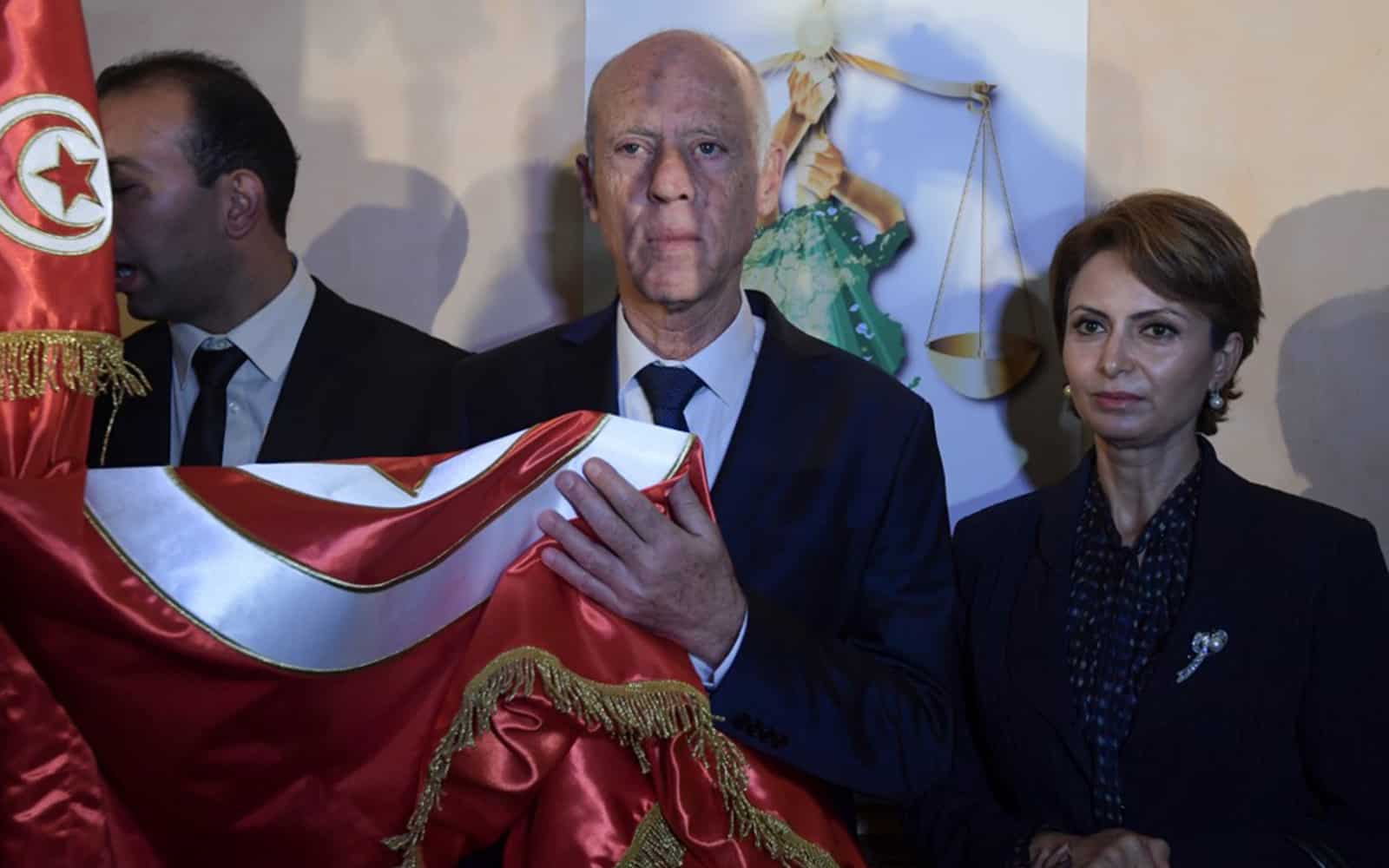
President Kaïs Saïed elevated outsider Fakhfakh, who’s party has no seats in the current parliament, to Prime Minister-designate and charged him with forming an acceptable coalition government. 

Saied had threatened to dissolve parliament and call for fresh elections if a coalition could not be formed, prompting Tunisian parliamentarians, unionists, and business leaders to re-double their negotiation efforts. 

After a small reshuffle, and Ennahda backflipping on the exclusion of Qalb Tounes (Heart of Tunis), Fakfakh was able to find a coalition that works, at least for the time being. The disparate nature of the new cabinet, described by critics as ‘incoherent,’ faces challenges from within and significant external pressure. 

Instability in neighboring countries, particularly Libya poses a major security challenge for Tunisia. Domestically, slow economic growth,  high government debt, stubbornly high unemployment, high cost of living, endemic corruption, expensive public sector, inequality, and disillusionment continue to seriously impede Tunisia’s post-revolution development.

Fakhfakh says his new government will get to work straight away to bring about an economic revival by fighting rising prices, poverty, corruption, and unemployment. However,  implementing such reforms will be easier said than done.   

Foreseeing the difficulties Fakfakh faces, outgoing Prime Minister Youssef Chahed ominously warned his successor; “The country will not move forward without reforms, and when reforms begin, each party concerned will resist and say no. After that, everyone will ask ‘where are the reforms.’” 

The new coalition government combines diverse political ideologies that have widely different stances on Tunisia’s major socio-economic policy issues such as privatization of state-owned assets and austerity measures.

Speaking to Al Jazeera, Tunisian journalist Moez Zayoud cast doubt over the participants’ ability to agree on a host of issues. According to Zayoud, “This is so much the case that I expect some members to vote against laws put forth by the government which they are supposed to be part of.”

 “On the economic front, parties like Ennahdha and the leftist People’s Movement – which holds 15 seats in parliament – are diametrically opposed. Despite being a ‘religious’ party, Ennahdha is fiscally liberal.”

One of the government’s first challenges will be negotiating a new IMF deal before the current agreement expires at the end of April. The 2016 deal granted Tunisia $3 billion in exchange for floating the currency, which, in turn, led to inflation that dramatically reduced Tunisian’s purchasing power. 

Fakfakh was finance minister at the time the original 2013 deal was agreed and is blamed by some for the effects critics believe it had on Tunisia’s post-revolution economic recovery. As in 2013, Tunisia still has high government debt, and the economy is sluggish meaning another $3 billion from the IMF to cover its deficit is the most feasible path.

According to Louise Keeler, an advocacy associate at the Program on Middle East Democracy, Tunisia is likely to be pragmatic and stick with the IMF program as no one is bold enough to pursue more radical reforms like selling-off state assets.

“We know Fakhfakh is supportive of international assistance to Tunisia (this includes helping to combat groups linked to Islamic State and al-Qaeda ), so I think he’ll almost certainly continue the IMF program,” said Keeler. 

“There don’t seem to be any viable alternatives, [and] no one has any other solutions they’re willing to stake their reputations on,” she added. 

Despite Ghannouchi reassuring parliament it, the wheeling and dealing to create a new coalition raises questions about the strength of Tunisia’s fledgling democracy.    

The electoral system based on proportional representation continues to produce governments comprised of disparate elements that struggle to gain a majority, forcing elected representatives to decide amongst themselves who takes power. 

The parties with the largest number of elected representatives tend to join forces to form a coalition government, leaving a relatively weak opposition to hold them to account. In exchange for being part of the government, more difficult reforms and controversial policies also fall by the wayside according to Sharan Grewal and Shadi Hamid, of the Brookings Institution.

“The national unity government of 2015-2019 abandoned controversial but necessary issues like transitional justice and security sector reform and could not take bold action on the economy or on the formation of the constitutional court,” said Grewal and Hamid.

“That the largest parties were in government together also meant that there was no effective opposition, which in turn contributed to public disillusionment with political parties and democracy.”

The current situation places parties and independent candidates with diametrically opposed views on issues like the economy, in one cabinet that is supposed to make coherent decisions. 

It remains to be seen if pragmatism is possible or if the fragile coalition will breakdown under the strain of Tunisia’s ongoing socio-economic and regional security challenges. Fakhfakh will have his work cut out, not only managing those challenges but also in his new cabinet. The young Prime Minister, however, may just have the right combination of experience and character to pull it off. 
Read also: UN Envoy Tells Iraqi Politicians to Stop Squabbling and ‘Step Up to the Plate’

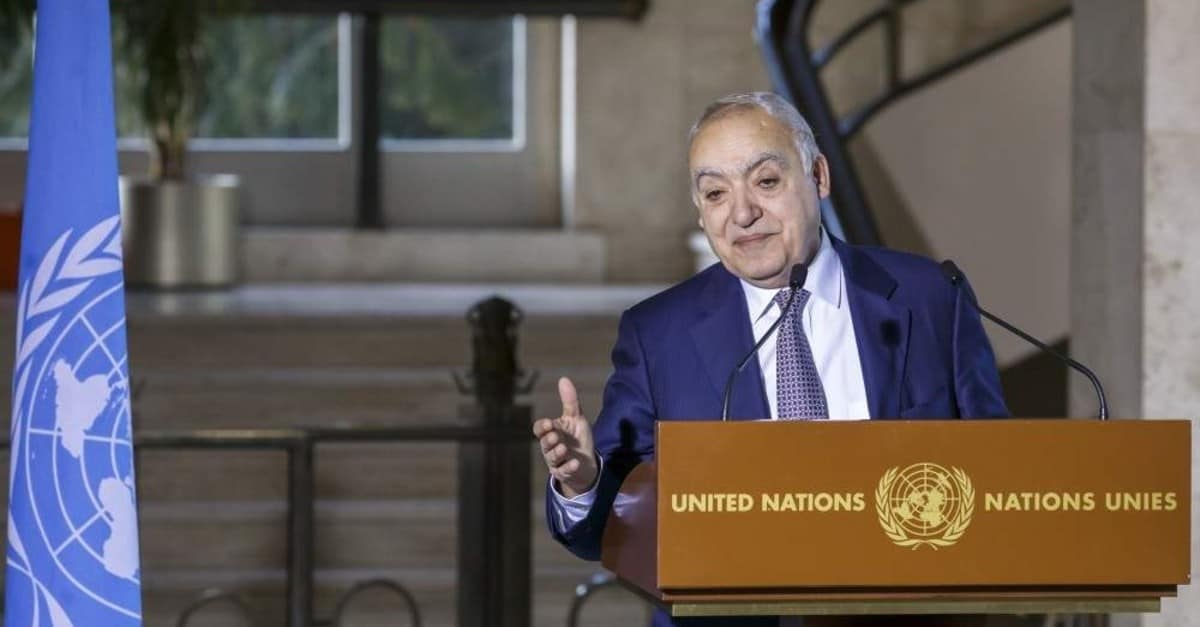
UN’s Envoy for Libya Ghassan Salame Resigns, Cites Stress

The United Nations’ envoy to Libya Ghassan Salame has announced his resignation from his position because of stress, after leading the peace process in Libya for three years.

In a tweet on Monday, Salame said the level of pressure from the role had a negative impact on his health.

“I have sought for two years and more to reunite Libyans and curb outside intervention and to preserve the unity of the country […] I admit that my health no longer allows for this pace of stress,” Tweeted Salame. “So, I asked the [UN] Secretary-General to relieve me of my mission in the hope of peace and stability for Libya.’’

UN spokesman Stephane Dujarric confirmed UN Secretary-General Antonio Guterres’ receipt of Salame’s resignation letter.

“The secretary-general has always had full confidence in Mr Salame’s work and the great efforts he has made to bring peace to Libya… (and) will be discussing with Mr Salame the way to ensure a smooth transition so as not to lose any momentum on the gains that have been made,” Dujarric said.

Just a week prior to Salame’s resignation, the former envoy brought together representatives of the Tripoli-based Government of National Accord (GNA) and the General Khalifa Haftar-led Libyan National Army (LNA) based in Benghazi in Geneva for peace negotiations. The meeting did not lead to tangible progress. 

The two conflicting parties supported by foreign states. Turkey and Qatar back the GNA forces, led by Prime Minister Fayez al-Sarraj, while the LNA receives support from Egypt, Russia, Saudi Arabia, and the United Arab Emirates (UAE).

Libya has been experiencing political fluctuations and economic collapse – despite being oil-rich – since the 2011 armed uprising that led to the ousting of the 40-year ruler, Muammar Al Gaddafi.

Salame’s mission has been plagued with difficulties. Not least, the LNA offensive against the capital, Tripoli. The assault killed hundreds and forced many to be internally displaced.

The former Lebanese minister of culture has strived to bring amendments to the December 2015 Libyan Political Agreement (LPA), signed in Morocco’s Skhirat. After failing to do so, Salame replaced the treaty with the Three Track approach, known as the Libyan peace process.

The peace process – which LNA and GNA adhered to – consisted of a ceasefire, stopping the flow of arms into the southern Mediterranean country, and establishing economic, military, and political tracks.

His resignation comes amid an escalation in fighting, and just days after he announced the near breakdown of a cease-fire between the country’s opposing governments as Haftar’s forces move toward Tripoli.

With a freeze in mediation between the opposing sides, Libya is now left to face its own destiny, pending the appointment of a new UN’s envoy. A possible escalation of tensions in Libya cannot be ruled out.

Read also: Libya Crisis: Looking for Peace in Any Old Place

Coronavirus Hits Morocco, Government Confirms First Case

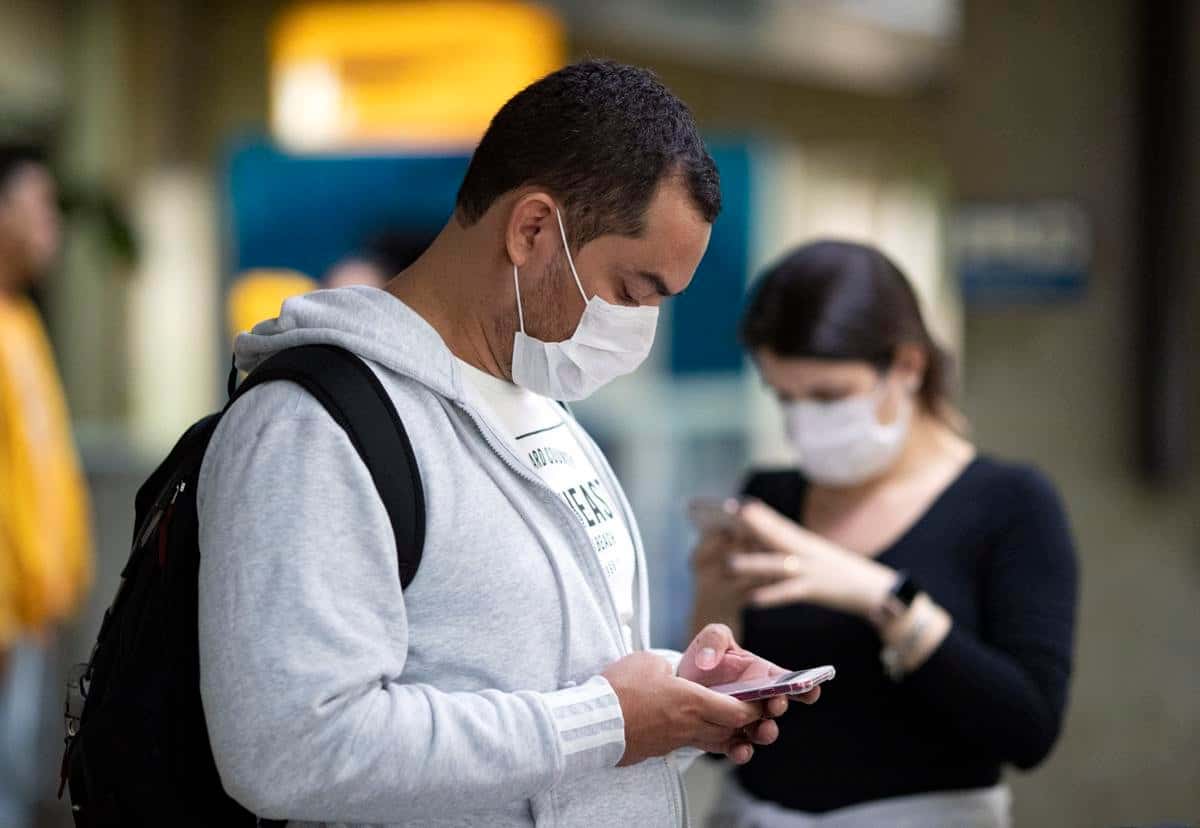
Tests conducted by the Institut Pasteur-Maroc confirmed the Moroccan is infected with the novel coronavirus, a press release issued by Morocco’s Health Minister said on Monday. 

According to the communiqué, the individual is in a stable condition and being treated in the isolation ward of Casablanca’s Moulay Youssef hospital, in compliance with national and international health standards.

As soon as the test results were confirmed, a team composed of specialists from the national and regional Public Health Emergency Operations began contacting anyone who had been in contact with the individual in order to carry out health checks and impose preventative measures aimed at stopping the virus’ spread in Morocco.

Tunisia also recorded its first case of COVID-19 on Monday. According to authorities, the infected person, a 40-year-old Tunisian man, had arrived by boat from Italy on February 27. 

Tunisian Health Minister Abdelatif el-Maki told the media that passengers of the boat had been told to monitor themselves for symptoms. The infected man called emergency services when his fever spiked. 

Saudi Arabia and Jordan also confirmed their first coronavirus cases on Monday. The two patients had traveled from Bahrain and Italy. 

Italy, with over 2036 recorded cases of COVID-19 has become the European epicenter of the outbreak. The death toll from the virus rose to 52 on Monday. The spread of coronavirus began in Northern Italy but cases have now been recorded in more than half of the country’s 20 regions, including the island of Sardinia. 

The disease has been slower to spread to the Middle East and North Africa, with the exception of Iran, which has officially recorded 1501 cases and 66 deaths from COVID-19 since February 19. 

Iran’s health service has been badly affected by crippling US economic sanctions, and the government has allegedly under-reported cases because it is ill-equipped to handle the outbreak.  

At the time of writing, 90 892 cases of COVID-19 had been confirmed worldwide, resulting in 3110 deaths in 73 affected countries. 

Cases of novel coronavirus have been confirmed in the following Middle East and North African countries: Jordan (1), Tunisia (1), Morocco (1), Saudi Arabia (1), Egypt (2), Algeria (5), Oman (6), Qatar (7), Israel (10), Lebanon (13), United Arab Emirates (21), Iraq (26), Bahrain (49), Kuwait (56) and Iran (1501). 

Read also: COVID-19 Update: New Cases Decline in China, Rise in Middle East and Europe

Sudan to Hand Over Ousted President Omar al-Bashir to the ICC

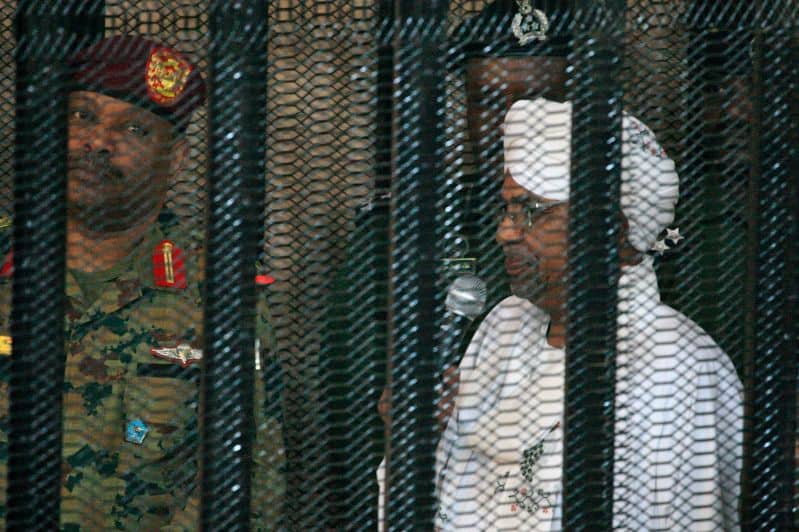
The government of Sudan announced Tuesday that ousted president Omar al-Bashir will be handed over to the International Criminal Court (ICC) for genocide, crimes against humanity, and war crimes. 

Al-Bashir came to power in 1989 following a coup d’etat. He was ousted in April 2019 by the Transitional Military Council (TMC), following nationwide protests against decades of high-handed, repressive rule.   

The ICC also issued international arrest warrants against three other individuals, widely believed to be Abdel-Rahim Muhammad Hussein, the interior and defense minister during the al-Bashir’s era; Ahmed Haroun, the leader of al-Bashir’s ruling party (the National Congress Party); and Ali Kushayb, leader of al-Bashir’s government-backed militia, the Janjaweed. The paramilitary group fought against Darfur’s rebels and committed genocide, murdering 300,000 non-Arabs. 

The three arrest warrants are connected to the crimes against humanity committed under the al-Bashir regime.

The decision to hand the former president to the ICC for justice came after the Sovereignty Council of Sudan reached an agreement with rebel groups from the Darfur region. 

Al-Bashir faces three counts of genocide, five counts of crimes against humanity, and two counts of war crimes for his spearheading campaigns of a deadly crackdown on protesters as well as atrocities during the Darfur rebellion. 

The ICC issued two arrest warrants against the 76-year-old former president, one in March 2009 for war crimes and crimes against humanity, and the second one in July 2010 for genocide.

Al-Bashir was also the first sitting president to be called by ICC to stand trial and the first defendant to be charged by the ICC with genocide, crimes against humanity, and war crimes at the same time, according to the court’s website.

But the former Sudanese leader refused to recognize the authority of the ICC when he was first charged with the crimes, describing it as a “political court.” 

Following the widespread protests that led to his downfall in December 2019, Sudanese prosecutors sentenced al-Bashir to a two-year prison term in a correctional facility for corruption and illegitimate possession of foreign currency. 

Also included in the litany of charges al-Bashir faces is the murder of protesters during the uprising that led to his removal from power. The 76- year-old former president was not detained, however, since Sudanese law prohibits the incarceration of convicts over the age of 70.

The charges against the ousted dictator were related to the crimes against humanity that he perpetrated during the War in Darfur between 2003 and 2008. He was detained in the Khartoum jail where he had incarcerated political opponents and dissidents during his rule. 

Decades of violence, ethnic cleansing

Ahmed Youssif, a political activist who left Sudan in 2015 to seek asylum in France after suffering torture, told Arabia Policy, “The prosecution of al-Bashir and his supporters will give justice, finally, to the millions of families and lives they destroyed. We hope this means that we will soon be able to return home and build our lives and our country again.”

Youssif is one of the many Sudanese citizens who faced arbitrary detention, torture, and inhumane treatment for political dissidence and an array of other, fabricated charges. 

According to Amnesty International, “the ex-detainees said they were also denied access to their families and lawyers. In some cases, the authorities seemed to deliberately make it difficult for their lawyers and families to find them, by transferring them from one detention facility to another.”

Seif Magango, Amnesty International Deputy Director for East Africa, the Horn and the Great Lakes, highlights the arbitrariness of arrests and the heavy-handed style in which al-Bashir ruled. 

“People in South Sudan have been arrested for their political and ethnic affiliations and are then subjected to unimaginable suffering – sometimes leading to death – at the hands of the government’s security forces,” said Mango. 

The War in Darfur broke out in February 2003 after rebels in the Darfur region of Sudan, the Sudan Liberation Movement (SLM) and the Justice and Equality Movement (JEM), fought back against the government’s genocide of the non-Arab population in western Sudan

The government responded by equipping and supporting Arab militias to battle against the Darfuri rebels. The government-backed militias, known as the Janjaweed, spread terror among civilians and prevented international aid from reaching the internally displaced people and victims of their atrocities. 

The then-government-backed ethnic cleansing and the violence that followed led to the killing of more than 300,000 of Darfur’s population and the displacement of around two and a half million, both externally and internally.

While many see in Al-Bashir’s prosecution the end of violence and horror in Sudan, as well as a new hope for the future of the country, the continued instability and tumultuous transition to democracy may mean a slow and difficult road to societal reconstruction. 

Hope for the future

In the wake of al-Bashir’s removal from power, Sudan has a collective head of state, known as the Sovereignty Council of Sudan

Created after the August 2019 Draft Constitutional Declaration, the council has been charged with paving Sudan’s way to a rule-of-law-based, democratically elected government. Meanwhile, Sudanese have great expectations for the council. 

The 2019 constitutional declaration stipulates that the military chief of staff and head of the TMC, Abdel Fattal al-Burhan, will chair the Council for 21 months and then transfer power to a civilian to rule for the remaining 18 months. 

Free elections will take place after the end of the transition period and are currently scheduled for November 2022. Both within Sudan and in the broader international community, however, the feeling of new hope that greeted the fall of al-Bashir is beginning to wane as citizens and interested parties look down the barrel of another 2 years of political instability.

In such a context of persisting fears and doubts over the future of the country, the interim government’s decision to hand over the former dictator to the ICC is expected to allay suspicions among Sudanese that the military council does not intend to hand over power to either a civilian government or an elected one. 

The move will also have wider impacts within the international community, symbolizing the TMC’s willingness to engage in good faith with international norms and conventions, therefore emphasizing the council’s commitment to maintaining stability. 

Some observers have suggested that the decision is also likely an attempt to persuade the US to revoke its 1993 blacklisting of Sudan. The US listed Sudan on its terrorism blacklist after the country allowed then-Al Qaeda leader Osama bin Laden to remain within its territory for more than five years.

In 1998, Al-Qaeda operatives orchestrated terror attacks on the American embassies in Kenya and Tanzania, killing more than 200 people.

On October 12, 2000, al-Qaeda bombed a US navy ship (USS Cole) while it refueled in a port in Yemen, causing the death of 17 US navy officers. Sudan was subsequently blamed for having a role in the bombing, alongside al-Qaeda.

On Thursday this week, Sudan agreed to pay $30 million in compensation to the families of the 17 US sailors who died in the USS Cole bombings. 

Now the priority for the TMC is to lift the US sanctions to end years of economic isolation and attract foreign investments. An end to the sanctions would facilitate economic and social development in Sudan, smoothing the much-needed and hoped-for transition to democracy.

Read also: New Tensions Surface in Ethiopia-Egypt-Sudan Nile Mega-Dam Negotiations

UAE Withdraws Troops from Yemen, Celebrates 5-Year Achievements

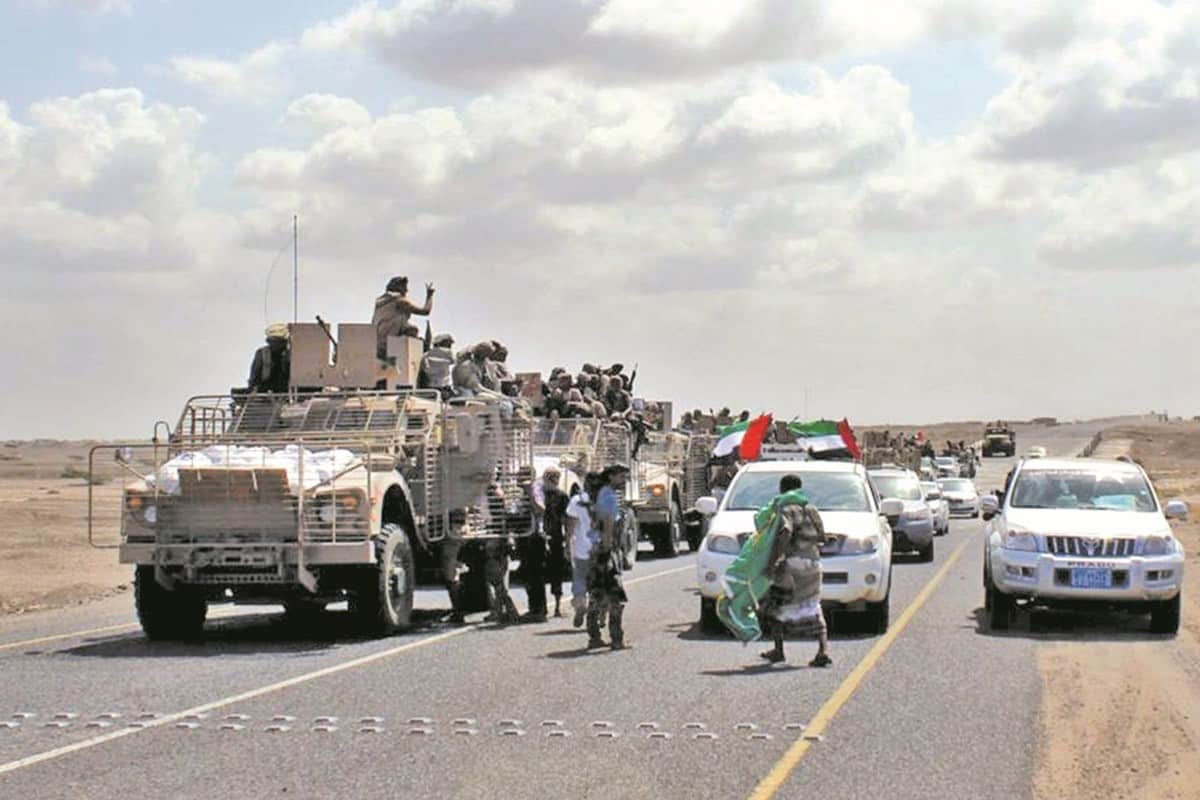
The United Arab Emirates (UAE) organized a welcome-home ceremony for UAE Armed Forces who served their country in Yemen, working to restore the internationally recognized government of President Abdrabbuh Mansur Hadi.

The ceremony took place at the Zayed Military City in Abu Dhabi on Sunday and was touted as an opportunity to celebrate the country’s achievements in Yemen during its 5-year mission with the Saudi-led Arab coalition to restore power to the embattled Yemeni government. 

Described as “faithful falcons,” the 15,000 Emirati soldiers carried out more than 130,000 air operations, equivalent to half a million flight hours. The UAE navy also sailed 50 ships in more than 1,000 naval missions to transport aid and military equipment from the UAE to Yemen.

The UAE’s mission in Yemen also involved protecting transit and trade shops from attacks at sea.

Sheikh Mohammed bin Rashid, Vice President and Ruler of Dubai, took to Twitter to express his satisfaction with the UAE military’s engagement in the Saudi-led coalition.

“Faithful falcons, you sacrificed and raised our heads [with pride],” bin Rashid said.”We are proud of you, your families, and your work. We are proud of every hour you spent away from your country.”

Sheikh Mohamed bin Zayed, Crown Prince of Abu Dhabi and Deputy Supreme Commander of the Armed Forces, was as effusive in his celebration of the Emirati forces. In comments he posted on Twitter, he argued that the aim of the UAE’s military involvement in Yemen was to restore peace in the country and ensure stability in the region.  

“The UAE will remain a bridge to peace and stability, supporting the region’s progress of hope for a better life and a better tomorrow,” bin Zayed tweeted.

During their 5-year mission to take back lands from Yemeni rebel forces, the UAE soldiers succeeded in liberating roughly 85% of Yemen. The mission was not, however, without its losses; 108 UAE military died in the fighting.

UAE’s Lt General Eisa Al Mazrouei paid tribute to the soldiers during his speech at the ceremony.

“The UAE Armed Forces learned many lessons during this mission at a heavy cost. We gave sacrifices to protect Yemen as an Islamic and Arab country,” Al Mazrouei said.

During their 5-year involvement with the Saudi-led Arab coalition in Yemen, Emirati armed forces also trained about 200,000 Yemeni soldiers. The training was aimed to prepare the  Yemeni military to maintain stability after the retreat of the UAE armed forces from the country.

In addition to protecting Yemenis from the Iran-backed Houthi rebels, the UAE’s military presence also supported development projects and humanitarian initiatives that benefited 17.2 million Yemenis.

From April 2015 to February 2020, UAE social and humanitarian initiatives in Yemen amounted to over AED 22 billion (US$6 billion), according to the Emirates Red Crescent’s latest figures. 

Statistics from the Ministry of Foreign Affairs and International Cooperation revealed that the financial aid from the UAE came from non-profit organizations, including the WFP, Unicef, WHO, UNHCR, and the ICRC.

The assistance went mainly into rehabilitating schools and hospitals, securing energy, rebuilding airports and ports. Also included in the projects was the construction and development of roads and housing units, as well as investment in improving access to healthcare and education facilities. 

According to the UAE and the Yemeni government, the projects aimed to provide everyday support to the Yemeni people affected by the conflict,  including widows and orphans

The Emirati officials announced a troop-redeployment in Yemen on July 8, 2019. The UAE said that it is transitioning from a “military-first” strategy to a “peace-first” plan.

The decision is seen as a significant move toward putting an end to the conflict and moving towards a dialogue-based approach. 

Observers have also expressed concerns about whether the UAE-trained Yemeni forces will be able to maintain stability following the withdrawal of the UAE forces. Emirati officials are, however, confident that the Yemeni troops will succeed in taking over the Emirati soldiers’ mission.

The UAE’s decision to recall its troops came only after months of discussions with Riyadh.

The same day that the UAE announced troop-redeployment, Reuters reported “the drawdown was not a last-minute decision,” quoting a senior Emirati under the condition of anonymity. The official explained that Abu Dhabi and Riyadh extensively discussed the decision before announcing the withdrawal.

Read also: “Mecca Girl” Faces Arrest, Racist Backlash in Saudi Arabia for Rap Video

Turkey’s Involvement in Libya: Another Failed Foreign Policy Adventure?

Since the start of the 2011 armed uprising against former Libyan dictator Muammar Gaddafi, the country has been the battleground for several local militarized and political factions, as well as regional and international players with opposing agendas. Lately, Turkey has emerged as another force throwing in its weight to influence the situation in the Northern African country.

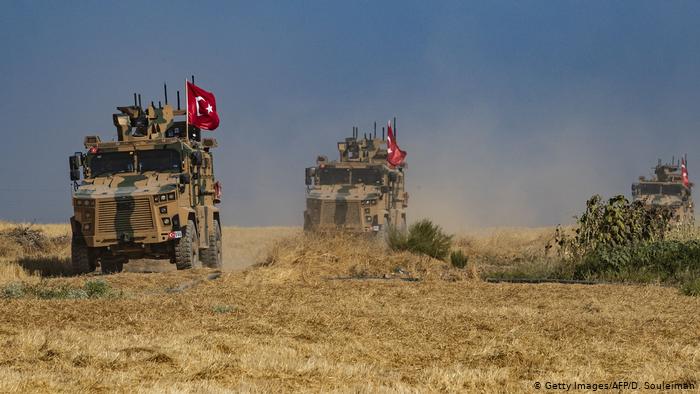
Ankara provides diplomatic and especially military support to the Tripoli-based Government of National Accord (GNA), the internationally recognized government fighting to retain control against the forces of General Khalifa Haftar.

Turkey’s involvement in the Libyan crisis raises several questions about Ankara’s controversial foreign policy in the Middle East and North Africa region.

While Turkish officials defend their involvement as a support to a government recognized by the international community, is the interference likely to destabilize Libya even further?

‘Zero Problems’

The economic boom that followed the rise to power of the Justice and Development Party (AKP) and its leader Recep Tayyip Erdogan in 2003 made Turkey a regional success story. The country then gradually turned into a key political player in the Middle East and North Africa (MENA) region.

Turkey dropped the policy of “zero problems” with its neighbors, put forward by the former prime minister and top diplomat Ahmet Davutoglu, and instead pursued a more aggressive approach to managing relations with countries in the region and reacting to game-changing events in the Arab World.

The 2011 Arab Spring provided Turkey with an opportunity to emerge, along with Qatar, as a backer of the uprisings against former Arab dictators. While the support was presented as a genuine endorsement of the democratic aspirations of the protesters, both countries’ controversial domestic human rights records gave the move more questionable connotations.

Both countries saw an opportunity to extend their influence beyond their borders, especially since the uprisings and ensuing political processes culminated in elections that brought in Islamist parties in countries such as Tunisia, Egypt, and Morocco. These parties all had strong ties to both Ankara and Doha.

Turkey then became a key player in the Syrian civil war. The two countries share borders that stretch over 500 miles. Ankara reports that Turkey now hosts more than 3.5 million Syrian refugees.

When the war broke out, Turkey became a passage for foreign fighters who joined different armed groups fighting on the ground in Syria, contributing to further destruction of the country and the deterioration of the humanitarian crisis.

The Arab Spring put Turkey at odds with countries that are opposed to the uprisings, such as Saudi Arabia, UAE, and Egypt. Relations between Turkey and the countries on the other side of the diplomatic argument soured as a result, especially when the Egyptian military ousted President Morsi.

The Syrian regime became, in turn, hostile to Turkey and its president after Ankara provided support to the Free Syrian Army, a faction of Syrian army deserters who supported the uprisings against the regime.

Turkey’s feet sank deep into Syria as it launched military operations in 2016 against Kurdish armed groups, seen by Ankara as a threat to national security. Authorities feared the Kurdish militant factions would establish a de facto autonomous Kurdish region near its border, thus giving momentum to the aspirations of other Kurds in Turkey to achieve independence.

The list of Turkey’s adversaries would only grow bigger as Ankara sought to extend its influence to other parts of the MENA region, including Libya.

Neo-Ottomanism and “Micro-Imperialism” 

The Arab Spring period was characterized by reminiscence of the past Ottoman dominance of the Arab region. The nationalist ideology has become known as “Neo-Ottomanism.”

Along with its ‘’Neo-Ottomanist’’ doctrine, the Turkish Government is preaching a discourse of protectionism and pursuing an independent policy that cuts with its historic long term ties with the West and alignment with NATO. As a result, Turkey’s political agenda estranged more countries, this in Europe, in addition to Israel.

For Turkish analyst Axel Corlu, Erdogan was emboldened by the failed 2016 military coup. In the wake of the unsuccessful attempt to seize power, the government received a domestic ‘’carte blanche’’ and used it to pursue a more aggressive foreign policy abroad, as well as corner internal political opposition.

Erdoğan was the leader who would represent a resurgence of pride seeking to be fulfilled in response to the lost empire trauma that had been so carefully cultivated for a century,’’ wrote Corlu for Ahval News.

Corlu described Erdogan’s adventures in the region as ‘’micro-imperialism,’’  suggesting the policy will only further expose this part of the world to more instability.

After an alliance of regional countries that included Israel, Greece, and Cyprus excluded Turkey from projects to transport gas from the Eastern Mediterranean to European markets, Ankara rushed, in November 2019, to strike a maritime agreement with the GNA delineating maritime borders between Turkey and Libya.

The deal was a counter-attack by Turkey, as the three countries sought to bypass Ankara as they proceeded with their EastMed gas pipeline project.

Erdogan said in a speech in January 2020 that it was “no longer legally possible” for other countries to carry out search or drilling activities without Turkey or Libya’s approval. He also announced that Turkey will start exploring for gas off Libya.

The GNA seems to be helping Turkey’s ambitions in the region a great deal. Still, the Tripoli-based government is clearly a weak partner that needs to be sustained as it struggles to assert its power in Libya, especially in its conflict with the much better equipped National Libyan Army (NLA), led by Haftar.

While Ankara’s presence in Libya could be marketed domestically in the name of national interest and to the Libyans, supporters of the GNA, as a helping hand to stand against the NLA campaign to capture the capital Tripoli, the intervention is, increasingly, causing concern in Libya.

“Turkey was previously seen favorably in Tripoli. Yet, its direct involvement is increasingly making locals concerned by it weighing in on political life. Turkey’s political weight forces other local actors to the sidelines and can cause the internal political game to be closed’’ wrote Ali Bensaad, a researcher at Institut Français de Géopolitique, on Orient XXI.

Ben said explained that Erdogan’s comments referring to Libya’s past as part of the Ottoman Empire as a justification for his country’s current role in the Northern African nation ‘“were understood’’ by Libyans ‘“as a claim to a right of tutelage.”

A Failing Dangerous Gamble

Turkey’s military involvement in Libya seems a dangerous gamble and one that is failing. Its military presence on Libyan soil is not limited to its own soldiers, as Bensaad mentioned in his article, but also through the presence of Syrian Arab fighters. Ankara’s privatization of its military involvement is reminiscent of the Bush administration’s disastrous use of mercenaries in its invasion of Iraq.

The Arab fighters were brought to Libya from Syria by Turkish military company Sedat, whose founder, Adnan Tanriverdi, is a military advisor to Erdogan. Tanriverdi’s relationship with Turkey could be likened to Wagner’s Evgueni Prigojine and Russian President Vladimir Putin. Wagner fighters are deployed for the opposite camp, alongside General Haftar forces.

By relying on mercenaries Turkey aims to avoid public anger by sparing the lives of its own soldiers. However, the use of this type of mostly undisciplined out-of-control “soldiers” is likely to end up alienating the local population.

On an operational level, the presence of mercenary troops does turn out to be a liability for the forces loyal to the GNA.

“On the different frontlines, fighters did not always receive a warm welcome because their presence only adds to the disorder and lack of coordination between the Tripoli defense units, even though they are more motivated and more combative than those supporting Haftar,” wrote Bensaad.

Furthermore, the lack of air cover renders the GNA forces more vulnerable as they are confronted with a disadvantage vis-à-vis the NLA. A disadvantage that Haftar forces are exploiting in their attempt to seize the capital Tripoli in an ultimate battle to exert control over Libya.

With every military advancement, the Haftar forces make they are not only scoring points against the GNA but also against their Turkish backers, threatening to make the Turkish role in Libya another failed military adventure for Erdogan.

“Even the least capable international observer could have seen that becoming allies with a rapidly unraveling, moribund political entity in Tripoli facing the rival General Khalifa Haftar, supported by Russia, France, Egypt, Saudi Arabia, and the UAE, was bound to be a disaster,” Corlu emphasized.

Read also: Putin and Erdogan to Meet in Moscow to Discuss Ceasefire in Idlib

What Tebboune’s Visit Says About Algeria-Saudi Relations

Conventional wisdom has it that the first foreign trip of an Algerian president would be to France, the former colonizing power with which Algeria entertains complex, yet close, diplomatic relations.

A neighboring country such as Tunisia would also be a logical diplomatic choice, in light of the fragile security situation in the region– particularly bearing in mind the situation in Libya, a country that shares borders with both states. Russia, Algeria’s main source of weapons and longtime partner since the Cold War, would have been an easy pick too.

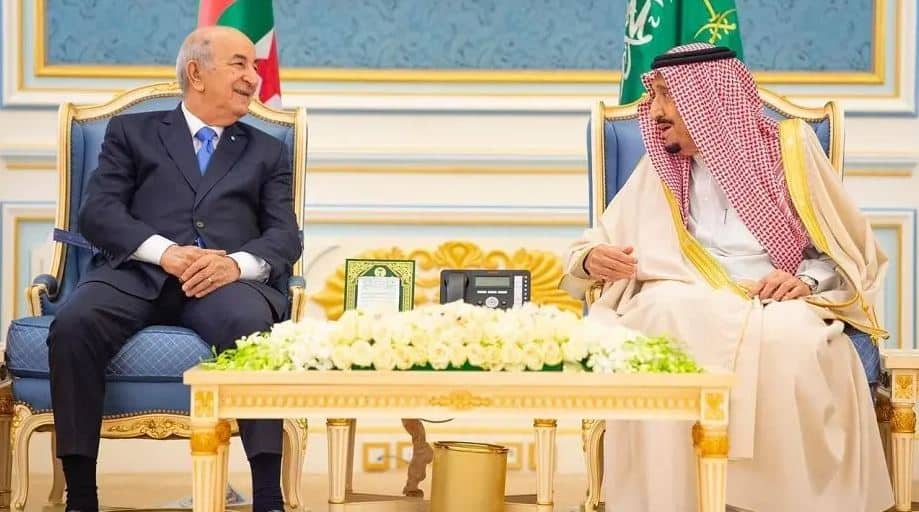
So, when the Algerian presidency announced earlier in February that President Abdelmajid Tebboune, elected to office last December, would pay a visit to Saudi Arabia following an invitation from King Salman the news turned more than a few heads. The announcement prompted media outlets across the region to speculate about the significance of such a choice

Financial motives

The Algerian president’s announcement about Tebboune’s trip was marked by the usual diplomatic language, shedding no light on the motives behind the visit.

“The leaders of the two brotherly countries will examine ways to strengthen bilateral cooperation, coordination, and consultation on issues of common interest,” read the statement.

But, as the Algerian French-language online platform TSA noted, economic considerations could explain the unexpected choice.

‘’Tebboune chose his first destination well. He could have started with other countries such as Tunisia, Turkey or Russia. But he chose Saudi Arabia which chairs the G20 and is a country that is very close to the United States, and a country which can help Algeria economically,’’ reported TSA.

Both Saudi Arabia and Algeria are members of the Organization of the Petroleum Exporting Countries (OPEC) and their economies are dependent on oil and gas exports. Keeping oil prices under control, Capmena think tank founder François-Aissa Touazi explained, is a major concern for both Algiers and Riyadh.

When oil prices fell significantly in 2014, dropping from $100 to $50 per barrel, both countries came to realize they need to end their dependency on oil exports and start diversifying their economies.

Saudi Arabia, amid much fanfare, announced its Vision 2030, presided over by Crown Prince Mohammed Bin Salman. The plan envisioned privatizing the state-owned oil company Aramco, growing the private sector, while reducing public expenditure.

Meanwhile, Algeria struggled to come up with a plan of its own despite an official discourse, preached by former president Abdelaziz Bouteflika, describing the diversification of the economy as “central goal” of the Algerian government.

Six years after the 2014 oil price crash, Algeria and Saudi Arabia are still in the same economic boat.

“The slowdown of the Chinese economy and coronavirus crisis, which can heavily affect the oil international market, is causing concerns among oil-producing countries. Saudi Arabia plays an important role in the oil market and the two countries have to coordinate their actions inside OPEC to avoid any significant drop in the price of the barrel,” said Touazi.

In Search of Political Understanding

While Saudi Arabia and Algeria do have some shared economic concerns and interests, on a political level the two countries generally do not see eye to eye.

Historically they were in two opposing camps. Algeria was a socialist country that shared Egyptian leader Gamal Abdel Nasser’s idea that royal regimes in the region, including that of Saudi Arabia, were regressive and should be overthrown.

For decades Saudi Arabia has been a close ally of Morocco, Algeria’s sworn enemy. In the Western Sahara issue, Riyadh has always backed Morocco’s sovereignty over the territory, while Algeria is the main backer and sponsor of the Polisario Front, the armed movement seeking independence for  Western Sahara.

Regionally, Algeria has always had very good relations with Iran which Saudi Arabia sees as its enemy number 1. Furthermore, Algiers does not also share Riyadh’s animosity towards the Bashar Assad regime in Syria.

Tebboune, in fact, reiterated his country’s call for Syria to rejoin the Arab League during an interview with RT Arabic, calling suspending Syria’s membership in the organization “a big loss.”

“Algeria remains faithful to its diplomatic principles. We do not accept that an Arab country or people are exposed to any harm. Syria is a founding member of the Arab League,” he said.

For Algerian observers, Tebboune’s visit to the influential Gulf kingdom may mark the beginning of a growing political understanding between the two countries. According to former Algerian minister of communication, Abdelaziz Rahabi, this understanding could center around the influential role that both countries are seeking to play in Africa.

“Saudi Arabia is expected to organize an African-Arab summit in mid-March in Riyadh and hopes to show that it is determined to strengthen its relations with African countries,” said Touazi.

“For his part, the Algerian president has clearly expressed new ambitions for Africa and is hoping that Algeria makes a come back in full force to Africa where it possesses several assets. The two countries can eventually explore new axes of cooperation and collaboration in this area,” said Touazi.

While the timing and choice of Tebboune’s visit to Riyadh suggest relations between the two countries have the potential of becoming stronger than before, the differences in political opinions that have long marked Saudi-Algerian relations are set to continue.

Algeria will remain faithful to Iran, reflecting the long term friendship between the two states. Meanwhile, Saudi Arabia is unlikely to turn its back on Morocco in the Western Sahara issue, despite past tension between Riyadh and Rabat over Morocco’s neutral position in the crisis between Saudi Arabia and Qatar.

Morocco could also prove to be more beneficial to Saudi Arabia in its African aspirations, having been more economically active in recent years, with investments spread out in the continent.

As for Algeria’s hopes that the wealthy kingdom will help it navigate its economic recession since the fall of oil prices six years ago, it remains to be seen whether Tebboune has bet on the right horse.

Read also: Turkey’s Involvement in Libya: Another Failed Foreign Policy Adventure?

Will Dubai Expo 2020 Have the Economic Impact the UAE Hopes For?

Dubai has been preparing to host the Dubai World Expo 2020 since 2013. The ‘World’s Greatest Show’ should be an opportunity for Dubai to shine on the world stage and share creative ideas and cutting-edge technology that addresses the universal challenges of our times.

An estimated 25 million visitors, 70% from outside the Emirates, are expected to attend what promises to be the largest event ever held in the Arab world, from October 2020 to April 2021. Organizers of the Middle East, Africa, and South Asia’s first World Expo have themed the event “Connecting Minds, Creating Futures,” a nod to the need to build partnerships to tackle the major transnational challenges facing the world.

Economic Catalyst

The value proposition for Dubai is extremely positive and Expo 2020 represents an important chance for it to show-off its international business credentials. It also presents a valuable opportunity to diversify the oil-dependant economy, from the building and construction phase, through to the hospitality sector gains from visitors expected to pour in from October 2020-April 2021.

Government spending, including funding for Expo 2020 projects, has already provided a welcome boost to the UAE economy, currently sagging under the burden of geopolitical tensions, OPEC-led oil output cuts, and the ongoing weakness in the non-oil sector.

Consultancy firm EY estimates the six-month Expo will contribute AED 22.7 billion ($ 6.2 billion), equivalent to 1.5% of the UAE’s annual GDP. The top three sectors expected to benefit during that period are restaurants & hotels (AED 8.9 billion), events organization & business services (AED 7.7 billion) and transport, storage & communication (AED 2.6 billion), the report predicts.

The IMF supports EY’s predictions, stating in November 2019, “Economic activity is recovering and likely to pick up more momentum next year, helped by Expo 2020 and existing fiscal stimulus”.

Like other financial organizations, the IMF also stressed that sustaining robust non-oil growth after Expo 2020 must remain a key priority for the UAE. Event organizers made sustainability one of the key thematic pillars of the event and appear committed to ensuring the massive infrastructure investment does not become a financial burden.

EY expects the legacy phase (2021 to 2031) to contribute AED 62.2 billion ($16.9 billion) in GDP primarily from the redevelopment of the festival complex into ‘District 2020’.

“Over 80% of the Expo built environment is planned to be retained for District 2020, and eventually expand into a city covering more than four million square meters. District 2020 companies will be focused on technology and innovation, including a mix of corporations and SMEs. The DEC [Dubai Exhibition Centre] is also expected to be a key facility in the site,” the report states.

COVID-19 Threat 

World Expo’s are designed to tackle global challenges, but one of the most prevalent crises, in the form of novel coronavirus or COVID-19, is now threatening the hard work and investment Dubai has made to host the flagship event. Troublingly, Iran, the UAE’s neighbor from across the Gulf, has become one of the hardest-hit regions and the coronavirus is now present on all continents, except Antarctica,

The same factors that make Dubai the perfect location for an international mega-event like the World Expo, also make it vulnerable to disease epidemics. It is positioned as a gateway between east and west and situated strategically within four hours (flight time) of a third of the world’s population. It is home to the world’s busiest international airport, connecting over 240 destinations across six continents, and has a large hospitality sector capable of welcoming large numbers of visitors.

On February 23, the UAE Ministry of Health and Prevention declared two new cases had been identified, bringing the confirmed cases of COVID-19 to thirteen in the UAE. One of the most recent cases is in an elderly Iranian visitor, believed to be in a serious condition in hospital.

In a statement on Wednesday, officials declared that the UAE is “well prepared and equipped for the worst-case scenarios” and has quarantine facilities and screening equipment to manage the disease outbreak.

“We are quite satisfied that we have taken all the necessary steps needed to preempt the spread of the virus at all levels, without pushing the country into a state of unwarranted panic,” the UAE National Emergency Crisis and Disasters Management Authority official said.

Authorities have, however, now issued a travel ban for Iran and Thailand, and suspended all flights to and from Iran.  Public events and gatherings, however, are continuing as normal inside the Emirates. The travel restrictions are simply “a precautionary measure”, part of the UAE’s “strict monitoring and prevention of the spread of the new coronavirus, COVID-19,” state news agency WAM reported.

The announcements come a week after rating agency Standard and Poors warned the disease outbreak could be bad for Gulf Cooperation Council (GCC) countries’ economies, and particularly deleterious to Dubai’s hospitality sector and Expo 2020 visitor numbers.

“Virus-related travel restrictions, if not lifted as we expect, could weigh on the GCC’s hospitality industry, but more so in Dubai, which received almost 1 million visitors from China in 2019,” the agency told Reuters.

Senior Director of S&P Middle East and Africa, Mohamed Damak said if the travel restrictions stay in place until March, the coronavirus outbreak would certainly reduce regional visitation and potentially impact investments and commodity prices.

Damak added, in that scenario, the number of visitors expected to attend the six-month Dubai Expo 2020 would also drop.

Concerns for Dubai Expo 2020 have also been heightened by recent comments from the International Olympic Committee member Dick Pound. He revealed the IOC is more likely to cancel the Tokyo 2020 Olympics than postpone it if coronavirus is not bought under control.

Due to the size and number of “moving parts” involved in the Olympics it may be too difficult to postpone if the virus threat continues, said Pound. The Olympics are scheduled to take place over 17 days from July 24 to August 9, 2020. The Canadian IOC veteran estimates a decision on the 2020 Olympics will be made in the next three months.

“In and around that time, I’d say folks are going to have to ask: ‘Is this under sufficient control that we can be confident about going to Tokyo or not?”‘ he asked.

Organizers are yet to comment on how COVID-19 is affecting preparations but, according to a ‘Construction Week’ article, security and disease prevention protocol for the event were discussed by the Expo 2020 Dubai security council at a meeting on February 23.

Commander-in-chief of the Dubai Police and the chairman of the Security Council, Major General Abdullah Khalifa Al Marri reportedly presided over the meeting and was updated on preventive protocols against epidemic diseases, as well as, security preparedness and event marketing plans.

The sleek event website reads “Expo 2020 Dubai will host the world for 173 days, each one brimming with new experiences. It’ll be a time to create, collaborate and innovate. And it’s going to be fun. We’re talking eye-catching, mind-bending, taste bud-tickling, grin-inducing, good-weird, did-that-really-just-happen fun.”

The tongue-in-cheek jibe, “Come along, or spend a lifetime telling less interesting stories,” however, takes on a darker tone in light of the COVID-19 outbreak, as anyone traveling internationally is at a greater risk losing their life altogether as the virus spreads unabated.

Read also: COVID-19 Update: New Cases Decline in China, Rise in Middle East and Europe

Palestine is No Longer Arabs’ ‘Primary Cause’

For decades the Palestine question was at the heart of political discourse throughout the Arab region. Seen as the Arabs’ “Primary Cause,” the issue was, at least in theory, one that united Arab governments and nations.

While Arabs are notorious for “agreeing to disagree,” as the great medieval historian Ibn Khaldun famously said, supporting the liberation of the occupied territories and condemning Israeli “aggression” had been the common denominator among Arab countries.

Arab armies took part in wars against the Jewish state after independence in 1948, in the Six-Day War of 1967, in the War of Attrition, and in the Yom Kippur War of 1970.

While for the most part the avenging defenders of Palestine failed to achieve crushing victories and could not regain large chunks of land Israel seized, the conflicts, at the very least, demonstrated that they unanimously regarded Israel as “the common enemy,” and that Arabs were united in their willingness to take up arms against it.

Arab masses have always felt very strongly about the Palestinian cause, sometimes almost on a similar level to their national causes.

Liberal, left-wing, and Islamist political movements might have their ideological differences, but whenever the Israeli Army launched an attack on Palestinian towns, killing and injuring civilians,  Arabs would all unite in condemning Israel.

Leaders of those movements could be seen, hand in hand, leading pro-Palestinian popular demonstrations. Ordinary citizens would take to the streets in large numbers in a show of solidarity with Palestinians.

Yet, all that has seemed to gradually change, especially since the whole region was set ablaze when Tarek Bouazizi, a young Tunisian street vendor, self-immolated almost 10 years ago, igniting uprisings throughout the region.

The “Arab Spring,” a game-changer

During the “Arab Spring,” attention shifted from the Palestinian issue to other hot zones in the Arab region. The fall of despots like Tunisia’s Zine Abidine Ben Ali and Egypt’s Hosni Mubarak, the NATO intervention in Libya and subsequent killing of Muammar Gaddafi, the civil war in Syria, and the ensuing rise of ISIS all relegated the Palestinian cause to the backburner.

As millions of people fled war and radical groups in Syria and Iraq, Palestinians ceased to be the largest population of displaced people in the region.

Countries such as Egypt, Libya, Iraq, and Syria continued to make the headlines in the last decade, capturing media and popular attention.

In Egypt, the military-led a coup against Mohamed Morsi, a leader in the Muslim Brotherhood and the country’s first elected civilian president. ISIS expanded into Libya, and General Khalifa Haftar rose to power in Benghazi. In Yemen, Shia Houthis rebelled.

Later on, the Russian intervention in Syria signaled that for regional and international players, there was more at stake in competing for influence beyond Palestine.

“Palestinians have lost the support they used to have in the Arab world. They are no longer a top priority on the agenda. We need to understand that the political order in the Middle East has changed since the Arab Spring,” said Israeli analyst Kobi Michael in an interview with French online platform La Croix.

Several observers of the Palestinian-Israeli conflict share Michael’s assessment of the Palestinians’ current isolation, including French geopolitical researcher Frederic Encel.

“Today, the Palestinian Authority is in a situation of extreme weakness,” Encel told Canadian Jewish News.

“Arab states almost practically provide no support to it as they are preoccupied with what they see as the two main threats to them: Iran’s Pan-Shiism and Jihadism.”

Ready to negotiate

When US President Donald Trump held a press conference with Israeli Prime Minister Benjamin Netanyahu to reveal his peace plan, the ambassadors of three Arab states, the UAE, Bahrain, and Oman were among the attendees.

Their presence gave the impression that several Arab governments, while not necessarily agreeing with the plan, see it as a basis for negotiation.

“This plan is a serious initiative that addresses many issues raised over the years,” said UAE’s Yousef Al Otaiba.

While it is not clear if the UAE, a key Arab country with close ties to Washington, will play a role in convincing Palestinians to engage in peace talks with Israel, Oman is already playing an active role in favor of normalized relations between Israel and the Arabs.

In October 2018 Netanyahu made a surprise visit to Oman at the invitation of Sultan Qaboos. The late monarch was keen on befriending the Jewish state. His government’s positions are quite at odds with official Arab discourse that remains unfriendly towards Tel-Aviv.

“The West has offered Israel political, economic and military support and it now holds all the means of power … but despite that, it fears for its future as a non-Arab country surrounded by 400 million Arabs,” said Omani Foreign Minister Yousef Bin Alawi at a World Economic Forum event in Jordan in April 2019.

Bin Alawi exhorted Arabs to “ease those fears” through “initiatives and real deals between us and Israel.”

The positions of both the UAE and Oman, while significant, are not as impactful as that of Saudi Arabia, the wealthiest country in the region and the epicenter of Sunni Islam.

Riyadh may favor negotiations, as a statement by the Saudi foreign ministry suggested. “The kingdom appreciates the efforts of President Trump’s administration to develop a comprehensive peace plan between the Palestinian and the Israeli sides, and encourages the start of direct peace negotiations between the Palestinian and Israeli sides, under the auspices of the United States.”

The Saudi welcome for the US initiative as a starting point for negotiations puts Palestinians in an awkward position because they came out strongly against the plan. Palestinians seem more isolated in their rejection of the Trump plan, a rejection they hoped would be shared by Arab capitals.

The fact that Saudi Arabia and Israel see Iran as their common enemy prompted Israeli media to speculate a normalization of relations between Israel and Saudi Arabia is on the way, something Saudis had to repeatedly deny.

“Saudi Arabia’s policy has been very clear since the beginning of this conflict. There are no relations between Saudi Arabia and Israel, and the Kingdom stands firmly behind Palestine,” Saudi Minister of Foreign Affairs Prince Faisal bin Farhan told Al Arabiya.

Bin Farhan left the door open for normalization, however, if both parties reach “a just and fair settlement” to the Palestinian-Israeli conflict.

Let’s be real

Other Arab countries, like Egypt, apparently see the Trump plan as a last chance for peace and invoke what they see as realism before saying accepting or rejecting the plan.

“Egypt recognizes the importance of considering the US administration’s initiative from the perspective of the importance of achieving the resolution of the Palestinian issue, read a statement by the Egyptian foreign ministry.

Commenting on the Trump plan, Egyptian Member of Parliament Imad Gad told BBC Arabic that, in the past, Palestinians and Arabs ended up losing more than they were offered because they refused to accept Israel as a fait accompli.

Gad said the foreign ministry’s statement is a message from Cairo to the Palestinians to accept negotiations.

The talk about establishing industrial units on Egyptian soil to employ Palestinian workers as an incentive for Palestinians to accept the deal, Gad added, is something Egypt would welcome.

Such projects, he said, “can pave the way towards populating Sinai with 10 to 15 million people.” Since the plan gives Egypt an opportunity for economic gain, Cairo would be more than happy to support it.

However, what Egypt—and other countries in the region with large numbers of displaced Palestinian populations from wars with Israel—openly rejects is granting citizenship to Palestinian refugees.

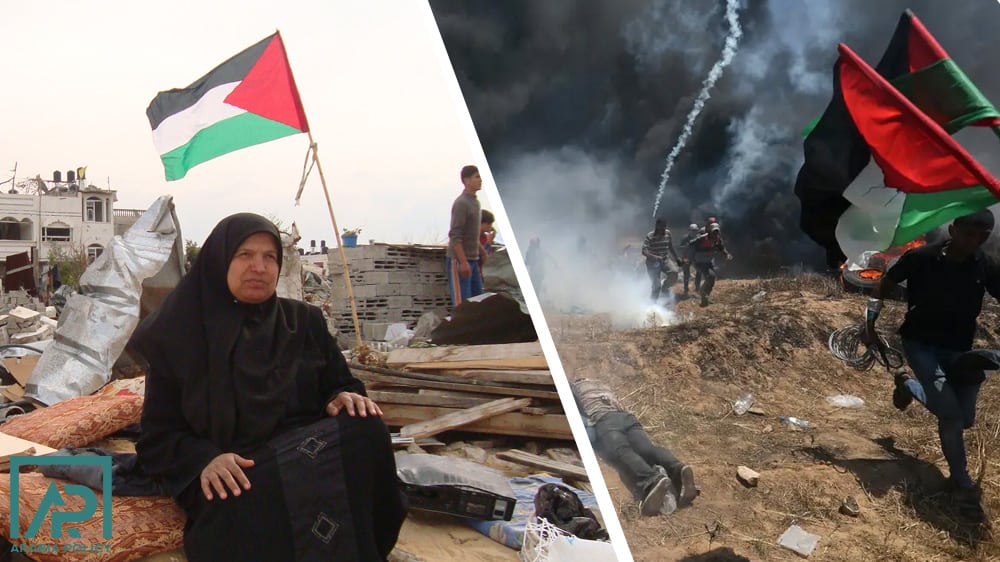
As Palestinians find themselves caught between the US and Israel offering a small piece of historical Palestine and Arab states that have apparently grown weary of what they might see as a Palestinian burden amid ‘’ more pressing’’ domestic and foreign policy issues, Palestinians seem more isolated than ever before in their struggle to finally see a state of their own come to life.

Read also: Boy Drowns as Thousands of Migrants Attempt to Reach EU after Turkey Opens Borders

Turkey and Russia: Partners or Adversaries?

In recent weeks one of the worst humanitarian catastrophes in Syria’s nine-year civil war has ensued in Idlib. This latest emergency comes as a result of escalating violence between Turkish-backed rebels and Russian-backed Syrian forces.

On Thursday, a Syrian government airstrike killed 33 Turkish soldiers. This marks the deadliest day in Syria for Turkey since it began sending thousands of troops into Idlib this month.

The President of Turkey, Tayyip Erdogan, chaired a six-hour national security emergency meeting following the attack.

During the meeting, it was agreed upon that Turkey would put all Syrian regime targets under fire.

As Turkey vows to retaliate for the attack, an all-out war with the Syrian regime and its close ally Russia is at risk.

Ramped up tensions

Tensions have soared since the beginning of the year as Syrian troops began a large military operation last month aimed at seizing the last opposition stronghold, currently controlled by Turkish-backed rebels.

By the end of January, Syrian government forces had recaptured Maarat al-Numan, the second largest town in the northwest Idlib province and by early February, the troops were just a few kilometers away from Idlib itself, the largest city in the province.

Erdogan responded by sending thousands of Turkish soldiers and military equipment to northwestern Syria to support the rebels. He demanded that Syrian and Russian troops stop their advances into the territory.

Turkey views the territory as a buffer zone, agreed with Russia under the 2018 Sochi accord, a part of the Astana peace process.

Russia, meanwhile, claims that Turkey has not held up its part of the agreement by failing to separate al-Qaeda affiliated fighters from moderate rebels.

Tensions between Turkey and Russia have reached dangerous heights in February, with multiple direct clashes between Turkish and Russian-backed Syrian forces.

Ankara fears that the Syrian government offensive will lead to another massive refugee flow into Turkey, the country that already hosts more refugees than any other state globally.

The United Nations estimates that over 900.000 civilians have been forcibly displaced since December 2019 due to the ongoing fighting.

On February 26 Erdogan reiterated that Turkey will not back down and that it is ready for a full-scale military confrontation if the Russian-backed Syrian army continues its advances.

Ankara claims that Syrian troops have surrounded four out of the twelve military outposts Turkey built under a de-escalation agreement with Russia in 2018.

Erdogan has given an ultimatum to Assad, stipulating that Syrian troops must withdraw from the outposts by February 29, but Russia and Syria are showing no signs of withdrawing, insisting that the Syrian army has the right to restore sovereignty within its territory.

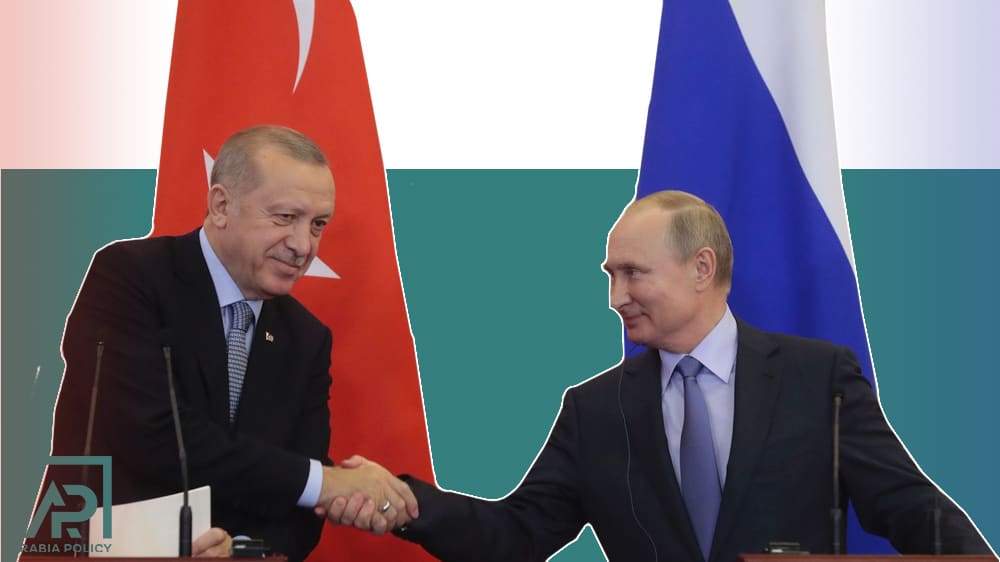
President of Russia, Vladimir Putin, and his Turkish counterpart discussed the situation in Idlib over the phone on numerous occasions but have failed to reach any consensus.

Erdogan announced on Saturday that he will hold a summit in Istanbul on March 5 with his Russian, French, and German counterparts.

Russia, however, dismissed the proposal on Thursday and instead suggested a three-way meeting with Turkey and Iran.

Is Turkey willing to risk war?

Uncertainty looms as February ends. Erdogan has expressed his determination to do whatever is necessary to stop Syrian advances in Idlib.

“We are planning to liberate our observation posts from the surrounding Syrian government forces by the end of this month, one way or another,” said Erdogan on Wednesday.

The Turkish president declared Turkey’s steadfast position during a speech in the Turkish parliament.

“We will not take even the smallest step back in Idlib, we will certainly push the regime outside the borders we designated, and ensure the return of the people to their homes,” he added.

Bilateral talks between Russian and Turkish delegations took place in Ankara during the week, but nothing concrete came out of the talks as neither side has, in recent days, made any move to de-escalate tensions on the battlefield.

While the talks were underway in Turkey, fighting continued on the ground in Syria.

No meeting between Erdogan and Putin has been scheduled, but during a phone call on Friday, the two leaders agreed to organize a top-level meeting to discuss the situation in Idlib.

The phone call came after a Syrian airstrike that killed 33 Turkish soldiers on Thursday. The Kremlin said that the two leaders agreed on the need for “new measures to be put in place to ease tensions and normalize the situation in northwest Syria”.

While Turkey does not want to give up on Idlib easily, it also realizes that the combined force of Syria and Russia has an advantage on the battlefield.

The prospects of a direct military confrontation between Turkey and Russia are increasing by the hour as both sides have shown intentions to continue to pursue their goals in Idlib.

If the two sides fail to reach a peaceful agreement on Idlib, there are widespread fears that an all-out war could break out in the near future.

The Turkish and Russian presidents will seek to avoid war, but their significantly different views on how to handle the situation in Idlib means that upcoming talks will be complex.

Complicated Turkey-Russia relations

Turkish-Russian relations are currently at their worst since November 2015, when Turkey shot down a Russian jet.

Russia imposed economic sanctions on Turkey as a response to the downing of its jet. Moscow also suspended work on the TurkStream project meant to increase Russian gas exports to Turkey.

The two countries reconciled after Erdogan apologized to Putin during a meeting in Moscow in June 2016. The TurkStream project was resumed, and sanctions were lifted in the following year.

Despite being on opposite sides of the Syrian conflict, the two countries have cooperated closely in the past few years on aligned interests such as weapons trade and gas supplies.

On 12 July 2019, Turkey received the first installment of the Russian S-400 missile defense system it had purchased from Russia.

The purchase significantly worsened Turkish relations with key NATO ally, the US. Turkey was excluded from participating in the American F-35 program as a consequence of buying the Russian missile system.

Signs of a Russian-Turkish partnership have also been visible in negotiations concerning Syria. Despite backing opposite sides, the two countries have worked together in attempts to de-escalate tensions and, up until a few weeks ago, had been able to avoid deadly clashes between Turkish and Syrian forces.

To date, more than fifty Turkish soldiers have been killed in February in direct clashes between Syrian and Turkish troops.

Turkish ambitions to become a major player in the Middle East

The 2011 outbreak of the civil war in neighboring Syria provided Turkey with an opportunity to expand its influence in the Middle East. Turkey supported many of the uprisings that spread across the Middle East, particularly during the Arab Spring, but has been the most influential in Syria.

Turkey attempted to topple Assad at the earlier stages of the war by supporting the rebels, but Russian-backed Assad remained in power.

The Turkish objectives in Syria are to prevent more refugees from entering Turkey and for People’s Protection Units (YPG) fighters to withdraw from northern Syria.

Turkey claims that YPG is the Syrian wing of the Kurdistan Workers’ Party (PKK), which Turkey has designated as a terrorist organization.

One of Erdogan’s foreign policy ambitions is for Turkey to become a major player in the Middle East, but Turkey understands that its influence in Syria will always be limited due to the strong Syria-Russian alliance. Therefore, Turkish policymakers have set their sights on the Libyan conflict instead.

Unlike Syria, the Libyan conflict has nothing to do with Turkish national security. The Turkish goals are solely to expand its influence and to secure access to natural gas deposits in the Mediterranean.

Turkey has pledged allegiance to the UN-recognized Government of National Accord (GNA), while Russia supports the Libyan National Army (LNA), challenging the GNA for power in the country.

LNA currently controls more than two-thirds of the territory and are trying to capture the capital Tripoli from GNA.

Erdogan has sent thousands of fighters from Syria to Libya since the end of 2019 as he seeks to establish Turkish presence in a conflict where Russia is far from as committed as it is to the Syrian conflict.

Putin and Erdogan have tried to freeze the Libyan conflict, but LNA refused to sign a Russia-Turkey engineered ceasefire in January.

Tensions between Turkey and Russia are at an all-time high, as both countries are looking to establish themselves as major players in the Middle East following the US plans to withdraw from the region it has been heavily involved in for several decades.

Regardless of whether peaceful diplomatic solutions prevail or violence escalates further, the Turkish-Russian relationship is as complicated as ever, with the one-time close partners now poised as adversaries on opposite sides of two bloody conflicts.

Read also: Putin and Erdogan to Meet in Moscow to Discuss Ceasefire in Idlib