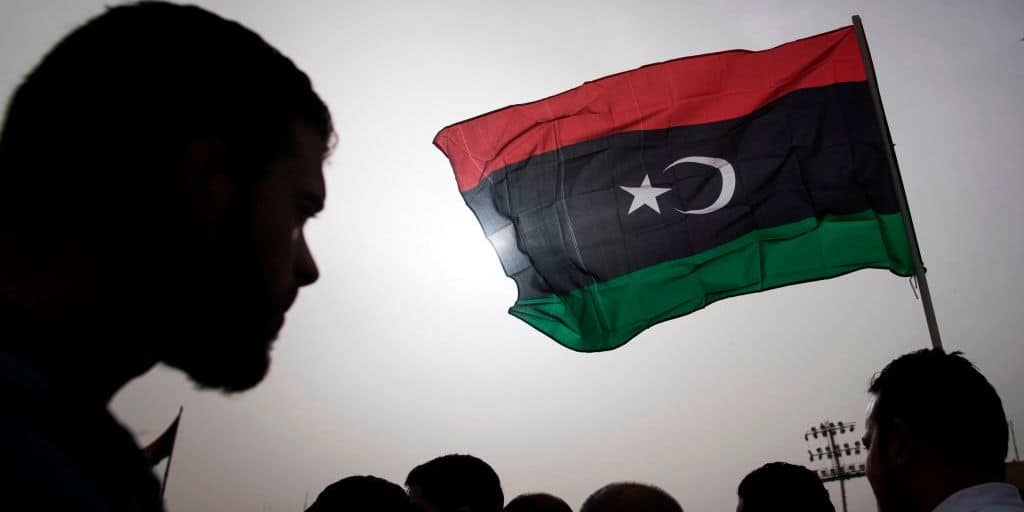
As violence continues to grip Libya, the threat of a devastating COVID-19 outbreak grows.
The Libyan Center for Disease Control announced on April 5 a new case of the novel coronavirus, bringing the total number of cases in the country to 18, including one death and one recovery.
“The reference laboratory of the center received 31 samples, 1 of which was positive (infected) and 30 negatives (uninfected),” the center, affiliated with the Government of National Accord (GNA), said in a statement.
The GNA announced on April 4 that it had finished preparing a COVID-19 treatment site the capital, Tripoli.
Libya’s Ministry of Health, in a statement on its Facebook page, said the COVID-19 treatment facility is a recently restored section of Tripoli’s government-owned El-Ayoun Hospital. The site is comprised of four floors and has a capacity of 50 beds.
As conflict ensues south of the capital between Khalifa Haftar’s Libyan National Army (LNA) and the GNA, however, the effectiveness of the Tripoli treatment site in the fight against COVID-19 remains to be seen.
The UN High Commissioner for Refugees (UNHCR) warned on April 3 of a “humanitarian catastrophe” in Libya if the coronavirus threat is not contained and the current conflict continues.
“The humanitarian crisis in Libya is exacerbated by the intensification of the conflict and the risk of an outbreak of the new coronavirus…which now brings new threats,” warned the UNHCR office in a statement, according to Xinhua news agency.
“The risk posed by COVID-19, if it is not contained alongside the current conflict, could create a humanitarian catastrophe in Libya,” the statement continued, quoting the head of the UNHCR mission in Libya, Jean-Paul Cavalieri.
The UN called for an immediate implementation of a “humanitarian truce” in Libya last month, but both sides of the conflict are still launching mutual attacks around the capital, and Turkish intervention in favor of the GNA exacerbates the violent flare-ups.
Intense GNA bombardment shook Tripoli on March 25 hours after Libya reported its first case of COVID-19 and despite the UN’s calls for a ceasefire.
The International Crisis Group reported that efforts to secure a ceasefire in Libya were no longer receiving high-level attention due to the COVID-19 epidemic.
As of April 5, the number of coronavirus cases worldwide has exceeded 1.2 million, including more than 66,000 deaths and approximately 254,000 recoveries.
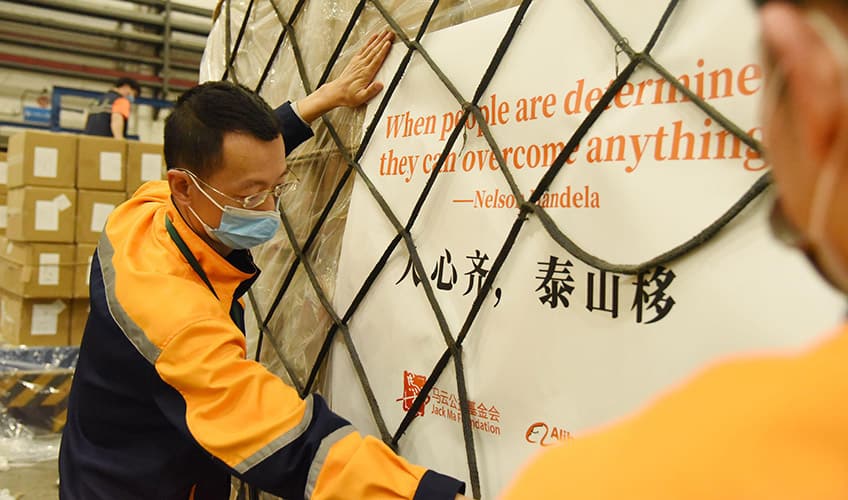
A plane carrying a shipment of desperately needed COVID-19 related medical supplies from Shanghai, China, touched down in Algiers on Sunday, April 5.
Prime Minister Abdelaziz Djerad greeted the delivery on the tarmac of the Houari Boumediene International Airport, declaring his country is committed to “getting rid of the [novel coronavirus] pandemic sooner or later.”
“This first order by the Hospitals Central Pharmacy (PCH) is composed of 8.5 million three-ply surgical masks and 100, 000 type FFP2 filtration masks,” Djerad, accompanied by Health Minister Abderrahmane Benbouzid, told the media.
Algeria is North Africa’s worst-affected country during the COVID-19 pandemic, reporting 1,251 cases of the disease and 130 deaths as of April 4.
In response to the growing outbreak, Djerad extended the country’s partial lockdown on April 5 to all provinces, except Blida, which is already in full lockdown.
China has overtaken former colonial power France to become Algeria’s top export partner in recent years.
Prior to the latest shipment of supplies, the China State Construction Engineering Corporation (CSCEC) sent a 12-person “task force” to Algeria on March 27, which included seven medical professionals who brought with them expertise and equipment to fight COVID-19.
“We have the confidence and ability to overcome the outbreak, maintain the physical and mental health of Chinese and Algerian employees, and ensure smooth production and operation,” said CSCEC representative Chen Jianguang.
COVID-19 cases have dropped dramatically in China, where the virus originated in December 2019. The country is now turning its attention to providing medical supplies, personnel, and aid to developing countries around the world.
In addition to the Algerian taskforce, CSCEC sent medical supplies and ten Chinese personnel to Egypt on March 17 to assist the country’s efforts to curb the coronavirus.
CSCEC has operations across Africa, including a base in Algeria that houses approximately 4,000 Chinese workers, along with numerous construction projects in Egypt that employ an unknown number of foreign workers. According to Chinese media reports, the company is also building a small hospital that could care for around 9,000 patients in Algeria.
In Egypt, Chinese Ambassador Liao Liqiang praised the country’s anti-coronavirus measures and said a shipment of Chinese medical supplies was on its way to further bolster the Egyptian fight against COVID-19.
The ambassador also thanked Egypt’s Health Minister Hala Zayed for being the first foreign health minister to visit China in February since the COVID-19 outbreak, Egypt’s State Information Service (SIS) reports.
Egypt has also been providing COVID-19 aid to other countries. Zayed delivered 10 tons of protective equipment to assist Chinese medical personnel during her recent diplomatic visit, and sent two jets worth of equipment and supplies to Italy, the European epicenter of the pandemic, on April 4.
Zayed reported 80 new cases of COVID-19 on April 4, bringing Egypt’s total number of recorded cases to 1,070. Health ministry spokesman Khaled Megahed said that 241 people who tested positive for the virus have now recovered, while another 71 people have died from COVID-19.
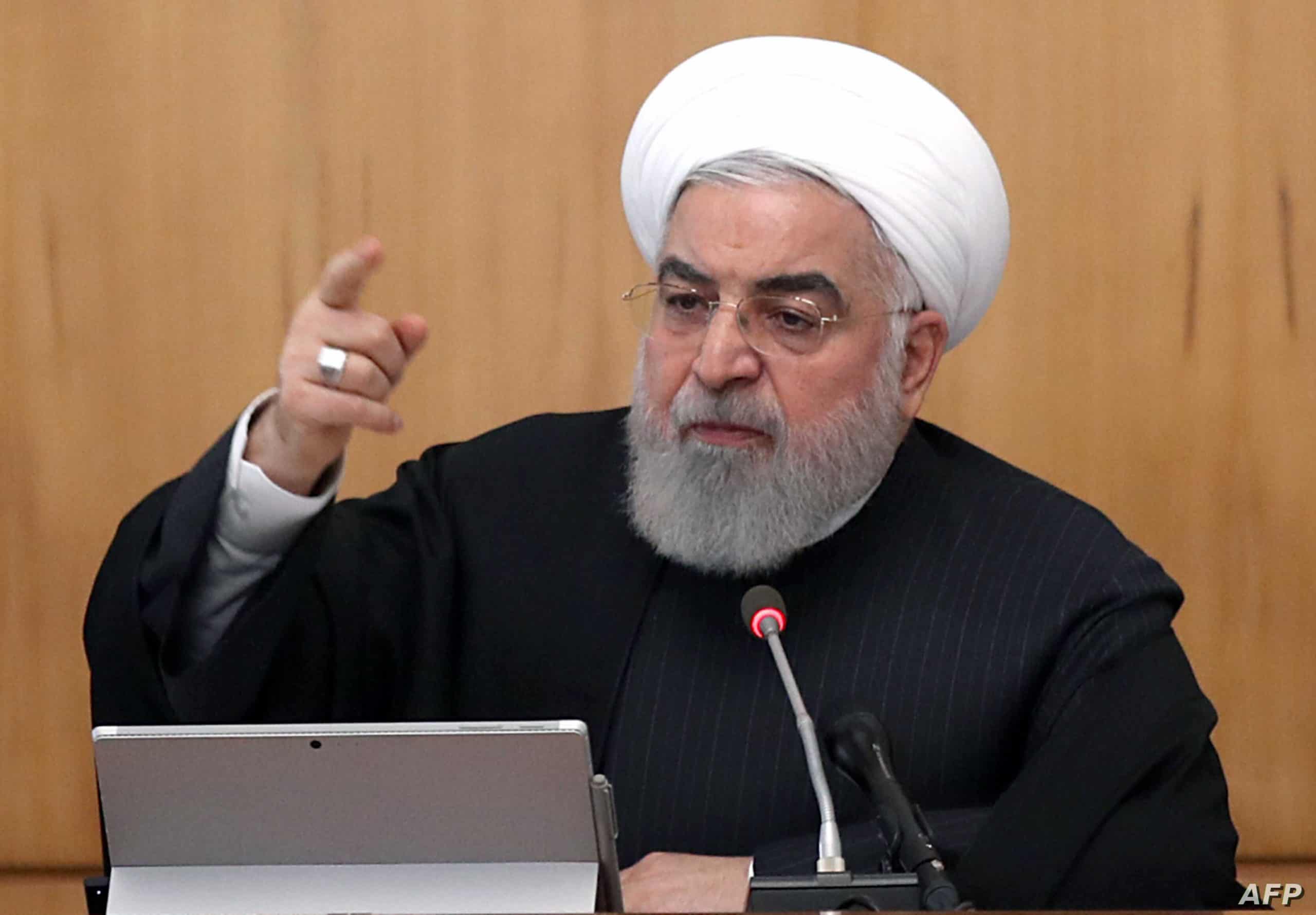
Iranian President Hassan Rouhani announced on Sunday, April 5, that Iran’s “low-risk” sectors could ramp up again from April 11 nationwide, and from April 18 in the capital, Tehran.
“Under the supervision of the health ministry, all those low-risk economic activities will resume from Saturday [April 11],” Rouhani affirmed while speaking on local television.
“Two-thirds of all Iranian government employees will work out of the office from Saturday … The decision does not contradict stay at home advice by the health authorities,” Rouhani stressed.
What activities qualify as low-risk remains unclear, but in the past, Rouhani has designated large populous gatherings, like education, sports, and religious or cultural events as “high-risk activities.”
Iran is the epicenter of the Middle East’s novel coronavirus outbreak. There are currently some 55, 743 active cases of COVID-19 and 3,452 fatalities from the virus, based on figures released by the Iranian Health Ministry on Saturday.
A day before Rouhani said Iran’s economy would start to get back on track, top health officials warned of a new spike in COVID-19 cases caused by people who flouted calls to stay home and traveled to visit family for the Persian New Year (Norwuz).
Deputy Health Minister Iraj Harichi told state TV he was worried about a surge of cases as people continue to defy social distancing measures.
“We are still concerned about the virus, for example with the level of traffic in Tehran today and queues of cars stuck on freeways, because these people can take the virus to their homes or workplaces,” Harirachi, who has contracted COVID-19, said on Saturday, April 4.
Iran’s health system and economy were badly unprepared for the shock of COVID-19 after years of economic sanctions led by the US, who has implemented an increasingly stringent program of embargoes against the rogue state.
The government has also had difficulty in enforcing closures, encouraging citizens to stay at home, and dealing with fake news. Worshippers stormed shrines in Reza and Qom shuttered to stop the COVID-19 spread, and hundreds have died from alcohol poisoning after rumors spread it could cure or prevent the disease.
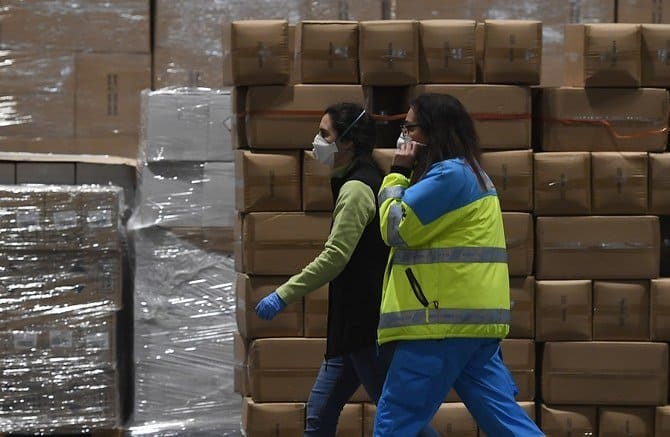
The Turkish government’s slow response to the fatal coronavirus epidemic and its failure to secure necessary medical supplies may have prompted the country to steal a medical aid plane destined for Spain.
The Spanish Foreign Ministry accused Turkish authorities of seizing a plane loaded with respirators that was destined for Madrid. Spanish Foreign Minister Arancha Gonzalez Laya said on April 3 that the Turkish government is holding a shipment of supplies in Ankara, according to El Mundo. Spain claims that the respirators were manufactured in Turkey by a Spanish company, with components purchased from China.
Gonzalez Laya explained that the Turkish government imposed restrictions on exports of medical devices from its territory mainly over concerns about Turkey’s ability to maintain a functioning healthcare system.
This shipment contains 162 respirators, which are valuable and in high demand for treating coronavirus patients in intensive care units, according to Spanish media.
Turkish customs officials reportedly seized the shipment of respirators that Spain urgently awaits after stopping the plane last Saturday.
Spain surpassed Italy in its number of confirmed coronavirus infections Authorities announced on April 3 that more than 900 deaths were recorded for the second consecutive day, bringing Spain’s total case count to more than 124,000, including over 11,000 fatalities. Spain is now the second most affected country globally in terms of case numbers after the United States.
Gonzalez Laya has spoken with her Turkish counterpart three times this week in order to resolve the matter, as has Spanish Minister of Health Salvador Illa, but to no avail. The Spanish Government is now considering the supplies as lost.
Erdogan’s government has assured Spain that the materials will arrive within a “matter of weeks,” but the Spanish foreign ministry is skeptical.
Kuwait passed an unfortunate milestone as it recorded its first COVID-19 fatality on April 4. The Gulf state has been lauded for its proactive approach to containment and testing, and is now preparing for a worst-case scenario.
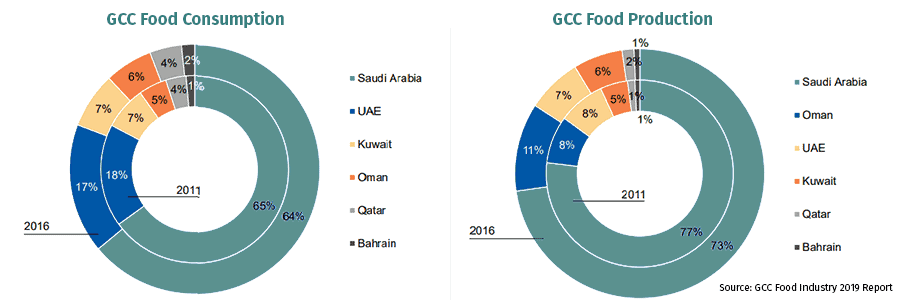
The International Monetary Fund (IMF), World Bank, and the UN Food and Agriculture Organization (FAO) have warned that food security might be at risk if nations start limiting exports. Food importing nations such as Kuwait could face scarcity of some food staples if net exporters like Russia, which produces wheat, or Vietnam, which produces rice, limit their exports.
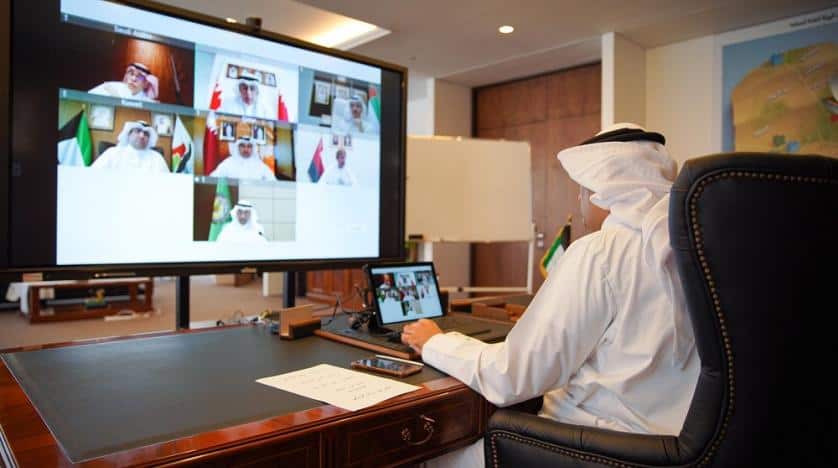
In order to guarantee food security for citizens of Gulf states, Kuwaiti Minister of Commerce and Industry Khaled Al Roudhan proposed a Gulf Cooperation Council (GCC) “joint food security network.” Al Roudhan introduced the plan during a video conference between GCC economic ministers, as a part of the council’s measures to address the economic consequences of the global COVID-19 outbreak.
Kuwait’s central bank launched an economic stimulus package on April 1 to support struggling businesses in the small Gulf state. Food security remains a codependent issue, as one in every five calories humans consume has crossed at least one border, according to the IMF.
The Kuwaiti proposal to the GCC aims to ease cross-border trade between GCC members to ensure adequate and accessible food supplies. The “smooth movement” of food supplies and medicine between GCC members through the proposed joint food security network would promote trade and reduce the chance of food shortages, according to the Kuwait Ministry of Commerce and Industry.
The joint food security network’s impact on trade with non-GCC members remains an unknown. If GCC members expand trade within the bloc without limiting exports to non-GCC members, the network would heed the IMF and FAO warning about the danger of protectionist measures on global food supply chains.
If trade between members comes at the expense of trade with other nations, the joint food security network could have an effect opposite to its stated goals. If the network limits the trade in food and medicine with outside partners in order to prioritize GCC members, it would entail a multilateral variant of the national food export ban global institutes are warning against.
The GCC joint food security network could indicate a re-prioritization of multilateral free trade, with countries such as Egypt and Russia now starting to stockpile food supplies. The plan could signal the beginning of a global disintegration of international food supply chains if it involves limitations on trade with non-GCC members.
Based on a detailed investigation of my Instagram feed, the unanimous response to the coronavirus pandemic has been limited not only to fear and panic, but also includes a global spike in banana bread baking.
Digital media company CEO Aleen Kuperman captured the zeitgeist when she asked her Twitter followers, “what is it about a global pandemic that signals to people it’s time to make some f****** banana bread?.” The tweet posted on April 3 has since gone viral.
After sharing Kuperman’s tweet on my own Instagram, half a dozen friends inboxed me admitting they too had caved in to the trend and rustled themselves up a lockdown loaf.
This made me wonder what could be behind the mysterious decision of hundreds, if not thousands of people in confinement around the world to turn to the kitchen and a batch of the humble family favorite in these troubled times.
I have come up with three theories and found three delicious recipes to go with these hypotheses so you too can join in on this wholesome global trend.
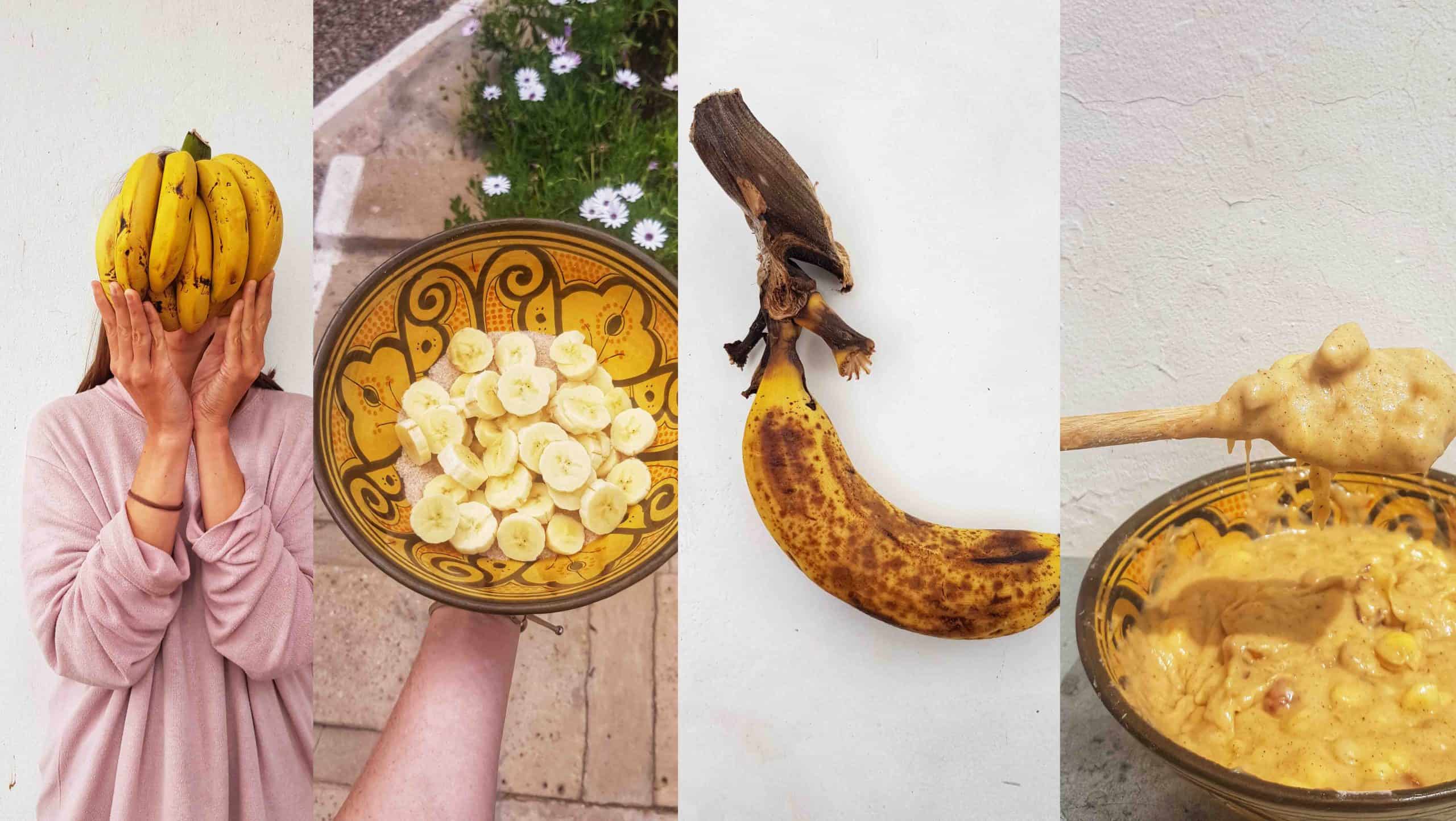
Everyone has banana bread on the brain [Jane Cornish/Arabia Policy]Theory 1: Emotional eating
Comfort eating is a big danger during these troubled times. Research has shown that many of us engage in emotional eating as a way to cope with stress and uncertainty.
“When you’re in a situation where you’re highly stressed, you’re more prone to engage in disinhibited eating,” explains psychologist Courtney Warren.
However, given the exceptional circumstances surrounding COVID-19, dietitian Katherine Kimber says emotional eating may be “the only coping toolkit we have in our bag,” therefore, “it’s okay to give yourself some slack.”
If the sight of a stray freckled banana, coupled with the latest COVID-19 case tally, has pushed you over the edge and you need some banana bread to fulfil your emotional eating needs then look no further.
Instagram sensation ReciPearce’s banana bread recipe is so easy you do not even have to mash the bananas. Plus, they have a fun tutorial on their page to help novice bakers join the banana bread craze.
For what it’s worth, they are also at a loss to explain the banana bread phenomenon, telling followers, “we cannot believe the response we have had to the banana bread.”
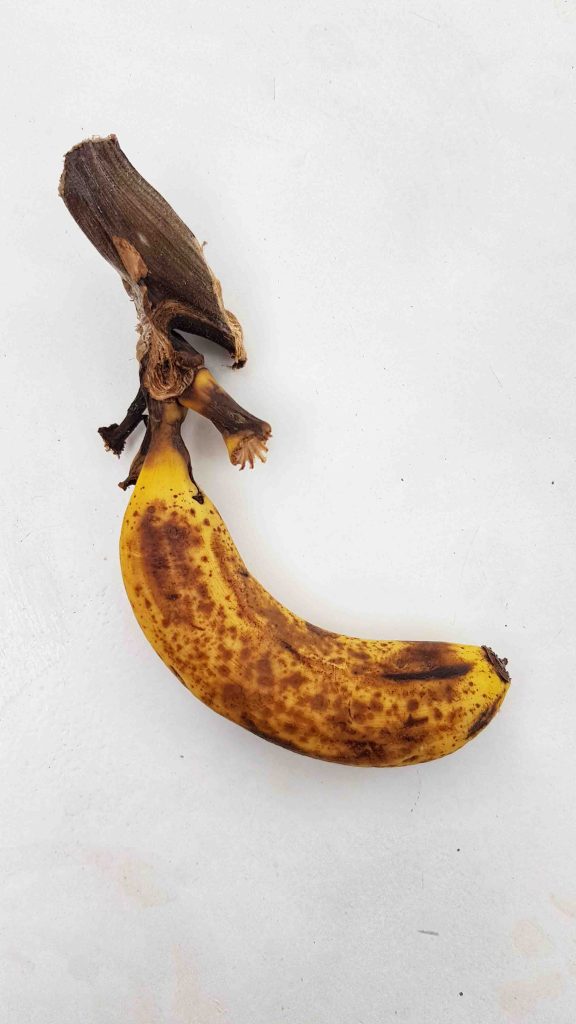
A banana perfectly ripe for baking [Jane Cornish/Arabia Policy]Theory 2: Boredom baking (and eating)
Now that most of us are working from home, or housebound with little to do, it is easy to find oneself boredom baking, and as an extension, boredom eating.
Studies have shown that boredom can be a big contributor to emotional eating, and there is very little stopping us from filling the void of friends, family, and co-workers with food as we respect sanitary isolation practices.
I have personally learned how to make ricotta, begun a sourdough starter, and made three different types of cake (as well as banana bread) during these two long weeks of confinement. As my mom says, “everything in moderation,” so remember to mix up your kitchen exploits with some exercise to avoid putting on extra isolation pounds.
Aside from the pitfalls of emotional eating like weight gain, there has never been a better time to attack that recipe or kitchen project you never normally have the time or motivation to complete. What’s more, many restaurants are sharing their customers’ favorite recipes online so you can get your fix while the restaurant is shuttered by coronavirus.
Give Joy the Baker aka Joy Wilson’s Tahini Flax Seed Banana Bread a whirl. It includes a few additional ingredients and more steps than the ReciPearce version, making it a great boredom–and belly–filler.
Banana bread is not exactly a complicated baking project, but it is a simple and fulfilling way to while away the hours, plus you probably have all of the ingredients in your pantry and fridge already.
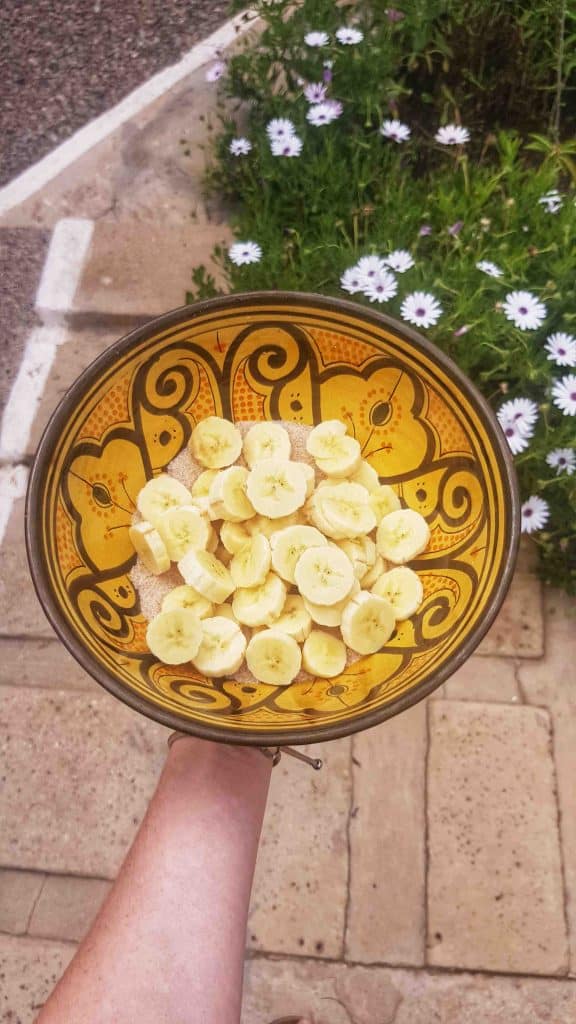
ReciPearce no-mash banana bread in the making [Jane Cornish/Arabia Policy]Theory 3: Not-so-Healthy habits
The World Health Organization has reminded us all to keep up good healthy habits around food and exercise as we sit this crisis out in confinement.
A lot of people seem to have initially taken heed and purchased delicious, potassium rich bananas with every intention of turning them into a healthy smoothie or eating them on their own.
An acquaintance locked down in Italy admitted they had fallen into this trap: “People buy bananas and don’t eat them,” he said.
Others, like a friend working in the UK health sector, had a different explanation. “My bananas went off because I work for the NHS [National Health Service] and don’t have time for food,” the physiotherapist who wishes to remain anonymous said.
Therefore, it appears that as the days in confinement wear on, our healthy intentions are forgotten or our work gets the better of us, resulting in a growth in stocks of browning bananas begging to be turned into delicious baked goods.
For a healthier spin on the classic banana bread recipe, give this Chunky Monkey Choc Banana Bread a try. The recipe title sounds sinful, but it is in fact low in sugar and fats, and because of that it has a shorter shelf life, so make sure to gobble it up quickly!
Now there are only three things left to do, dear readers: Stay home, stay safe, and bake banana bread!
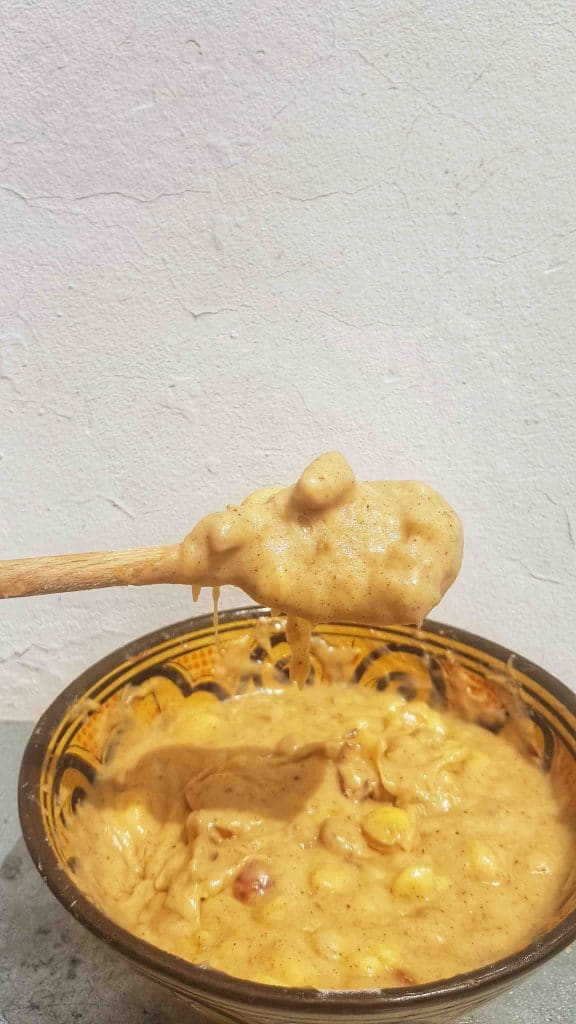
Banana bread batter ready for baking [Jane Cornish/Arabia Policy]
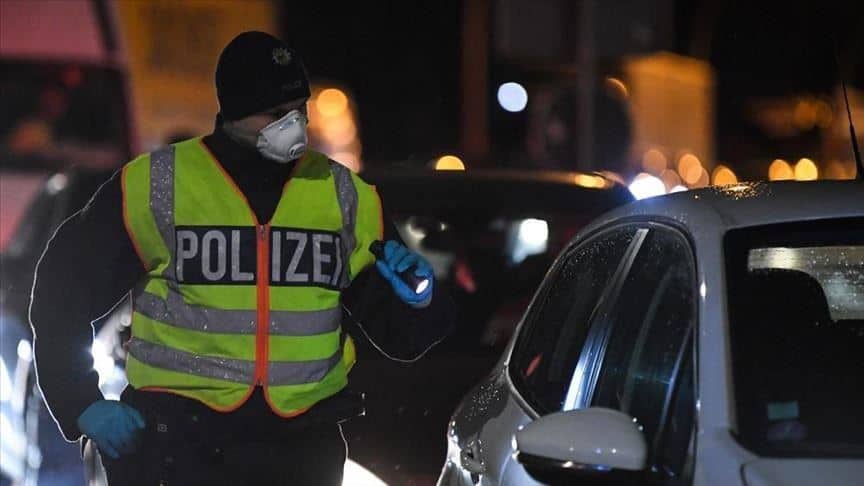
Roughly three centuries after the “Golden Age of Piracy,” nation states are once again accusing each other of piracy. The “privateers” in question today: A yet unknown US party that intercepted a shipment of 3M face masks bound for Germany. The Berlin police department ordered the shipment of FFP2 masks, but they were confiscated in Thailand en route to Europe.
On the way to delivery in Germany, a new bid from another party meant the 200,000 masks, reportedly produced in China, were redirected to the higher bidder. 3M denies that the order ever existed, but the interior minister for the Berlin region, Andreas Geisel, disagrees. Geisel described the turn of events as “an act of modern piracy,” saying, “This is no way to treat trans-Atlantic partners. Even in times of global crisis there should be no wild west methods.”
Governments are scrambling to purchase any available protective face masks in the wake of a global shortage. The pressure on governments to protect their healthcare workers has led to a “treasure hunt” for the items, according to French politician Valerie Pecresse.
Pecresse described the current process of face mask procurement as a bidding war that is impossible to “win” for certain parties. “I found a stock of masks that was available and Americans–I’m not talking about the American government–but Americans, outbid us,” Pecresse told BFMTV.
“They offered three times the price and they proposed to pay upfront. I can’t do that. I’m spending taxpayers’ money and I can only pay on delivery having checked the quality, so we were caught out,” the politician continued.
In what the French media dubs “mask wars,” shipments of the coveted masks are distributed to the highest bidder, even when a lower bid has already been accepted. This leads to shipments of protective equipment from being “hijacked” on their way to delivery.
With US President Trump pushing manufacturer 3M to stop production of face masks for Canada and Latin America, the bidding war could result in protectionist trade measures. Canadian Prime Minister Justin Trudeau commented on the issue by urging continued commitment to free trade, saying that “it would be a mistake to create blockages or reduce trade.”
3M versus Donald Trump
Mask-producing manufacturing giant 3M entered into conflict with US President Donald Trump after Trump invoked the Defense Production Act to force the multinational company to produce as many face masks as possible. Although the company is based in the US, most production is done in factories across the globe for a variety of international customers.
We hit 3M hard today after seeing what they were doing with their Masks. “P Act” all the way. Big surprise to many in government as to what they were doing – will have a big price to pay!
Because of the international scope of 3M’s business, not all face masks and respirators it produces are meant for the US market, something the Trump administration is eager to change.
3M released a statement urging the government to avoid protectionist trade policies: “Ceasing all export of respirators produced in the United States would likely cause other countries to retaliate and do the same, as some have already done. If that were to occur, the net number of respirators being made available to the United States would actually decrease.”
The company’s statement matches recommendations from the IMF and World Bank, who have urged countries to avoid putting up trade restrictions in order to keep global supply chains unimpeded. The current conflict between Trump and 3M could lead to a new era of protectionist trade policies as nation states scramble for protective equipment.
After four decades of virtual consensus on global free trade, the coronavirus pandemic is starting to reveal cracks in the way nations consider trade. Whether this will lead to a shock to global supply chains, or even instigate a new era of “piracy,” remains to be seen.
The tuberculosis vaccine, Bacille Calmette-Guerin (BCG), like chloroquine and hydroxychloroquine, has been in use for many years and is gaining increasing international attention as a potential tool in the fight against the COVID-19 pandemic.
Researchers in Australia and Europe have begun inoculating health workers at high risk of contracting COVID-19 through increased exposure to see if the old vaccine can increase immunity and fight against the dangerous respiratory disease.
Scientists don’t expect BCG to prevent COVID-19. Rather, many believe the adaptive immune response it causes may not just fight TB-causing bacteria, but could also boost recipients’ innate immune systems, and improve their bodies’ defenses against a variety of pathogens.
Australian infectious diseases expert and researcher Nigel Curtis said, “It [BCG vaccine] can boost the immune system so that it defends betteragainst a whole range of different infections, a whole range of different viruses and bacteria in a lot more generalized way.”
Curtis is leading a trial of the BCG vaccine on 4,000 Australian frontline hospital workers, organized by the Murdoch Children’s Research Institute. The study will run over six months with participants randomly allocated either a combination of the TB and seasonal influenza vaccine, or the seasonal influenza vaccine only.
Correlation between universal TB vaccination & COVID-19 cases
Hopes that BCG could be a COVID-19 prevention tool were raised by a preliminary study showing a correlation between universal TB vaccination programs and lower cases of the novel coronavirus.
The research, which is yet to be peer-reviewed, found that “countries without universal policies of BCG vaccination (Italy, Nederland, USA) have been more severely affected compared to countries with universal and long-standing BCG policies.” The New York Institute of Technology academics found that “BCG vaccination also reduced the number of reported COVID-19 cases in a country.”
In North Africa, Tunisian health authorities said they will “not rule out the possibility of starting clinical trials of the vaccine on health workers, as they are highly exposed to infection.” Pasteur Institute of Tunis (IPT) has been producing BCG since 1928 and the country has had a universal vaccination program since the 1970s.
“The importance of this vaccine lies in its ability to strengthen the immune system,” IPT Director General Hachmi Louzir told TAP on April 2.
BCG can “under no circumstances be used as a vaccine against coronavirus,” Louzir stressed, alluding to growing concerns in many countries that citizens will rush to get the injection in the same way they began stockpiling hydroxychloroquine and chloroquine.
“The institute is able to produce sufficient quantities of the vaccine for tuberculosis (BCG) if clinical trials prove its effectiveness against the coronavirus (COVID-19),” affirmed Louzir.
BCG discussion sparks controversy
A controversial televised debate between two French doctors who said BCG and other vaccines should be tested in Africa “where there are no masks, no treatments, no resuscitation,” sparked a global conversation about the vaccine.
The comments of French doctors Jean-Paul Mira and Camille Locht went viral and have been lampooned by civil rights campaigners as racist, with many arguing that “Africa is not a testing laboratory.”
Locht is the head of research at the French National Institute of Health and Medical Research (INSERM), which has attempted to defend the doctor’s comments. INSERM released a clarifying statement on Twitter claiming the viral video was #fakenews and the “the subject of erroneous interpretations” because it was cut in a way that removed the context.
INSERM’s statement also argued that Africa should not be “forgotten or excluded” from testing of the BCG vaccine and other COVID-19 treatment and prevention tools.
#FakeNews Une vidéo tronquée, tirée d’1 interview sur @LCI d’1 de nos chercheurs à propos de l’utilisation potentielle du vaccin #BCG contre le #COVID19 fait l’objet d’interprétations erronées sur les réseaux sociaux. Voici les bonnes explications. ⬇️⬇️ pic.twitter.com/3QRcLgOkso
The Head of Intensive Care at Cochin Hospital in Paris, Jean-Paul Mira, and the Head of Research at the Inserm Health Research Group, Camille Locht, sparked a wave of international backlash when they suggested researchers should test a tuberculosis drug on novel coronavirus patients in West Africa.
The two French doctors told France’s LCI television channel that the Bacillus Calmette–Guerin (BCG) vaccine, currently used to prevent tuberculosis, could be effective in the fight against the novel coronavirus pandemic. However, the doctors met widespread criticism when they said the BCG’s efficacy could be tested in Africa.
“If I can be provocative, shouldn’t we be doing this study in Africa, where there are no masks, no treatments, no resuscitation?” Mira said.
“A bit like it is done elsewhere for some studies on AIDS. In prostitutes, we try things because we know that they are highly exposed and that they do not protect themselves,” Mira continued.
Lucht replied, “We will seriously think about it [piloting the vaccine in Africa], but this does not prevent us from parallel thinking, in carrying out this study in Europe and Australia.”
The comments received an angry response on social media, including from retired football players Samuel Eto’o and Didier Drogba.
“I would like to vividly denounce those demeaning, false and most of all deeply racist words,” Drogba tweeted.
“Do not take African people as human guinea pigs! It’s absolutely disgusting,” he added.
Eto’o called the doctors “assassins,” saying “Africa is not your playground.”
Let us save ourselves from this crazy virus that is plummeting the world economy and ravaging populations health worldwide.
Do not take African people as human guinnea pigs! It’s absolutely disgusting…
The French National Institute of Health and Medical Research (INSERM) released a statement on their Twitter account, calling the footage “fake news” and claiming it was misinterpreted.
#FakeNews Une vidéo tronquée, tirée d’1 interview sur @LCI d’1 de nos chercheurs à propos de l’utilisation potentielle du vaccin #BCG contre le #COVID19 fait l’objet d’interprétations erronées sur les réseaux sociaux. Voici les bonnes explications. ⬇️⬇️ pic.twitter.com/3QRcLgOkso
The African continent is currently at the beginning stages of the outbreak with 7,064 cases and only 290 confirmed deaths as of today, April 3. The World Health Organization warned African governments to prepare for a pandemic on the scale of the outbreaks in Europe and China.
The continent’s worst-hit country is South Africa, where 1,462 people have been infected, including five fatalities.
The protective face-mask has become the icon of the coronavirus crisis. People wearing masks on the streets were common in Asia where the use of masks was already prevalent before the pandemic.
As the pandemic spreads many fearful citizens across the globe have started to hoard medical masks and some governments have made the wearing of masks mandatory in public places.
The argument for wearing facemasks is simple. The COVID-19 virus can be transmitted by droplets from a person’s cough or sneeze entering the nose, eyes, or mouth of another. By wearing a mask, the wearer protects their mouth from the droplets. Healthcare workers are expected to wear face masks as part of their Personal Protective Equipment, further ingraining the feeling among many that the face-mask is the first line of defense against contracting the virus.
Research is underway over the power of sneezes and coughs in the spread of the pandemic. Official WHO recommendations have estimated that coughs and sneezes travel between one and two meters, but new research in the United States shows coughing and sneezing can project small droplets to up to 8 meters. There is no proof the novel coronavirus can travel that far, but scientists are considering it.
There is general consensus that people who are infected should wear a mask in order to protect others. By wearing masks they avoid projecting their sneezes and coughs over long distances and limiting the exposure of people around them.
Masking the risks?
But most face-masks do not perfectly protect the wearer from the oral inhalation of droplets. High-grade medical masks seal the edges of the mask and cover the nose perfectly, but many of the masks worn by people today offer no such guarantees. A small crease on the side of the mask or open space around the nose could be enough to allow droplets in, as they do not necessarily travel in a straight line from the transmitter to the receiver.
Taking a mask off and disposing of it in a proper way is crucial to the level of protection masks offer. Many wearers could contract the virus simply by improperly handling, or disposing of, the masks after they have returned home.
The reason the WHO has recommended people not to wear masks unless infected has little to do with the efficacy of the equipment. Most masks are single-use disposable products for hygienic reasons, effectively using face-masks requires a lot of masks per individual. With shortages in PPE available for healthcare workers around the world, the WHO is fearful of shortages of masks for those who need them most, as people around the world stock-up on the product.
The Czech Republic is now making the masks mandatory in public, and many governments are contemplating similar measures. The Czech government is even actively spreading it’s the pro-mask approach to other nations, but many experts fear the masks give users a false sense of security.
Dr Shunmay Yeung told the BBC: “If you are not close to people that are directly coughing or sneezing on you, a mask is not needed.”
Yeung highlighted that it often contacts through the hands that spread infections. People can wear masks, but if that gives them the confidence to go out where they touch surfaces many others have touched, rubbing the eyes or scratching the face could already pass the virus. Taking off the facemask improperly (by touching the mask itself) can expose the user to the virus and lead to infection.
Much is still unknown about the novel coronavirus and, as experts are grappling with the specifics of transmission and infection, people around the globe are looking for ways to protect themselves. Until more is known, proper hand hygiene and staying informed by following WHO recommendations appear to be the safest way of collectively dealing with the pandemic. For people who do choose to wear a mask, please follow WHO instructions on how to wear and dispose of them to minimize risks through improper use.