
13 Countries Shut Down Schools Amid Coronavirus Outbreak, Affecting 290 Million Students 

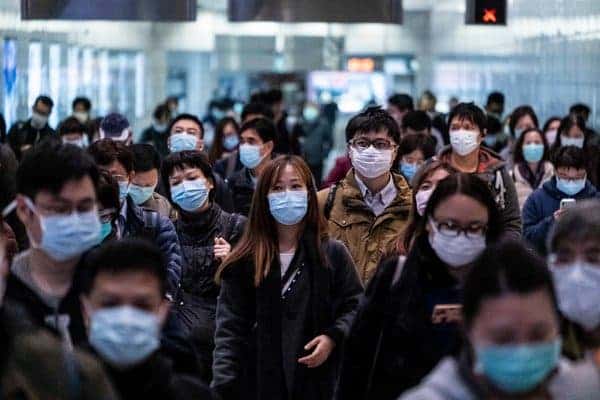
The UNESCO said on Wednesday that 13 countries have closed schools, affecting 290.5 million students, while nine others have implemented localized closures.

“The global scale and speed of the current educational disruption is unparalleled and, if prolonged, could threaten the right to education,” said UNESCO chief Audrey Azoulay.

Italy has been the latest country to suspend education to contain the virus that has so far infected 3,089 and killed 107 people in the country, the deadliest outbreak outside China. The Italian government made the decision on Wednesday and said that classes will resume on March 15. 

The UAE also announced on Tuesday the shutdown of schools for a four-week period over fears of the spread of the epidemic. Emirati officials said that they moved up the spring holidays from march 29 to next Sunday. 

The Emirati Ministry of Education will employ a distance education method for the last two weeks of the four-week suspension to ensure the continuity of education.

Kuwaiti authorities declared on Wednesday the closure of schools for two weeks at the beginning of March, after registering 56 infected cases.

South Korea, where infections rose to 6,088 and death toll reached 40, also pushed back the start of the second school term to March 23.

Schools in Japan are also closed as the virus has contaminated 317 people. Japanese Prime Minister Shinzo Abe called for classes to be canceled through March and early April.

Iran, the most Coronavirus-affected Middle Eastern country with 3,513 confirmed cases and 107 reported deaths, also suspended classes.

India suspended primary education in its capital, New Delhi, affecting more than 2 million children. The country recorded 29 confirmed cases with no reported deaths.

The US states Washington and New York have also closed schools, along with the Californian city of Los Angeles. The US has recorded 129 confirmed cases and 11 reported deaths.

Education is also suspended in other countries such as France, Pakistan, Lebanon, and Greece, either for days or weeks.

The global death toll from the virus has reached 3,307 with 96,435 infections, as of Thursday evening. 
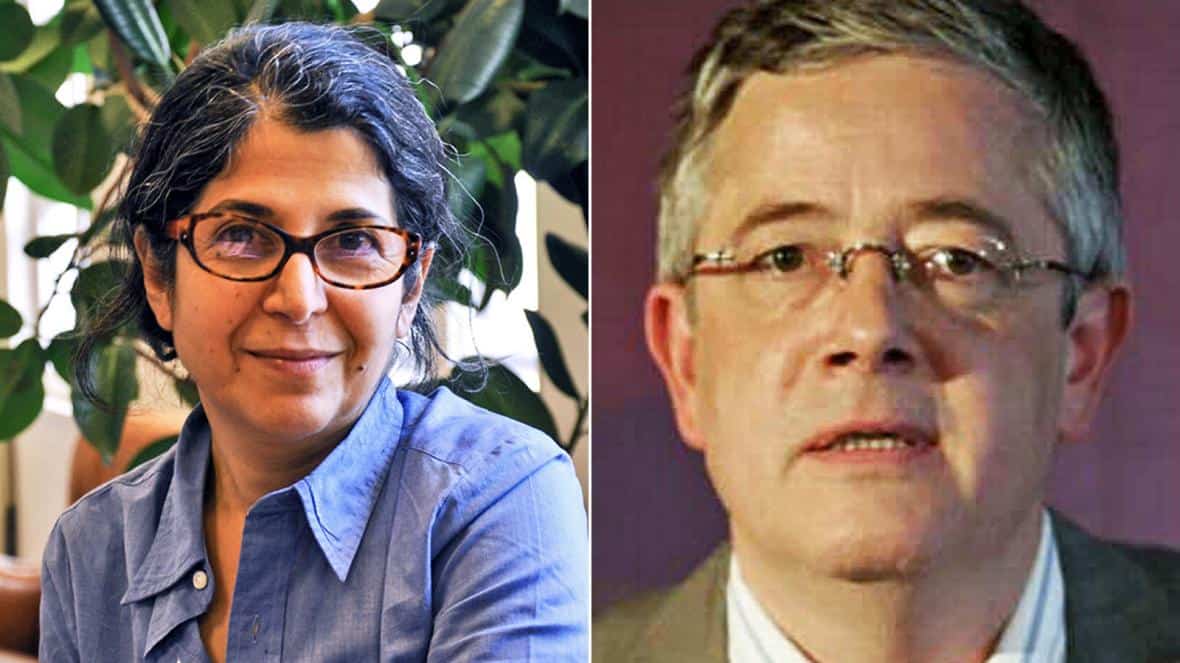
French Academics’ Trial in Iran Adjourned Sine Die as COVID-19 Threats Swell

In June 2019, Iran’s Revolutionary Guard Corps arrested French academics Fariba Adelkhah and Roland Marchal while they were conducting fieldwork on behalf of the Sciences Po Center for International Studies. 

After spending nine months in a prison in Evin, northern Iran, trial proceedings against 64-year-old Marchal and 60-year-old Adelkhah commenced behind closed doors in Tehran on Tuesday.

The researchers’ lawyer said they are charged with “propaganda against the political system of the Islamic Republic” and “conspiring against national security.”  

Espionage charges against Adelkhah, who is originally from Iran and holds dual-citizenship, were dropped in January

Paris-based supporters of the “scientific prisoners” released a statement on Tuesday saying that only Fariba Adelkhah was present at the trial. The trial has apparently been adjourned sine die. 

Members of the Parisian support group also believe that Adelkhah did not have access to her lawyer and French consular officials were unable to observe proceedings. Iranian authorities are yet to comment on the trial.   

Marchal may not have attended the hearing because “he refused to appear before a masquerade of justice, he was not summoned, or he was not able to appear given his deteriorating state of health,” the support committee suggested.  

The academics’ physical and mental health is a growing cause for concern, according to French authorities and supporters, who claim they have been held in almost complete isolation, denied contact with family, each other, and French consular authorities. 

Adelkhah is also reportedly suffering from kidney problems stemming from her 49-day hunger strike that ended on February 20. She has allegedly been denied medical treatment.

With the researchers’ trial now adjourned to an unknown date, there is a possibility that Adelkhah and Marchal could join 54,000 other Iranian prisoners released temporarily to help stem the transmission of the novel coronavirus (COVID-19) among the prison population.

In the meantime, Adelkhah and Marchal’s confinement in the overcrowded Evin prison, frail health, and advanced age place them at greater risk of contracting COVID-19. At last count, the virus had killed 92 people in Iran. 

Advocates for British-Iranian charity worker Nazanin Zaghari-Ratcliffe, who is also being held in Evin prison, said on Tuesday she could be released on furlough in the coming days. 

Zaghari-Ratcliffe told her husband that she began showing symptoms of the disease, but claims Iranian authorities refuse to test her.

The French foreign ministry summoned Iran’s Ambassador to France to discuss the researchers’ imprisonment in December. 

A statement from the Ministry said it had again requested both prisoners be released without delay. The statement reiterated France’s “extreme concern” for the prisoners’ health and “demand for consular access, thus far refused.” 

Iran does not recognize dual-citizenship and its Foreign Minister has called France’s involvement in Adelkhah’s case “meddlesome and unacceptable.”

Turkey to File Complaint to European Court of Human Rights Over Greece Treatment of Migrants

Turkey announced that it is preparing a case in the European Court of Human Rights (ECHR) over Greece’s treatment of migrants following the mass influx of migrants to the Turkish-Greek borders.

Turkey’s Interior Minister, Suleyman Soylu, announced the decision on broadcaster CNN Turk on Wednesday after Ankara accused Greek forces of shooting dead a migrant and injuring others.

Soylu said that Turkish officials “are making preparations” to file a complaint to the ECHR over Greece’s interventions with the migrants, adding that the families of the migrants who died at border crossings authorized them to take action.

Turkish officials said that Greek authorities fired tear gas at migrants to stop them from crossing.

Athens refutes the claims, arguing that Turkish police facilitate illegal migrant crossings into Greece.

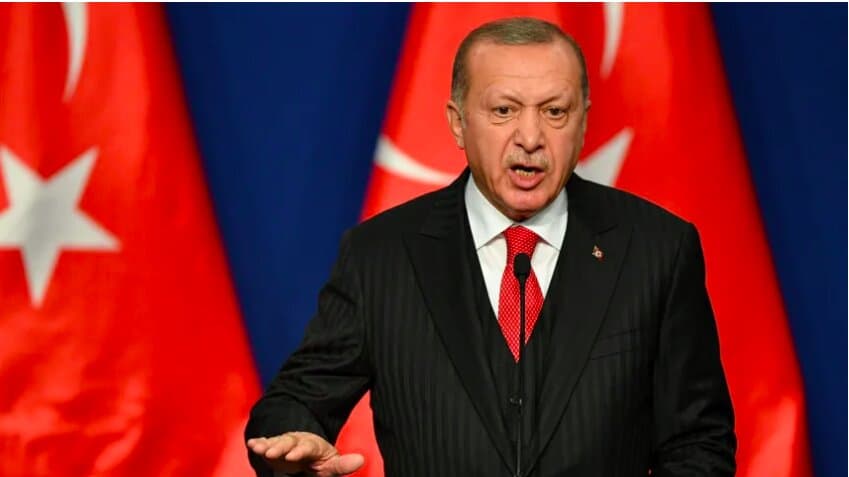
Turkish President Tayyip Erdogan opened Turkey’s borders with the EU after a Syrian regime ariel operation killed 33 Turkish soldiers in Idlib on February 27.

According to Soylu, more than 135,000 migrants have left Turkey for Greece since Saturday. Greece did not confirm the figure but reported that it has thwarted more than 27,000 migration attempts and arrested 220 people who have managed to cross into the country.

On March 3, a delegation of EU officials circled over the Turkish-Greek borders in a helicopter. Following their inspection tour, the EU announced plans to grant Greece €350 million in emergency funding to assist it in managing the border crisis by dispatching six patrol vessels, two helicopters, and additional security personnel to Greece.

“Our first priority is making sure that order is maintained at the Greek external border,” said European Commission President Ursula von der Leyen. 

After the EU announced its financial assistance to Greece, Erdogan met separately with European Council President Charles Michel and the US ambassador to the UN, Kelly Craft.

Turkish Foreign Minister Mevlut Cavusoglu and EU Foreign Policy Chief Josep Borrell attended the two-hour meeting between Michel and Erdogan.

The Turkish FM also attended Erdogan’s meeting with the US ambassador to the UN.

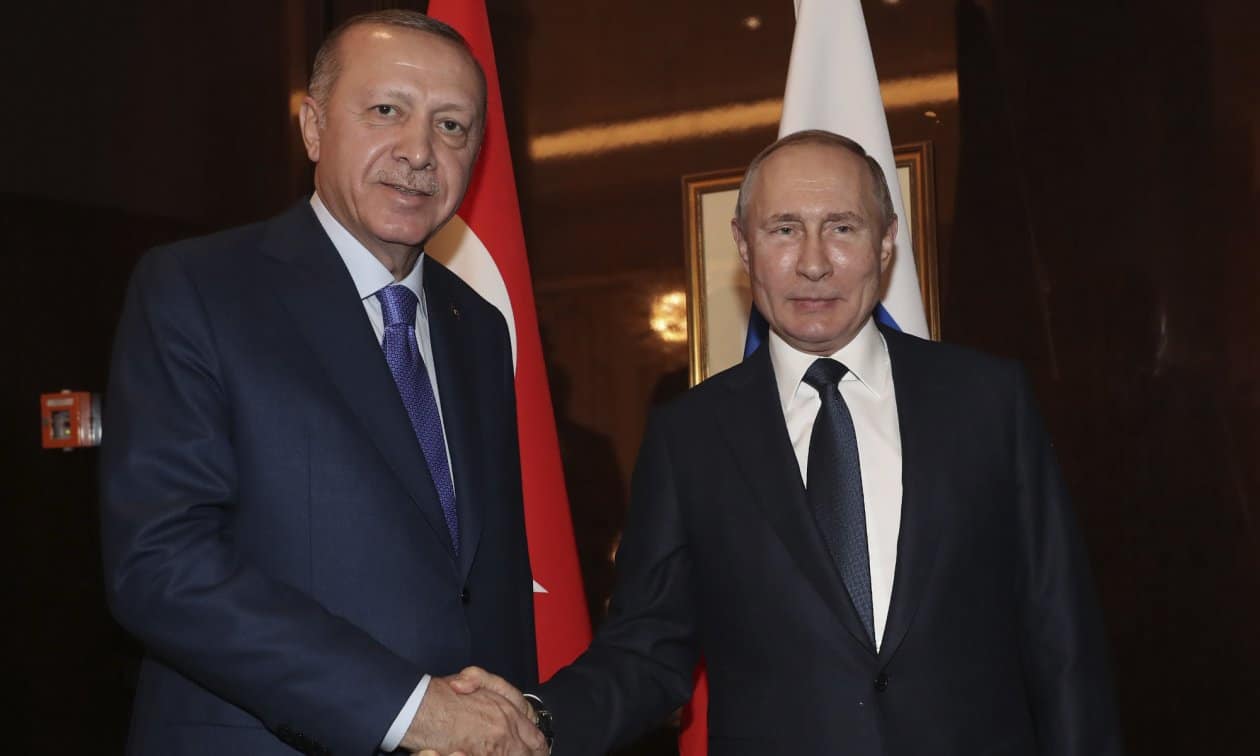
The Turkish president is now meeting with Russia’s President Vladimir Putin in Moscow, with aims to reach a ceasefire agreement amid escalating tensions between Turkish and Syrian government forces in Idlib.

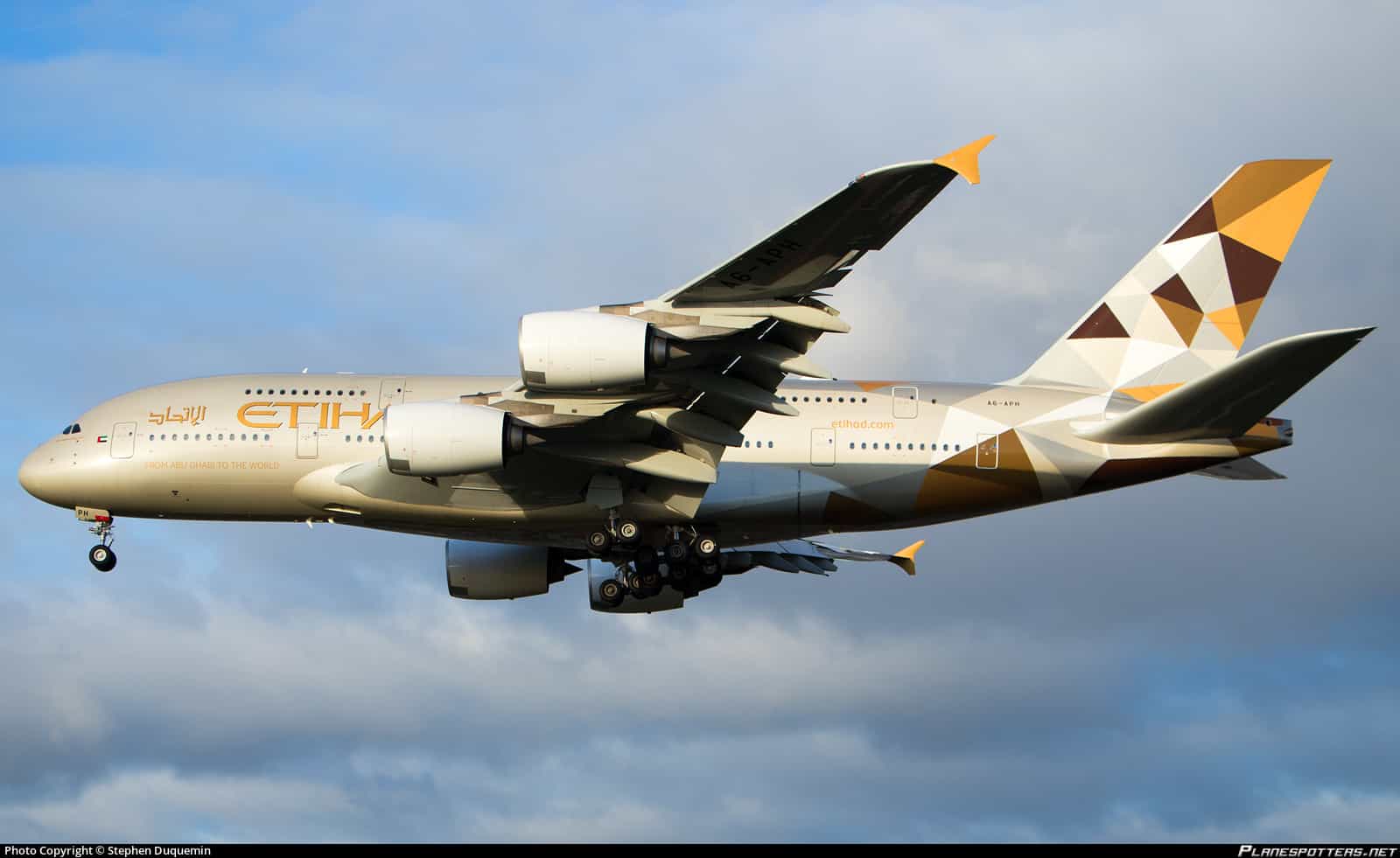
Etihad on a ‘Positive Trajectory’ Despite Recording $870 Million Loss for 2019

Etihad Airways said the $870 million loss in 2019 was a significant improvement from the heavy loss of $1.28 billion the year before, exceeding the company’s internal predictions. Although figures improved slightly in 2019, it is still the troubled airline’s fourth consecutive year of losses. 

Abu Dhabi’s state-owned carrier also announced “an encouraging 32% improvement in core operating performance for 2019, on revenues of US $5.6 billion” compared to $5.9 billion in 2018. A continued focus on cost control and low fuel prices helped the troubled carrier bounce back slightly last year. 

Savings found from measures such as reducing routes and seat numbers have enabled Etihad to reduce core operating costs by 55% since 2017, leading the airline to declare its transformation strategy is on track. The five-year transformation program aims to return the company to profit by 2023. 

That being said, despite filling 78.7% of seats on Etihad flights, passenger numbers were down from 17.8 million in 2018 to 17.5 million in 2019. Passenger revenues were also slightly down but route profitability improved overall due to capacity reductions. 

Cargo figures also fell from 682,100 tons in 2018 to 635,000 tonnes in 2019, leading to a reduction in revenue from $830 million to $700 million last year. Etihad blames “belly-hold and freighter capacity rationalization undertaken in the fourth quarter of 2018, combined with adverse market conditions” for the 7.8% drop. 

CEO Tony Douglas was upbeat and said improved operating cost bases had reduced the pressure on Etihad, giving the company the “headroom to invest in the guest experience, technology and innovation, and our major sustainability initiatives.”

“There’s still some way to go, but the progress made in 2019, and cumulatively since 2017, has instilled in us a renewed vigor and determination to push ahead and implement the changes needed to continue this positive trajectory,” he said. 

Etihad identified progress on its fleet renewal program, the sale of its old aircraft, and increases in flight frequencies on key routes as highlights for 2019. 

Going forward, agreements to sell Etihad’s retired Airbus A330 aircraft and the sale and lease-back of its current Boeing 777-300ER aircraft were expected to boost 2020 results. 

Although the company is yet to comment on the issue, reduced travel due to the novel coronavirus (COVID-19) outbreak will undoubtedly eat into those gains. 

The global aviation industry body, the International Air Transport Association (IATA) has predicted air travel disruptions due to COVID-19 will cost the industry $29 billion, equivalent to a 4.7% industry-wide drop in revenue per passenger-kilometer.

Read also: Will Dubai Expo 2020 Have the Economic Impact the UAE Hopes For?

UN Envoy Tells Iraqi Politicians to Stop Squabbling and ‘Step Up to the Plate’

Domestic, regional and international events continue to cause political upheaval and uncertainty in Iraq. The country is again without a Prime Minister-designate, after Mohammed Allawi quit on Monday, having failed to find a cabinet that could break the political deadlock. 

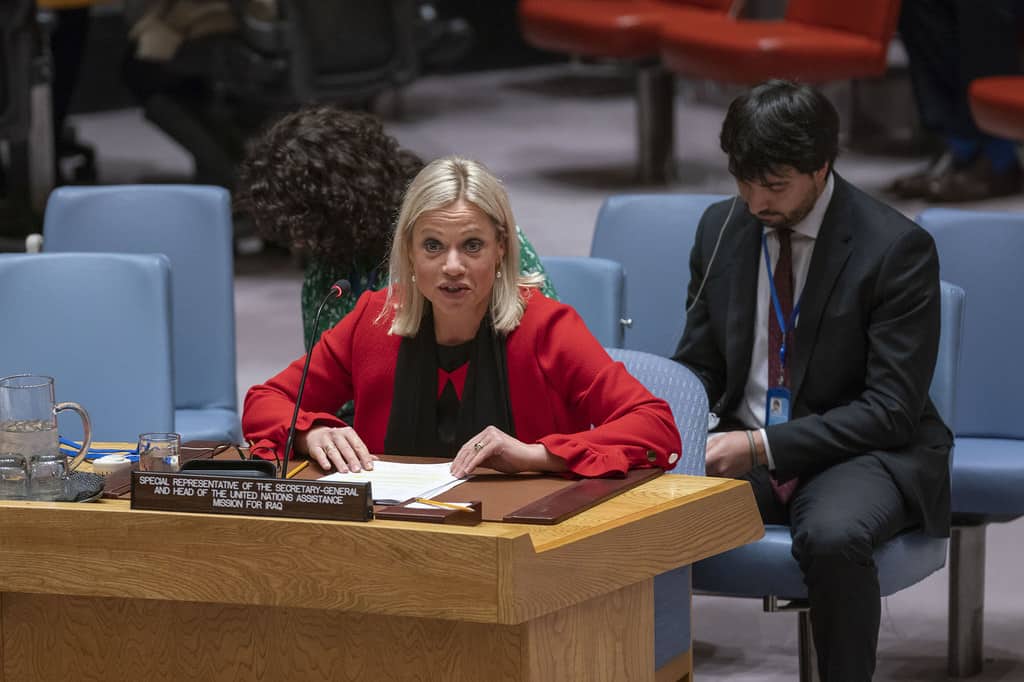
In spite of recent events, UN Envoy for Iraq Jeanine Hennis-Plasschaert started her Tuesday address to the UN Security Council on a hopeful note.

“I choose to begin with hope,” she declared. 

“The hope of a people who remain united in their determination for a more just and prosperous future, the hope of a nation that refuses to become a battleground for conflicts that are not it’s own and the hope that Iraq may very well find itself at the most opportune moment for genuine and lasting political reform in a generation.”

The UN Envoy quickly turned her attention back to the political situation at hand, a situation she says is pushing Iraq “into the unknown.” The political power-vacuum, mass unrest, and the emergence of COVID-19 in neighboring Iran are all factors driving Iraq towards the abyss.

“I sincerely hope that Iraqi political leaders will recognize in this moment, the crossroads where they either stand idle, or where they place themselves in the service of their countrymen and women,” she told the Security Council. 

“I have to say: the critical window of opportunity is closing fast,” she added. 

Iraq has experienced five months of protests in Baghdad and the Southern provinces. Hennis-Plasschaert said many Iraqis have “paid an unimaginable price” for taking part in the protests and calling for justice. 

Socio-economic challenges such as endemic corruption, poor public services, and high unemployment are at the root of the popular uprising that has killed an estimated 500 people and left thousands injured.

Meanwhile, on the security front, Iraq faces threats from the remaining elements of ISIL, war in neighboring Syria, and being drawn into US-Iran tensions.

In September former-Prime Minister Abdul Mahdi yielded to protesters’ pressure and resigned, but has stayed on in a caretaker role.

President Barham Salih appointed Prime Minister-designate Mohammed Allawi in February but he resigned on Monday after failing to form a government. 

Without naming names, Allawi said political parties were to blame for impeding progress towards a new and independent government, and his decision to relinquish the premiership. 

He criticized the parties for not being “serious about implementing reforms that they promised to the people” and negotiating “purely for narrow interests.” 

Read also: Sudan to Hand Over Ousted President Omar al-Bashir to the ICC

Allawi however, went against tradition by casting-aside the muhasusa system, instead of trying to secretly select a cabinet of independent technocrats. His efforts were thwarted as the government repeatedly failed to achieve a quorum for parliamentary confidence votes. 

Political uncertainty has now entered a new phase as Iraqis wait for the President to nominate a replacement Prime Minister-designate sometime in the next fortnight. 

The new can candidate will then need to engage political parties in a new round of negotiations and try to build cabinet acceptable to parliament and the angry Iraqi populace. 

The new Prime Minister-designate will need to manufacture a level of political cooperation that has been elusive so far, but is badly needed to get Iraq on track to recover after years of war. 

“Out of the ongoing political crisis, a fairer, stronger and inherently more resilient Iraq can emerge,” said Hennis-Plasschaert. 

“But again, for this to materialize political leaders will have to act fast, placing the country’s interest above all else.”

In a country where government corruption reigns supreme, that level of pragmatism appears unlikely, if not impossible. 

Putin and Erdogan to Meet in Moscow to Discuss Ceasefire in Idlib

Russian President Vladimir Putin and his Turkish counterpart Recep Tayyip Erdogan are set to hold talks in Moscow on March 5, reports Russian news agency TASS.

The two presidents will discuss “ways to resolve the Syria issue with a focus on the current tensions in the Idlib de-escalation zone,” according to a press release from the Kremlin.

Putin’s spokesman Dmitry Peskov told reporters on March 4 that Moscow is hopeful the talks will shed light on the causes of the Idlib crisis. Moscow also hopes the two leaders can agree on measures to de-escalate the situation.

“Plans are in store to discuss the Idlib crisis with Erdogan. We expect that an understanding on the forerunner of that crisis, the reasons for that crisis, the fallout from that crisis and the package of necessary joint measures aimed at ending it will be reached,” Peskov elaborated.

The situation in Idlib deteriorated at the beginning of February when Ankara sent thousands of Turkish soldiers to Idlib to support rebel forces. Ankara called on Syrian government forces and Russian troops to withdraw from the area.

Damascus and Moscow continued their advances into northwestern Syria, citing their right to restore sovereignty in its territory as a justification.

The heightened tensions on the battlefield led to direct clashes between the Syrian government and Turkish troops.

On February 27, Turkey suffered their biggest military loss in Syria when a Syrian government airstrike killed 33 Turkish soldiers and injured 30 more. 

Turkey responded by launching “Operation Spring Shield” putting all Syrian regime targets under fire.

The Turkish Air Force has carried out airstrikes on several Syrian government positions over the past few days, and hit more than 200 targets according to Ankara.

Erdogan has asked for military assistance from the US, but Washington is only ready to supply Ankara with ammunition as a NATO ally.

Defense Secretary Mark Esper has ruled out any retaliatory strikes from US troops. 

The meeting in Moscow will be the third in-person meeting between Erdogan and Putin since the beginning of the year.

Ankara has also expressed hopes that the two sides can solve the Idlib crisis with a political solution.

“We expect a ceasefire to be declared,” Erdogan told Turkish media on March 4.

Previous meetings have not led to any agreements on how to resolve the crisis and many experts believe that this could be the final attempt to achieve a lasting peaceful solution.

The talks will take place amid heightened tensions that have pushed the two sides to the brink of war. 

Bilateral relations between Russia and Turkey are currently at an all-time low, with the one-time close partners poised as adversaries on opposite sides of two bloody conflicts in Syria and Libya

The two presidents are expected to announce the result of the discussions in a joint-press conference following their meeting.

The United Nations estimates that over 900.000 civilians have been forcibly displaced in Syria since December 2019 due to the ongoing fighting.

As the fighting escalates, Erdogan announced last week that he would open the border for refugees heading to the European Union, in a ploy to pressure the west and NATO into supporting his objectives in Syria.

Read also: Turkey and Russia: Partners or Adversaries?

New Tensions Surface in Ethiopia-Egypt-Sudan Nile Mega-Dam Negotiations

“The United States believes that the work completed over the last four months has resulted in an agreement that addresses all issues in a balanced and equitable manner, taking into account the interests of the three countries,” a Treasury statement said.

Ethiopian Foreign Minister Gedu Andargachew called out “undiplomatic” statements from the US following recent negotiations. At a press conference on Tuesday, he reiterated Ethiopia’s right to build the dam to lift its citizens out of poverty using its natural resources.

“We want Americans to play a constructive role. Any other role is unacceptable,” he said.

The comments came after the latest round of Great Ethiopian Renaissance Dam (GERD) negotiations at the US Department of Treasury in Washington on February 27-28. Ethiopia was absent from the meetings. 

Andargachew seems to have taken issue with the US statement saying that “final testing and filling (of the GERD) should not take place without an agreement.”

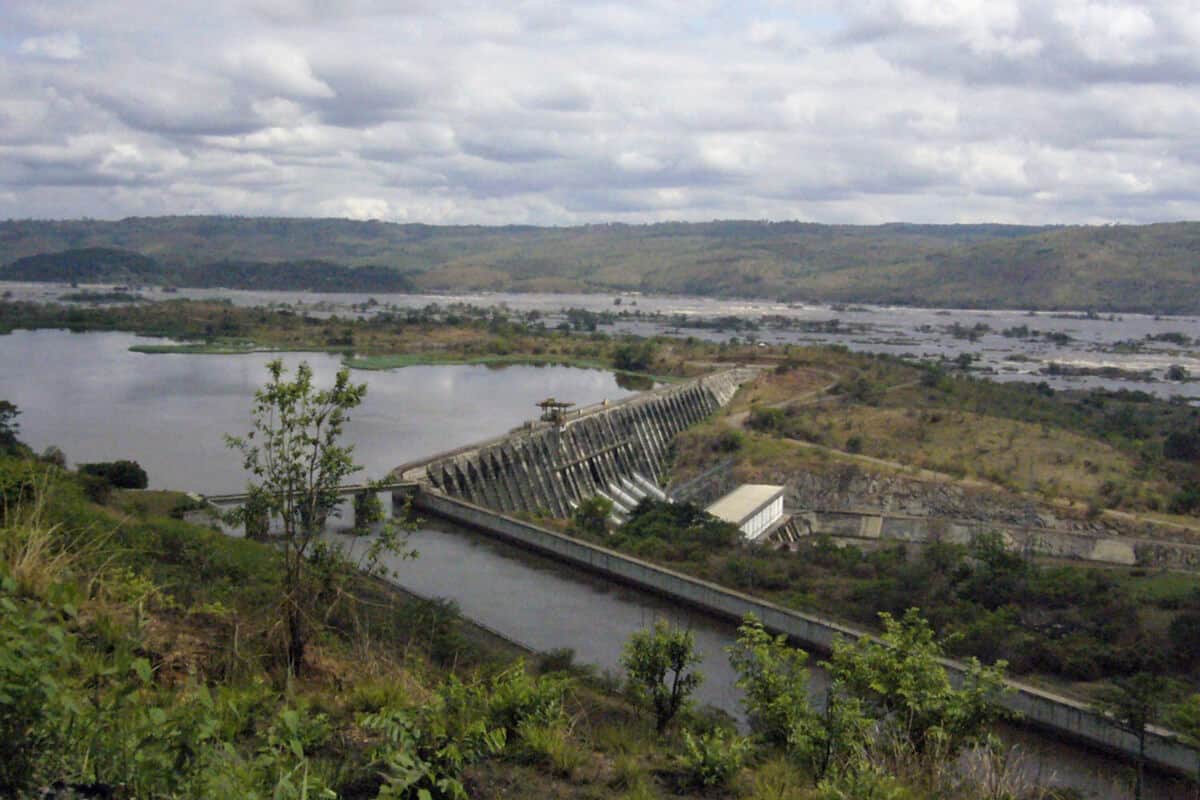
Ethiopia, Egypt, and Sudan have been in negotiations over the filing and operation of the GERD for 10 years. There are fears the dam, located on the Ethiopia-Sudan border, will give Ethiopia control over the river which supplies 90% of Egypt’s water. 

Egypt and Sudan are assured the majority of Nile water rights by a 1923 treaty, but there are concerns that damming the Blue Nile will cause river levels downstream to drop dramatically, endangering Sudan and Egypt’s water and food security. 

Ethiopia’s Ministry of Foreign Affairs said “it needed more time to deliberate on the process” in a February 29 Facebook post. It also stated Ethiopia does not agree with the “characterization that the negotiation on the Guidelines and Rules on the First Filling and Annual Operation of the GERD is completed.” 

With the absence of Ethiopia, the U.S. Treasury Secretary Steven T. Mnuchin held separate bilateral meetings with Ministers of Foreign Affairs and the Ministers of Water Resources of Egypt and Sudan.

After five years of negotiations, Egypt is the first and only country to sign the agreement. Egyptian Foreign Minister Sameh Shoukry echoed the DoT’s sentiments, telling Egyptian TV the deal is “just and balanced.” 

“Ethiopia must realize that the Nile is a river that passes through many countries that have rights and interests closely connected to it,” Shoukry said.

Read also: Sudan to Hand Over Ousted President Omar al-Bashir to the ICC

In response to a question during a US House of Ways and Means hearing on Tuesday, Mnuchin said the dam could be an important resource for the region, but added the US has grave concerns over its impact on regional security and water security. 

“Ethiopia didn’t show up for the last meeting,” said Mnuchin. “Where we are now in Sudan and Egypt have said, which we agree with, that Ethiopia should not fill the dam until there is an agreement and that is a safety issue for 700 000 Sudanese people.”

President Donald Trump has also weighed in on the impasse, reaching out to his Egyptian counterpart Abdel Fattah El Sisi in a phone call on Tuesday. 

A spokesman for Sisi said Trump called to thank Egypt for signing the “comprehensive, fair and balanced agreement”. 

“Trump told Sisi that his administration would continue its sustained efforts and consultations with the three countries on the dam issue,” the representative added.

Despite expressing its displeasure at the US’s impartiality in negotiations, Ethiopia said it will “continue its engagement with the Arab Republic of Egypt and the Republic of Sudan to address the outstanding issues and finalize the Guidelines and Rules on the first filling and annual operation of the GERD.”

COVID-19 Update: New Cases Decline in China, Rise in Middle East and Europe

The disease outbreak appears to have ebbed in China. WHO verified figures showing that since February 26, more new cases are being identified outside of China than in the country where COVID-19 originated in December 2019. 

The WHO’s Director-General said outside of China, 1848 cases have been reported in 48 countries, with 80% of those cases recorded in just three countries: South Korea, Iran, and Italy. Another 12 countries recorded their first cases. 

The number of cases in Iran, the epicenter of the outbreak in the Middle East, has surged, with 2336 cases and 77 deaths as of Wednesday. The response from Iran, whose health system was already strained by US sanctions, has been strongly criticized by local health workers and international observers. 

Ministers and high-ranking officials have contracted the virus, with the head of the country’s emergency medical services, Pirhossein Kolivand among the latest to be diagnosed.

On Monday, the WHO deployed a plane, full of technical experts and supplies to assist Iran’s response to the epidemic. The mission is providing guidance on strengthening and scaling up the response to the ongoing outbreak and delivered personal protective equipment for 15 000 health workers, and laboratory kits to diagnose up to 100, 000 people.  

The number of cases in Italy is also on the rise. The European country has now recorded 80 deaths, the most outside of China. South Korea has introduced drive-through testing to combat the spread of the virus. The Asian country has 5328 confirmed cases of novel coronavirus and  32 deaths have been recorded to date. 

The World Health Organization’s Director-General Tedros Adhanom Ghebreyesus said on Tuesday the organization has major concerns about the availability, supply, and cost of health equipment such as face masks, gloves, and respirators. 

The Director-General said, “We are concerned that countries’ abilities to respond are being compromised by the severe and increasing disruption to the global supply of personal protective equipment – caused by rising demand, hoarding, and misuse.”

“We can’t stop COVID-19 without protecting our health workers,” said Ghebreyesus. 

COVID-19 is not influenza

The Director-General also reiterated that COVID-19 is not seasonal influenza, and despite sharing some similarities, it should not be tested or treated in the same way.

COVID-19 is much more severe. At the time of writing 3.4% of those who contracted the virus have died, compared to less than 1% of people infected with seasonal flu. COVID-19 is a new strain of the virus, meaning no one has immunity, and more people are susceptible to infection. 

The only accurate surveillance system for novel coronavirus is testing for antibodies in large numbers of people. Unlike the flu, there is no vaccine or therapeutic treatment for COVID-19 yet, although vaccines and treatments are rapidly being developed. 

Containment is still possible for COVID-19 and will save lives, the WHO advises. Based on current data, the disease does not spread as efficiently as influenza, and implementation of measures such as quarantine and good hand hygiene could be the difference between a “handful of cases and a larger cluster” in countries recording their first cases.

The Novel coronavirus was first reported in the Chinese city of Wuhan, in Hubei Province on December 31, 2019. 

The WHO states, “COVID-19 is the infectious disease caused by the most recently discovered coronavirus.” 

Symptoms include fever, tiredness, and dry cough. Older people and those with underlying medical problems are most likely to develop serious illness.  

Protection measures recommended by the WHO include practicing good hand and respiratory hygiene, maintaining a distance between yourself and people who are coughing or sneezing, and avoiding touching your nose, eyes, and mouth. 

People are also advised to stay home if they feel unwell and seek medical attention if they have a fever, cough, or experience difficulty breathing. 

Read also: Coronavirus Hits Morocco, Government Confirms First Case

Boy Drowns as Thousands of Migrants Attempt to Reach EU after Turkey Opens Borders

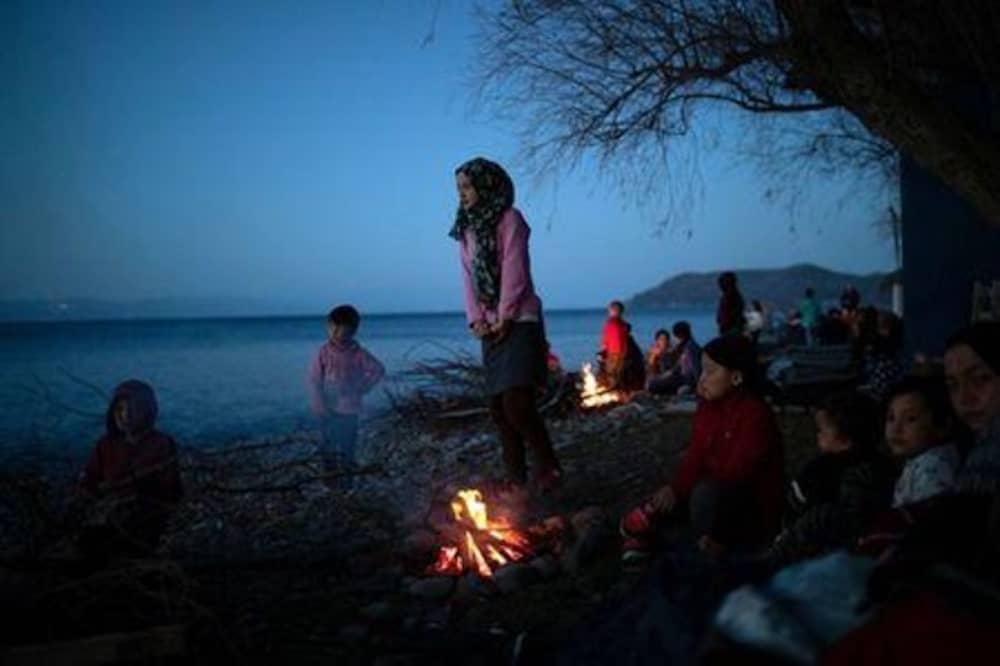
The child died when the boat he was traveling in capsized off the Greek island of Lesvos. The exact circumstances of his death remain unclear.

Greece claims the dinghy carrying 48 people was accompanied by a Turkish vessel until it reached the waters just off the island. A police source on Lesvos told The Guardian the vessel was deliberately slashed to trigger a rescue. 

The inflatable boat’s passengers were rescued by the Greek coast guard who reported that a 6 or 7-year-old boy, believed to be Syrian, was pulled from the water unconscious and could not be revived.

On Friday, Turkey threw open its borders in response to the escalating war in Syria, where 33 soldiers sent to monitor a ceasefire were killed last week. The move has permitted waves of Middle Eastern migrants trying to reach Western Europe to flow into neighboring Greece by land and sea. 

Reuters reports 10,000 migrants have reached Turkey’s land borders with Greece and Bulgaria, and another 1000 have reached Greece’s Eastern Aegean islands since Turkey opened its borders. 

Greece has made clear its borders remain closed and has deployed riot police, elite forces, soldiers, and extra guards to control the massive movement of displaced people. 

Authorities have used tear gas, and water cannons to push back refugees in the ‘no-man’s-land’ at the Kastanies land border crossing. 

A video has also emerged of a Greek coast guard boat apparently running maneuvers aimed at capsizing or turning back an inflatable boat overloaded with passengers trying to reach Greece. 

Greek authorities can also be seen hitting boat passengers with long sticks, most likely boat hooks, in the video circulated by the Turkish government. It is not known if the video is linked to the incident where the boy drowned. 

A Greek spokesman has refuted Turkish President Recep Tayyip Erdoğan’s claims that two people had been killed by Greek soldiers, and a third badly injured. 

Greek Development Minister Adonis Georgiadis declared Greece faces “an organized invasion from a foreign country.”

“Turkey is making use of innocent people in its efforts to destabilize Greece and Europe,” he said.

The latest mass movement of refugees fleeing the Middle East via Turkey, trying to reach Europe is reminiscent of the 2015-2016 crisis. However, it comes at a time when Greek-Turkish relations are already strained over under-sea exploration rights and Turkey’s ‘Line of Defense’ geostrategic policy that disregards Greece’s sovereignty over territorial waters in the Aegean. 

Read also: Palestine is No Longer Arabs’ ‘Primary Cause’

Benjamin Netanyahu Claims Victory in Israeli Elections, Polls Show Majority Unlikely

Exit polls are predicting the right-wing bloc led by Likud will take 59 seats, ahead of opposition center and center-left parties who polls predict will win 54-55 seats.

If predictions are correct, Netanyahu’s grouping will become the largest in parliament but, will still fall short of gaining a 60 seat majority.

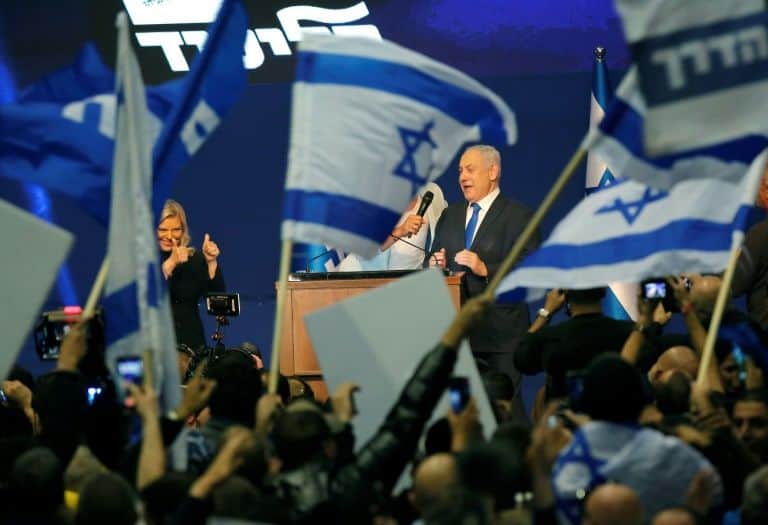
Nevertheless, Netanyahu claimed victory and declared the outcome “the biggest win in my life”.

“What a joyous night,” exclaimed Netanyahu to a cheering crowd at Likud’s Tel Aviv election headquarters. “This victory is especially sweet because it is a victory against all odds … We turned lemons into lemonade.”

Netanyahu also told supporters he would get to work negotiating a new coalition immediately. A return to political deadlock is a possibility, however,  if the Prime Minister once again fails to form a government. Commentators expect some leftists will defect to a Likud-led coalition.

The election result comes two weeks ahead of Netanyahu’s March 17 court date where he will face charges of bribery, fraud, and breach of trust, connected to three separate cases. The Prime Minister has protested his innocence and claimed the charges are part of a politically motivated “witch hunt”.

The third poll in under a year and the pending corruption trial presented the perfect opportunity for Opposition Leader Benny Ganz to wrest power from Netanyahu, who is seeking a record fifth term in office.

Alas, with nearly three-quarters of the ballot counted, it appears highly unlikely that Ganz’ plans will come to fruition He has so far stopped short of conceding defeat but recognized the results are not looking good for his Blue and White party.

Ganz’s supporters were shocked by the vote. Even though he was previously unable to form a government, they had been buoyed by polls putting him slightly ahead as well as the September election results, where Blue and White took 33 seats to Likud’s 32.

“I realize and share your feelings of disappointment and pain, for this isn’t the result that we wanted to happen,” he told supporters gathered at their election headquarters.

He also assured supporters Blue and White would not compromise its principles and wait for final results, affirming an election promise not to partner with Likud to form a majority coalition, as long as Netanyahu remains Prime Minister.

The preliminary results also appear positive for the Arab Joint List party who will be the third-largest with 17 seats this time around, compared to 13 in the last election.

A victory will pave the way for Netanyahu to implement his election promises and annex Jewish settlements in the West Bank and Jordan Valley, home to some 600 000 Jews. The move is backed-up by the United States’ ‘Deal of the Century’ which, in a departure from international law and previous US positions, considers the settlements to be legal.

Read also: Benjamin Netanyahu Claims Victory in Israeli Elections, Polls Show Majority Unlikely