Houthi and Yemeni Forces Signal Possible Cease-fire

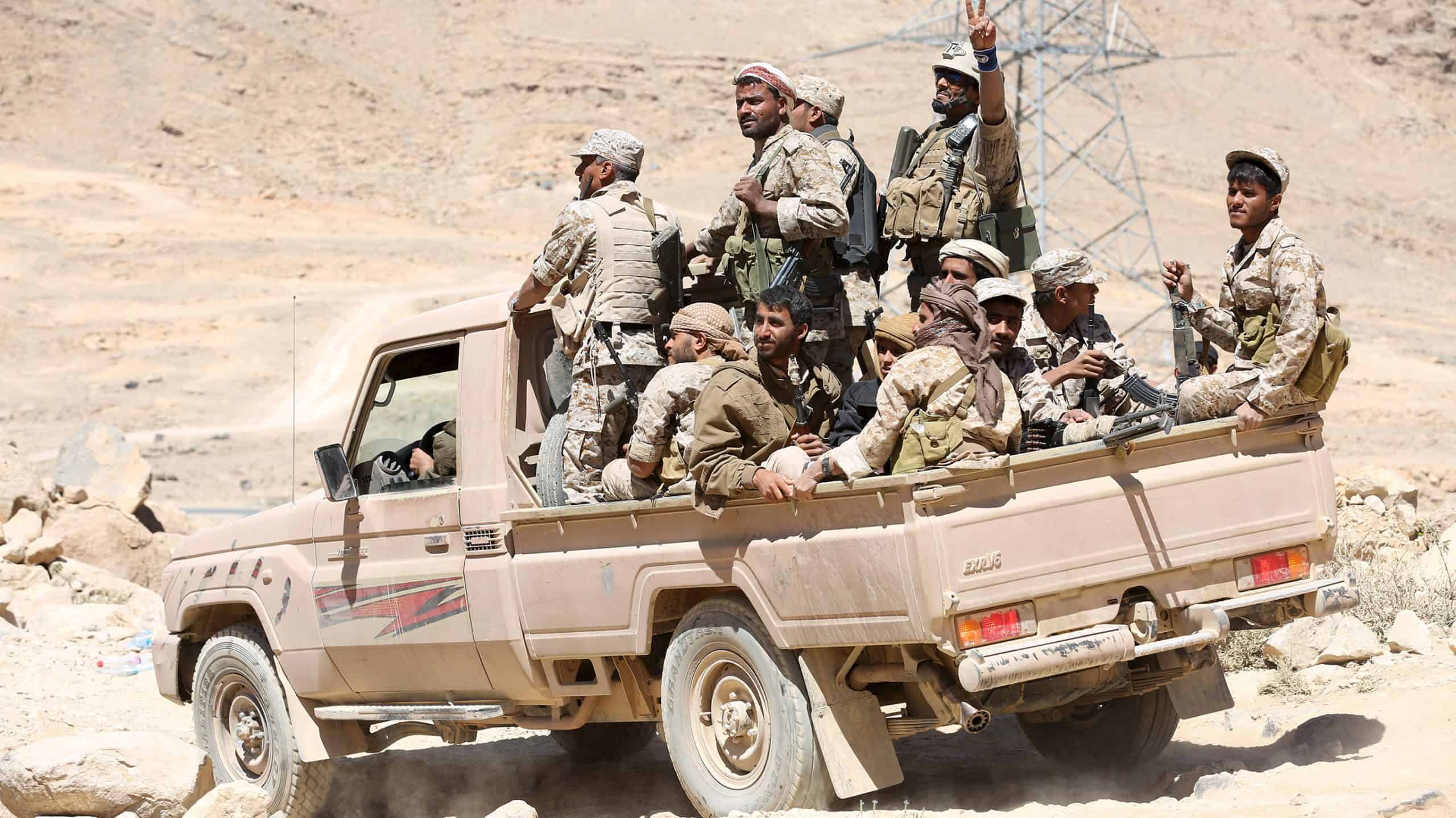
Today, March 26, a glimmer of hope marked the fifth anniversary of the bloody conflict in Yemen. For what many experts consider the worst humanitarian disaster on earth, a temporary reprieve from violence may be on the horizon.

The conflict in Yemen between the Iran-backed Houthi minority and the Saudi-coalition supported national government has been unrelenting and has spared few. 

The country is considered the “worst place on earth to be a woman” by the UN. Hospitals, internally displaced people, and civilian institutions have been regularly targeted. One-third of all airstrikes have hit civilian targets, according to the Yemen Data Project. 

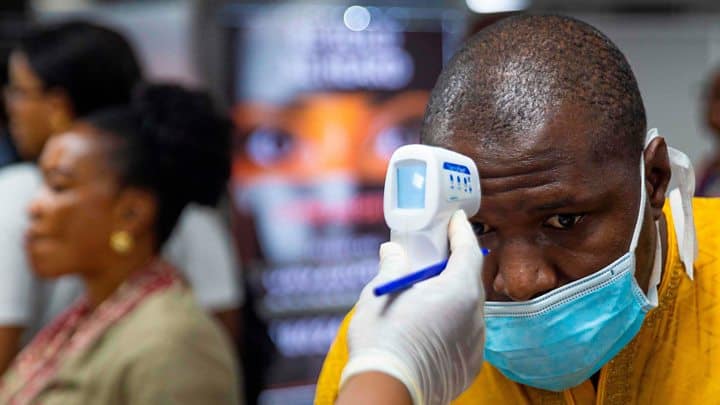
In the midst of this chaos, the coronavirus pandemic has made Yemen’s outlook even more troubling.

Both parties in the conflict have now signaled their support for a temporary ceasefire in order to allow any semblance of a COVID-19 response to emerge, appearing to heed the call from UN Secretary-General Antonio Guterres.

On Tuesday, March 24, after Guterres spoke to the world about the need to have a temporary global ceasefire, a Houthi spokesman announced the Iranian-backed side would support a ceasefire, the Tasnim News Agency reported. The Houthis hoped for a temporary lifting of the blockade on Yemen to allow much needed COVID-19 related medical supplies and equipment to enter the country.

The following day, on March 25, the Saudi-led coalition echoed the willingness to establish a ceasefire.

The development will come as welcome news to those most vulnerable people in Yemen. After five years of bloody fighting and the destruction of almost half of all Yemeni healthcare centers, a temporary truce is in the making. Prior to the conflict, the country’s healthcare was already impoverished. 

Half a decade of shortages and deliberate attacks on hospitals have left Yemen utterly incapable of dealing with a pandemic that is claiming lives in even the strongest of healthcare systems around the world.

Divisions in the splintered alliance between the UAE and Saudi Arabia still pose a threat to a sustainable ceasefire, but, with the world watching, Yemenis can share a moment of desperate hope for a reprieve in the country’s conflict. 

Whether a ceasefire can help limit the spread of COVID-19 remains to be seen, but the absence of airstrikes will undoubtedly be welcomed by civilians throughout the country.


Read also: Libya Announces First Case of COVID-19 as Fighting Continues

Christchurch Attacker Surprises Victims With Guilty Plea, Admits to 51 Murders

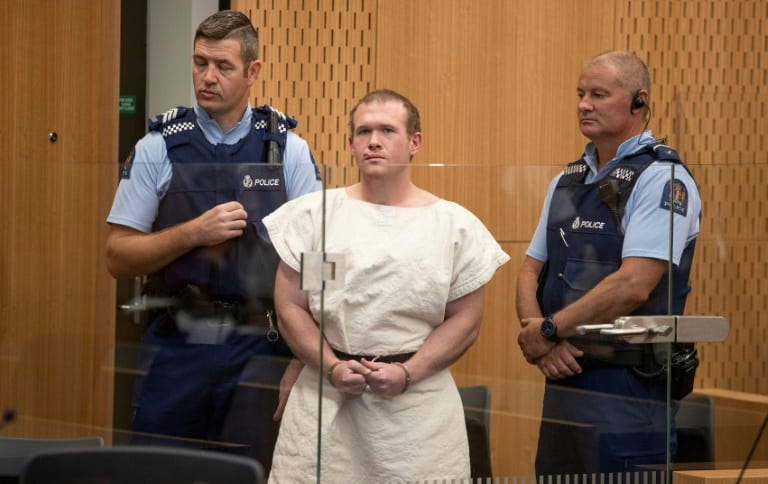
Australian white supremacist Brenton Tarrant admitted to being the lone-gunman responsible for the deadly attack he livestreamed on Facebook. The attack rocked the New Zealand city of Christchurch, and the world, in March 2019. 

Tarrant fronted a hastily arranged special session of the Christ Church High Court on Thursday March 26 via video link. The 29-year old defendant, who had requested the hearing, then shocked the court and small group of observers by changing his plea on all charges from not guilty to guilty. 

“He has been convicted of each and every one of those charges,” said presiding judge Justice Cameron Mander. 

“The entry of guilty pleas represents a very significant step towards bringing finality to this criminal proceeding,” Mander added, according to hearing minutes released by the court.

The lone-wolf attacker’s guilty plea and conviction on 51 charges of murder, 40 charges of attempted murder, and one terrorism charge comes just over a year on from the day his deadly attack shattered New Zealand’s small and peaceful Muslim community. 

Members of the community affected by the attack jumped for joy at the surprising news. 

Ahmed Jahangir was shot in the shoulder at the Linwood mosque and told Australian broadcaster ABC News: “It was quite surprising and quite shocking for me this morning.”

The mother of Hussein Al-Umari who was killed at the Al-Noor mosque said she jumped out of bed and started dancing after hearing the news.

“I just danced to my favourite music with my son’s photo in my hand,” Janna Ezat beamed. 

Ezat said she has been racked with grief since her son’s tragic death, but after hearing the decision she felt the strength to laugh again.

“I’ve been waiting to hear my laugh. I missed laughing,” she said.  

New Zealand Prime Minister Jacinda Ardern welcomed the convicted killers guilty plea, saying in a short statement after the hearing: “The guilty plea today will provide some relief to the many people whose lives were shattered by what happened on March 15 [2019].”

The guilty plea means the victim’s families will be spared the difficulty of a lengthy, public trial, previously set to take place in June. Justice Cameron Mander said the court had agreed to hold the hearing at such short notice to prevent any delays from curbs put in place to slow the spread of COVID19. 

A date is yet to be set for sentencing but New Zealand police have assured victims that it will take place once the thret of coronavirus has passed, and it is safe for them to attend court, if they wish to do so.

“These guilty pleas and conviction bring accountability for what happened and also save the families who lost loved ones, those who were injured, and other witnesses, the ordeal of a trial,” said Ardern, who has praised in NZ and internationally for her empathetic response to the 2019 attacks

“I can’t make any further comment given that sentencing is yet to happen,” she added.

Only seventeen people, including the Imam’s of the two mosques targeted, were able to attend the Thursday court hearing due to novel coronavirus-related restrictions recently introduced in New Zealand. 

On March 15, 2019 Tarrant burst into the Linwood and Al-Moor mosques during Friday prayers and began firing indiscriminately at worshippers, in what became the deadliest terror attack in New Zealand’s history. 

In a move that shocked the world further, he callously filmed and live streamed the events via Facebook. The attack prompted New Zealand to raise its terrorism threat level to high, and governments around the world scrambled to get the video taken off the internet.   


Libya Announces First Case of COVID-19 as Fighting Continues

On Tuesday, March 24, a game-changer in the form of a text alert from the Libyan National Center for Disease Control hit the ongoing conflict. The center had detected Libya’s first confirmed COVID-19 case.

The health minister for Libya’s Government of National Accord (GNA) must have known this moment would come, as he announced new quarantine sites the following day. To illustrate the lack of control he and his government have over the country, explosions could be heard in the distance as opposition forces continued to bombard the capital.

In a televised statement, the ministry announced that a 73-year-old Libyan-man returning from Saudi Arabia had tested positive for COVID-19 and is now receiving treatment in the capital, according to the Libya Herald.

The patient had a high temperature and has been experiencing respiratory issues. He is now in quarantine and being monitored by the National Centre for Disease Control.

After another night of heavy fighting over control of the country’s capital, global concerns over Libya’s civil war are escalating now that the presence of COVID-19 has been confirmed. Libya is ill-equipped to face the impacts of the pandemic, already bringing wealthy nations and global superpowers to their knees.

The continued violence is a grave disappointment after early indications that the call for a cease-fire was being considered by Libya’s warring factions. 

On March 23,UN Secretary General Antonio Guterres had called for a global ceasefire, to focus on limiting the spread of COVID-19. With some indication that the Secretary-General’s appeal is being acknowledged in Yemen, desperate hope still existed for a temporary cessation of hostilities in Libya.

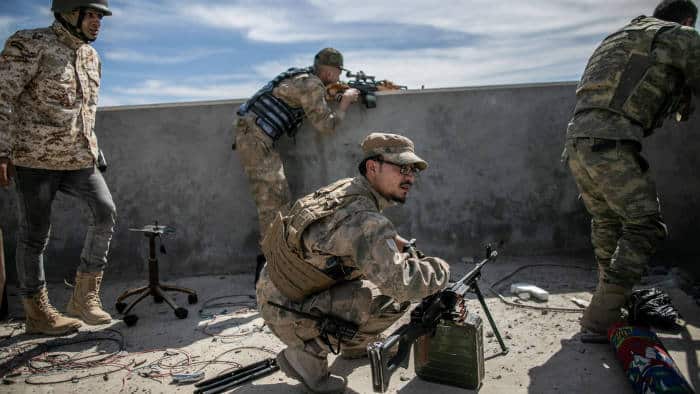
As Libyan medical staff prepared new quarantine sites and trained with recently imported laboratory equipment, airstrikes rattled the city. Meanwhile the Tripoli government’s forces were seen advancing on an airbase controlled by Khalifa Haftar’s forces. Considering the extensive use of mercenaries and the influence of a variety of nations, Libyans themselves hold little sway over the future of their country.

Desperate for assistance and COVID-19 expertise, the Libyan Health Ministry has pleaded with China to send Chinese medics to help limit the outbreak in the country. But, as violence continues, there is little hope to contain the pandemic within Libya’s borders as its porous borders and fragmented areas of control spell disaster for millions of Libyans, refugees, and combatants.  


Read also: UN Secretary-General Commends Humanitarian Pause in Libya Conflict

Turkish Boxers Contract COVID-19 at London Olympic Qualifier

The Boxing Federation’s website announced that three team members, two boxers and a coach, tested positive for COVID19 on March 24.  All three team members attended the Boxing Road to Tokyo European Qualification tournament that began behind-closed doors in London on March 14. The event was canceled after just three days of fighting.

“Our national athlete Serhat Güler is currently in good condition at the hospital in Istanbul. He will be discharged from the hospital within three days. Our trainer Seyfullah Dumlupınar also underwent treatment at the local hospital in [northeastern Turkish province of] Bayburt,” said a statement from the Turkish Boxing Federation Chairman Eyup Özgeç published on the organisation’s website.

All other Turkish team members who attended the event are now in mandatory 14 day home-quarantine. To date, there are 2348 active cases of COVID19 in Turkey and there have been 59 fatalities from the disease, according to Johns Hopkins Medical modelling.

Eyup has since lashed out at the IOC, calling them “irresponsible” for allowing the event to go-ahead amid the coronavirus pandemic.

“While the whole world was taking extreme measures to deal with the virus, I am baffled that an IOC taskforce and the British government allowed the tournament to start even though many of us had concerns and almost every other sport had shut down,” Eyup told The Guardian on March 25.

Eyup, also the European Boxing Confederation Vice President, took issue with what he claims were insufficient medical precautions at the venue and hotel that housed participants. He is planning to make an official complaint to the IOC, the Guardian reported.

“This virus has been around since December 2019. Therefore, it is inevitable to ask why the European qualification event was not postponed before it even took place? They did not consider anyone’s health, which led them to organise this horrible event,” he said 

The IOC is yet to comment on the positive tests but a spokesperson provided a brief statement on the developments saying, “for understandable reasons we will wait to receive the details from those concerned before making an informed comment.”

The IOC Boxing Task force gave the green-light for the qualifier to go ahead at London’s Copper Box Arena despite the European Boxing Confederation President Franco Falcinelli saying he was “very concerned” about the event due to the “very high” chance of participants getting COVID-19.  

In addition to COVID-19 contamination, the Road to Tokyo qualifier had a financial sting in the tail for the countries involved. According to Eyup, they had all been asked to pay upfront for the 15 day competition and given it was cancelled after just three days, he would like to know if a refund from the IOC is on the cards. 

“I am of the deepest conviction that it is time the IOC taskforce gives us a definitive answer on what is going to happen to all of us countries’ hard work and money?” Eyup asked. 

The event drew 350 male and female boxers from 40 countries. Of the hundreds of particpants16 realised their Olympic dream by qualifying for Tokyo 2020, yet the two Turkish athletes’ lives and Olympic aspirations now hang in the balance as they battle COVID-19. 

It remains to be seen if other athletes and support staff who attended the Copper Box Arena will test positive for the novel coronavirus. On a positive note, the IOC confirmed Tuesday that the Tokyo Olympic Games 2020 would be postponed until 2021 meaning the athletes may still be able to recover and qualify for the Games. 


Read also: Latest Coronavirus Victim, Tokyo Olympics 2020, to be postponed to 2021

COVID-19 Will Have Specific Impacts on Middle East

With millions trapped in self-isolation, enforced quarantines, and a growing number of infections, the Middle East is bracing itself for the economic impact of the novel coronavirus. An analysis by International Monetary Fund (IMF) Director for the Middle East and Central Asia Jihad Azour provides some insights into the regional issues that will emerge as a result of the COVID-19 pandemic.

Several sectors of the region’s economies face significant difficulties. The service sector is a major employer in most Middle Eastern and North African countries, and current reductions in the tourism, hospitality, and retail sectors are hitting hard.

Production and manufacturing faces an extreme slump as global supply and demand have collapsed and supply lines are disrupted. Manufacturers in the region are canceling and postponing investments in the current atmosphere of uncertainty. The pandemic’s spread has weakened consumer and business confidence.

Two scenarios face MENA countries, based on whether the state imports or exports oil. Oil exporting countries will see reduced revenue from business taxes, which results in government budget gaps. Countries that import oil will suffer from the reduced demand for goods and services and could feel the reduction in remittance transfers from citizens abroad.

Capital flight is a risk for both oil importers and exporters. Current global market volatility drives investment away from the region and into investments that international investors consider safer. The timing of the current crisis is unfortunate for the region: Payment on a combined $35 billion in maturing debt is due in 2020.

IMF provides recommendations for hard-hit countries.

The IMF recommends prioritizing policies that mitigate the pandemic’s public health threat, first and foremost. The IMF supports protecting the public through strong mitigation and containment efforts, and highlights the need to strengthen national health systems and social safety nets.

Primarily, countries should avoid economic policies that could turn the pandemic into a longer recession. Through a mix of “timely and targeted” policies on hard-hit sectors and people, the IMF recommends cash transfers and tax relief to alleviate current financial difficulties.

On a smaller scale, the IMF recommends that governments provide temporary fiscal support for households and businesses affected by the crisis. Central banks should provide liquidity to banks, especially those that loan to small and medium businesses.

After the pandemic and its resulting economic slump pass, oil importing countries will have large deficits. The IMF recommends striking a balance between easing credit conditions and avoiding vulnerability to capital outflows, possibly through creative use of exchange rates.

Where countries are unable to independently recover, the IMF offers support. The monetary fund is already advising and assisting regional authorities, and has tools available to assist countries in dire need. 

Countries can apply for emergency financing, change the terms of existing lending programs, or receive grants for debt relief. The IMF is also offering new financing arrangements, and is processing new requests from 12 countries in the region. 

Above all, Jihad Azour stresses the importance of solidarity: “Now, more than ever, international cooperation is vital if we hope to prevent lasting economic scars.”


Read also: Europe Urges IMF to Support Iran and Venezuela

‘Butcher of Khiam’ Flown to US Directly After Release

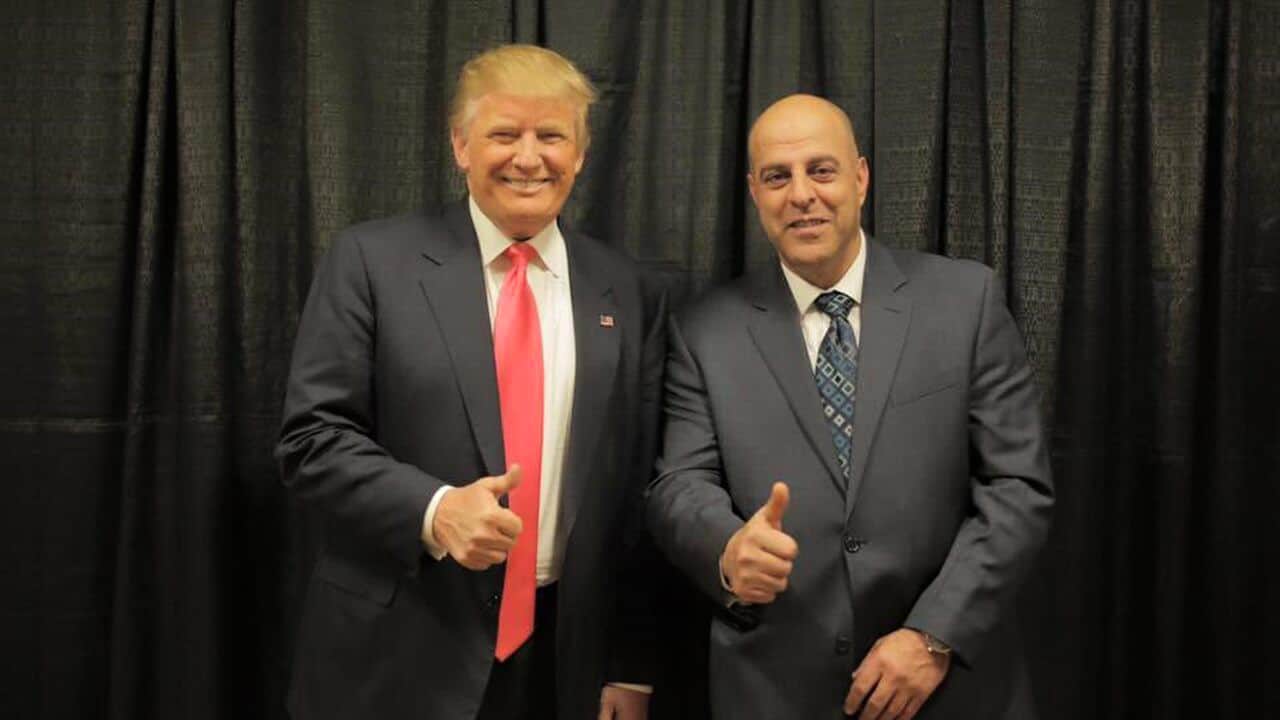
On Thursday, March 19, Donald Trump stepped up to the lectern of the White House press center with news to share: An American citizen was released from a foreign prison and was on his way “home.” President Trump highlighted US citizen Amer Fakhoury’s battle with cancer and thanked the Lebanese government for allowing Fakhoury to spend the remainder of his life with his family.

A US military plane landed at the US Embassy in Beirut to airlift Fakhoury out of the country hours after his release.

The urgency stemmed from Fakhoury’s reputation as “the butcher of Khiam” for his actions as head of a prison during the Israeli occupation of Lebanon.


For over a decade, Khiam Detention Center functioned as a prison for opponents of the occupying Israeli forces. The South Lebanon Army, an Israeli proxy, ran the facility that was used to torture prisoners. Accounts from author Robert Frisk, several eyewitnesses who spoke to l’Orient le Jour, and Human Rights Watch describe horrific torture methods.

Accounts detail how the “butcher” got his title.

Amer Fakhoury’s role in these practices appears often in reports. Afif Hammud, a Khiam survivor, recalled, “They used to whip our bodies with electrical cables until our skin got lacerated. Amer Fakhoury was the one who orchestrated the torture sessions.” 

Hammud described some of the inhumane ways he was treated under Fakhoury’s instructions: “They put me in a dungeon that was 75 cm wide and 75 cm high. Five hours later, I felt like my body broke into a thousand pieces. During the torture sessions they would operate a noisy engine in order to cover our cries of pain and to make sure that the residents living nearby would not hear.”

Many accounts of torture at the prison are too extreme to publish, but the prison’s function and Fakhoury’s role in orchestrating torture made his name notorious in Lebanon.

After Israel withdrew its forces from Lebanon, Fakhoury fled to Israel and did not visit his country of birth for the following two decades.

After a general amnesty was announced for Lebanese collaborators during the Israeli occupation, Fakhoury returned to Lebanon in 2019 to visit family. Border agents stopped Fakhoury and confiscated his passport. Public outcry on social media over Fakhoury’s return to the country eventually prompted his arrest. 

The general amnesty applied to his role as a collaborator, but a collective of lawyers and former Khiam prisoners filed a complaint with the Public Prosecution Office in response to accusations of persistent atrocities, according to Arab News. Crowds of protestors seeking justice came in crowds to Fakhoury’s military court trial.

Fakhoury was released and airlifted out of the country one year later. The Trump administration had threatened sanctions on Lebanon, a country buckling under financial and medical crises. US Senators Ted Cruz and Jeanne Shaheen had prepared a bill of sanctions for Lebanon specifically working to force Fakhoury’s release.

We know little about the specifics of Fakhoury’s release. The rapid evacuation and the shocked responses from Khiam victims indicate this was a well-planned US intervention, assisted by Lebanese officials desperate to avoid sanctions on the already crippled nation. 

Many in Lebanon consider the release a betrayal of justice. Vigilantes expressed frustration in Lebanon’s streets, and murdered one of Fakhoury’s associates in broad daylight the weekend following the controversial release.

Qatar Airways Keeps Flying as Other Transit Hubs Close

The United Arab Emirates international transit hubs of Dubai and Abu Dhabi fell silent on Wednesday March 25 as the country’s suspension of all passenger flights came into force. 

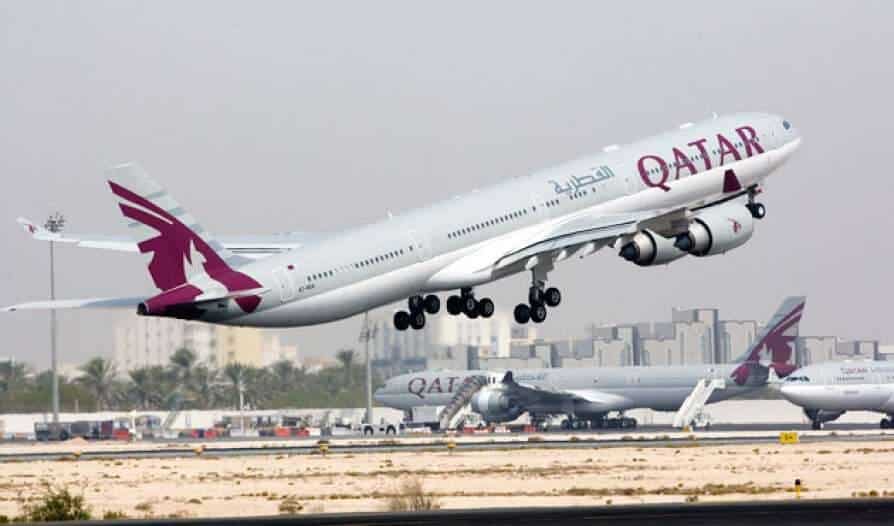
Rival Gulf carrier Qatar Airways has seized on the opportunity presented by the shutdown and is expanding its services to keep up with the demand from travelers desperate to return to their home countries as the novel coronavirus (COVID-19) pandemic accelerates.

Their decision to keep flying, however, raises serious questions over whether they are putting passengers, staff and crew safety at risk to reap the financial rewards of maintaining operations when other carriers have made the sensible decision to scale-back.   

Qatar Airways has reinstated some routes and is currently running 150 flights a day to 70 destinations worldwide including cities in some of the country’s worst-hit by the deadly virus such as Tehran, Rome, Madrid, Berlin and Paris. 

“It’s clear there is such a very strong desire amongst people all over the world to get home, so that is what we are wholly focused on right now – how can we get people home from right around the world,” Qatar Airway’s Chief Commercial Officer Simon Talling-Smith told Executive Traveller on March 25.

In light of this, the airline announced via its Facebook page on March 25 that it will be, “upgrading aircraft to 12 global destinations, including Perth, Paris, Frankfurt and London, as well as reinstating our Airbus A380 where possible.”

Qatar has recorded 526 confirmed cases and 41 recoveries from coronavirus, according to Johns Hopkins University modelling. The global number of cases now exceeds 440 000. 

“We’re changing things almost by the day, but across the board we are increasing the amount of flying we are doing, with both larger aircraft and more frequencies and some more destinations,” said Talling-Smith.


Read also: Qatar Locks Migrant Workers in Squalid Labor Camps to Prevent COVID19 Spread

Inside a Drastic Lockdown : Living and Working through Confinement in Jordan

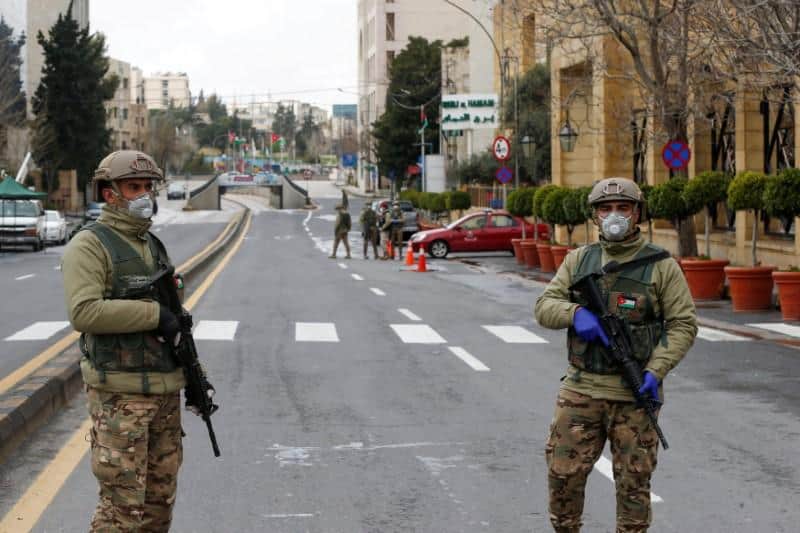
Sirens sounded across Jordan at 7:00 am on Saturday March 21 to mark the beginning of the country’s indefinite novel coronavirus (COVID19) induced curfew that has since been loosened slightly. 

The government originally promised to update citizens on March 24 about when they would be able to leave the house again to purchase necessities, instead, the government deployed trucks to distribute only the most basic commodities – bread and water.  

After four days of hunkering down in their homes waiting for an update on the curfew conditions, Jordanians finally received a highly anticipated reprieve on Tuesday March 25. Prime Minister Omar Razzaz announced that the curfew would be lifted from 10am-6pm on Wednesday March 25 to allow people to leave their homes to visit foodstuff stores, pharmacies and water sellers. 

“Today, we have developed a comprehensive plan and a timetable to provide citizens with their basic needs with the opening of the service for delivery to authorized service providers from large supermarkets starting next Thursday, and delivery mechanisms will be announced,” Razzaz said. 

The Prime Minister empathised with Jordanians, saying “I fully understand the state of anxiety and tension among some and your need to secure your household supplies of food, bread, water, medicine and fuel. I also understand that the curfew is an abnormal and unusual situation for Jordanians in this safe country and has negative and psychological repercussions for us all.”

Following Razzaz’s declaration, Minister of State for Media Affairs Amjad Adaileh reiterated stressed the “new measures do not mean lifting the curfew, and individuals will only be allowed to purchase their basic needs, on specific dates, and at short times.”  The BBC reports some 1600 Jordanians have already been arrested since Saturday for falling foul of the stringent curfew. 

Jordan’s coronavirus tally stands at 153 confirmed cases after Minister of Health Dr Saad Jaber reported that 26 new infections had been recorded around the Kingdom on Tuesday. 

The Danish Refugee Council’s Economic Recovery Manager Rahul Mitra told Arabia Policy that he had been well prepared for what he called a “drastic” shutdown. However he is concerned about the impact the shutdown will have on vulnerable Jordanians as well as the refugees and asylum seekers who make up approximately 10% of the country’s population.  

“I did stock up quite a bit in preparation and I’m fortunate enough to be able to go to a grocery store and have enough cash at hand and savings that I can pull from. But there’s a lot of questions whether refugees and asylum seekers can service their needs, and if they have liquidity at the household level to actually buy supplies,” said Mitra, who has been stationed in Jordan since November 2019. 

The curfew has shuttered the NGO’s seven service centres that normally function as offices and important community hubs for vulnerable populations across the Kingdom. 

Mitra said service provision had now switched from economic development initiatives like helping single-mothers to build small business or vocational education for young Syrians, to providing emergency assistance.  

“Right now we’re looking more into providing direct cash assistance to beneficiaries so that they at least have enough liquidity that they can get food and medicine,” said the Economic Recovery Manager. 

He also stressed that, “when you’re already struggling to make ends meet, you’re not going to be investing towards the business…your main concern is just to put food on the table and make sure your basic necessities are met.”  

That raises a further challenge for aid agencies of how to actually get the cash assistance to those in need. Normally, pre-loaded ATM cards or cheques would be used, but now Mitra said the curfew has forced his organization to consider other options. 

“We’re trying to look into e-wallets, direct mobile to mobile transfers so they’ll at least have that money virtually to pay their bills, to go to the grocery store, and to use mobile money to make those purchases,” he said. 

Mitra, who has extensive experience managing projects that provide technological solutions to communities in poverty, warned that virtual alternatives come with their own set of problems. Technology literacy is one, household power dynamics are another, because “if there is one cell phone in the house it usually belongs to the male member and if you transfer directly to this person, then they might not make the best investment for the household.”

The seasoned International Development expert also predicts the contraction in trade between Jordan and its biggest trade partner the European Union, as well as neighbouring countries caused by the COVID-19 pandemic will “lead to a snowballing effect to the Jordanian economy.” 

“I think even if Jordan is able to manage the immediate effects of the COVID-19 outbreak by inflicting all these drastic measures there’s still going to be follow-on effects because the international markets are closed now and the supply chains are affected. Time will only tell, but I think the problem is going to be long term,” Mitra said pessimistically. 

On the positive side though, he said the non-governmental sector was working well together to come up with “out of the box” ways of overcoming the “unusual circumstances” created by the pandemic. 

“Here in Jordan the different organisations coordinate really well, we are always on calls with not just the Danish Refugee Council but all the other organisations trying to figure out how we can solve this problem together. How do we ensure that we’re all complimenting each other’s work and not duplicating efforts, and sharing any learnings and best practices. That’s been a really good thing here in Jordan compared to other places.”

More broadly, Mitra was circumspect but hopeful that COVID-19 would raise the world collective awareness of how easy it is to go overnight from safety and security to a position of extreme vulnerability. 

“The hope is that more and more people are going to realise how vulnerable their institutions are to a situation like this. How, as a society, we have made huge advancements in technology but we have invested so little in what really matters the most and in protecting the most vulnerable.

“Hopefully because this crisis is not happening in a faraway “underdeveloped” country and is on everyone’s doorstep, it is going to get people to empathise with the situation that has been endemic in most of the developing world. 

“Only time will tell if that actually materialises or if that’s wishful thinking,” he concluded. 

 

Read also: Global Institutions: COVID-19 Will Impact Every Facet of Life

Netanyahu Ally Bows to Pressure, Resigns Parliamentary Presidency

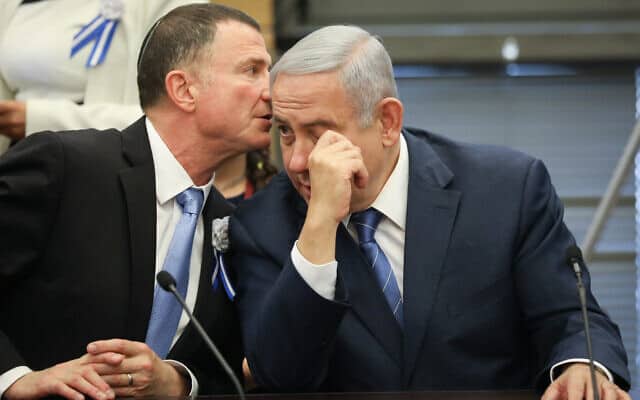
Knesset Speaker Yuli Edelstein submitted his resignation on Wednesday, March 25. The announcement came just hours before the High Court of Justice’s deadline, which was set to allow elections for a successor. The move comes as a political blow to Prime Minister Benjamin Netanyahu.

“As someone who has paid a personal price of years in a labor camp for the right to live in the State of Israel, as a Zionist and as the speaker of this house, I won’t allow Israel to descend into anarchy, I won’t lend a hand to civil war,” Edelstein, who spent three years in a Soviet gulag, said in a statement.

Edelstein cited the novel coronavirus crisis and Israeli leader Reuven Rivlin’s call for a “national emergency government” as reasons for delaying a vote for the speaker position, following an inconclusive national election on March 2.

Edelstein referred to five Likud party justices who told Edelstein late Monday night, March 23, that he must yield to a vote for his successor no later than Wednesday.

Edelstein attacked the Israeli Supreme Court, saying that the decision destroys the parliament’s work and violates its sovereignty.

The decision “constitutes blatant and rude interference in the affairs of the elected legislative authority” and “undermines the foundations of Israeli democracy,” Edelstein added.

“The Supreme Court’s decision is a wrong and dangerous decision,” the former speaker continued, stressing his position that Israel needs a unity government.

Edelstein’s resignation has significant implications.

Prior to his resignation, Edelstein rejected the opposing Blue and White party’s request to set a session to elect a new Speaker of the Knesset. The Israeli Supreme Court issued a decision obliging Edelstein to resign to allow elections by Wednesday, March 25.

The opposition party holds 61 seats in the 120-seat Israeli Knesset. The majority could allow opposition members to choose a new Speaker of the Knesset from outside the Likud party, which has dominated Israel’s parliament since 1973.

Observers note that removing Edelstein from the Knesset will weaken Netanyahu’s position. The prime minister’s rival, Benny Gantz, was tasked with forming the government in the wake of elections that took place on March 2.

The Blue and White party seeks to control the parliament and oversee the Israeli government’s response to the coronavirus crisis. 

The party is pushing for legislation that would prevent a Knesset member facing criminal charges to become prime minister. This would block Prime Minister Benjamin Netanyahu, who has been indicted on three criminal counts, from his goal to form a new government.

Justice Minister Amir Ohana limited Supreme Court sessions as a social distancing measure in the wake of the COVID-19 crisis, which effectively delayed Netanyahu’s trial until May.

Right-wing Israeli representatives loyal to Netanyahu boycotted the Knesset’s session on Monday, March 23, in response to the Blue and White party’s “dictatorial behavior.”


Read also: Netanyahu Calls for Forming of Emergency Government in Face of COVID-19

Europe Lacks Capacity to deal with Economic Fallout From Coronavirus

“When COVID-19 arrived on the scene, it found a global capitalism that was sitting on a gigantic bubble of private debt that had been minted by central banks on behalf of financial capital,”Yanis Varoufakis, former Greek finance minister and economist and co-founder of the left-leaning Democracy in Europe movement (DiEM25) said. 

Varoufakis became well-versed in economics in times of crisis. His spell in Greece’s government gave him first-hand experience of its debt crisis following the 2008 economic downturn. 

Sharing his thoughts on the economic ramifications on the coronavirus pandemic, Varoufakis emphasized that the current economic crash is still part of the 2008 meltdown. “COVID-19 has pricked the bubble on which financial capitalism was sitting,” he warned, while highlighting that the EU’s capacity to combat the current economic fallout is extremely limited.

Europe’s fiscal policy, as outlined by President of the European Central Bank Christine Lagarde last week, intended to steady the nerves of the markets, but instead “failed spectacularly” Varoufakis said. 

Lagarde signaled that the capital required to prop up markets had been spent in the post-2008 era, with the ECB’s current negative interest-rates unable to lower further. “It is at the end of its tether” Varoufakis explained, Lagarde “looked prime-ministers and presidents in the eye and said it’s your job now to borrow and spend”. 

The latest Euro-group meeting stated that the pandemic poses a clear and present danger to recession in Europe, “the urgency was so great, that they decided to do absolutely nothing” the economist said to highlight European disunity and EU bureaucratic flaws.

The current crash and the 2018 solution

Varoufakis identifies two factors that led to recovery in 2008. The US central bank, the Federal Reserve extended dollar swap-lines, effectively giving dollars to foreign governments to cover losses. This activity, combined with strong economic performance in China had provided the foundation for recovery. The two factors allowed the IMF and central banks in Europe to shift “gigantic amounts of losses of private banks onto the shoulders of the weakest taxpayers,” which Varoufakis called “Socialism for the very very few and harsh austerity for the many”. 

Both pillars of the 2008 recovery today are highly depleted, according to the economist. China is in no position to produce an economic boom, with its economy impacted by the Chinese COVID-19 outbreak and a severe slump in global demand.

The Federal Reserve could again offer dollar swap-lines to foreign governments, but the Trump administration might be less likely to support foreign governments, and might try to attach strings to support which could lead to “an even deeper recession” that would impact the entire world according to Varoufakis.

Structural problems

Varoufakis also admonished the decade-long move towards private healthcare. Private healthcare during this crisis resembles “rats leaving the ship,” according to the economist, who highlights how private healthcare providers have been pushing COVID-19 care to public health services. Having made healthcare ‘efficient’ over the years means there are few spare hospital beds or medical staff available in times of emergency.

Varoufakis has little trust in policy-makers’ ability to address the crisis. “The European Union has never been less competent than it is now, the European Union has never been less capable of acting as a union,” he noted. He sees the ease with which the markets collapsed in the face of the pandemic as evidence of deeper issues. According to Varoufakis, the inability of EU countries to deal with problems unilaterally has strengthened nationalism and encouraged people like Boris Johnson.

The economist said an insistence on austerity-based policies has weakened the possibility of any practical recovery , the economist hopes that through the movement he co-founded he is hoping to provide proposals that could have a ‘real’ impact.

The former economic minister sees the only way out of this crisis in massive investments in green technology and ‘green jobs’ and a significantly different way of approaching politics in Europe.  


Read also: Europe Urges IMF to Support Iran and Venezuela