“Mecca Girl” Faces Arrest, Racist Backlash in Saudi Arabia for Rap Video

Asayel Slay, a female rapper of Eritrean origin, recently released a song and music video called ‘Bint Mecca,’ or Mecca Girl, singing the praises of the holy city’s women, who she says are like “sugar candy”.

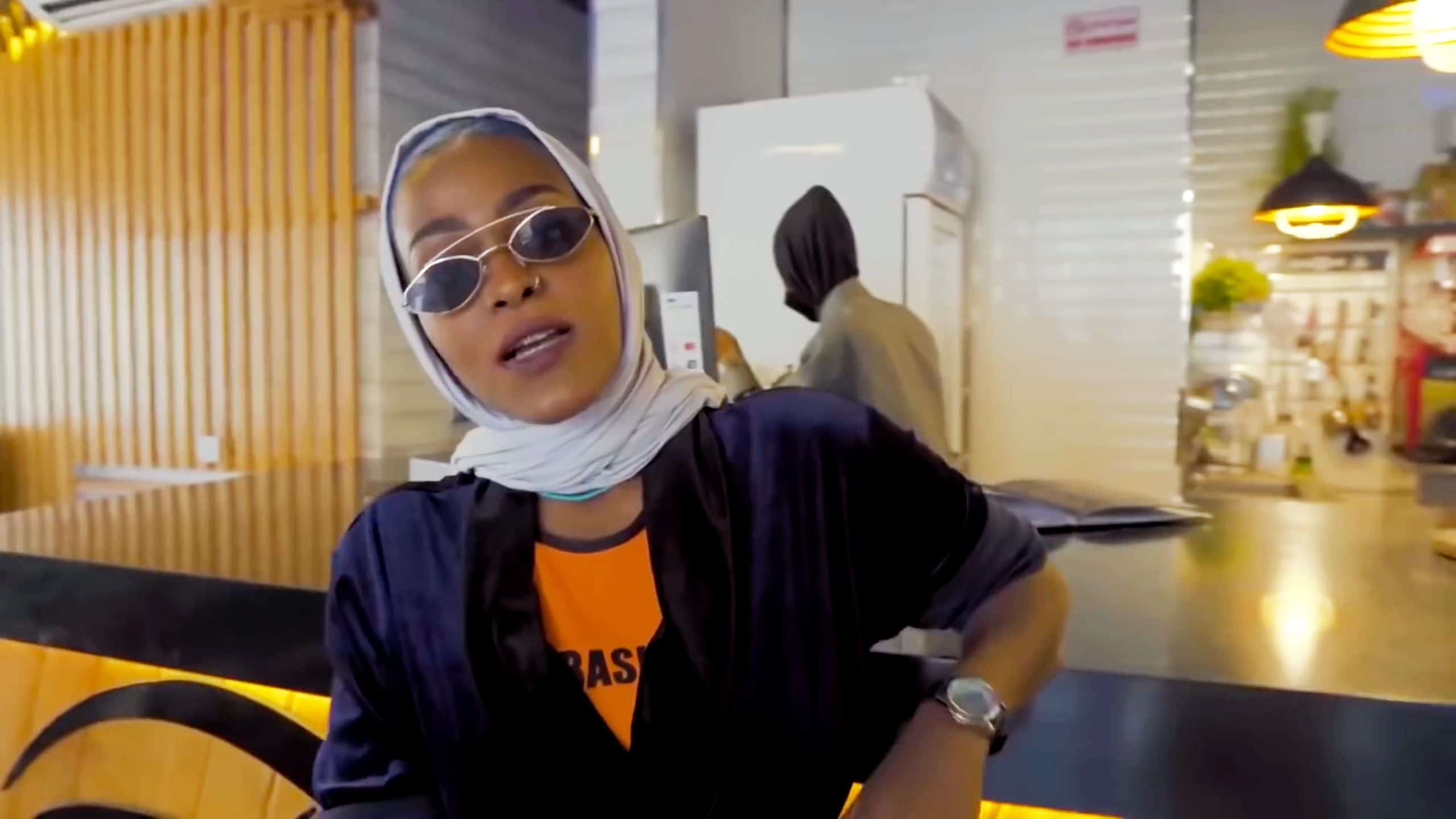
In the clip, Asayel moves around the trendy cafe in a hijab and loose-fitting outfit, and raps in Arabic, as enthusiastic young back-up dancers break-it down behind her. She sips on fresh juice and spits bars extolling Mecca girls’ many virtues.

Following a well-known rap tradition, Asayel expresses pride in her home town signing, “Our respect to other girls but the Mecca girl is sugar candy.”

“A Mecca girl is all you need/Don’t upset her, she will hurt you.”

“With her, you can complete the Sunna [get married]/Your life with her will become Paradise,” she boasts

Asayel uploaded the video to her youtube channel and it was shared widely, receiving over 1.6 million views before it was removed.

Unfortunately, a young black woman rapping about women from Islam’s holiest site angered some users, leading to Asayel’s account also being suspended. The video continues to circulate on other channels and platforms.

Asayel’s lyrics are a far cry from the highly-sexualized, obscenity-laden bars in most rap songs. “Bint Mecca” does not include a single obscenity, reference to drug use, nudity, insults, or even references to smoking.

Asayel Slay’s song also drew the ire of Mecca’s governor. On February 20, local authorities in Mecca called for Asayel and anyone involved in producing the clip to be arrested in a tweet on the @mekkahregion account.

“Prince Khalid bin Faisal of Mecca has ordered the arrest of those responsible for the Bint Mecca rap song, which offends the customs and traditions of the people of Mecca and contradicts the identity and traditions of its esteemed population,” the tweet said.

It also included the hashtag #You_Are_Not_Mecca’s_Girls, sparking a heated debate on Twitter. The social media platform was quickly overrun with disparaging tweets, many openly racist, saying foreigners must respect local customs, that Asayel should be deported, and that her words and video do not represent Mecca’s women.

Prominent thinkers like liberal Muslim feminist Mona Eltahawy, using the hashtag #Mecca_Girl_Represents_Me condemned the Saudi regime’s hypocrisy and “the anti-Black racism and misogyny’ Asayel has been subjected to.

Sydney-based Saudi activist known as ‘Ms. Saffaa’ jumped to Asayel’s defense tweeting “I am from Makkah & the only thing I find offensive is ur racism, misogyny, and ur war on a young woman & her artistic expression of her culture & her people. #لستن_بنات_مكة

“This is so typical of the Saudi government to do – bring western influencers to artwash the regime but attack real Saudi women who try to artistically express their cultural identities,” tweeted Saudi-American activist Amani Al-Ahmadi.

“How do you explain calls to arrest Black Saudi woman rapper & misogynoir thrown at her in the country that invited Nicki Minaj to perform?,” said Eltahawy to her followers.

In a bid to shake off the country’s ultra-conservative image and open up to the international community, Saudi Arabia has actively encouraged foreign artists to perform, inviting the likes of Janet Jackson, Mariah Carey, and Nikki Minaj.

American rapper Nicki Minaj, renowned for her daring, barely-there outfits and highly explicit lyrics, canceled a scheduled performance in Jeddah last July citing the country’s poor record on women’s rights, LGBTQ rights, and freedom of expression.

Mecca Girl seems to be the latest troubling incident of censorship in Saudi Arabia. Media outlets are tightly controlled in Saudi Arabia and, due to the level of anonymity the platform affords, Twitter has emerged as a quasi ‘town square’ that allows residents to share news and views with a level of freedom not granted in other parts of society. In response, Saudi authorities have attempted to shape the information on Twitter.

In November 2019, Twitter employees Ali Alzabarah and Ahmad Abouammo, and marketing official Ahmed Almutairi, who has links to the Saudi royal family, were indicted in the US for accessing Saudi Twitter users’ private data.

Saudi government officials allegedly recruited and paid the trio large sums of money to access information like email addresses, phone numbers, and user’s locations. “Saudi agents mined Twitter’s internal systems for personal information about known Saudi critics and thousands of other Twitter users,” said US lawyer David Anderson.

Within weeks, Twitter suspended 5,929 accounts linked “to a significant state-backed information operation on Twitter originating in Saudi Arabia,” the tech company revealed in a December 20 blog post.

“Our internal analysis shows the network was involved in various forms of platform manipulation, targeting discussions related to Saudi Arabia and advancing their geopolitical interests on the world stage.

According to Twitter, the 5929 suspended accounts were part of a broader network of 88 000 “spammy accounts” responsible for amplifying pro-Saudi messages through “inauthentic engagement tactics such as aggressive liking, Retweeting and replying.”

Twitter also divulged that its investigators had traced the coordinated operation to Saudi Arabia-based social media marketing company Smaat, who created, purchased or managed the spam accounts on behalf of their clients who happen to include “high-profile individuals, as well as many government departments in Saudi Arabia”.

Smaat is owned by a man called Ahmed Aljbreen, but US authorities have declined to say whether it is the same Aljbreen who was indicted in November for involvement in a Saudi operation to access Twitter user’s private data.

Saudi activist Manal al-Sharif, who now resides in Australia, famously quit Twitter in 2019 over her personal safety concerns. Mecca-born al-Sharif rose to prominence for leading the #Women2Drive movement in Saudi Arabia and was imprisoned for ‘driving while female’.

In a blog post explaining her decision to quit Facebook and Twitter, Al-Sharif wrote, “Twitter, the platform that once saved my life, is now putting it in danger”.

“Twitter, which was once a tool to change the discourse, give voice to the voiceless and push for social justice, is now becoming a trap — one that is used by our regimes to haunt and silence us. It is being used to propagate misinformation and spread regime propaganda on a greater scale than ever before,” said al-Sharif, who is also an information security expert.

Amnesty International shares al-Sharif’s concerns, reporting Saudi Arabia’s Specialized Criminal Court has been used to muzzle critical Twitter users. According to the Muzzling Critical Voices report released in February 2020, Saudi Arabian Human rights defenders, Issa al-Nukheifi and Essam Koshak have been convicted of “posing a threat to public order through their writing, including posts on Twitter.”

“The Saudi government’s rhetoric about reforms, which increased after the appointment in June 2017 of Mohammad bin Salman bin Abdulaziz Al Saud as Crown Prince, stands in stark contrast to the reality of the human rights situation,” the Amnesty report states.

Saudi Arabia has, on the one hand, started to implement some reforms such as enabling women to drive, but social norms are not as easily dismantled. Both activists and artists appear to still be at risk of arrest and imprisonment.

Last December, Riyad played host to the MDL Beast music festival, a massive public diplomacy bonanza aimed at demonstrating Saudi Arabia’s ‘cultural shift’ to the West.

Influencers, DJs, and locals partied on to electronic beats, in scenes reminiscent of European rave, yet 120 men and women were reportedly arrested by local police for wearing “inappropriate clothes” and offending public morals.

The kingdom’s keen desire to open to the West, as set out in its Vision 2030 plan, remains very much at odds with religious conservatism and traditional norms that persist there. The soft-power ground gained by MDL Beast, and highly publicized reform announcements, is eroded by incidents like the backlash over Mecca Girl and calls for Asayel Slay’s arrest.

The regime’s eagerness to show a more contemporary face and invite the West in, often at the expense or in contradiction to its culture, has acted as a magnifier for the hypocrisy at play in Saudi Arabia. No matter how tightly controlled it may be, Twitter’s ability to expose this can only be a positive for freedom of expression in Saudi Arabia, now and into the future.
Ivanka Trump Commends Handful of MENA Nations for Women’s Empowerment Initiatives

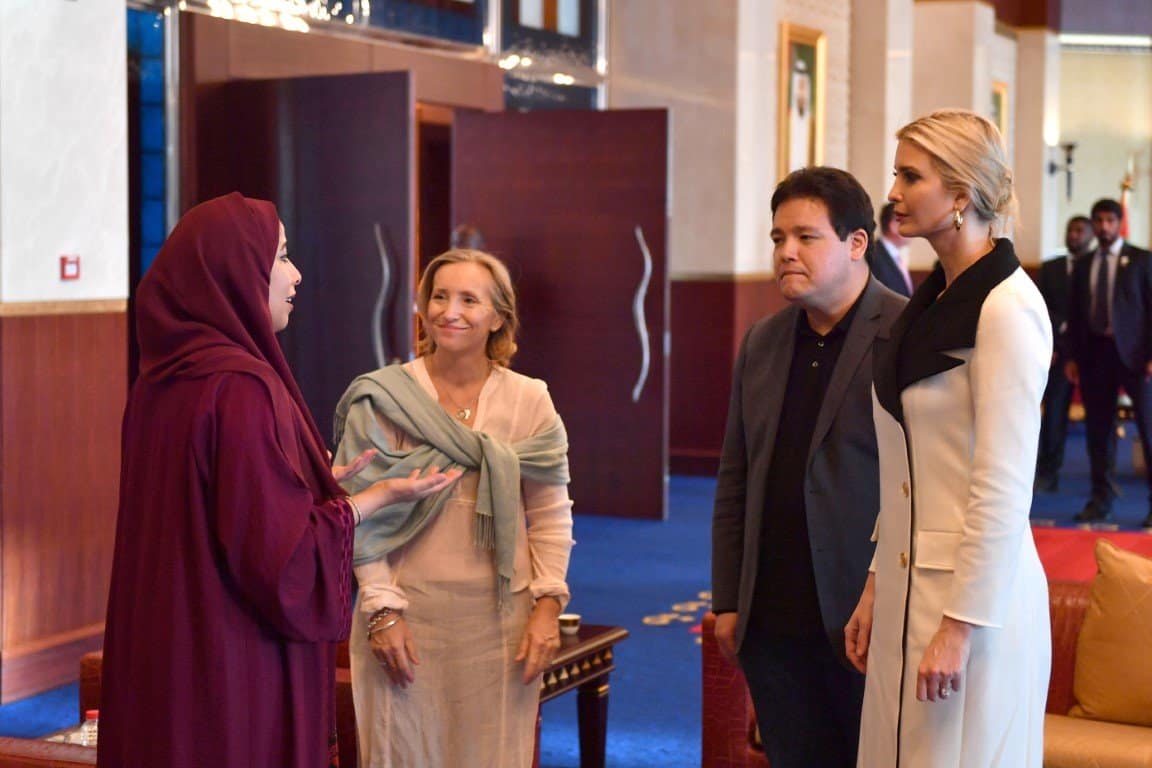
Ivanka Trump, Advisor to the President of the United States congratulated close US allies Saudi Arabia and the UAE for their “significant reforms” aimed at empowering women. She also singled out Bahrain, Jordan, Morocco, and Tunisia for their efforts to advance women’s rights, encouragingly saying “progress builds upon progress.”

“Saudi Arabia has changed laws to respect women’s freedom of movement and access to credit and financial services. Bahrain introduced legislation to prevent discrimination in the workplace. Jordan eliminated legal restrictions on women’s ability to work at night. Morocco expanded women’s land rights. And Tunisia introduced laws to combat domestic violence,” Trump said to a receptive crowd gathered at a glitzy resort overlooking Dubai’s coastline.

Her comments, especially when she mentioned Saudi Arabia, drew hearty applause from the crowd. Despite reforms relaxing Saudi’s male guardianship laws and lifting the ban on women driving, women’s rights campaigners remain behind bars, unable to enjoy the freedom they’ve fought to obtain.

Trump was not all praise though, reminding the crowd that across the region, women on average still have only half the legal rights of men. Citing the UAE as an example, she said more work needs to be done to ensure an equal and flourishing environment for women.

“Last year more than 70 percent of university graduates in the UAE were women. It’s incredible. Yet only 10 percent of the UAE’s national income is derived from women and we know that is only going to grow and flourish in the years ahead,” Trump added.

The US president’s daughter joined 3000 other attendees, including high-profile guests like former UK Prime Minister Theresa May, World Bank Group President David Malpass, and IMF Managing Director Kristalina Georgieva. The conference’s theme was “Power of Influence.”

Since her father came to office and elevated her to the role of a White House Advisor, Ivanka Trump has tried to use her power and influence for good by spearheading women’s empowerment initiatives. The 38-year-old mother of three’s flagship project is the Women’s Global Development and Prosperity (W-GDP) Initiative, launched by the White House in February 2019.

In a Twitter video posted during her Dubai visit, Trump talked about the success of the W-GDP and Women Entrepreneurs Finance Initiative (We-Fi) that has catalyzed over $2.6 billion in investment. Saudi Arabia, UAE, and the US were among fourteen early supporters who provided the initial funds for We-Fi.

“W-GDP has ambitious goals of reaching 50 million women in the developing world by 2025 but we’re going to reach and exceed that goal. In just the first year of the initiative…we’ve already reached 12 million women,” Trump revealed in the video.

Jordan, Bahrain, and Tunisia, who Trump commended in Dubai, are notable omissions from the W-GDP Annual Report 2019-2020 released just a week before the Dubai conference. The report briefly mentions “significant progress seen over the past year in countries like Saudi Arabia” and the UAE’s improved score in the World Bank’s 2020 Women, Business and the Law Report.

Morocco, on the other hand, is mentioned multiple times, and commended for its “important and bold reforms.” “Two of the most significant milestones of the W-GDP Initiative have been the Governments of Cote d’Ivoire and Morocco each amending laws in order to promote women’s economic empowerment by enhancing women’s property and land rights, respectively,” the report stated.

Morocco’s achievements were also selected as a one-year anniversary highlight. Trump and Millennium Challenge CEO Sean Craincross visited Morocco in November 2019 to champion women’s land’s rights and “new legislation securing women’s land rights were subsequently codified and implemented,” said Secretary of State Mike Pompeo and Advisor Trump’s Foreward to the report.

Moroccan women have been campaigning for 10 years for law changes that will grant them equal rights to communal-lands they inherit.

Changing the laws and cultural norms that prohibit women from fully and freely participating in the economy is one of three pillars of the W-GDP, alongside promoting women entrepreneurs, and advancing women’s job training and vocational education.

The program has been highly successful to date, and now efforts are being made to have it written into US law. Before flying to Dubai, Ivanka Trump announced, “we will be introducing bipartisan legislation in the Senate to promote the empowerment, development, and prosperity of women globally, aptly named the W-GDP Act.”

The legislation would enshrine women’s economic empowerment as a core tenet of US Foreign Policy and pave the way for the establishment of a dedicated Office of Women’s Empowerment led by an Ambassador-at-Large. The move would ensure continuity of the program, which has thus far been beneficial for countries in the Middle East and North Africa.

Read also: Could Women’s Economic Empowerment Be the Solution to Jordan’s Economic Woes?

Could Women’s Economic Empowerment Be the Solution to Jordan’s Economic Woes?

Jordan’s crippling national debt has tripled in the last decade and was estimated at $42.4 billion in 2019, equivalent to 97% of GDP. Regional conflicts, like those in Syria and Iraq, have generated unprecedented flows of refugees, placing serious pressure on the Jordanian economy.

In addition to the refugee crisis, deep structural reforms are required to address expansionist fiscal policy, high public sector expenditure, slow growth (around 2%), high youth and female unemployment, and pervasive tax evasion that are all contributing to the country’s spiraling debt.

The government has found itself in a dangerous fiscal cycle from which it seems unable to extricate itself. High government spending on public service wages and welfare are used to ensure stability and preempt civil unrest, like protests over IMF-backed austerity measures in 2018 or the Arab Spring in 2011. However, the measures only serve to add to government debt and, therefore, necessitate new austerity measures.

In January, Jordan authorities and the IMF mission reached a staff-level agreement to implement a new four-year, $1.3 billion IMF program “centered on increasing growth and stimulating job creation, strengthening external and fiscal stability, increasing transparency, and improving social spending,” an IMF statement said.

According to the IMF statement issued in Washington, Jordan’s structural reform agenda is “designed to improve the investment climate and reduce costs to businesses, which will make it easier to create jobs while also protecting Jordan’s poor and most vulnerable.”

Women and refugees fleeing the conflicts in neighboring countries make up the bulk of Jordan’s poor and vulnerable. Strong political, economic, and social participation from all members of society, regardless of gender, religion or ethnicity are important tools for sustainable development and promoting women’s economic empowerment is going to be a key factor in achieving the deep structural reforms required to transform Jordan’s economy.

According to the World Economic Forum Global Gender Gap Report 2020 closing the gender gap is essential economically and for society in general. The report stressed, “Gender parity has a fundamental bearing on whether or not economies and societies thrive.”

“Developing and deploying one-half of the world’s available talent has a huge bearing on the growth, competitiveness, and future-readiness of economies and businesses worldwide.”

Statistically speaking, Jordan is behind its the Middle East and North African neighbors in terms of female labor force participation and female unemployment. Female labor force participation is seriously low and female unemployment is very high. The kingdom has a long way to go to address the disparities, though the government does seem genuinely committed to reform.

Former Minister for Planning and International Cooperation Mary Kawar wrote that despite these challenges, at the governmental level, “Jordan can claim a lot of progress,” adding, “I am quite optimistic. I feel there is a great momentum”.

The gains include the creation of an Inter-Ministerial Committee for Women’s Empowerment in 2015 and the adoption of a five year  “Women’s Economic Empowerment Action Plan”  that aims to increase female labor force participation rates to 24% by 2025.

The 2019 implementation of the Jordanian National Action Plan (JONAP) for advancing the implementation of UN Security Council resolution 1325 on Women, Peace, and Security (UNSCR 1325) has also helped the plight of Jordanian women.

At the same time, significant amendments have been made to the Labor Law, including provisions like clear definitions on “wage discrimination,” paid paternity leave, and revised onsite child care requirements, all aimed at promoting pay equity and non-discriminatory practices between women and men in the workplace.

 Labor force participation rate, female:

Unemployment, female:

World Bank modeling demonstrates the serious gap between Jordan and its Middle East and North African neighbors.

Despite these advances, “even in big cities, Jordanian women face difficulty finding jobs”, UN Women Jordan reports. The female labor force participation rate has remained stuck at around 14% since 2011, compared to 63% for men. It is one of the lowest rates in the region and the world, earning Jordan a rank of 138 out of 153 countries on the World Economic Forum’s Global Gender Gap Report.

In January last month, the Jordanian government’s Inter-Ministerial Committee for Women’s Empowerment convened a forum on “Economic Empowerment of Women in Jordan,” bringing together government officials, the private sector and NGO’s to develop dedicated action plans for the implementation of women’s economic empowerment commitments at the local level.

Speaking on behalf of Prime Minister Omar Razzaz, Higher Education Minister Muhyiddin Touq reiterated the government’s commitment to the issue.

“The Jordanian government, under the directives of His Majesty King Abdullah, has adopted several procedures to increase women’s participation in the labor market,” she said.

“We hope that the conference will come up with practical recommendations for ways to increase women’s economic participation so the government can adopt them and draft legislation and strategies to complement the work of the participants,” the Minister reaffirmed.

Secretary-General of the Higher Population Council (HPC) Abla Amawi addressed the fact that women’s economic participation in Jordan has not increased despite the significant effort being exerted over the years. She stressed that equal distribution of resources for men and women in Jordan was a precondition, saying “only then will women be able to improve their lives and well-being”.

“We need to think of new and innovative ways to make the needed change to increase women’s economic participation and to be committed towards this cause,” Amawi said.

Some women’s rights activists disagree and have voiced concerns that the government is not doing enough to implement women’s economic empowerment initiatives like those discussed at the January forum, instead, leaving NGOs and the private sector to take the lead.

“These recommendations and others have been coming up for years in various lists of demand by the women’s movement and civil society organizations working in the field,” said Sahar Aloul, executive team member of Sadaqa, an NGO that aims to increase women’s economic participation in Jordan.

“There are many efforts being exerted on the ground by the women’s movement and all that is left is for the government to jump on board,” Aloul told The Jordan Times.

The Economic and Social Council’s annual “State of the Country” report, released in January, took a different track, doubling down on the cultural issues holding Jordanian women back. It called for a re-examination of school textbooks as they continue to reinforce the “traditional and stereotypical role of women in society by depicting them as weak housewives in need of male guardians,” in need of guidance, and unproductive on a community level.

CEO of Jordan Education for Employment and women’s rights activist Ghadeer Khuffash agrees “the main obstacles for women to access the labor market are rooted in culture”, that is perpetuated by the education system. A system where paradoxically, education attainment among Jordanian women is high.

UN Women Jordan cites social pressures and objections from family members as one of the five main reasons it has identified that stop Jordanian women working outside of the home. Others include childcare and other household responsibilities, lack of transport, low wages and unattractive employment opportunities and women unsafe or unfriendly workplaces

“Many still believe that women don’t belong in the workplace… I want to work on changing the stereotype, so women can enjoy more fulfilling lives,” said Raghad Khaled, a recent graduate of a Call Centre and Customer Service Training program provided by Education for Employment (EFE-Jordan), in partnership with UN Women.

Khaled’s thoughts echo recent comments by Ivanka Trump given during her keynote speech at the Global Women’s Forum Dubai 2020 where she said gender equality not only equates to more money but greater fulfillment.

“In the Middle East and North Africa, on average women have only half of the legal rights of men. In this region alone, women’s economic equality has the potential to add $600bn to global annual GDP by 2025,” said the US President’s advisor on women’s education and economic empowerment.

“This number represents far more than an economic boom. It represents millions of lives full of promise, mothers who could provide for their children, daughters who could be the first to graduate high school and young women who could start businesses and become job creators,” said Trump.

The government, civil society and public sector all recognize the need for increased female economic participation in Jordan and are actively working towards a more inclusive future, for the benefit of women, the economy and society as a whole.

Jordanian women have the potential to be great drivers of growth but, the country’s economy faces such complex structural challenges. Women’s economic empowerment is not a viable short term solution, but Jordanian authorities should keep up their commitments as it will surely pay dividends in the long run.

Read also: Ivanka Trump Commends Handful of MENA Nations for Women’s Empowerment Initiatives

Fleeting Freedom: Osman Kavala Rearrested in Istanbul

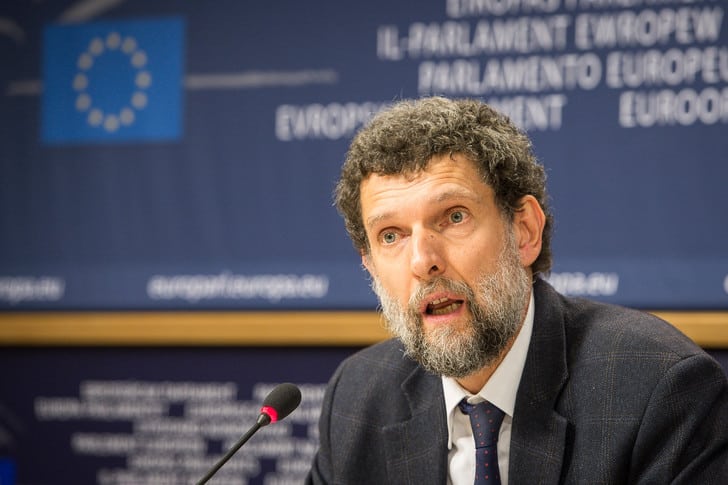
Osman Kavala and eight other defendants in the so-called “Gezi Park Trial” were acquitted of “attempting to overthrow the government or partially or wholly preventing its functions” (article 312 of Turkey’s criminal code) on February 18, 2020. The decision delighted and surprised supporters and momentarily renewed faith in the Turkish justice system.

A businessman and philanthropist, Kavala was arrested in 2017 on charges relating to his involvement in the 2013 Gezi Park Protests and 2016 failed coup attempt. At the time of writing, according to ‘Free Osman Kavala,’ he has spent 842 days behind bars.

The surprise verdict proved too good to be true. Reports from Turkish state-media outlet Anadolu Agency said Kavala only briefly left the maximum-security Silivri prison before being taken back into custody. The whipsaw move from Istanbul’s chief prosecutor saw Kavala detained on new charges of “attempting to overthrow the constitutional order,” stemming from his alleged involvement in the failed July 15, 2016 coup, which Kavala denies.

Amnesty International said the activists rearrest “smacks of deliberate and calculated cruelty”.

“To have been granted release after almost two-and-a-half years behind bars only to have the door to freedom so callously slammed in his face is a devastating blow for Osman Kavala, his family and all who stand for justice in Turkey,” said Milena Buyum Amnesty International’s Turkey Campaigner.

Just five hours earlier, Amnesty heralded the Gezi Park judgment as “a touchstone for Turkish justice,” saying: “We hope it signals a shift in the political climate in the country and brings to an end these politically motivated prosecutions.”

Alas, it appears that the opposite is true and there is no clear end in sight to the Erdogan government’s dogged pursuit of political opponents.

Kavala’s supporters argue he has become a target for the nationalistic and conservative AKP government because of his attempts to unite Turkey’s diverse and fractious society through the work of various non-governmental organizations like Anadolu Culture.

Kavala’s supporters rode a rollercoaster of emotions. On Twitter, fellow Turkish activists, friends and international followers first expressed their joy at his release, then their disbelief and despair over his re-arrest.

Outspoken Turkish journalist and author of “How to Lose a Country: the 7 steps from Democracy to Dictatorship,” Ece Temelkuran expressed her shock at Kavala’s incarceration on Twitter.

Only hours after rejoicing that “our friend is finally free,” Temelkuran echoed the sentiments of many when she commiserated, “it feels the nonsense to speak, to write when despair exceeds the threshold of endurance.”

“After being acquitted (sic) from all charges of #GeziCase yesterday, our friend #OsmanKavala was arrested again to be sent back to the prison where he had been kept unlawfully for almost three years,” she wrote.

The Gezi Park protests were the first major challenge to then-Prime Minister Erdogan and inspired an unprecedented wave of anti-government demonstrations across Turkey.

They began as a peaceful movement in May 2013 against government plans to turn Gezi Park, one of central Istanbul’s few green spaces, into a shopping mall. Environmental activists, local residents and Turkish civil society groups, occupation of the area prompted a forceful intervention from police.

Violence escalated and ensuing clashes resulted in the deaths of four civilians, two police officers and thousands being injured.

Gezi Park galvanized and united Turkish civil society, but, at the same time, marked the beginning of a harsh government crackdown that has continued since the 2016 coup attempt. Following the failed coup, thousands of supporters of alleged mastermind, American-based Turkish cleric Fethullah Gulen, were arrested and a state of emergency put in place. It was only lifted in 2018.

Since 2016, Human Rights Watch reports over 1500 foundations and associations have been shut down and almost 130 000 public sector workers were arbitrarily dismissed for their “alleged links to terrorist organizations”.

“Peaceful protest has been suppressed. Despite the end of emergency rule, critics of the government risk criminal charges and lengthy pretrial imprisonment. Over 100 journalists and media workers remain in prison,” Human Rights Watch said in December 2019.

Kavala’s detention has become symbolic of the massive government crackdown, drawing criticism from international human rights organizations. The European Court of Human Rights ruled against Turkey last December, and the Commission declared arrests and detentions like Kavala’s form part “of a broader pattern of escalating reprisals in Turkey against civil society activists and human rights defenders for their legitimate work.”

The December 12, 2019 judgment found Turkey, who is a longstanding member of the Council of Europe and signatory to European Convention on Human Rights, was in violation of Articles 5 (right to liberty and security, right to a speedy decision on the lawfulness of detention) and 18 (limitation on use of restrictions on rights) of the Convention. It called for the businessman and human-rights defender’s immediate release from prison.

Furthermore, the Court concluded that Kavala’s detention “pursued an ulterior purpose…namely that of reducing [him] to silence,” ruling that the charges he faced and the detention “were likely to have a dissuasive effect on the work of human rights defenders,” and a “chilling effect on civil society.”

The Court was also scathing in its criticism of the Istanbul Chief Prosecutors’ new detention order for Kavala. In a statement on the development, Spokesman Peter Stano said “the lack of credible grounds to re-arrest Osman Kavala and to continue his detention pending different charges, further damages the credibility of Turkey’s judiciary.”

In another concerning development for Turkey’s beleaguered justice system and symptom of Erdogan’s tightening grip, Anadolu Agency also reported: “a council of judges and prosecutors has launched an investigation into the members of the high criminal court which issued an acquittal decision on the nine defendants in the Gezi Park case.”

Hopes Kavala’s acquittal would be a turning point for Turkey’s justice system were clearly premature. His rearrest signals that anyone Erdogan sees as a threat will continue to be menaced by a politicized judiciary that has made a habit of indicting activists on trumped-up charges, keeping them in long pretrial detention, and handing down verdicts based on the flimsiest of evidence.

Read also: Boy Drowns as Thousands of Migrants Attempt to Reach EU after Turkey Opens Borders

Coldplay’s “Everyday Life” Music Video Features Morocco

Rabat – British rock band Coldplay featured scenes in Marrakech in their new music video, “Everyday Life.”

Coldplay has not only featured Morocco in their new music video, but also South Africa and the Ukraine.

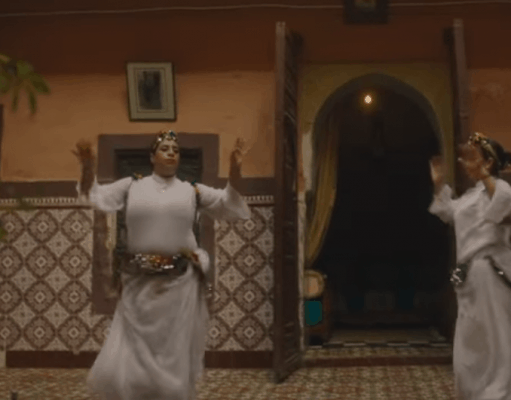
Directed by Karena Evans, “Everyday Life,” celebrates Moroccan heritage in scenes that feature Ahidous dancing in a riad, a man praying on the rooftop of a house, a man selling Moroccan pastries, and children walking in the old medina of Marrakech.

Rabat – British rock band Coldplay featured scenes in Marrakech in their new music video, “Everyday Life.”

Coldplay has not only featured Morocco in their new music video, but also South Africa and the Ukraine.

Directed by Karena Evans, “Everyday Life,” celebrates Moroccan heritage in scenes that feature Ahidous dancing in a riad, a man praying on the rooftop of a house, a man selling Moroccan pastries, and children walking in the old medina of Marrakech.

American Woman Weeps After Raja Casablanca Tickets Sell Out

Rabat – An American woman has filmed herself in tears after finding out that tickets for the CAF Champions League football match between Raja Casablanca and ES Tunis are sold out.

The video showing the woman sobbing after not being able to buy tickets for the Raja of Casablanca game has gone viral.

The video shows the woman crying for nearly a whole minute before she explains why she is in tears.

Pipeline Attack Reignites Sinai Security Fears

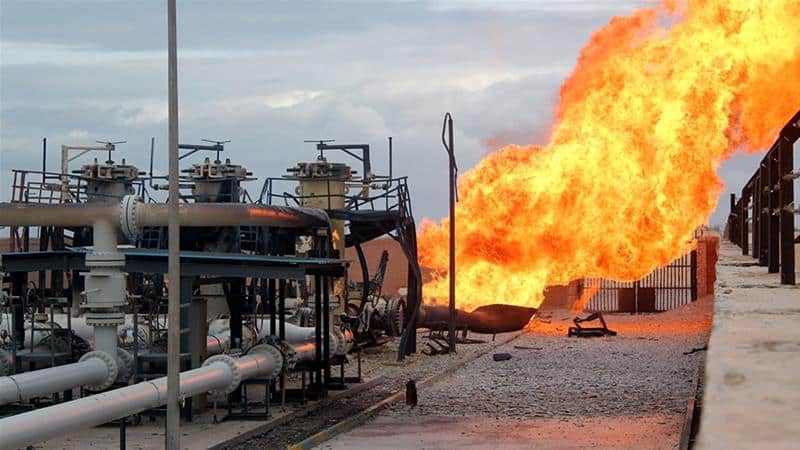
Six masked men planted explosives under the pipeline at Bir al-Abd, sending thick flames shooting into the sky, news outlet Haaretz reported citing anonymous officials.

The pipe carries gas to homes and factories in North Sinai’s capital el-Arish. It has been blown up over ten times since 2013. No group immediately claimed the attack but, the way it was carried bears marks of ISIS affiliate Wilayat Sinai’s (Sinai Province) hit-and-run operations.

Masked militants attempted to blow up a natural gas pipeline in Egypt’s northern Sinai Peninsula on February 02, 2020. There were no casualties and gas imports were unaffected.

The February pipeline attack, as well as the January execution of ISIS-alleged Egyptian spy Suleiman Mutawe and various hit-and-run attacks on Egyptian forces claimed by Wilayat Sinai, show the group remains operational and dangerous. “There is no end in sight to Wilayat Sinai’s guerrilla campaign against the Egyptian Army and other foes, despite the launch of multiple counter-insurgency operations by the Army since 2013,” wrote Joe Truman for the Long War Journal.

Sisi’s Israeli-aided war on terror in North Sinai has successfully killed and captured high-ranking jihadis, and the governorate is notably more secure now than at the height of Wilayat Sinai’s de facto rein in the region in 2014-2015.

Last May, speaking of the group’s continued presence in the region, Human Rights Watch said: “its militants have committed horrific crimes, interviewees said, including kidnapping scores of residents and members of the military or police and extrajudicially killing some of them.”

With support from Israel, President Sisi has been maintaining pressure on terrorists in Sinai by launching a number of air-strikes in various hot spot areas in the region. In November 2019 a Cairo court sentenced two militants to death, including notorious North Sinai operative Hisham Al-Ashmawy in the hope of deterring other terrorists.

However, as Sinai specialist Zack Gold pointed out, the government’s efforts have not yet yielded the expected outcome. “Without Ashmawy, both IS and Al-Qaeda-linked groups have managed high-casualty attacks on both sides of Egypt,” Gold wrote.

He noted, meanwhile, that the government’s operations have been mildly successful and that there are reasons for hope, despite the apparent determination of the regions’ Jihadi groups. “The Egyptian army, especially, has proved that when it takes the initiative it can keep the pressure on militants in Sinai.”

Gas Security

But experts maintain that the Bir al-Abd pipeline attack demonstrates Wilayat Sinai is still operational and capable of high-impact attacks, raising alarm over the Egypt-Israel gas deal.

The latest attack came just a month after the new East Mediterranean Gas Company (EMG) pipeline began transferring gas from Israel’s Leviathan field. Gas flows between Egypt and Israel have long been controversial, with pipelines consistently attacked when security spiraled out of control after the 2011 revolution.

Partners developing the project are apparently confident that “the flow of gas from Leviathan to Egypt is continuing as normal,” even as the latest incident vindicates commentators like  Gold who doubted its viability on security grounds.

“If they (Egypt) can’t protect themselves and their own infrastructure, it will be a struggle for them to protect this gas-line infrastructure,” Gold argued after the agreement’s announcement in September.

Peace Plan Promises

Egypt’s inability to assure its own security raises serious doubts about new infrastructure plans like pipelines, water or port facilities, especially generally for the North Sinai region. This, however, hasn’t stopped the Trump administration from offering Egypt US$9 billion in economic grants under the US president’s “Peace to Prosperity” plan for the Israel-Palestine conflict.

If Trump’s “deal of the century” gains the momentum and traction Washington and Israel seek, it would be a boon for Egypt’s struggling economy and provide economic development desperately needed by residents of the desolate Northern Sinai.

While it is highly unlikely that Trump’s “Peace to Prosperity” initiative will be successful (even Mike Pompeo has stated “one might argue” that the plan is “unexecutable”), it’s worth investigating the plan’s potential benefits for Egypt.

The ‘Strengthening Regional Development and Integration” section of the plan promises funds to create new opportunities for Palestinian businesses while increasing commerce with neighbors Egypt, Jordan, and Lebanon. Twelve projects are earmarked for Egypt, with four located in Sinai.

Under the plan, energy, water, transportation, and tourism projects in Sinai would benefit from US$ 625 million in grants, US$1 billion in concessional loans and US$ 375 million in private.

But the plan is vague when it comes to who exactly would pay for these projects.

“Besides omitting a political solution, the (Trump) administration’s economic plan cannot answer basic questions about implementation: who is going to fund the 50 billion dollar price tag; what government(s) will oversee the 179 projects identified; and where are the borders of the Palestinian land area where these projects will take place?” said visiting Carnegie Endowment for International Peace fellow Zaha Hassan.

At the same time, there have been insistent reports that Egypt would agree to cede part of Sinai for Gazan resettlement. Some of these rumors swirled during a “deal of the century” summit in Bahrain last summer. Economic opportunities and an increasingly cozy Egyptian-Israeli security relationship appear to be the basis of pro-Palestinian commentators’ concerns over whether Gazans will be forced into North Sinai under Trump’s deal.

In an opinion piece for Middle East Eye in July of last year, Amr Darrag, former minister and Chairman of the Egyptian Institute for Political and Strategic Studies claimed that the implementation of the “deal of the century” may include “the settlement of Palestinians” in Sinai.

“Sisi is conspiring to dedicate a swathe of land in the Sinai Peninsula to the settlement of Palestinians,” Darrag said. “Gaza sources say the area will stretch from Rafah to El Arish and some parts of northern Sinai, which will remain under Egyptian control.”.

But these allegations were quickly quashed by Egyptian foreign minister Sameh Shoukry who said “not one grain of sand” from Egypt’s territory will be relinquished. Peace Plan architect Jason Greenblatt also denied these claims, tweeting in April 2019: “Hearing reports our plan includes the concept that we will give a portion of Sinai (which is Egypt’s) to Gaza. False!”

Meanwhile, Aaron David Miller, a former negotiator, and analyst on Middle East issues for both Republican and Democratic administrations had this to say about the DoC: “You can’t do serious economic development without resolving the security and political issues that allow investors and internal economic growth and employment.”

The recent pipeline attack in Sinai crystallizes the problem for Egypt. Even if the DoC is accepted, Egypt’s inability to ensure security in Sinai means that any funds it would receive may not be of much use. Until Egypt, with or without the help of Israel, can calm the restive Sinai, its development will benefit no one.

Read also: New Tensions Surface in Ethiopia-Egypt-Sudan Nile Mega-Dam Negotiations

Libya Crisis: Looking for Peace in Any Old Place

In the fall of 2016, a full five years after the fall (and death) of Libyan dictator Moammar Qaddafi, Libya as a functioning nation was hanging by a thread. Renegade militias, human trafficking networks, torture, on-and-off threats to Libya’s crucial oil exports, murdered journalists, and, according to the UN High Commissioner for Refugees, some 435,000 internally displaced people.

Human Rights Watch noted some 4,500 individuals had drowned or gone missing while transiting the Mediterranean Sea from Libya during 2016. The Libya Body Count NGO reported 1,523 violent deaths in Libya in 2016 alone. The figures spoke of multi-layered misery; of a country that had become the shadow of its former self.

The finger-pointing in late 2016 was particularly direct in the United Kingdom, where a House of Commons report from the foreign affairs committee unambiguously lambasted the lack of planning by Prime Minister David Cameron’s government in the spring of 2011 when Western nations (primarily NATO members) undertook military and humanitarian intervention in Libya. The report noted:

“By the summer of 2011, the limited intervention to protect civilians had drifted into an opportunist policy of regime change. That policy was not underpinned by a strategy to support and shape post-Gaddafi Libya … [and] regional actors are currently undermining the GNA [Government of National Accord] by flouting the United Nations arms embargo and using Libyan militias as proxies. The GNA is the only game in town. If it fails, the danger is that Libya will descend into a full-scale civil war to control territory and oil resources.

Fast forward to 2020, the GNA is seemingly no longer the only game in town. General Khalifa Haftar and his Libyan National Army’s (LNA) offensive into western Libya and toward Tripoli is the natural culmination of five years of under-the-radar military consolidation in the eastern part of the country by Haftar, western indifference to a lasting political solution in Libya and, importantly, it’s the culmination of strategic (and parochial) calculations by foreign and regional powers.

Haftar’s drive on Tripoli has now stalled. But given the deluge of arms that have flowed into Libya—from Turkish armored vehicles to French anti-tank missiles—Haftar may likely have enough battlefield hardware to prevent him from losing despite the lack of a meaningful victory anywhere on the horizon. More misery for Libya’s 6.7 million citizens, more than two-thirds of whom live along the Mediterranean coast in a country that is the size of Alaska.

That leaves Haftar and his militia allies in control of a vast expanse of barren desert that may buy him time; time to make new alliances, choke off even more oil exports and deepen the wounds in Libya’s civil society that are a prerequisite for the spread of Al Qaeda and ISIS-affiliated militants. It’s worth noting: Libya has the largest proven oil reserves in Africa—48 billion barrels—and the quality of its oil is considered premium grade (low in sulfur).

Third, the fourth time a charm? 

When General Haftar left Moscow without signing a ceasefire deal two weeks ago, he knew he had the world’s attention and he was hoping, perhaps, that time was indeed on his side. Given Putin’s parochial strategic interests in the region, it was only natural that the Moscow meeting ended in bad optics: Haftar departed early and no formal ceasefire agreement was signed. He may have thought that the loss of oil export revenue for Tripoli, perhaps, would quickly buy him a de facto victory that military action had not. A gamble that is unlikely to pay off.

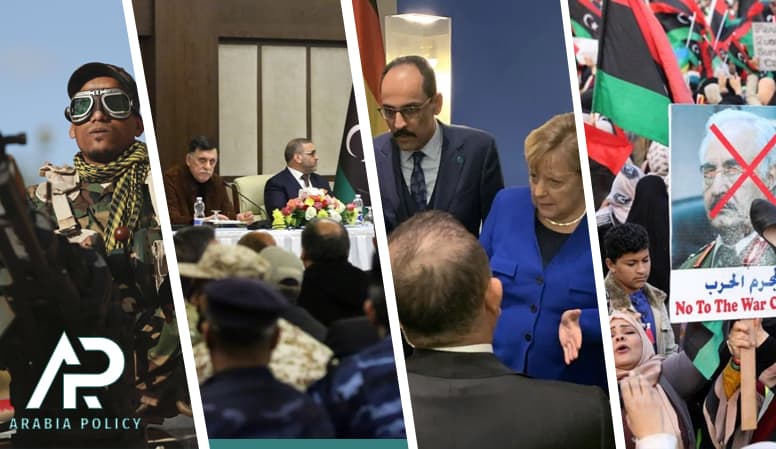
And then there was the Berlin conference on January 19, where Germany’s Angela Merkel hoped to cancel out the confusion from the Moscow meeting and lay the ground for a much clearer and the viable road to peace. But facts on the ground resulted in that conference concluding with a modest communiqué calling for a permanent ceasefire, full compliance with a UN arms embargo, the disarming of dozens of for-hire militias, and the resumption of a political process led by the UN Mission in Libya (UNSMIL).

Representatives from both Haftar’s LNA and the GNA then met in Geneva, hoping to move from a shaky truce to a ceasefire that might enable preliminary talks toward some level of peace. Success for the UN Special Envoy Ghassan Salame means threading the needle: creating enough mutual trust inside Libya to lessen the seemingly inexorable influence of foreign actors offering advanced weapons and with deep pockets.

The role of foreign fighters, including hundreds of Syrian fighters brought in to support the GNA in Tripoli, is a crucial challenge facing the special envoy, too. Erdogan has vowed to protect Tripoli and the GNA no matter the cost (in Free Syrian Army lives, anyway) even as results of a public opinion poll conducted in Turkey last month by the daily Cumhuriyet showed that just 34% of Turks supported sending Turkish troops to Libya.

With so many outside narratives involved in the Libya crisis, it is easy to embrace the pessimism of that 2016 House of Commons report. The obsession among Gulf state leaders to combat political Islamists—real or imagined—, an aggressive Russian foreign policy in the MENA region, Erdogan’s passion for mixing Turkey’s commercial priorities with a new type of gunboat diplomacy, and an omnipresent western priority for secure borders in an increasingly rough neighborhood.

Some lessons can be gleaned from the conflicts in the former Yugoslavia during the 1990s. Local militias committing atrocities across Bosnia and Kosovo, a UN arms embargo, a NATO bombing campaign, displaced populations by the hundreds of thousands, and a very belated but indispensable role played by American military forces (60,000 US/NATO troops on the ground by 1996).

American and European leaders may have been reluctant to engage in peace enforcement actions in Bosnia but the risk to the stability of the greater Balkans region was significant—as was the mounting damage to NATO’s credibility on its doorstep. Likewise, Libya falling further into chaos creates more instability for its immediate neighbors, creates a training ground for expanded militancy across the Sahara and Sahel regions, more human suffering inside Libya, more refugee and migrant deaths in the Mediterranean Sea and a repository of sophisticated weapons in search of future conflicts.

An American commitment on the level of Bosnia will not be forthcoming in Libya in 2020, and local players like the Arab League will have to decide how deep they want to get involved in long-term conflicts like Syria and Libya when its member states have time and again pursued such divergent policies on regional security issues.

Is a local North Africa neighborhood-based dialogue approach the answer? Perhaps, but GNA head Fayez al-Sarraj would certainly seek input and robust backing from the larger international community and General Haftar, flush with modern weaponry from his foreign allies, may believe that short of outright military victory in Tripoli time is on his side no matter where ceasefire and peace discussions are taking place.

Are peace and political settlement too much to hope for from a battered and bruised Libyan civil society? Trust is in short supply more than two years after the 2017 Skhirat agreement committed all parties to dialogue and national reconciliation. As the parties talk in Geneva about a lasting ceasefire and confidence-building measures, perhaps courage will win the day.

Nearly 80 years ago in Libya, another field marshal, Erwin Rommel, fought and later fled across the desert plains of North Africa during World War II. One strategic admonition often attributed to Rommel is a temptation that Libya’s warring parties should seek to avoid in 2020: When there’s no clear option, it’s better to do nothing.

Read also: UN’s Envoy for Libya Ghassan Salame Resigns, Cites Stress

Saudi Arabia Uses Influencers, International Stars To Expand Public Diplomacy

How do you convince the world you are an open and tolerant country in the 21st century? Instagram of course, and visas. Most governments are doing it, and it is only natural that Saudi Arabia is jumping on the “tourism as openness” bandwagon to curate its image and score big on international reputation rankings.

But the trouble with the Gulf kingdom’s impressive public relations campaign is the notoriously grim socio-political realities underpinning it.

Increasingly, Saudi Arabia’s latest public diplomacy efforts have been singled out for taking place against a backdrop of human rights abuses, the most notable of which has been, the murder of journalist Jamal Khashoggi.

Public diplomacy uses various channels and mediums (education, sport, cultural projects, etc.) to share messages about a country’s values, ideas, and culture in an attempt to make it more attractive to foreign audiences.

The goal is to extend soft power, or a country’s non-coercive power to attract and influence. So why is Saudi Arabia drawing so much attention when governments around the world are using social media and expensive public relations campaigns to extend their soft power?

MDL Beast

The MDL Beast music festival in Riyadh in December 2019 for one, bought things to a head when debate erupted on social media over the ethics of influencers agreeing to promote the kingdom.

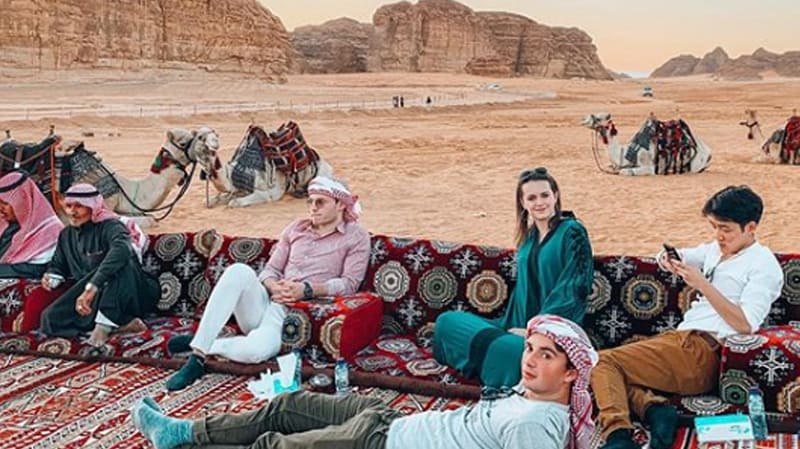
MDL Beast drew a glitzy crowd of influencers, models and celebrities, including big-name acts Steve Aoiki and David Guetta to headline the festival in Riyadh. Instagram was soon filled with photos of celebrities like actors Armie Hammer and Ryan Phillipe enjoying the electronic music. In most cases, the eye-catching pictures were accompanied by captions proclaiming a “culture shift” (Hammer), or “I love different cultures” (Phillipe). Models Alessandra Ambrosio, Sofia Richie, and Winnie Harlow shared sultry snaps, deliberately tagged: “Riyadh, Saudi Arabia.”

They were quickly called out by followers, journalists, academics and influencer peers, including models Teddy Quinlivan and Emily Ratajkowski, for unashamedly celebrating Saudi Arabia as an open and tolerant country. Podcast host and writer Aminatou Sow decried the “shameless” influencer culture on Twitter, while Instagram users peppered comment sections with questions like “how much are you getting paid to rebrand Saudi Arabia?”.

In a statement to Buzzfeed News, model Teddy Quinlivan was scathing. “Our platforms bring validity to what we promote and they reach massive audiences,” she said. “It’s clear that along with social media becoming a tool for propaganda, influencers are being weaponized as well.”

Visas and Paid Promotions

In October 2019, Saudi Arabia opened up tourist visas to US, European, and UK citizens, expanding eligibility beyond an initial list of 49 countries. It then announced unmarried foreign men and women would be allowed to share hotel rooms. Just prior, positive images and stories about the Kingdom flooded Instagram.

According to investigations by the Guardian in 2018 and 2019, Saudi Arabia has recruited a raft of influencers, public relations, and communications companies to work on campaigns.

The investigations exposed the names of some of the influencers, public relations and communications companies Saudi Arabia has engaged to work on expensive campaigns to create a positive international image for the kingdom. Public relations agency Freud’s and Consulum, British newspaper the Independent, American broadcasting company Vice Media and the Tony Blair Institute for Global Change are among those with links.

“London has become a hub for global Saudi public relations and media influence campaigns, with British firms earning millions of pounds from efforts to improve the image of the kingdom and its regional allies in recent years,” the Guardian’s investigation found in 2018.

Dr. Raihan Ismail, an associate lecturer at the center for Arab and Islamic studies at the Australian National University (ANU), agrees. He argued that Saudi Arabia has already invested billions of dollars to burnish its image in the West.

“The Saudi government is investing so much in trying to reconstruct its image, particularly after the assassination of Jamal Khashoggi,” says Ismail. “I think that’s when people started to realize that we’re dealing with an authoritarian regime. We’re dealing with a state that is so repressive.”

Saudi Arabia uses NGO Gateway KSA, to offer all-expenses-paid, supervised trips to social media personalities. “We’re looking for the influencers, policymakers, and leaders of tomorrow. Young men and women who can see beyond today’s headlines and tweets to imagine and shape a future of openness, collaboration and innovation together,” Gateway KSA’s sleek, modern website reads.

Those trips have produced stunning images of beautiful people in exotic landscapes, and resoundingly positive reviews of sponsored holidays that notably avoid mention of Saudi’s human rights abuses, women and LGBT+ rights or military involvement in Yemen.

Yet, Dutch-Australian founder of Gateway KSA, Nelleke Van Zandvoort-Quipsel claims none of these sensitive topics are off limit during sponsored trips. “All the Saudis they meet are willing to talk about their views candidly and openly,” she says. “It’s real people, sharing real experiences, and from that they can judge and form their own opinion. We don’t guide them in how or what to think, whether positively or negatively.”

As of October 2019, Gateway KSA hosted 19 influencer trips to Saudi Arabia. Meanwhile, the Saudi Tourism Board has also hosted an unknown number of paid visits. The influx of influencers fawning over Saudi Arabia hasn’t gone unnoticed by social media users, however.

Australian photographer and Instagrammer Gab Scanu @gabscanu, for example, received backlash from his 365 000 followers for a 2018 Gateway KSA video collaboration. Like many of his counterparts, Scanu hit back, arguing the trip was accepted on artistic, not political grounds.

Scanu retorted: “I don’t agree with ‘influencers’ traveling there and commenting on issues they’re not educated in. It’s definitely not what the media makes it out to be. I think there are a lot of improvements to be made for sure but I never felt unsafe or in danger while there.”

But the Saudi political landscape has witnessed some recent improvements, even if the changes made so far remain largely cosmetic compared to the persisting challenges. On women’s rights, for instance, Crown Prince Mohammed bin Salman has relaxed some gendered prohibitions, including the driving ban and male guardianship system controlling women’s travel. However, female activists and dissidents continue to be arrested and detained.

“Reforms for Saudi women do not whitewash the rampant harassment and detention of Saudi activists and intellectuals, including women’s rights activists, who simply expressed their views publicly or privately,” said Michael Page, deputy Middle East director at Human Rights Watch. “If Saudi Arabia has any hope of rehabilitating its tattered image, the authorities should immediately release everyone they’ve locked away merely for their peaceful criticism.”

For her part, ANU’s Dr. Raihan Ismail warns influencers against legitimizing Saudi Arabia’s public relations campaign, insisting that Instagrammers should not be wooed into thinking Saudi Arabia has changed or liberalized.  She also urges them to consider the ethics of working with the regime. “Sometimes you have to pick a stand,” she said. “The standard you walk past is the standard you accept. If you see a country violating human rights, do you turn a blind eye or do you take a stand?”

As it happens, the challenge for influencers and celebrities remains: Can they agree to promote Saudi Arabia in spite of documented human rights abuses, and will their followers continue to unquestioningly consume such content? It also remains to be seen whether the Kingdom’s public diplomacy campaign’s clever use of influencers will rehabilitate its international image, delivering the soft power it so desperately craves.

Read also: “Mecca Girl” Faces Arrest, Racist Backlash in Saudi Arabia for Rap Video

Crypto Leaks: Documents Reveal True Extent of CIA-BND Spy Operation

Secret documents reveal CIA and former-West German spy agency BND used Crypto AG encryption machines to spy on friends and foes for over forty years.

Internationally renowned Swiss company Crypto AG was a market leader in encryption technology and services. Made famous by their “unbreakable” CX52 encryption machine, countries around the world trusted their technology to keep state secrets safe. 

However, the secret papers German public broadcaster ZDF, the US’s Washington Post newspaper, and Swiss broadcaster SFR recently gained access to, reveal everything changed when Crypto AG founder Boris Hagelin, agreed to sell his company to the CIA and BND for $8.5 billion.

Hagelin had a close relationship with US intelligence, including with the particularly feted codebreaker William Friedman. In 1995, the Baltimore Sun broke a story on the US’s sophisticated spying empire. Headlined “Rigging the Game” and based on company documents and employee testimony, the story unveiled what it referred to as the “intelligence sting of the century,” unearthing links between Crypto AG and the CIA.  

Crypto AG strongly rejected the allegations, however. The company firmly assured customers “manipulation of Crypto AG equipment is absolutely excluded.” But as later revelations would show, the Baltimore Sun had just scratched the surface of a much bigger story.

A 2015 BBC report uncovered more details about Crypto AG, or the “Boris Project,” in declassified NSA documents. “The relationship, initially referred to as a “gentleman’s agreement,” included Hagelin keeping the NSA and GCHQ informed about the technical specifications of different machines and which countries were buying which ones,” they reported. 

Now rumors that have swirled for years are confirmed. #Cryptoleaks tells the full Crypto AG story, revealing that under CIA/BND ownership, the US and Germany “rigged the company’s devices so they could easily break the codes that countries used to send encrypted messages,” according to the Washington Post.  

Who’s implicated? 

Thanks to Crypto AG, the US, and West Germany were able to monitor a plethora of sensitive messages between governments, embassies and the military of over 100 countries including Iran, Argentina, Morocco, Saudi Arabia, Italy, and Turkey. A wealth of intelligence intercepts were generated from late 1971 until either 1993 when Germany reunified; or 2018, when Crypto AG was sold-off and remaining assets liquidated. 

Middle Eastern buyers included Saudi Arabia, Iran, Iraq, Syria, Jordan, Kuwait, Lebanon, Oman, Qatar, and the United Arab Emirates. In North Africa, Egypt, Algeria, Libya, Morocco, and Tunisia were customers of Crypto AG.

Operation “Rubicon,” as the CIA codenamed its ownership and control of Crypto AG, was not solely limited to spying on third-world foes. According to the documents, the CIA was perfectly comfortable eavesdropping on European nations, including US allies like Ireland, Spain, and Portugal. 

The BND, however, expressed reservations about spying on close allies, but the CIA shrugged off the complaints and argued there were “no true friends” when it comes to collecting sensitive and extremely useful intelligence. The Washington Post reports that “the Germans were taken aback by the Americans’ willingness to spy on all but its closest allies, with targets including NATO members Spain, Greece, Turkey, and Italy. 

China and the Soviet Union never trusted Crypto AG and steered clear, placing themselves in the “small circle” of countries whose encrypted secrets could not be read by Washington and Bonn. 

Crypto AG, codenamed “Minerva” in CIA documents, reportedly had two machines. One was fully secured and “unreadable,” while the other was encrypted in such a way that the CIA and BND could easily break its codes and read the secret communications of governments who used it. Meanwhile, the spying operation it allowed was far safer than any network of human espions, assuring a steady flow of information with almost no risk of detection. 

According to the uncovered secret information, Switzerland received a secure machine and was along with Israel, Sweden and Britain, one of four countries that knew about the program.

The CIA boasted in a lengthy internal resume  on the operation, “it was the intelligence coup of the century.” It went on to say, “Foreign governments were paying good money to the US and West Germany for the privilege of having their most secret communications read by at least two (and possibly as many as five or six) foreign countries.”

Fellow Five Eyes signals intelligence-sharing alliance members the UK, Canada, Australia, and New Zealand are likely the other countries referred to. The Five Eyes agreement states “each party will continue to make available to the other, continuously, currently, and without request, all raw traffic, COMINT end-product, and technical material acquired or produced…” This means that Canada, Australia, and New Zealand were most probably aware of Operation Rubicon, and benefiting from intelligence it gathered, too.  

Repercussions and Legacy

Switzerland’s global reputation for engineering expertise, discretion and neutrality made Crypto AG a perfect target. That the Swiss intelligence was aware of and complicit in Operation Rubicon has thrown the European country’s press and politicians into a spin. The Swiss government launched an investigation on Tuesday into how the Zug-based company became the centerpiece of the US and West Germany’s “eavesdropping empire.” 

“So the rumors at the beginning of the 1990s were true. Good Switzerland – neutral and non-aligned – was home to a quasi-agency of allied intelligence services,” said Pierre Veya in a Tribune de Geneve editorial on Wednesday. 

It is believed most of Crypto AG’s employees did not know about the CIA-BND plot and now have mixed feelings about their unwitting involvement. Crypto International formed part of the original company until it was bought by Swedish entrepreneur Andreas Linde. In a statement to the Washington Post, Linde denied any knowledge of the operation and said he feels “betrayed” by the allegations.

During the Cold War, the operation gave the US, West Germany, and their allies a crucial intelligence edge on opponents. Amongst their achievements, the CIA and BND report state they “monitored Iran’s mullahs during the 1979 hostage crisis, fed intelligence about Argentina’s military to Britain during the Falklands War, tracked the assassination campaigns of South American dictators and caught Libyan officials congratulating themselves on the 1986 bombing of a Berlin disco.”

Germany’s ex-secret service coordinator Bernd Schmidbauer told ZDF that Rubicon “has certainly contributed to making the world a bit safer.” Former CIA Director and NSA Deputy Director Bobby Ray Inman, who led the CIA in the late 1970s and early 1980s, agrees that the operation was a great success and a much-needed asset in the world of intelligence gathering. 

Despite the outrage and mistrust that the recent revelations are sure to fuel, Inman insisted he has no qualms about the program. “Do I have any qualms? Zero,” he said. “It was a very valuable source of communications on significantly large parts of the world important to U.S. policymakers.”

The new revelations also raise questions about the US and West Germany’s knowledge, and lack of action, on atrocities committed around the world over the past fifty years. It appears the US and Germany preferred to sit back and watch instead of intervening, to safeguard Crypto AG and “access to streams of intelligence.” 

Meanwhile, while it could be argued that the US or West Germany’s right to legally intervene in other states affairs would have been restricted by international law and the norms of state sovereignty. The scale of Operation Rubicon, and the CIA’s documented involvement in regime changes around the world, shows how the US only respects other’s sovereignty when it’s in its national interest. 

With the revelations of CIA-BND-Crypto collusion coming against the background of a US-China feud over 5G technology, it is not surprising that the US, UK, and allies are wary of Chinese state technology company Huawei.